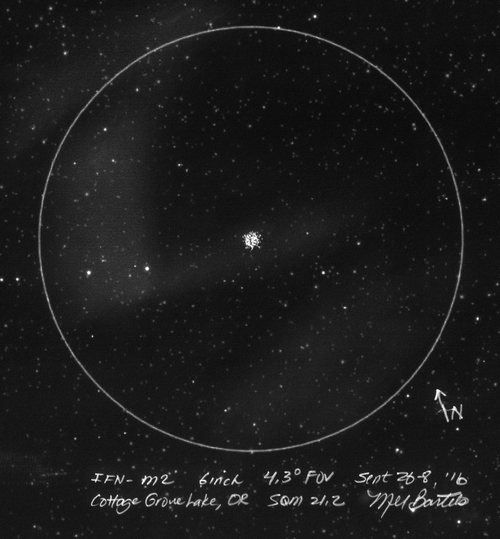
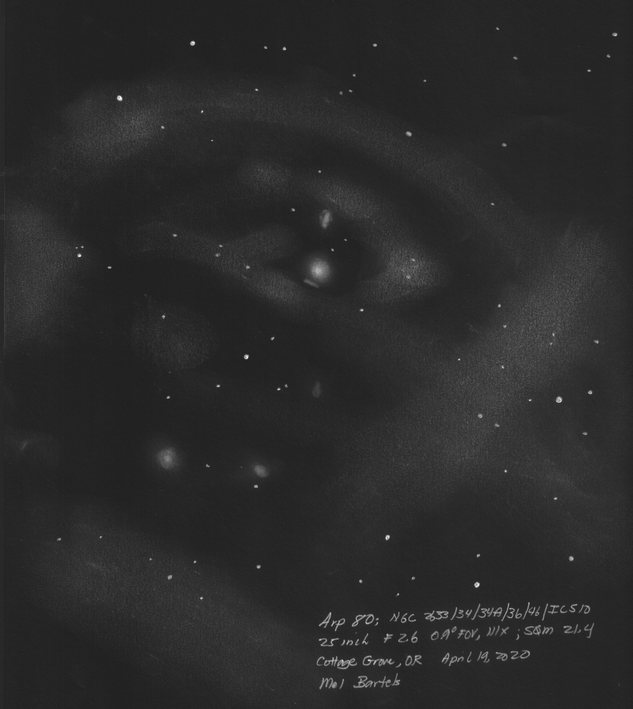
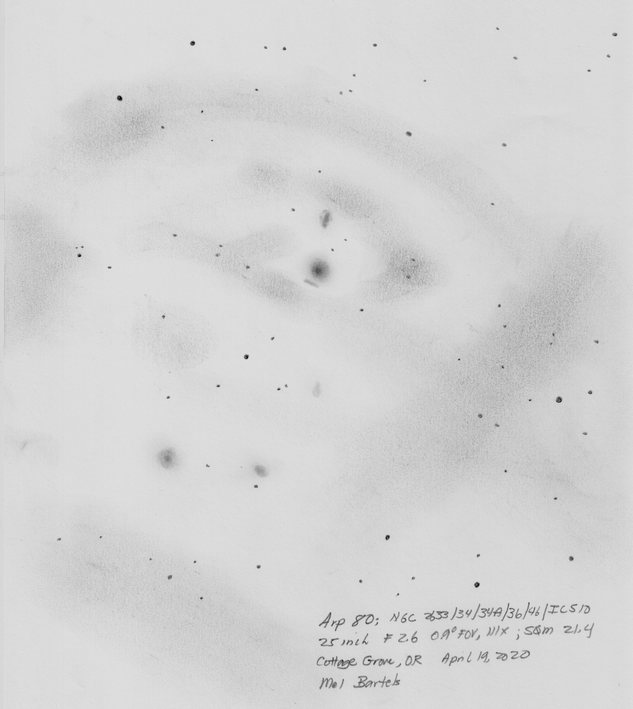
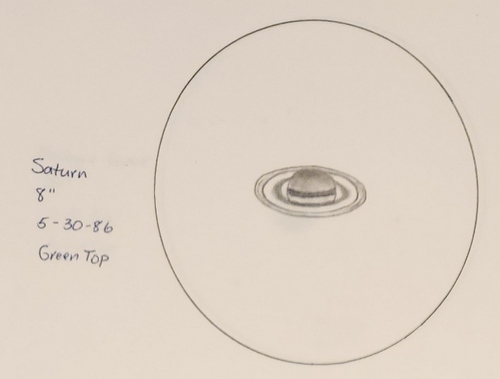
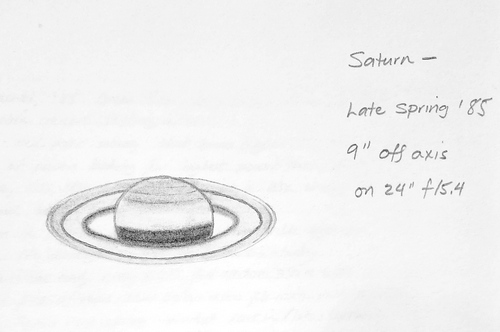
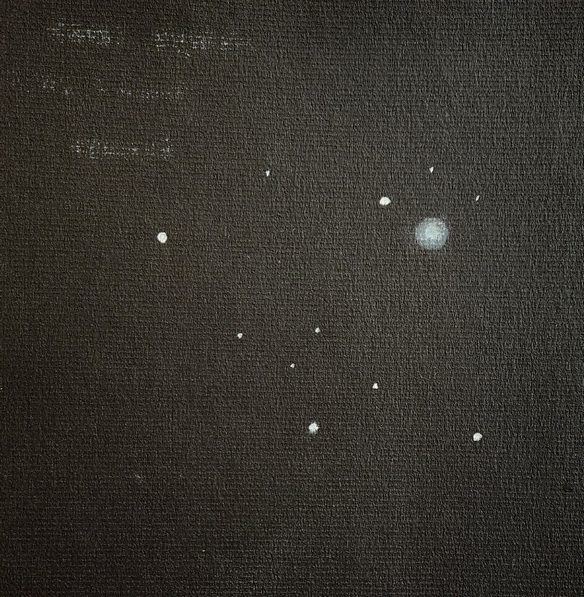
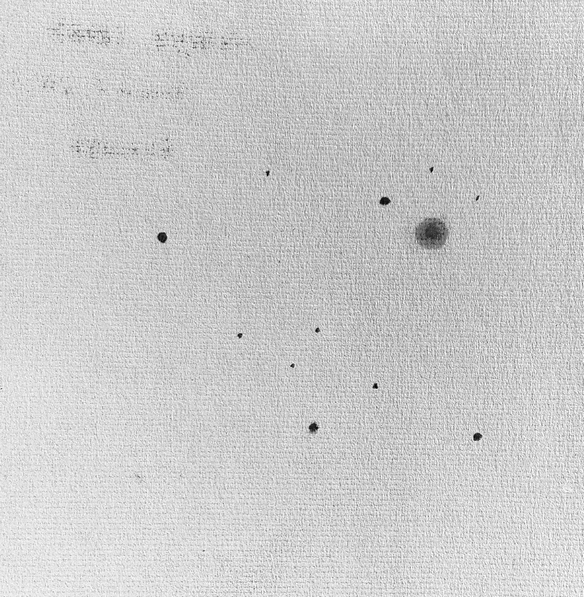
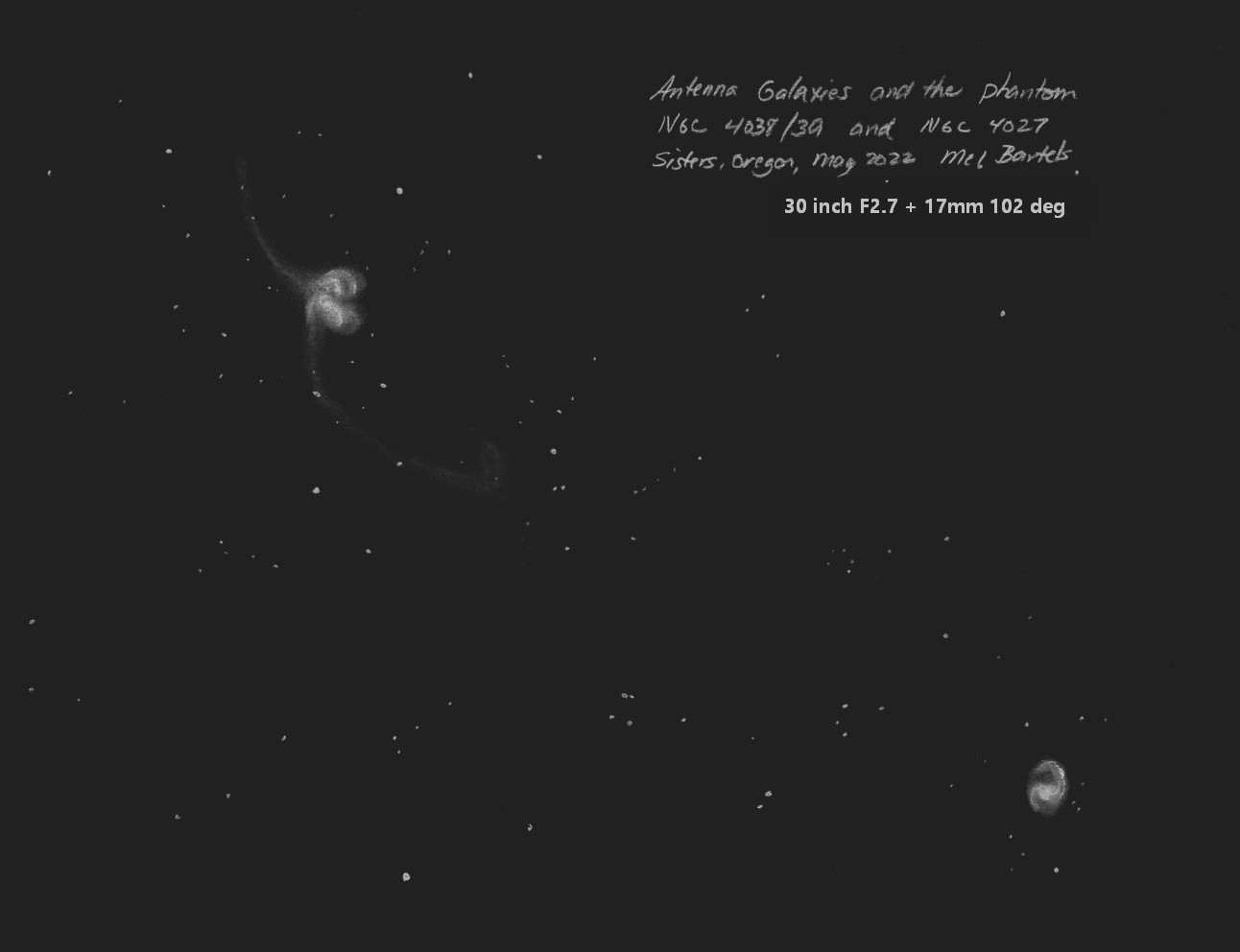
A striking view of the Antenna Galaxies and a nearby galaxy that masquerades as a near lookalike phantom, visible in the 30 inch f2.7 wide angle telescope with a little nudging back and forth. I had anticipated that the 30 inch would extend what I saw in the 25 inch, but more is going on beyond the numbers - the 30 inch is a real galaxy killer. It is hugely motivating to continue to build scopes and observe with them. One has to build and look; there are surprises that would remain hidden if not seen.
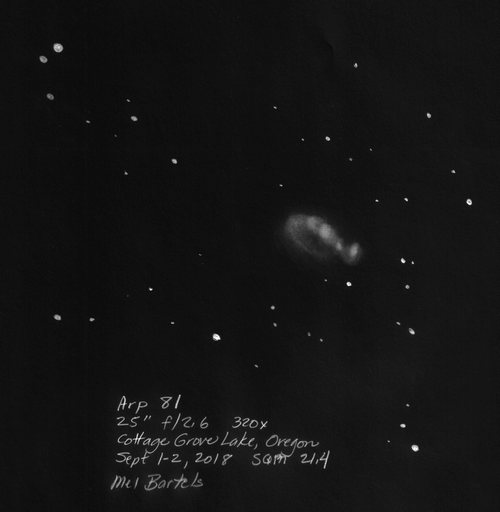
Arp 81 with tidal stream, 25 inch f2.6 at high power.
Arp 81 was on the Oregon Star Party advanced observing list.
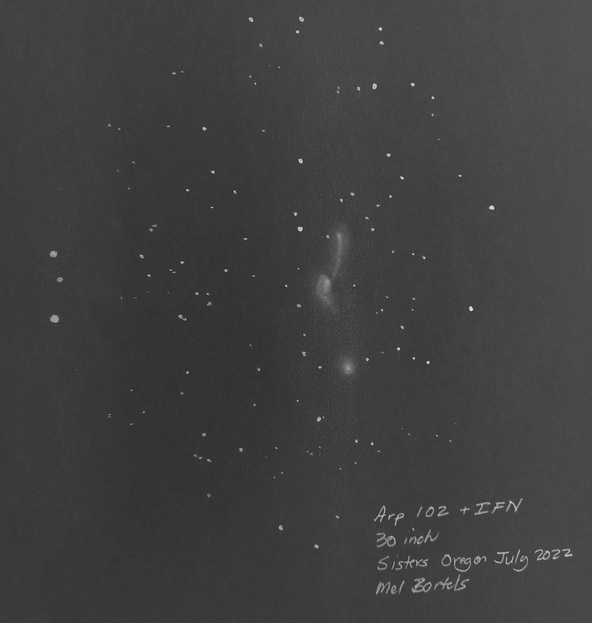
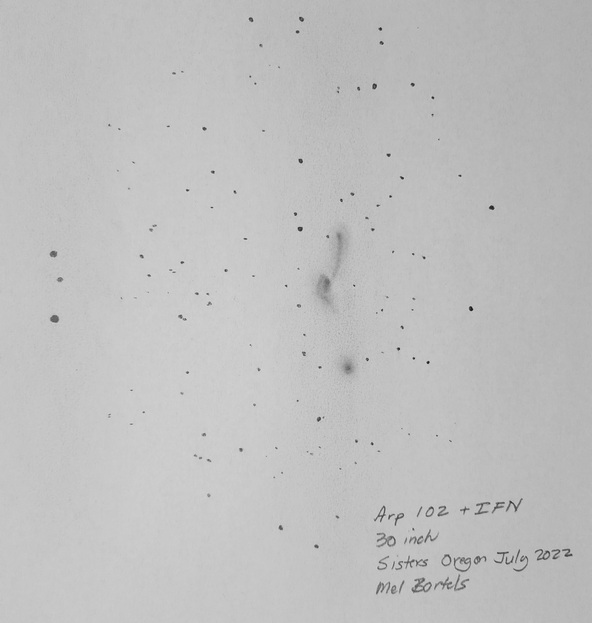
Arp 102 with tidal stream and IFN using my 30 inch f2.7.
That's quite a star hop - 4 deg from Draco's head. I tried winging it but wasn't sure what I was looking at. So star asterism to asterism I went. Complicating looking for the faintest tidal stream which I did not see was that Arp 102 is embedded in faint IFN. There are two faint 'vertical' bands, one going through the bright double star to the 'left' and one going right through Arp 102. Also complicating were all the stars - too bright - hurting my night vision and distracting.
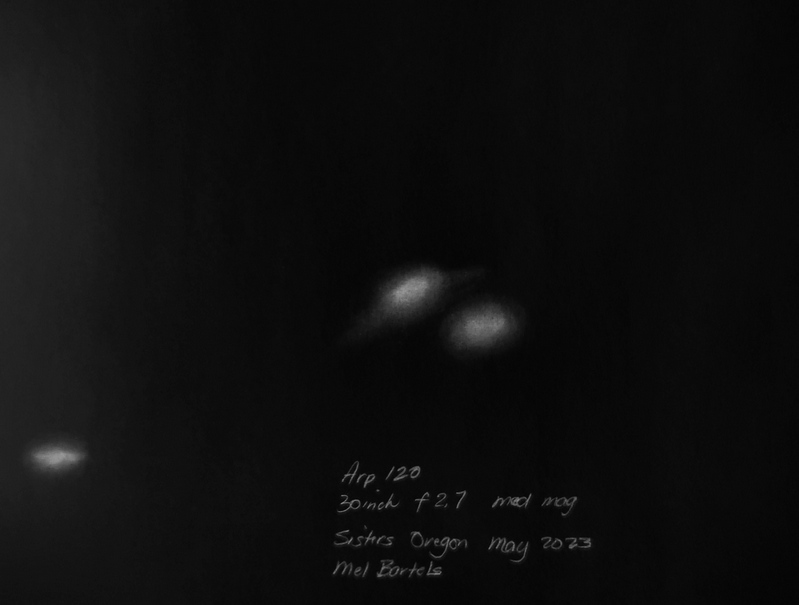
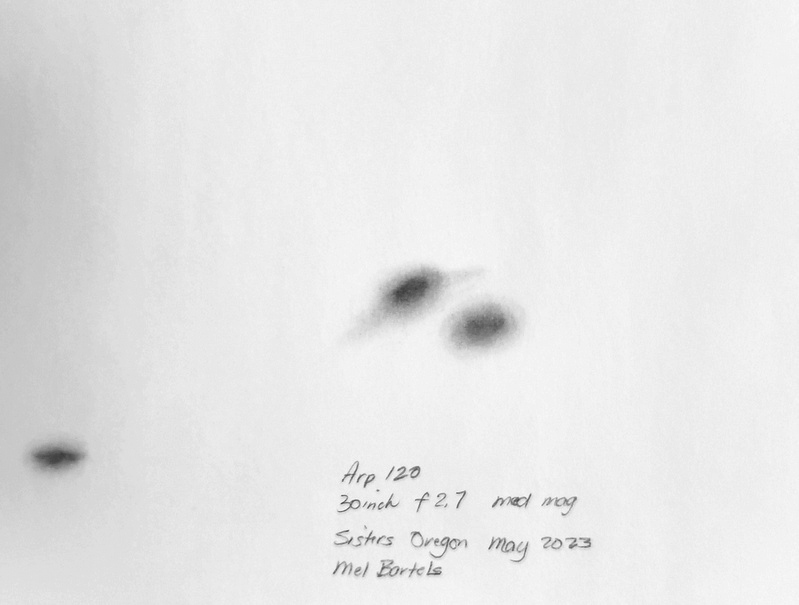
Arp 120, part of the Markarian Galaxy Chain, with tidal stream using my 30 inch f2.7
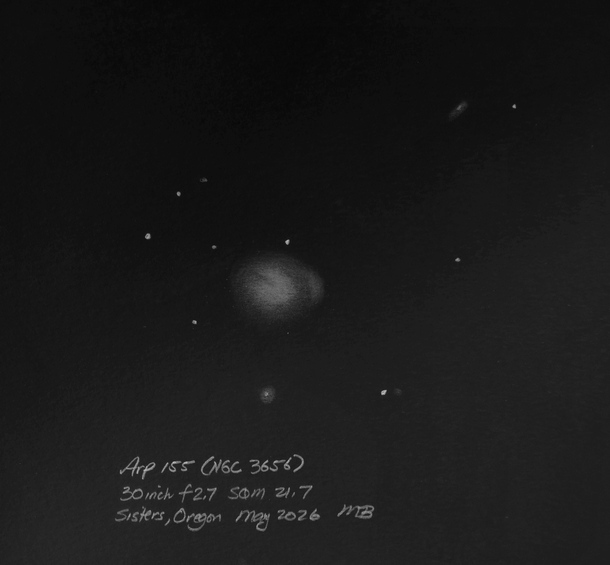
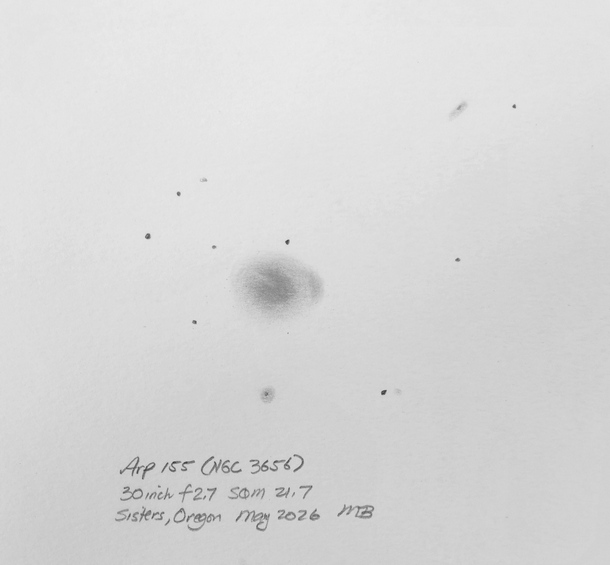
ARP 155 (NGC 3656) using my 30 inch f2.7
I looked for a tidal stream in Arp 155. I could see a connection mainly on one side between the two galaxies. They really are tightly grouped. Check out the Wikipedia image to compare.
Arp 194 + IFN wide field using my 30 inch f2.7.
Arp 194 is one of those faint Arps that, sigh, looks so faint at low power. Just a couple of smudges. But at high power, after an hour of looking, the galaxies go from a detail here and there to rather subtly beautiful. Plus an IFN nearby.
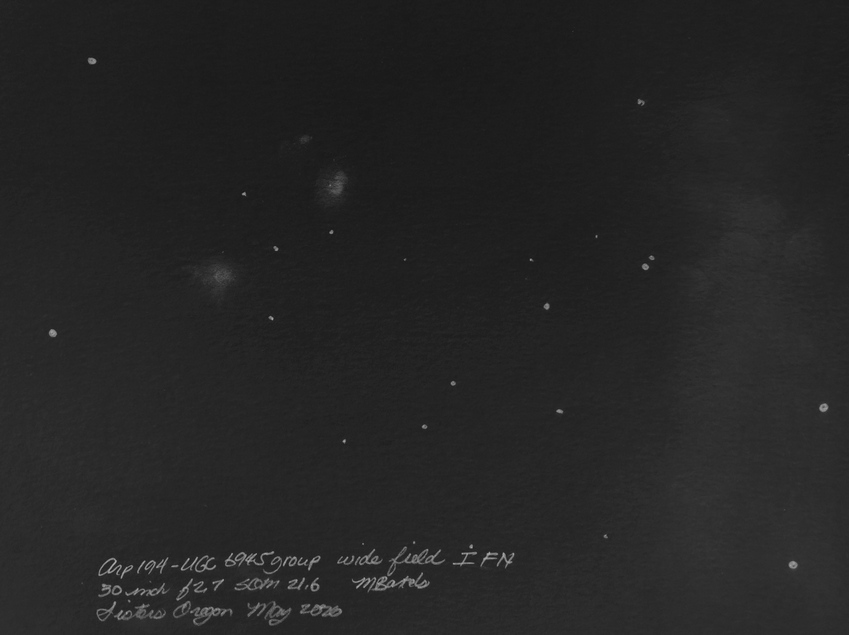
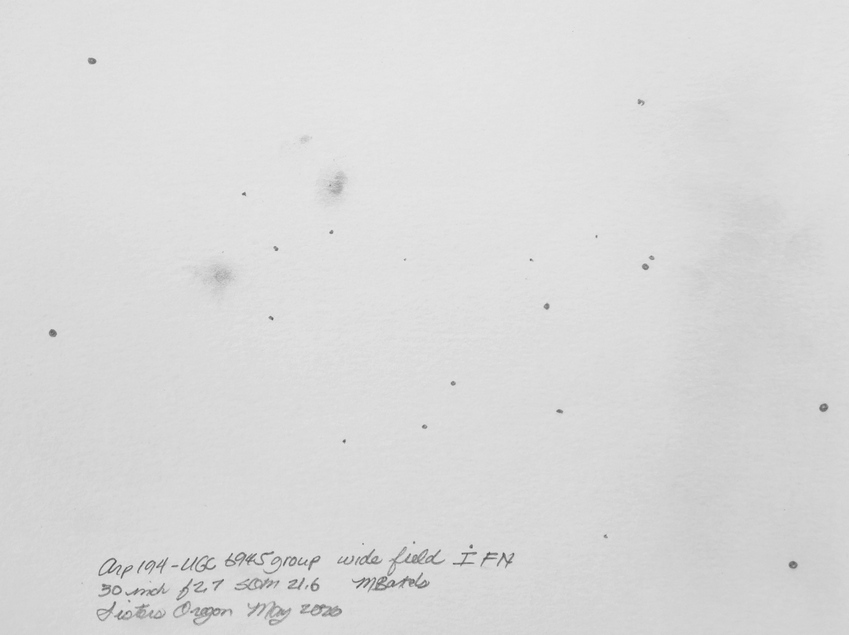
Arp 194, high magnification, using my 30 inch f2.7.
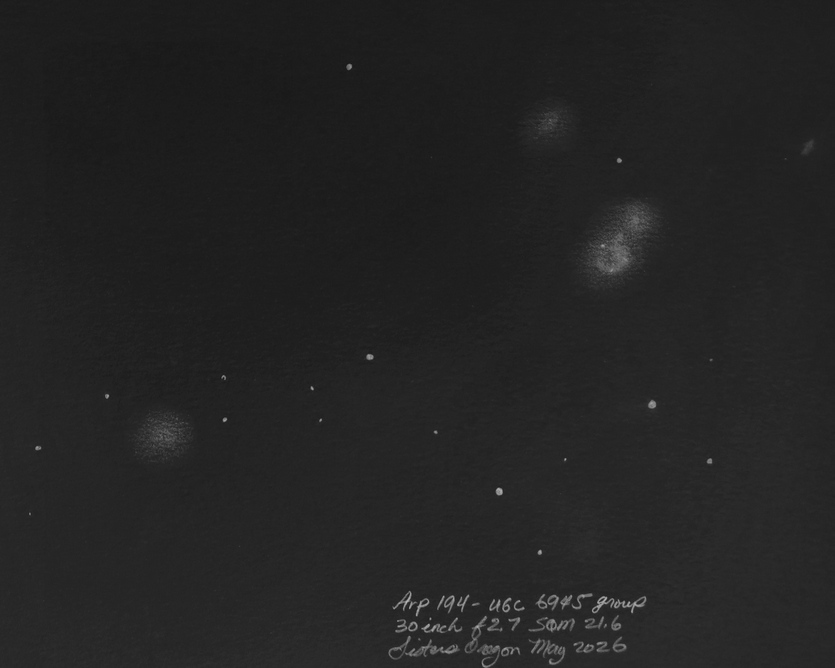
Arp 242 tidal stream (the Mice galaxies) with my 30 inch f2.7. These are small and easily overlooked because of their faintness.
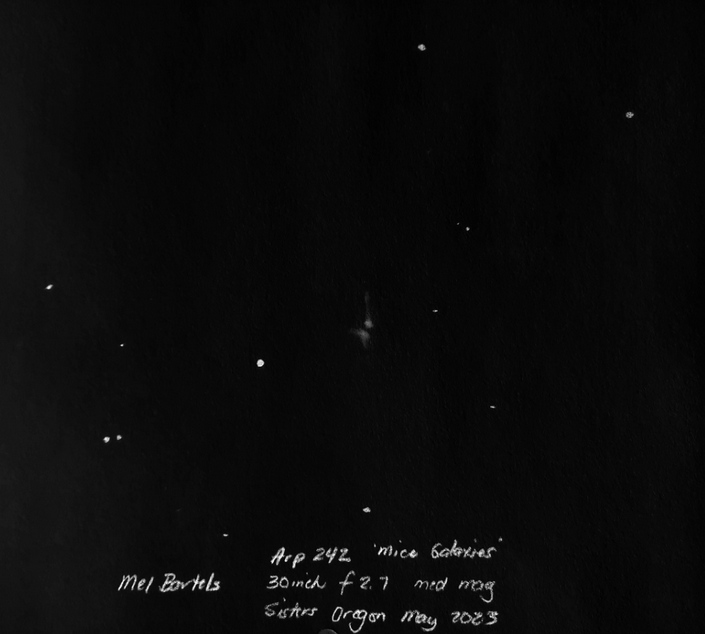
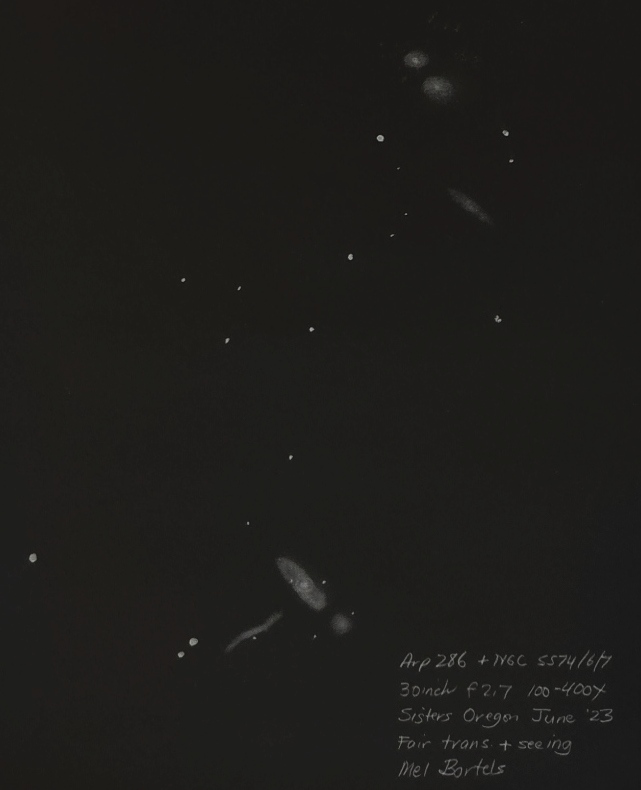
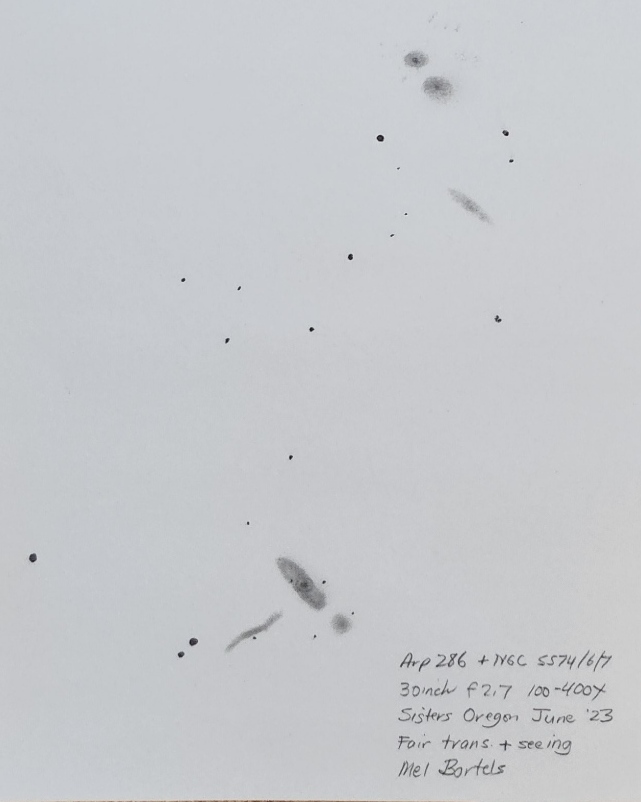
Arp 286 tidal stream with the nearby NGC 5574-6-7 group.
Arp 286 is a chaotic threesome of interacting galaxies. Just out of the field is a pretty grouping of NGC 5574/6/7, each galaxy being different.
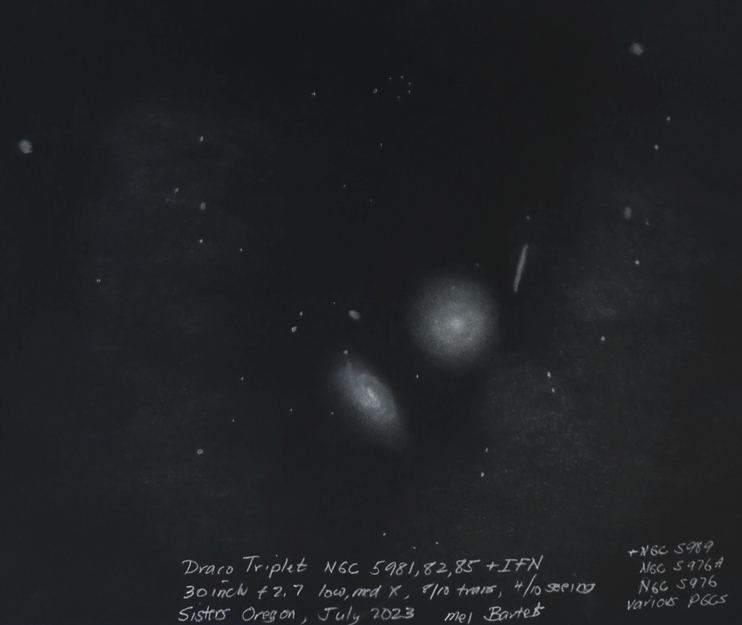
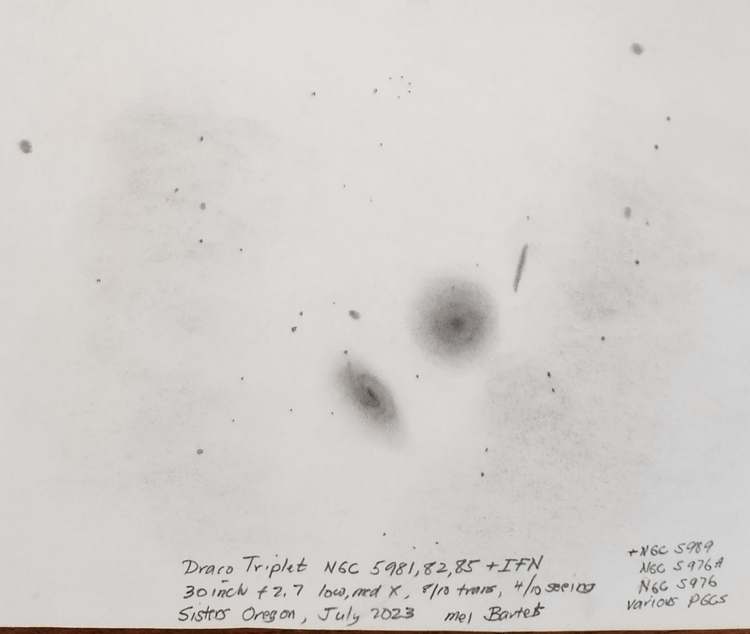
Dramatic view of the Draco Triplet with IFN and fainter background galaxies using my 30 inch f2.7.
I got Dale Eason's SkySolve to help me identify where the heck I am amidst all the stars visible in a 30 inch. I've found a number of IFN that I've had to leave on the side of the road because I couldn't identify the star field. Hmm, come to think of it, maybe I should have sketched those fields as accurately as possible then submitted it to astrometry.net for potential identification. Last night I came across a bright IFN, following it to a neat little spiral galaxy. But which galaxy and where in the sky? SkySolve to the rescue! I found the Draco Triplet with SkySolve. Beautiful IFN everywhere, not to mention the dramatic Draco Triplet in a 30 inch. A new scope means re-viewing objects seen before: views are unique to the scope. The elliptical galaxy's outer shell was visible and the large spiral looked spiral-ish. A nice perspective was the handful of fainter, much more distant NGC and PGC galaxies in the field. Transparency was excellent. The North American Nebula's Gulf of Mexico was broken up into patches and streaks - as good as I've ever seen.
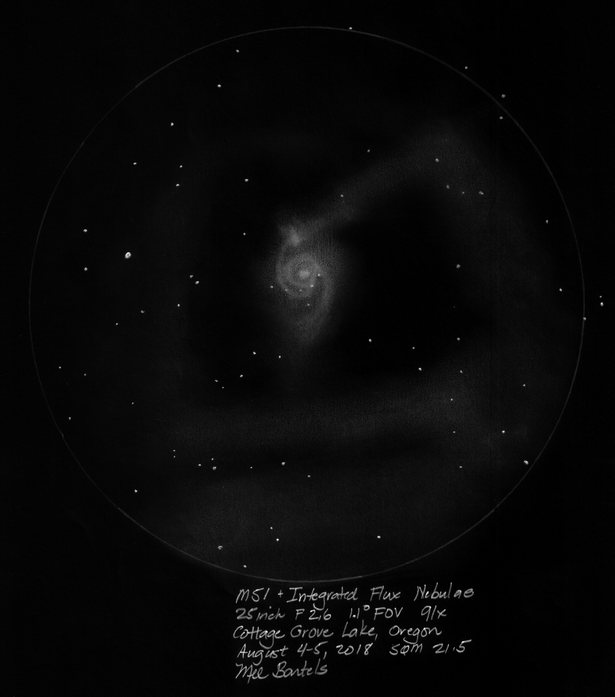
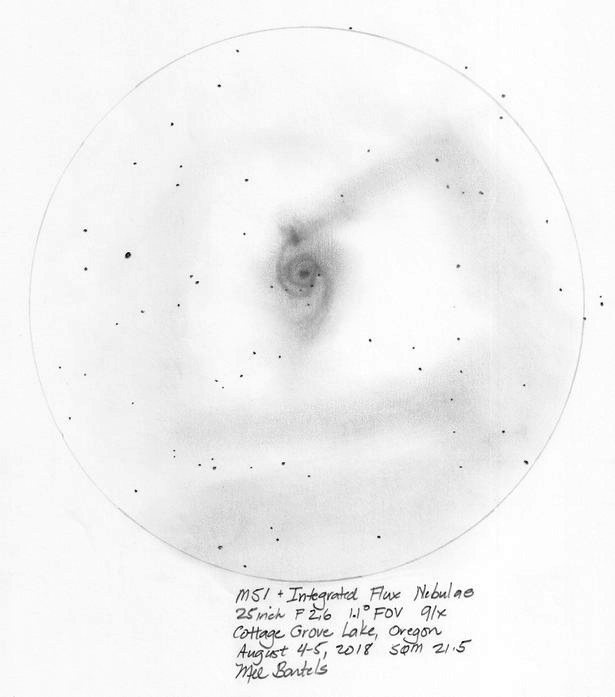
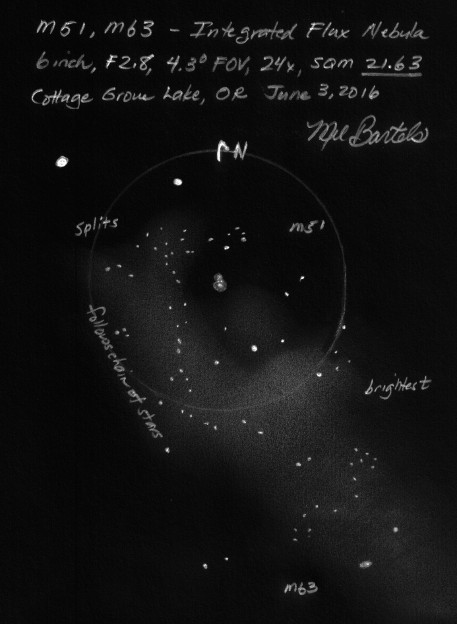
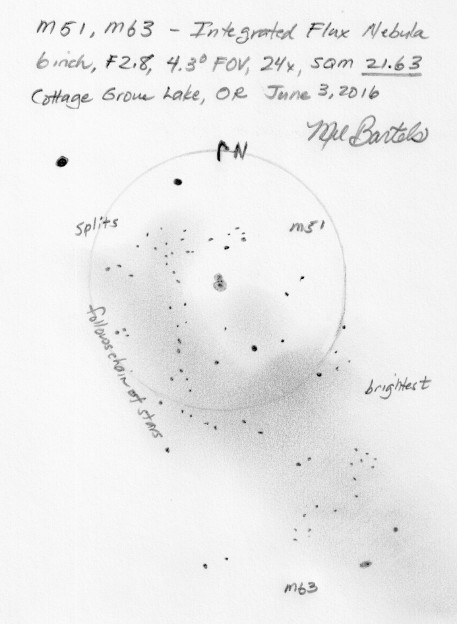
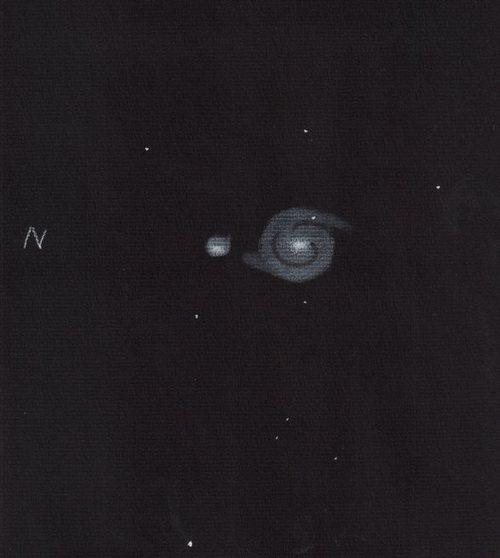
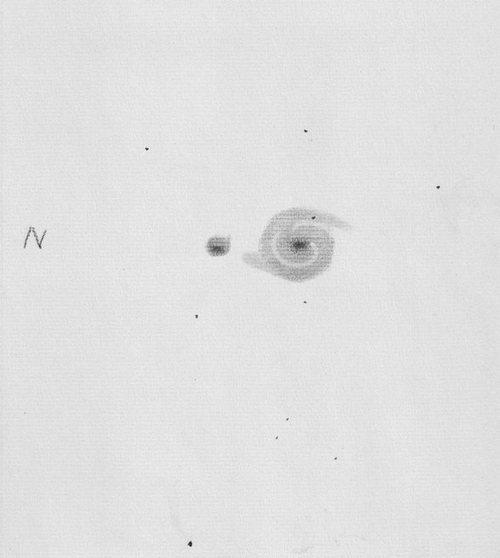
Four drawings of the Whirlpool galaxy (M51): 30 inch f2.7, 25 inch f2.6, 13 inch f3.0, 6 inch f2.8 and a 8 inch f7 from back in the day (white on black). The drawings show the Whirlpool from a variety of apertures, magnifications and fields of view.
My drawing of M51 using the 30 inch showed more resolved IFN than I see with smaller scopes. I used Howard Banich's drawing of M51, the best drawing of M51 ever done, to observe from. I didn't have it with me at the eyepiece; instead I got the general idea ahead of time and went looking to see what I could see. I didn't try for all that Howard saw, just much of it. In particular, I wanted a larger perspective to capture the IFN clouds in more detail than I've seen before with smaller scopes. What's interesting is that the patches of very faint light surrounding the galaxy suggest very faint outer arms. Also interesting is that the galaxy at high power in my 30 inch begins to take on a more wind-swept view. I wonder if the observers at Lord Rosse's 72" caught that sensation of the hairy wind swept spiral arms. No doubt they were coming to grips with the overall spiral nature. The drawing took me a number of nights. There's so much to see.
A great book about Lord Rosse is "William Parsons, 3rd Earl of Rosse: Astronomy and the castle in nineteenth-century Ireland". Howard's drawing and the effort he went to is here.


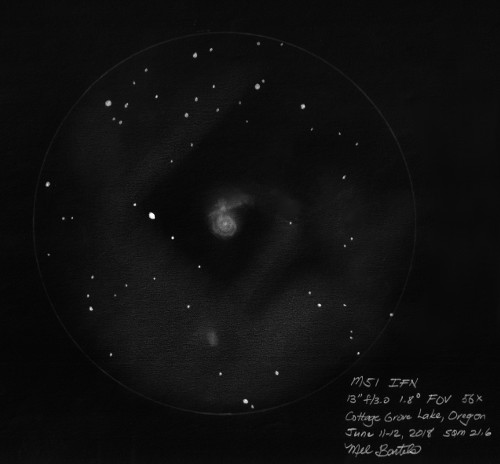
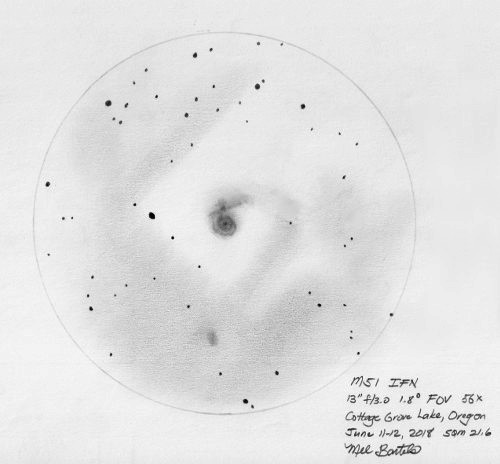
Superb transparency last night - 21.6 at my house. I had previously found IFN near M51 stretching to M63 with the 6". I wanted to sketch what I could see with the 13" before I train the 25" on it. Spent all night on M51. What was striking was the extensions off the secondary galaxy - unmistakable broad smears that on one side almost blended into a nearby IFN. The grayness of the galaxies was a nice contrast with the white stars.
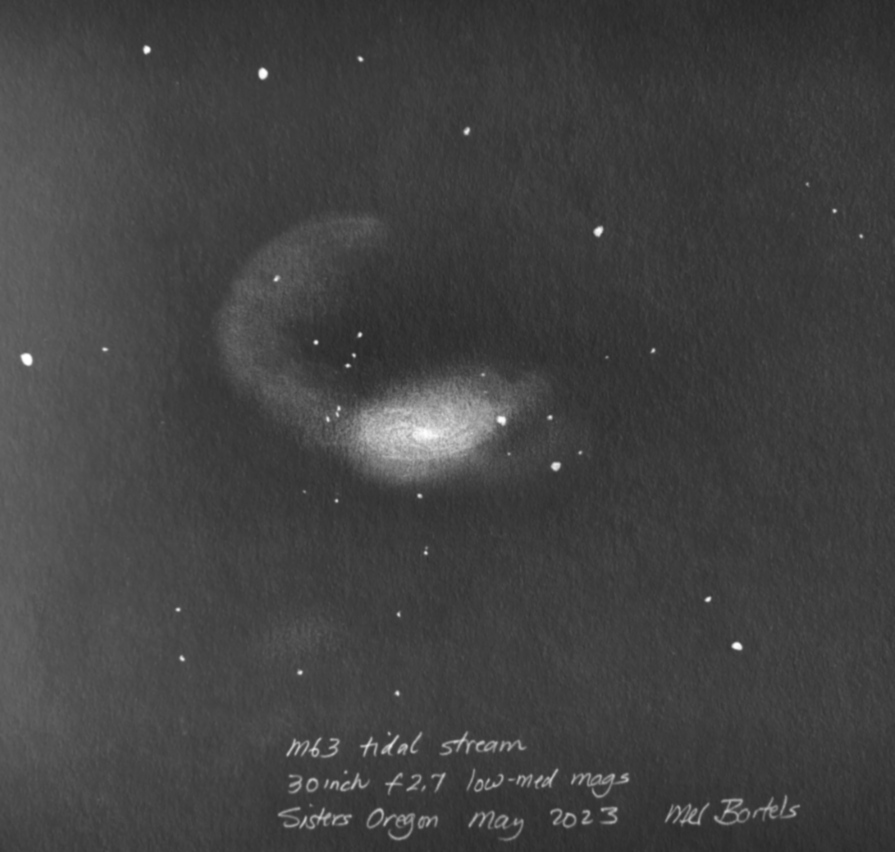
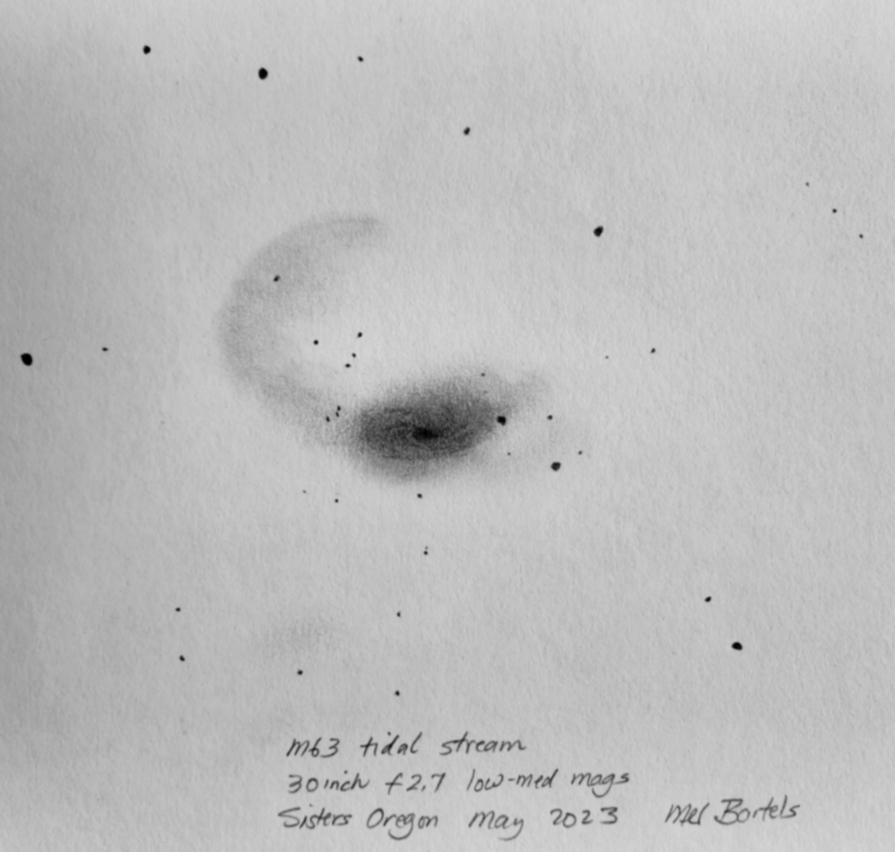
M63, the Sunflower galaxy, and its little known tidal disruption with the 30 inch f2.7.
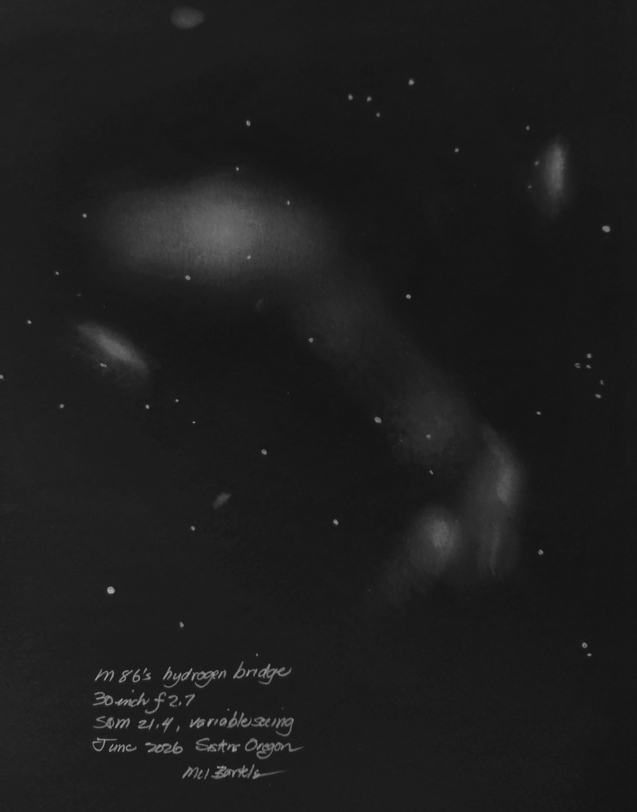
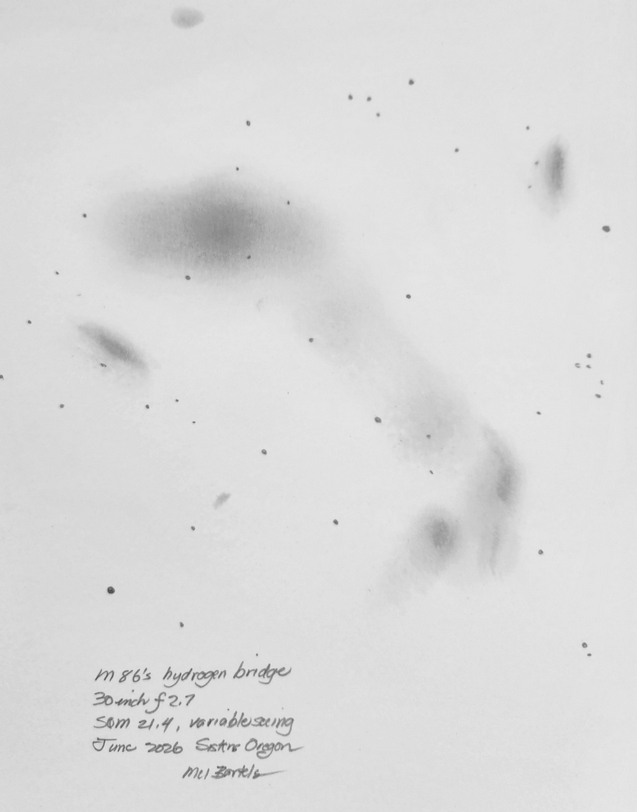
M86 hydrogen bridge to NGC4438 with the 30 inch f2.7.
I immediately saw M86's hydrogen bridge as a ghostly arc, like a stain, in the field of view. Experimenting a bit, I found that medium-low magnification was best, and that a NPB filter helped a little. I'm sure I saw it because I noticed an arc with two blotches and an extension beyond M86. That matches the digital image that I inspected in detail later. I'm surprised how easy this was to see and how I've missed it for decades. I guess that sometimes, knowing where to look is 9/10ths of seeing. I expect that this will can be seen with a variety of scopes, even small ones, because of its large apparent size. Speaking of size, if this hydrogen bridge is truly connected to M86, then its size is incredibly massive. The digital image is here.
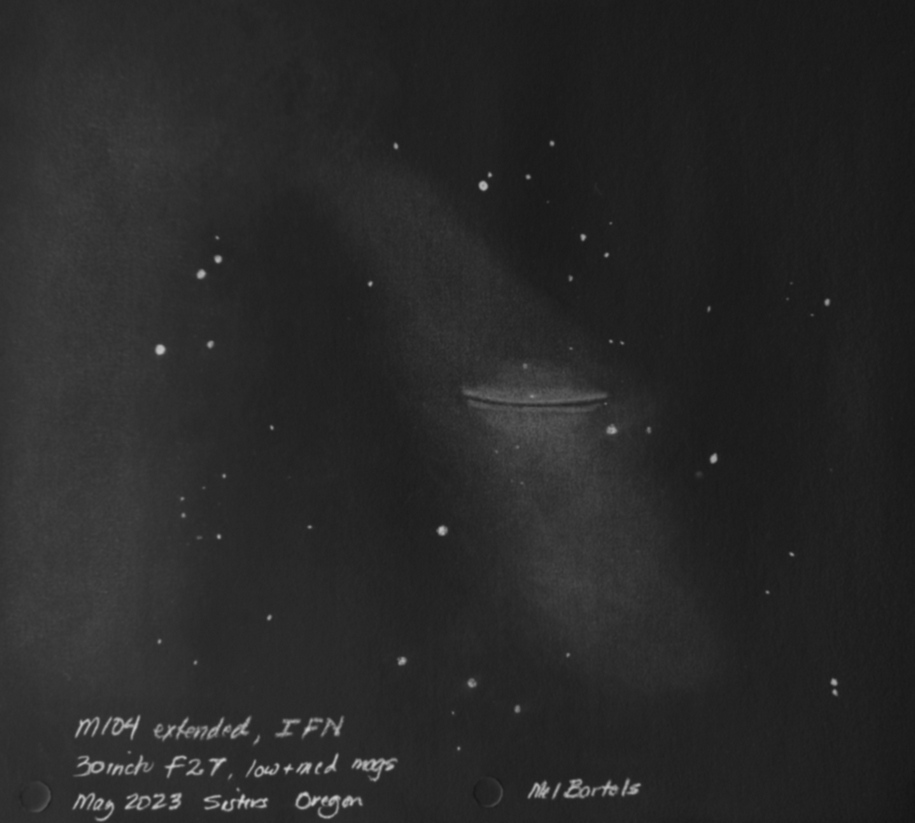
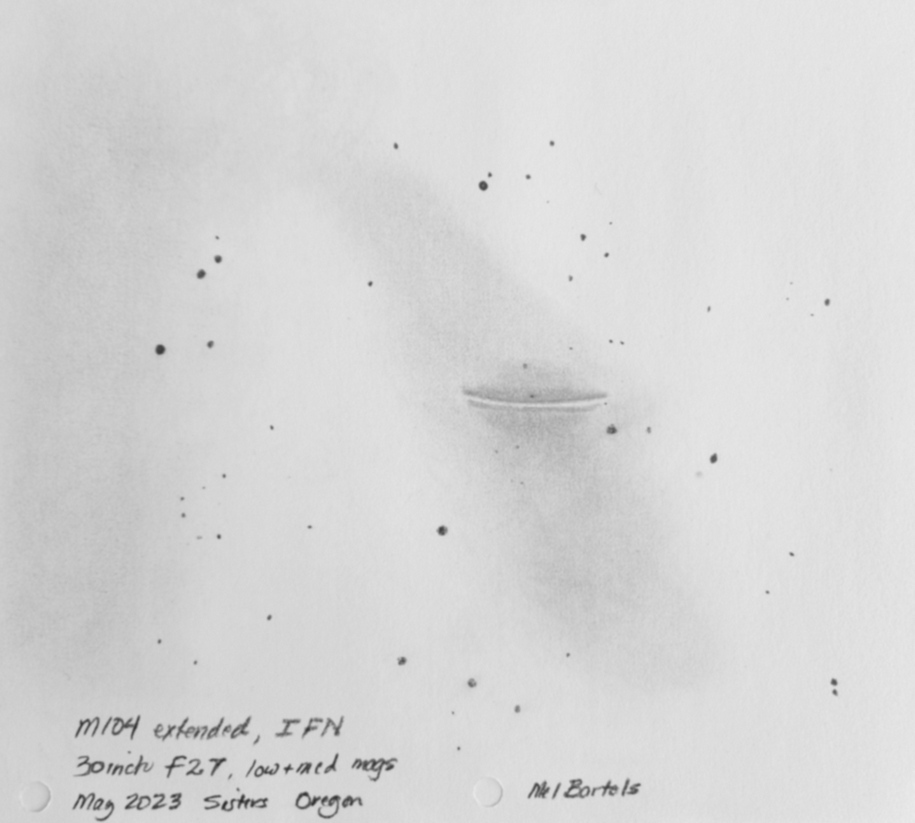
M104 tilted tidal stream halo + IFN, using my 30 inch f2.7.
I didn't realize it at the time, but reviewing later, I succeeded in detecting part of an extensive halo with extended tidal streams.(this is not an IFN). Here are some references.
literature
Astrobin image. Note that the image is reversed left/right from my eyepiece view.
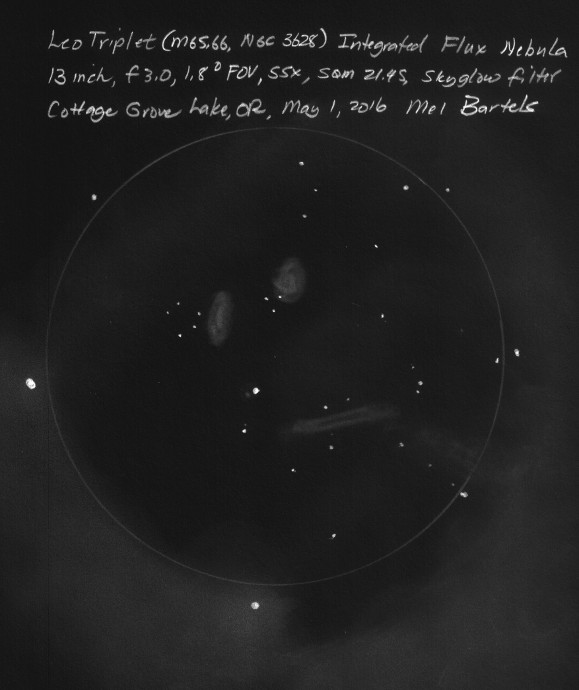
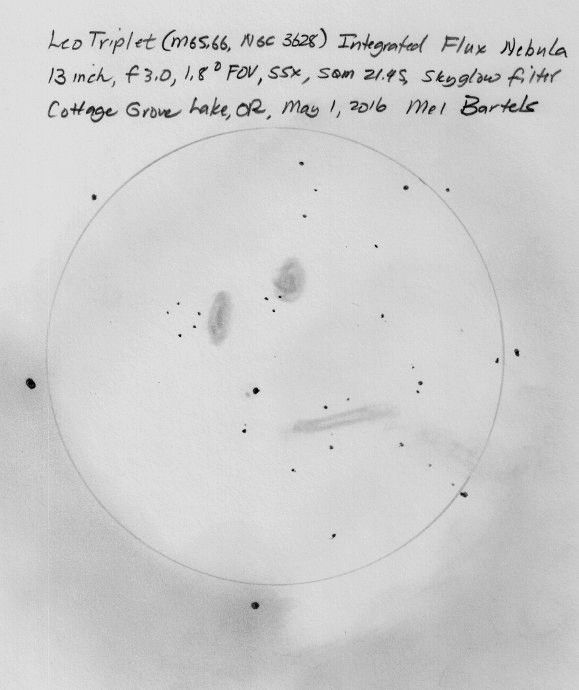
Leo Triplet (M65, M66, NGC 3628) with IFN using my 13 inch f3.0. This is a simply beautiful view, the large galaxies with their dusky gray to nearly white hues with the IFN encircling the galaxy trio. For decades I've enjoyed the trio, yet simply failed to notice subtle changes in the foreground glow. I also managed to glimpse portions of NGC 3628's tidal extension that reaches to the IFN. A Skyglow filter helped with the IFN, but dimmed the galaxies.
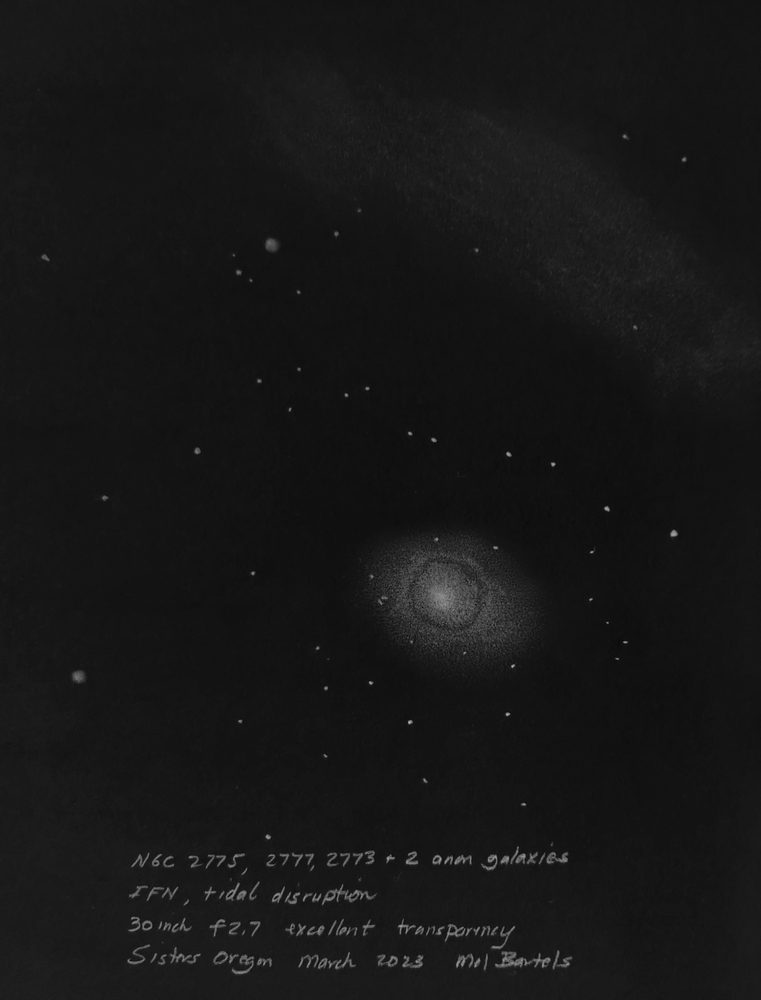
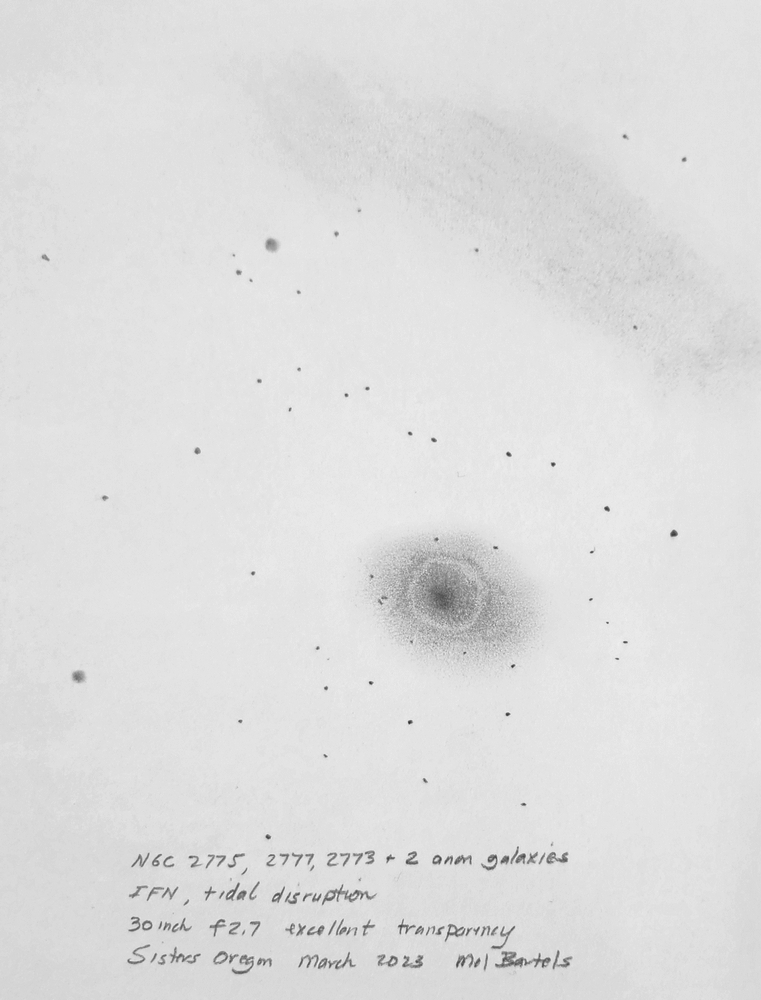
NGC 2775 tidal disruption + IFN + NGC 2773, NGC 2777 + 2 anon galaxies using my 30 inch f2.7. NGC 2775's ring is interesting in its own right.
A very wide field view of NGC 2903 and IFN
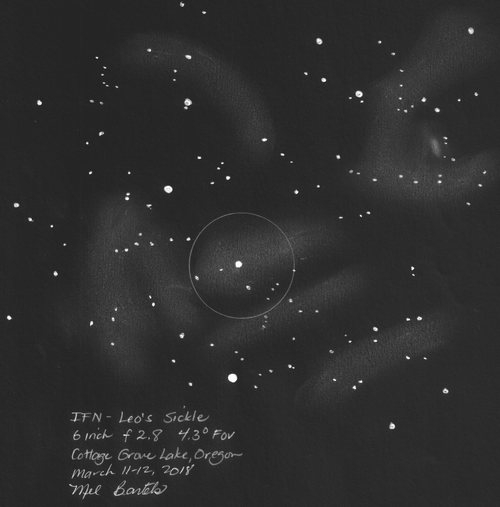
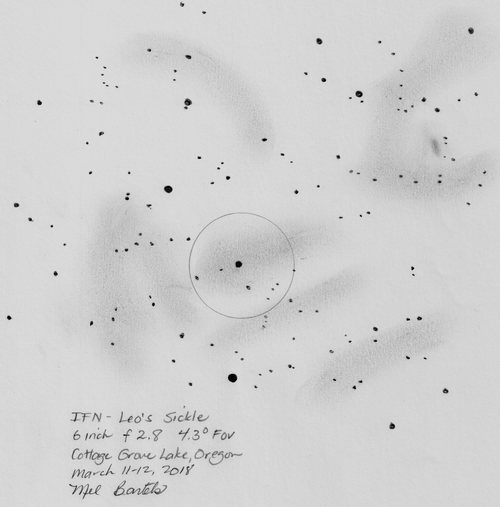
NGC 3077 and IFN.
The 'other' galaxy (next to M81/82) isn't bad in a big scope. Reminds me of galaxies in much smaller scopes.


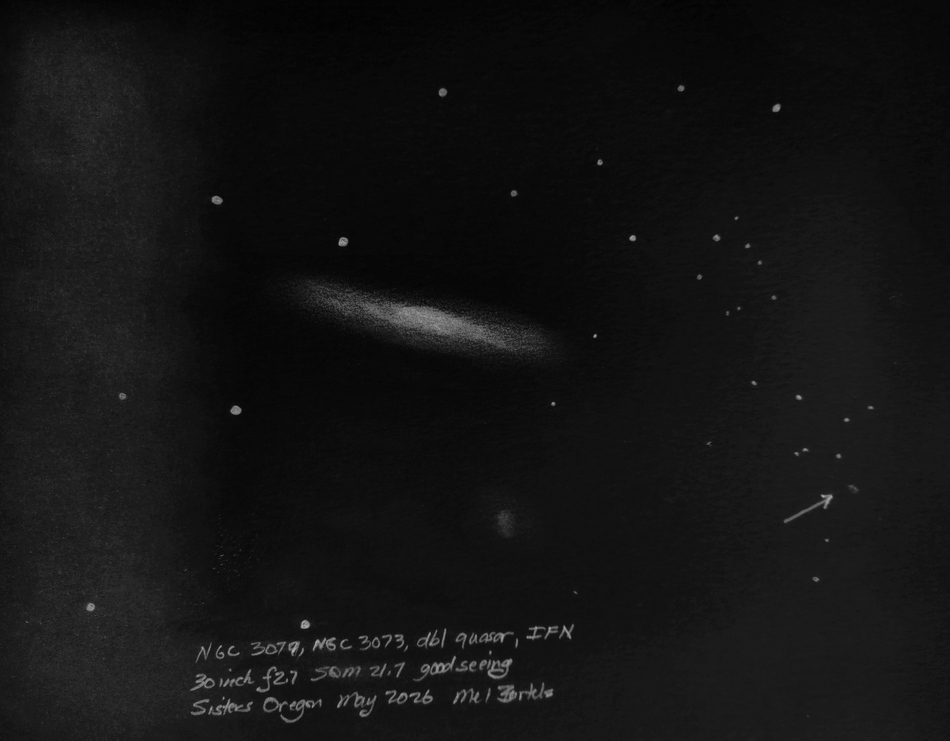
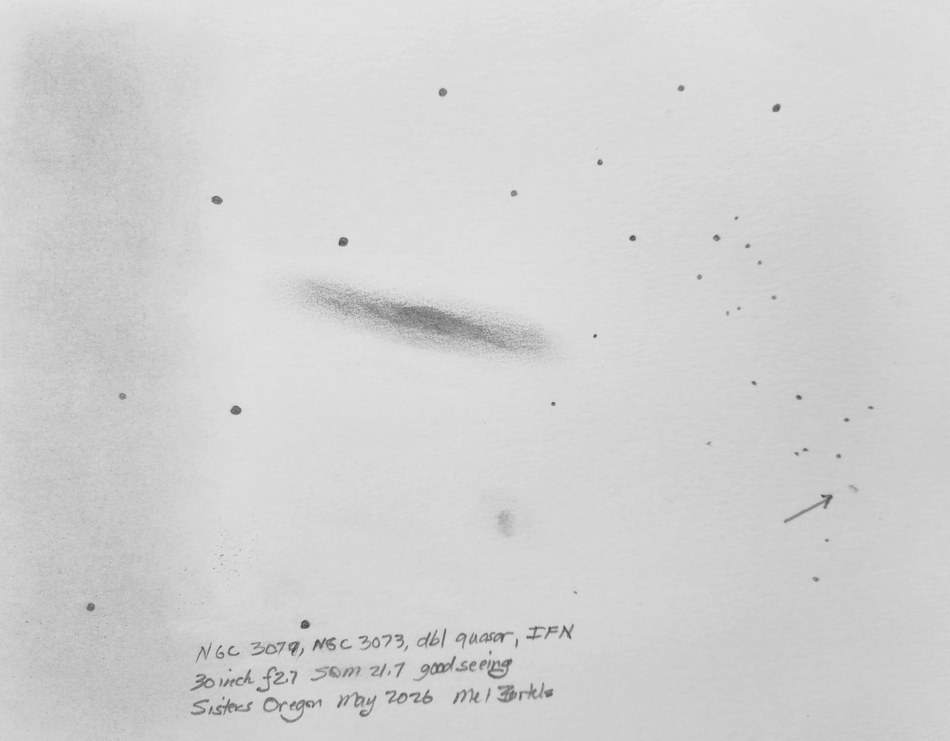
NGC 3079, NGC 3073, Ursa Major dbl quasar, IFN, 30 inch f2.7.
Another great night, SQM 21.7, decent seeing. To find the double quasar in Ursa Major, I started with NGC 3079. Wow, what an imposing galaxy! And a wall of IFN to the side. The double quasar is quite faint, sometimes looking like two fuzzy stars, other times looking like a fuzzy elongation, depending on seeing. The separation is listed as 6 arc-seconds. Sure seemed closer than that. And the magnitudes are listed as 17.4 and 17.1, though being a lensed quasar, then can vary. The distance is something like 9 billion light years and the intervening invisible galaxy is maybe 4 billion light years away. What was really special about the view was the depth of the field: IFN at a few thousand light years, the galaxy at 50 million ly, the lensing galaxy at 4 billion and the quasar at 9 billion ly.
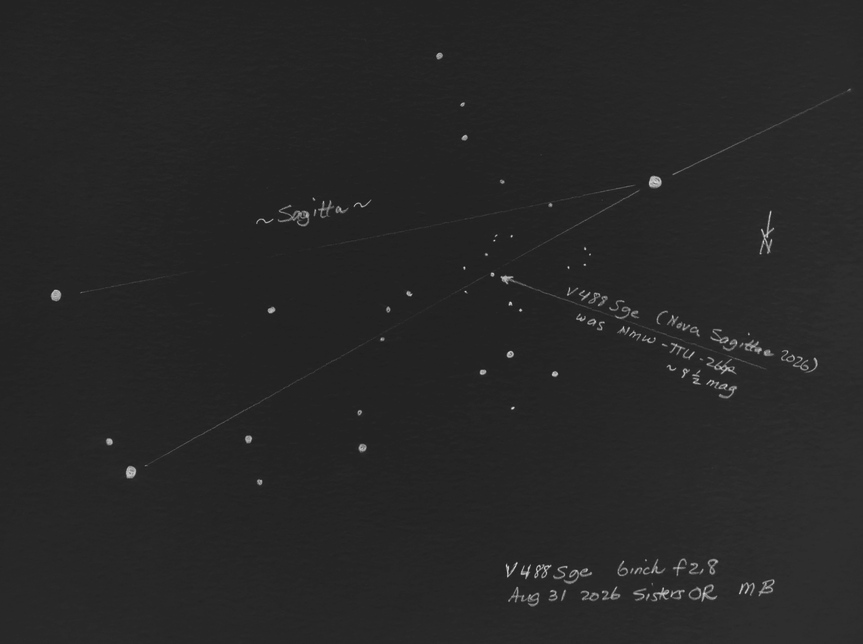
Nova V488 Sge (Nova Sagittae 2026, also known as PNV J19450648+1822422), was NMW-TTU-26bp. 6 inch f2.8.
As the skies darkened after sunset, the high clouds dissipated, the Milky Way showed itself nicely, and lots of stars appeared in the little 6inch f2.8 scope. Star hopping the old fashioned way, I found my way to the field. The nova was there, but there were faint stars adjacent that made the identification less than crystal certain. High power resolved the stars, spread them out, and brought more into view. The nova could masquerade no more. Discovered a week before, the nova jumped from 19th mag to between 6 and 7 mag, depending on who you read. Fading erratically, I estimated the nova at 8 1/2 magnitude. The high clouds returned with the nearly full Moon rising, so that was it for the evening's observing.
NGC 3310 with tidal shield, 30 inch f2.7.
NGC 3310 is an interesting galaxy. It's a super bright featureless blob at first glance but with some time I could see a portion of the shield and detect the spiral structure.
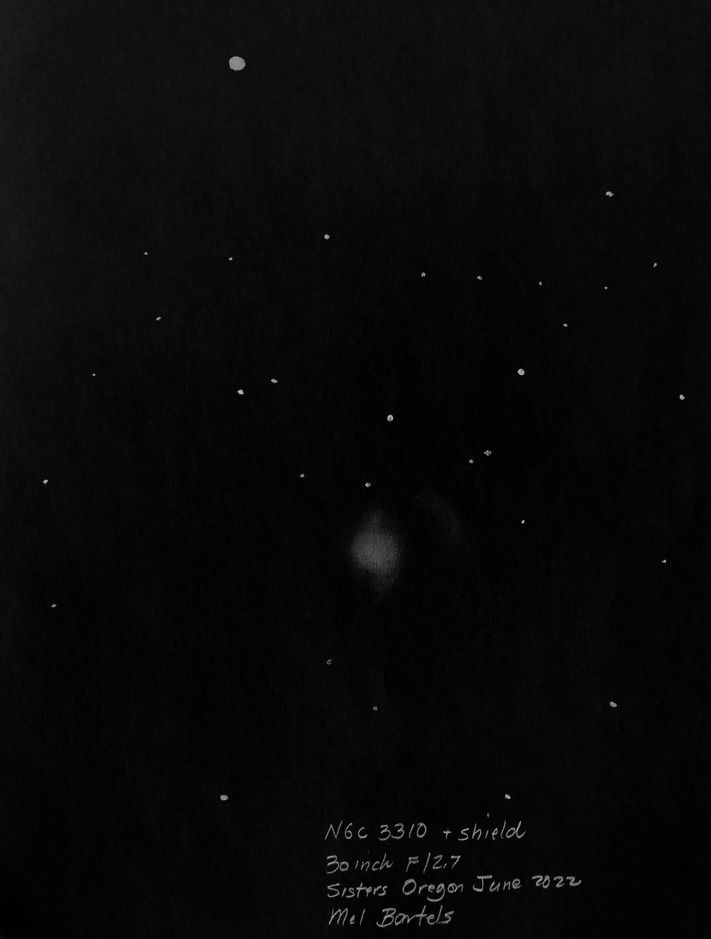
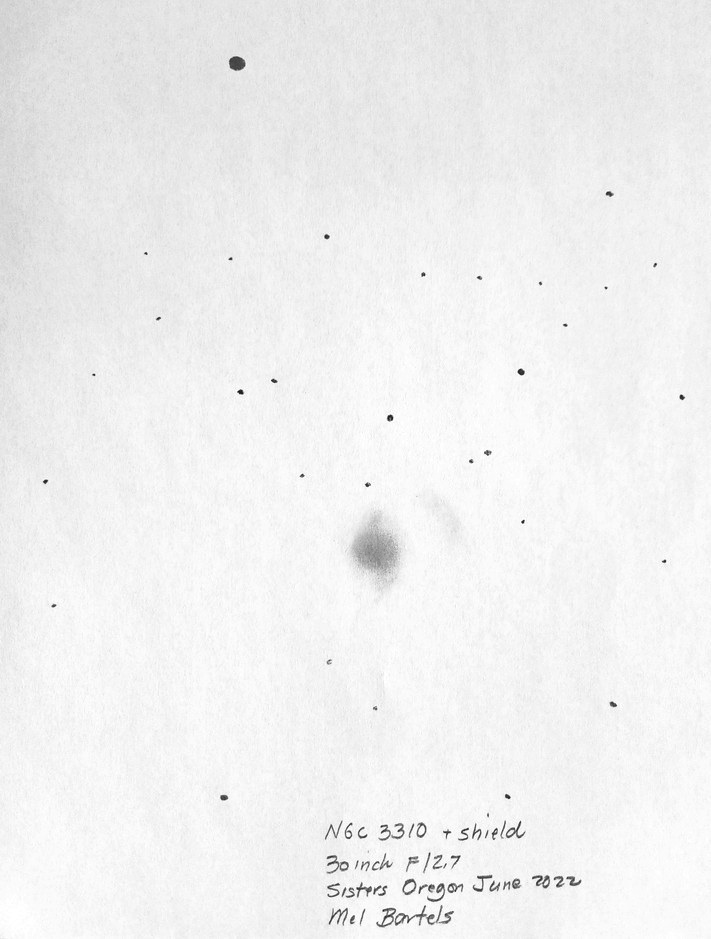
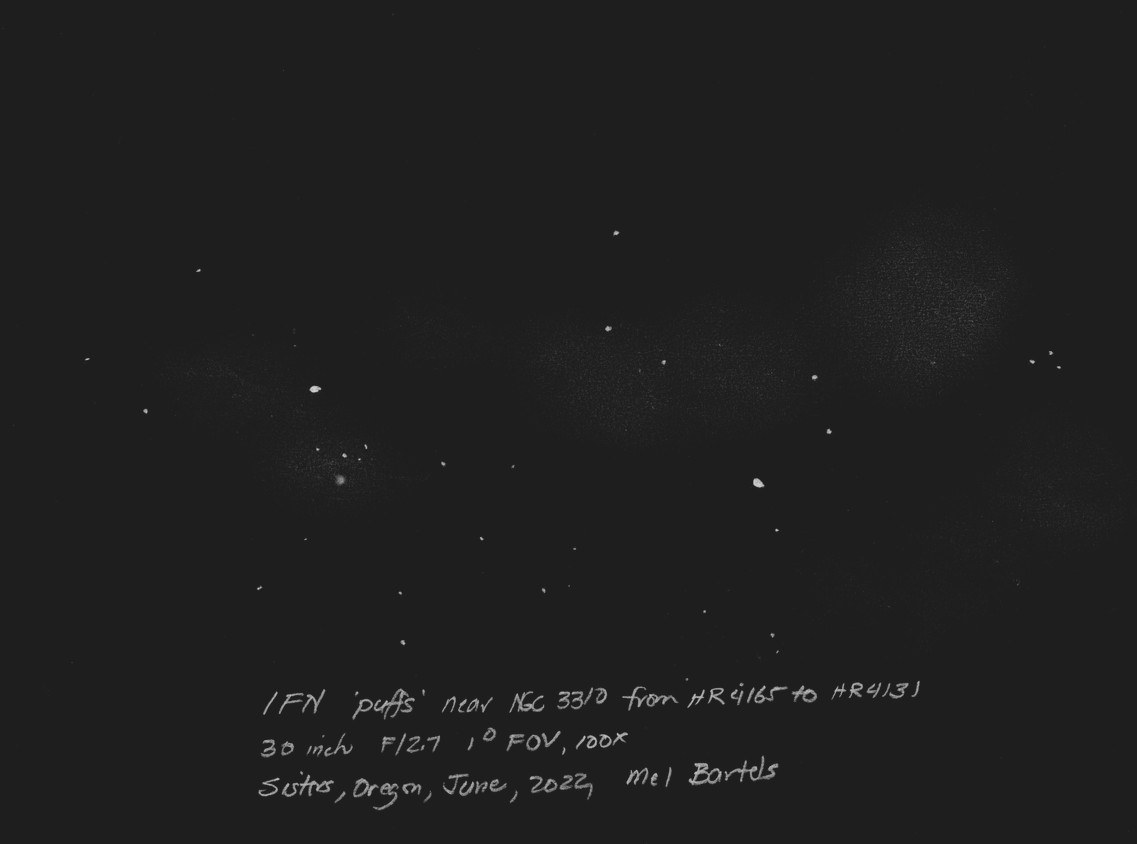
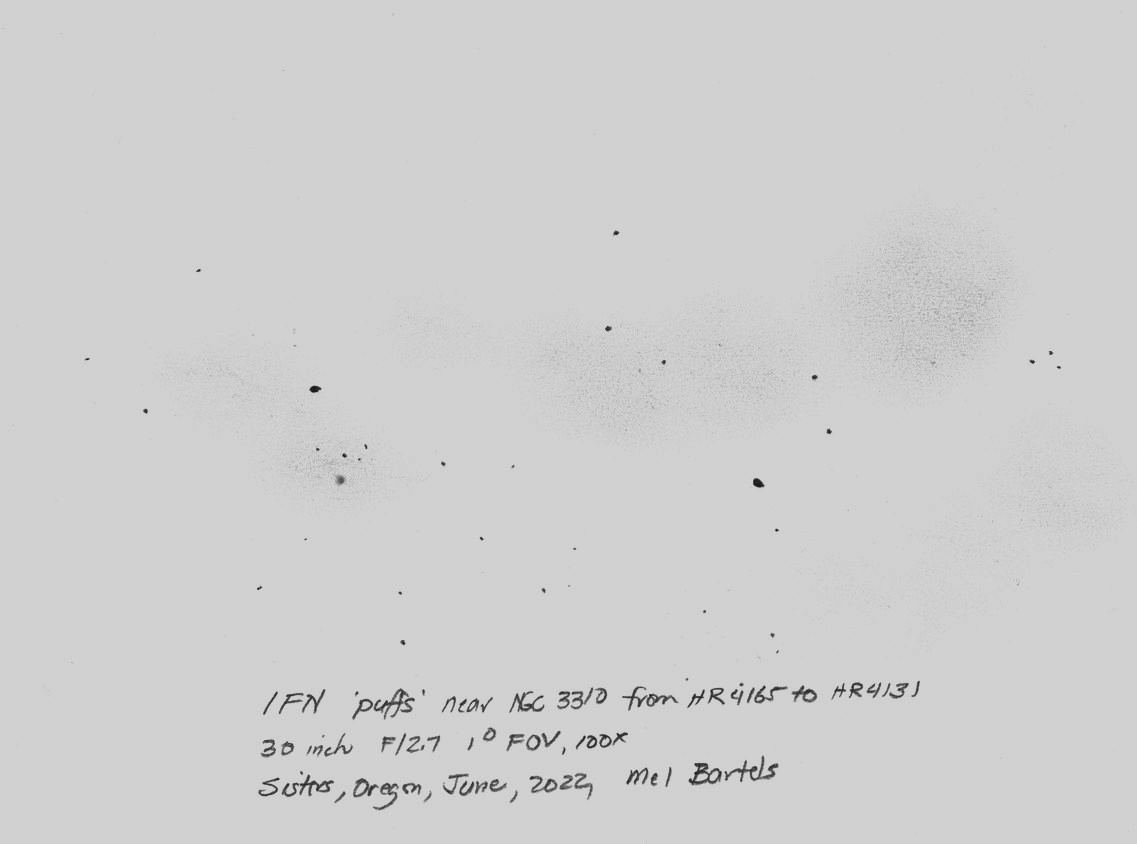
A wide field view of NGC 3310 using the 30 inch f2.7. Here, I move the scope about, creating a drawing by combining fields of view.
NGC 3489, 30 inch f2.7.
I could not see a tidal extension that a deep digital image shows is perpendicular to the galaxy's nucleus.


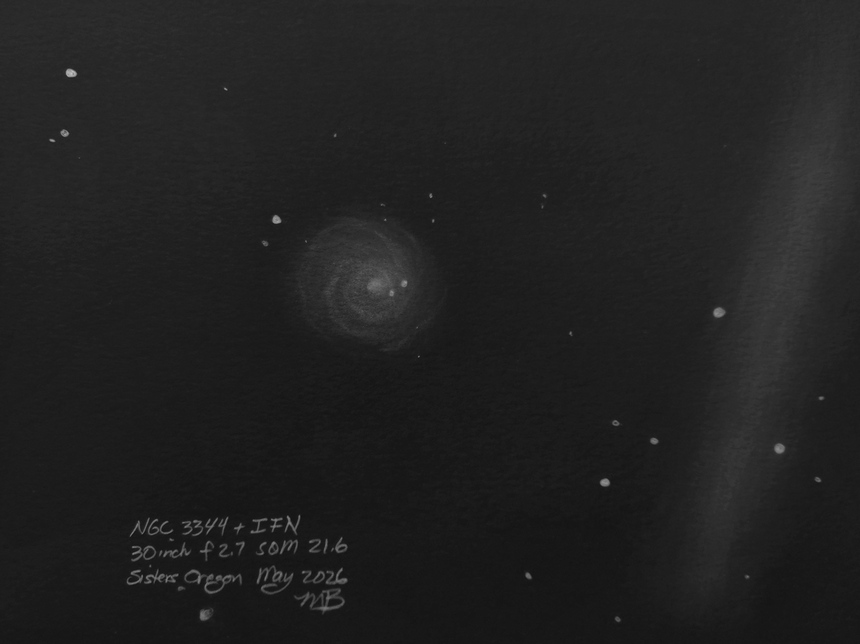
NGC 3344 is a beautiful face-on spiral with a sharply delineated IFN bar to the side. Unexpectedly a really nice view. Using the 30 inch f2.7. SQM was 21.6, nearly as good as it gets here. But cold and windy. And clouds moving in after I finished with NGC 3344. So some galaxies got bumped to the next night, or maybe next year if weather's bad until the Moon interferes and June becomes too late.
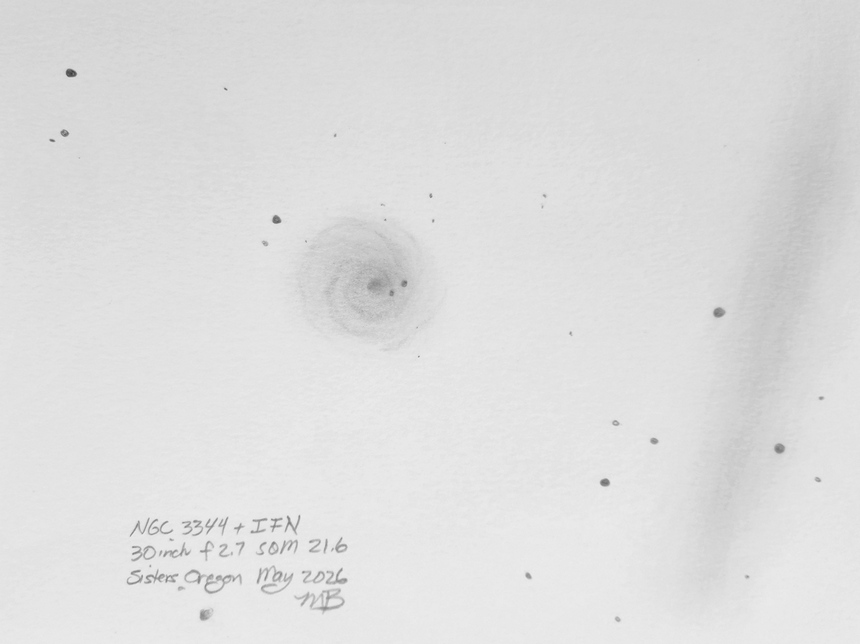
Wide field and highest power field drawings of NGC 3353 with faint IFN streaks. 30 inch f.2.7.


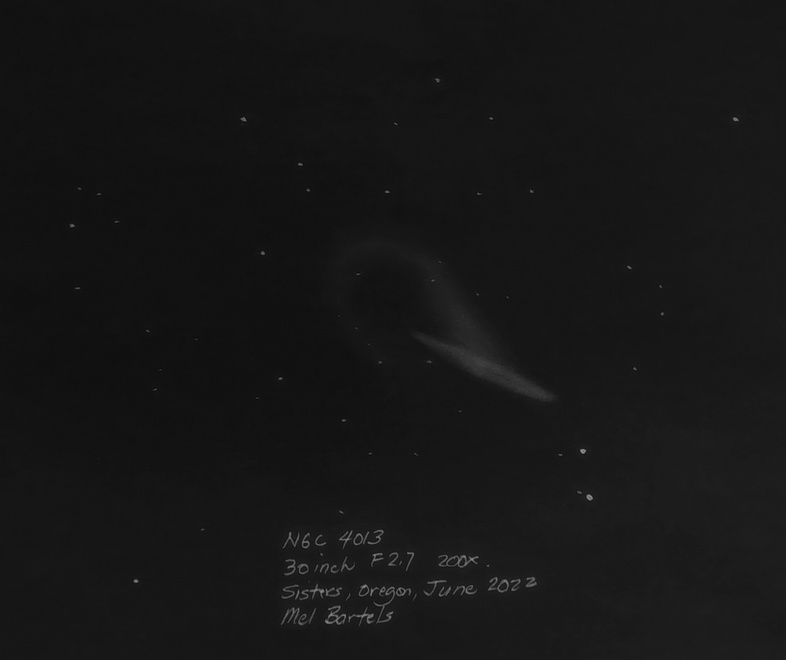
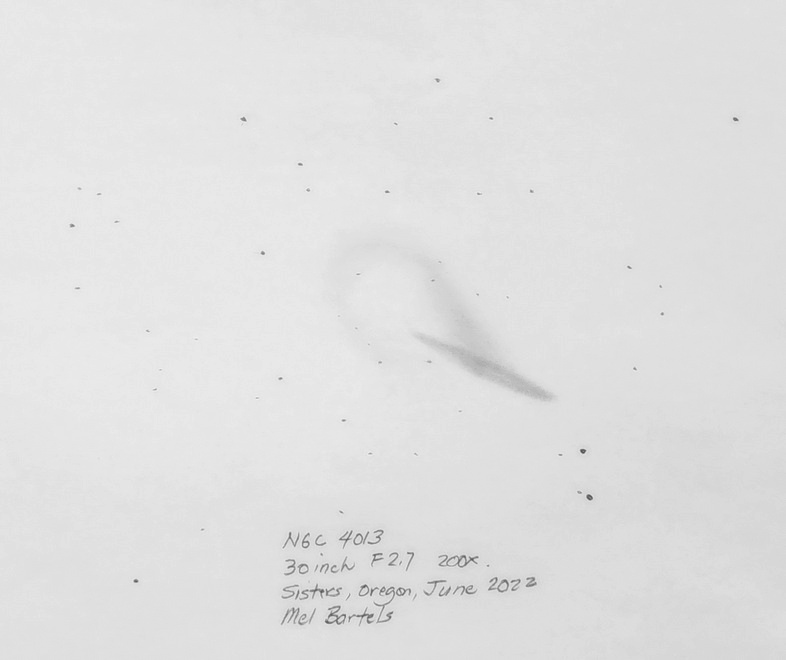
NGC 4013 with its beautiful tidal stream that loops back onto the galaxy, 30 inch f2.7.
On an incredible night (21.9, rock solid seeing) I found the tidal stream to be quite straightforward, holding it nearly continuously. Really pretty.
NGC 4236 4128 + ISM, 30 inch f2.7.
NGC 4236 is a monster galaxy in the 30 inch. And there are bright bands and arcs and blotches of IFN/ISM throughout the field. Looking at digital images afterwards, there appears to be a lot of hydrogen alpha along with a blue streak, so this suggests ISM InterStellarMedium more than IFN IntegratedFluxNebula.


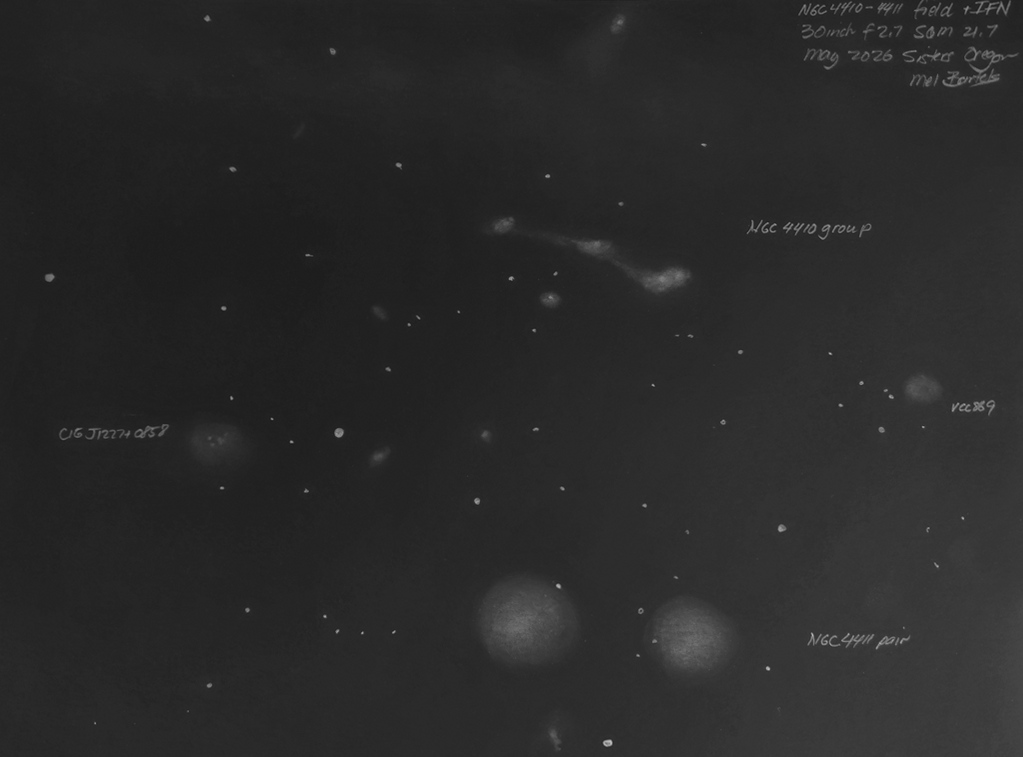
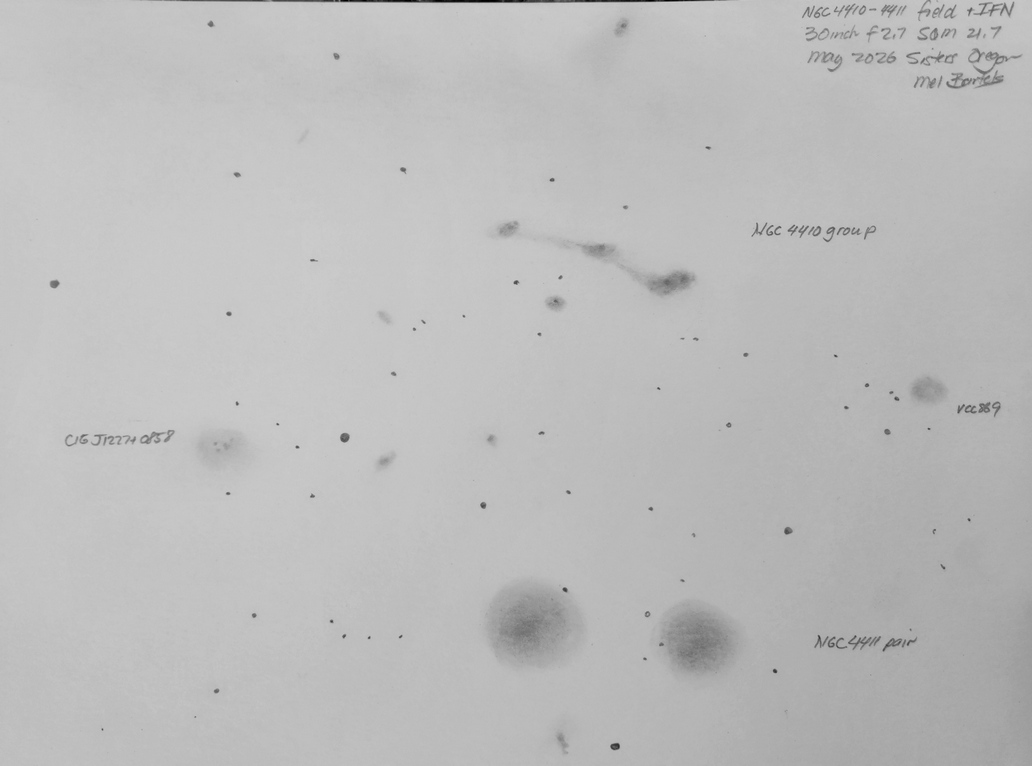
NGC 4410, 4411 complexes + IFN. 30 inch f2.7.
A transparent night! 21.7 by 10pm. These galaxies look so distant and faint and tiny at low power. But as I get used to the view and work my way up through my eyepieces to high power, the galaxies begin to show pleasing character. Especially the busy and varied field of the NGC 4410 group and the NGC 4411 group.
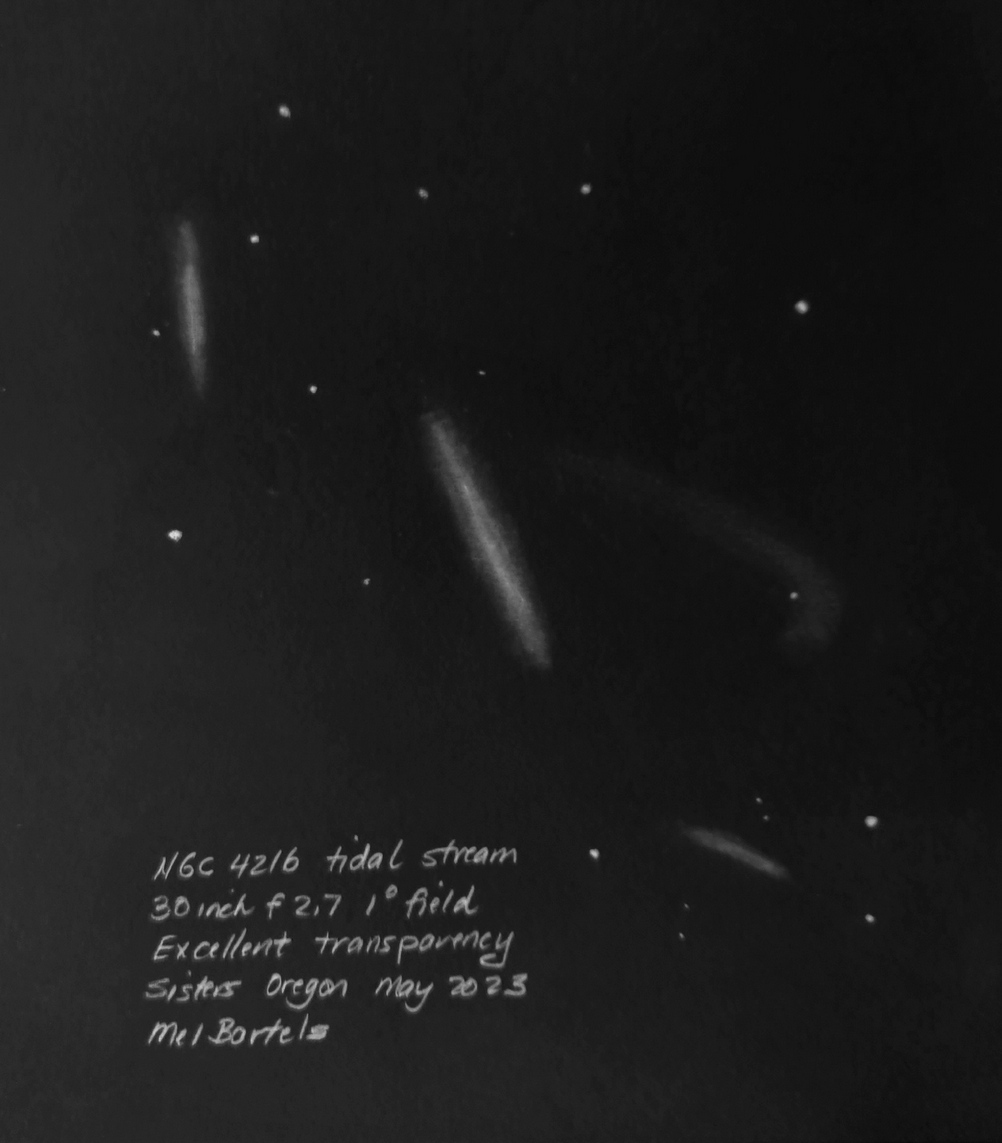
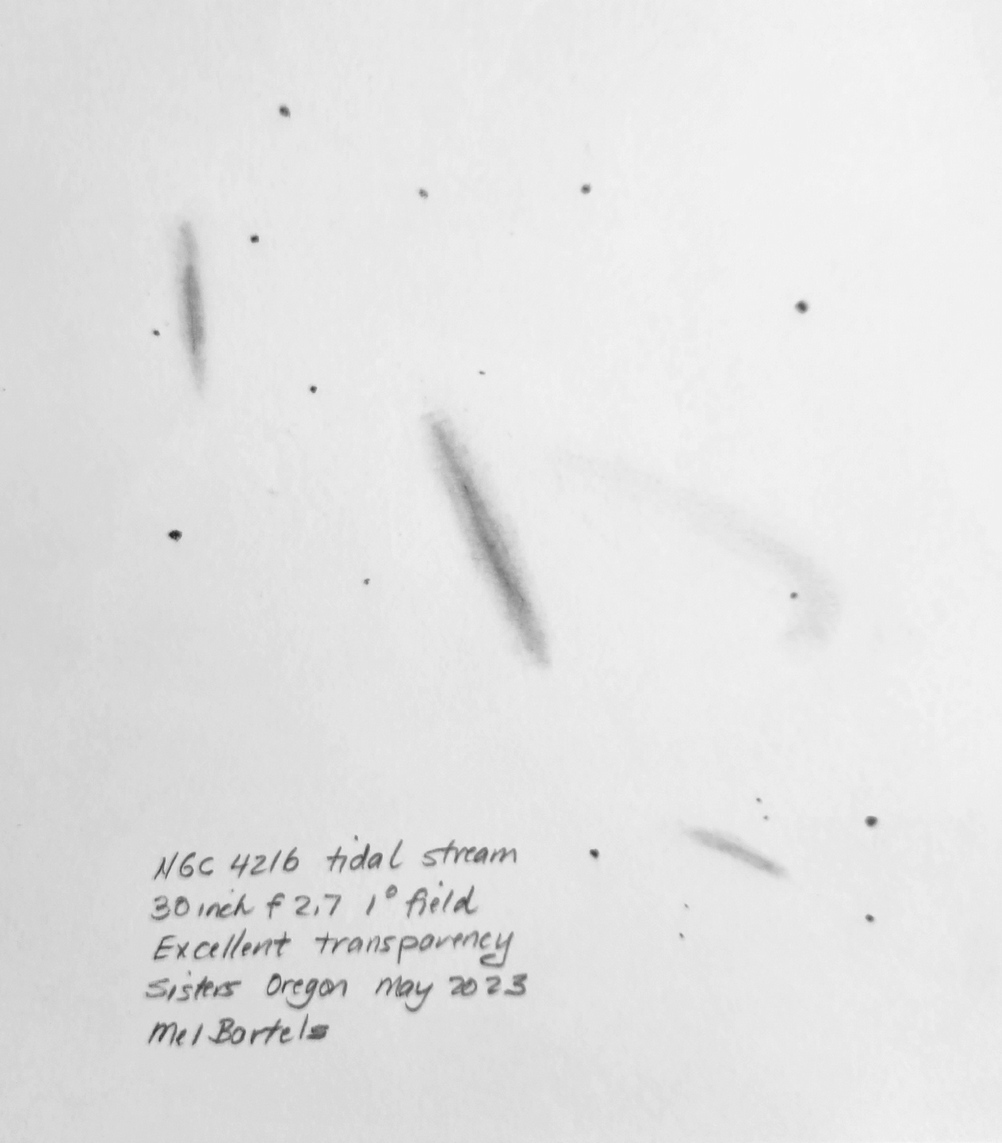
NGC 4216, 30 inch f2.7.
Pushing the scope down towards the tail of Leo then eastward to NGC 4216's grouping of three edge-on galaxies, I saw the kinked tidal stream almost immediately; very low-contrast though. Every field of view was filled with galaxies of all sorts of brightness, and shape and structure and detail. Richest-Galaxy-Observing. If I lingered, more dark charcoal small galaxies would come into view.
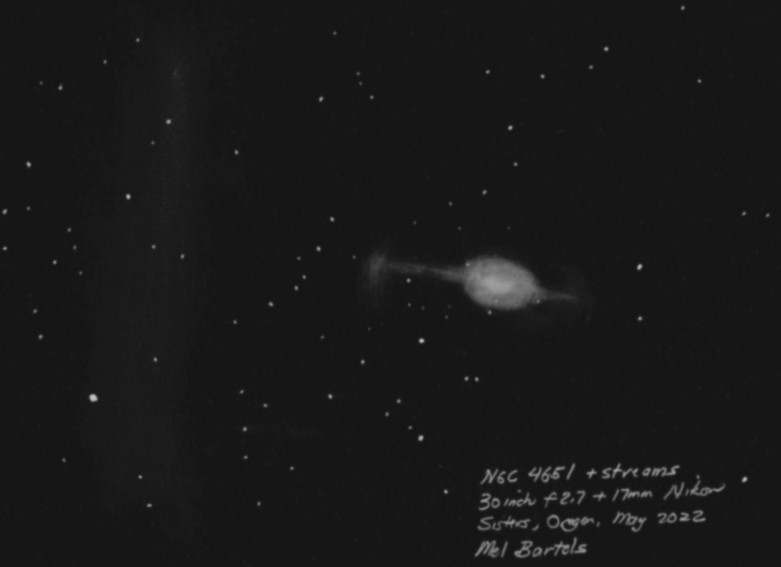
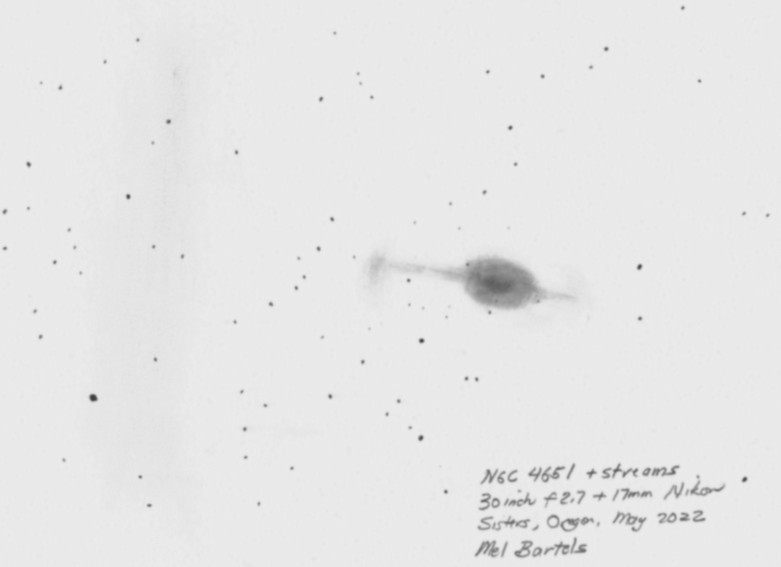
NGC 4651 with its arms with shields tidal streams; IFN, 30 inch f.2.7.
NGC 4725 4712 4747 IFN, 30 inch f.2.7.
Similar in style to NGC 3893 but with a band of IFN.


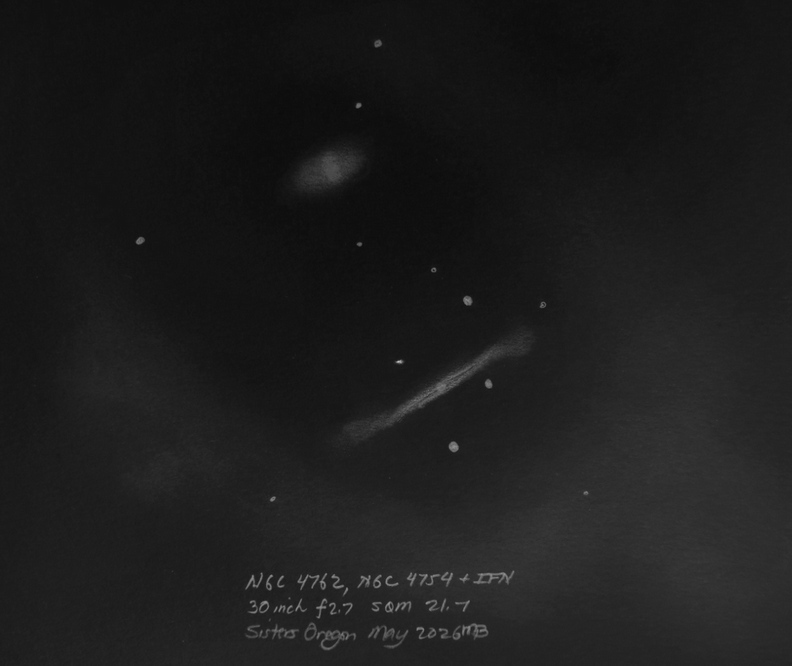
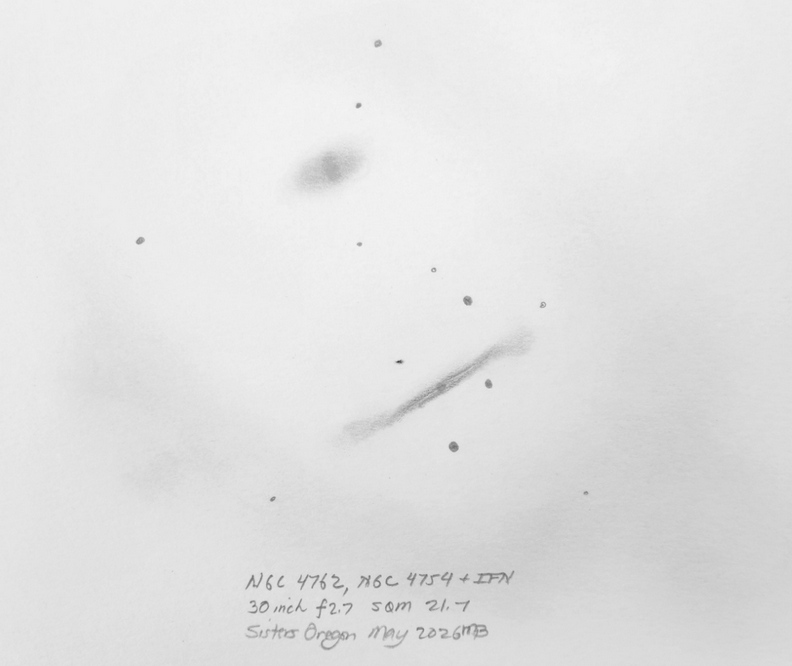
NGC 4762 NGC 4754 IFN, 30 inch f.2.7.
This galaxy is really interesting. The ends of the galaxy appear to warp first one way, then the faint extensions warp the other way. With a nice dark lane and starlike nucleus. And surrounded by fairly bright IFN.
NGC 5247, 30 inch f.2.7.
The spiral arms appear ghostly, wrapping in a counter-clockwise direction.


NGC 5506 NGC 5507 IFN, 30 inch f.2.7.
The tidal stream is very faint; I drew it to one side of the stars which turned out to be correct. A band of IFN is nearby.


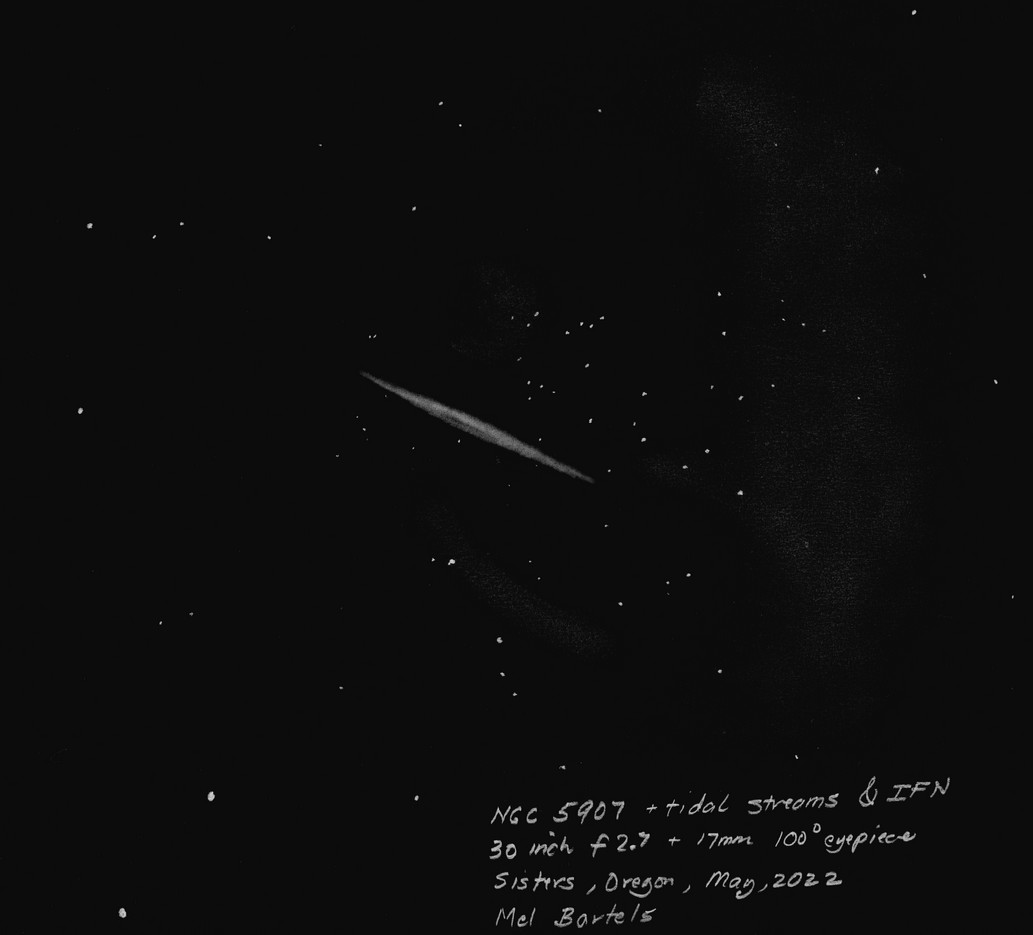
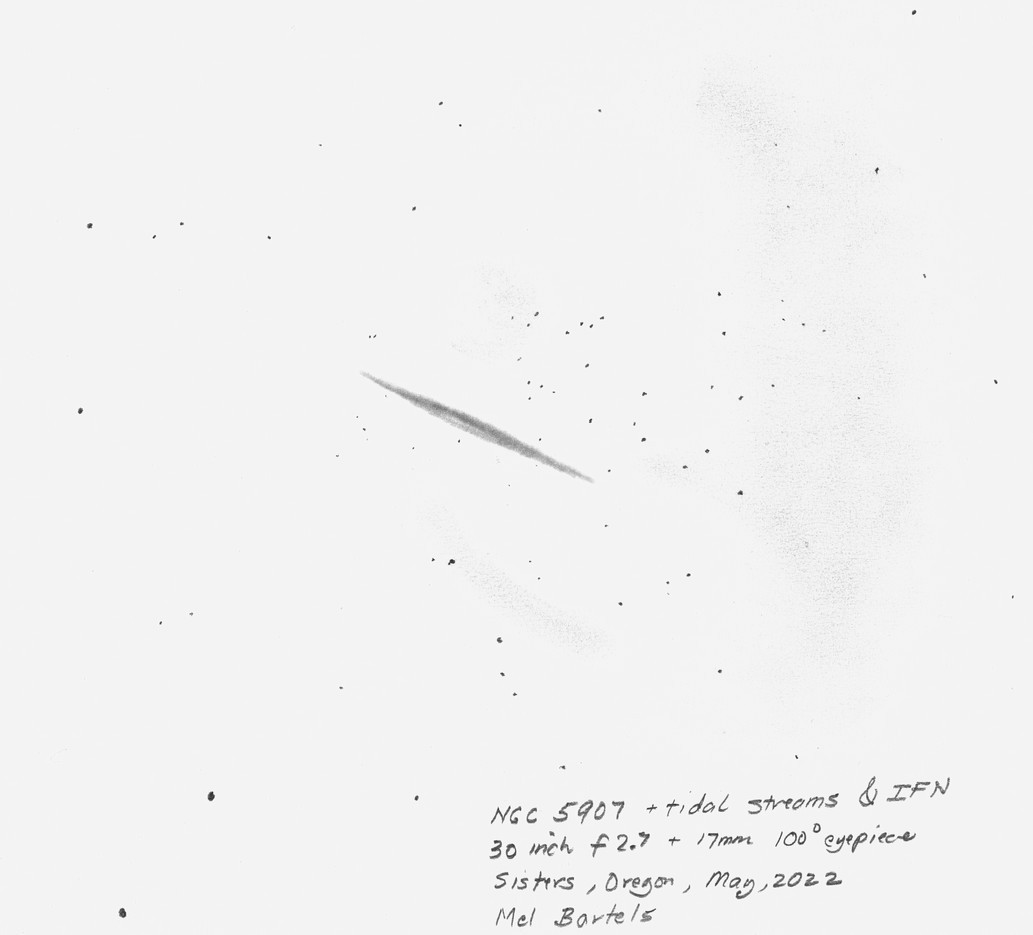
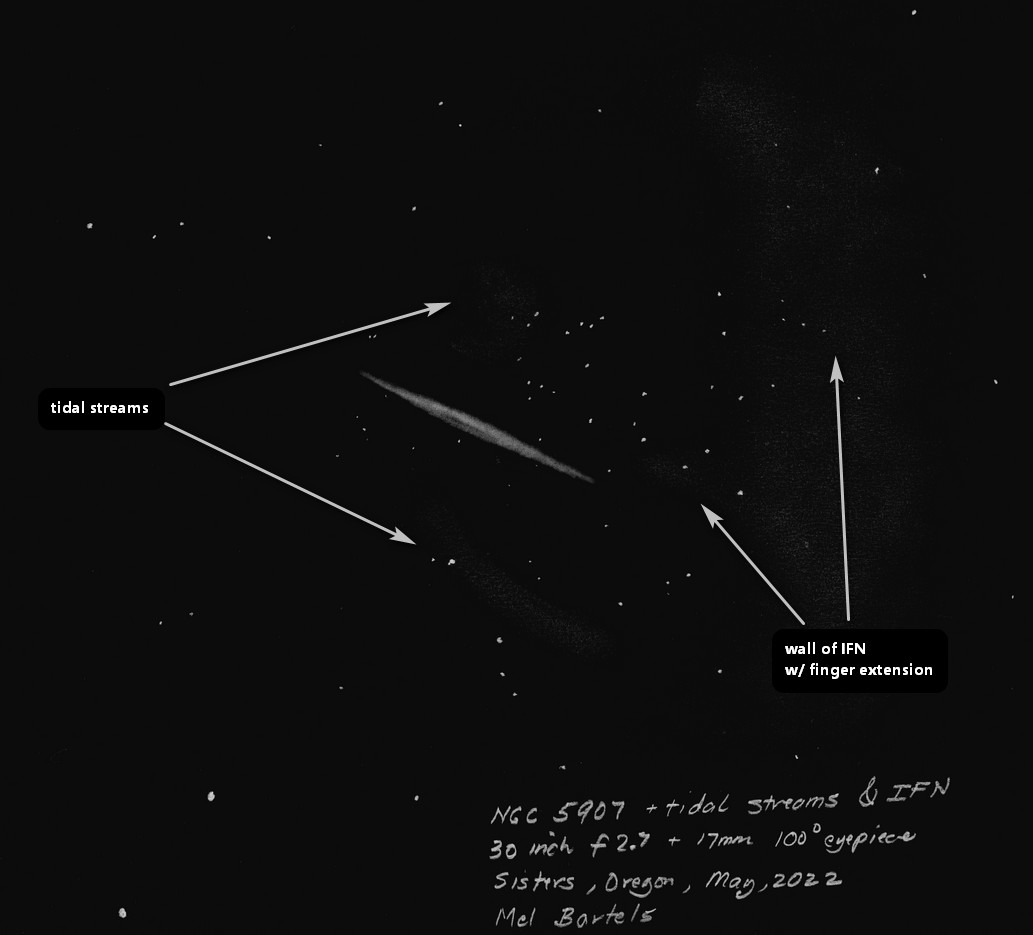
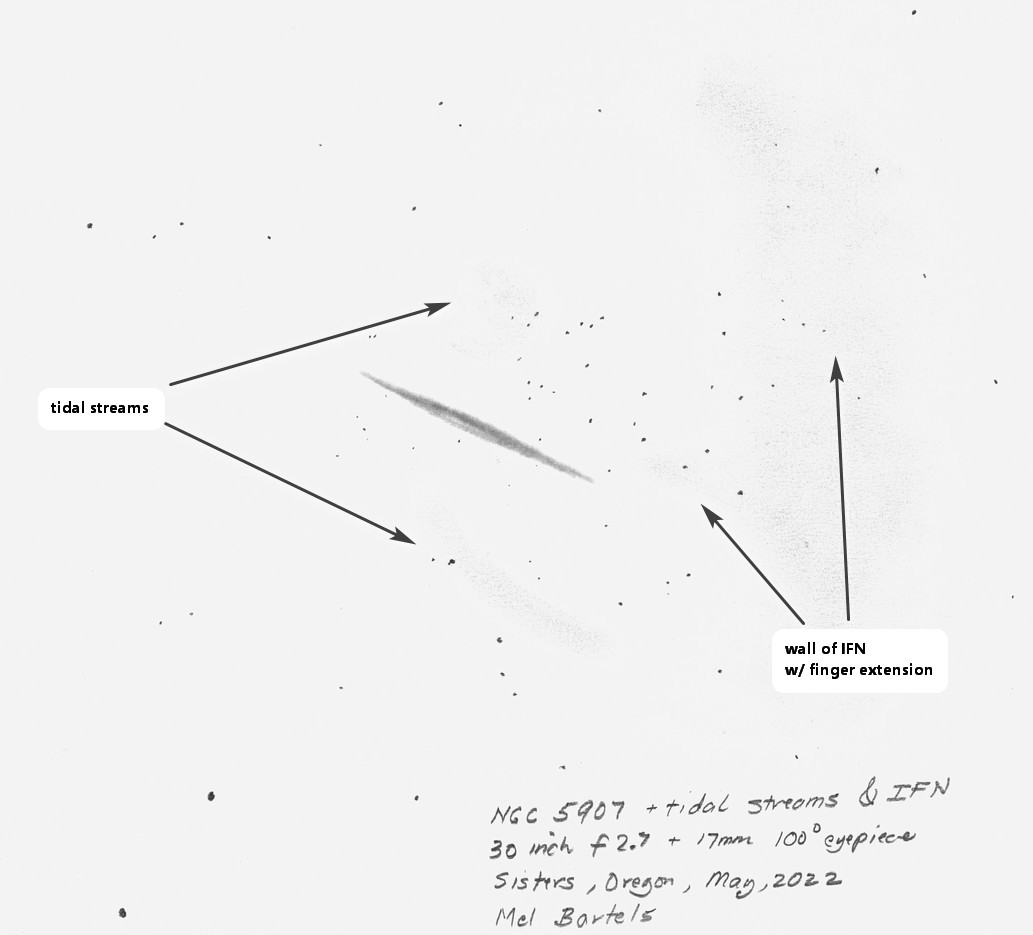
NGC 5907 with faint tidal streams, 30 inch f2.7.
Last night was beautifully transparent, dry, though a little windy and cold. NGC 5907, the so-called Splinter Galaxy, was so bright that I winced. I saw a bright wall of IFN to the side of the field. There was an IFN finger almost reaching the galaxy. And I saw the two tidal streams. I'm confident that I saw them because I saw and drew the stream arcing away from the galaxy as just inside a bright star. The region 'above' fleetingly looked much broader though otherwise easier than the arc 'below' which I saw inside of that bright star. Looking later, I saw digital images that confirmed the location. If I hadn't known about the tidal streams, I would have concluded that they were IFN, as the field was littered with very faint IFN. I used my 30 inch f2.7 with 17mm Nikon 100 deg eyepiece. That is becoming my goto combination for max exit pupil with max magnification to show greatest detail. Controversially, digital images show one or two loops. Edit: I finally found an image that shows the IFN, particularly the area to the 'upper right'. It is here.
I use a graduated series of checks:
- I suggest starting with 5.5mm-ish eyepiece exit pupil in 21.5+ skies. Plan on 1-2 hrs.
- The galaxy should be quite bright.
- The IFN nearby is relatively easy. See that next. Next time I'll spend more time here and define it better as it went way past the near one degree field I was using.
- The area to the top is both small and large in size. Several times it appeared to be rather large to me; I drew a narrower sized because that's what I saw more often.
- The tidal curve underneath is really indistinct and is more of a comma arc impression. It sits to the inside of that bright star, though I hope you forget this detail because this is a determining factor (what side of the star do you see the glow) to determine confidence in your observation. This is one of those, if you look w/ averted vision just so, it will pop out for a few moments.
- Go find something big bright bold and beautiful as Jerry Oltion says. It's a relief and by comparison will really stand out!
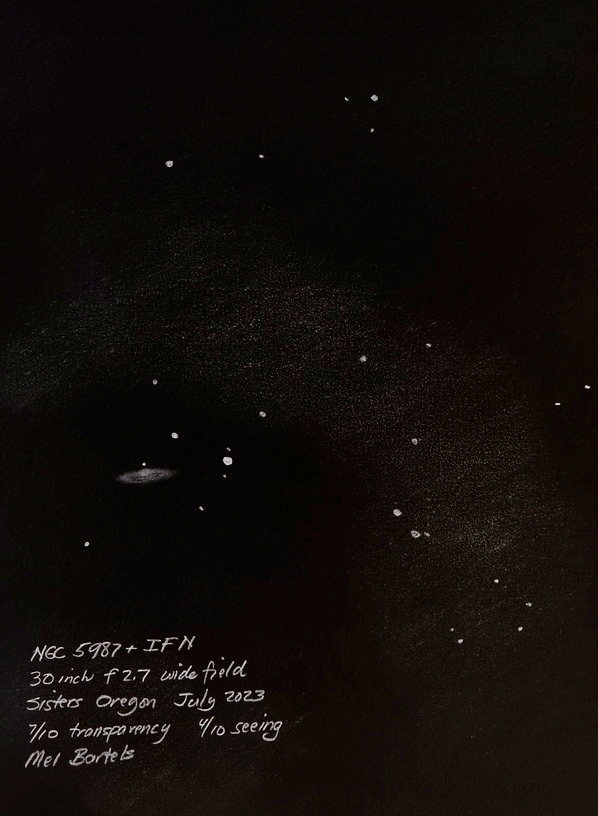
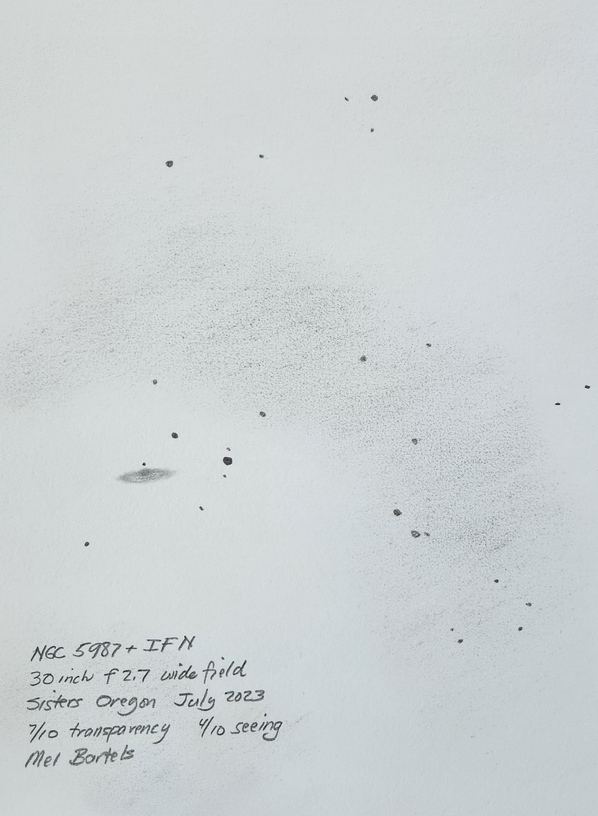
NGC 5987 + IFN, 30 inch f.2.7.
M87 + IFN, 30 inch f2.7.
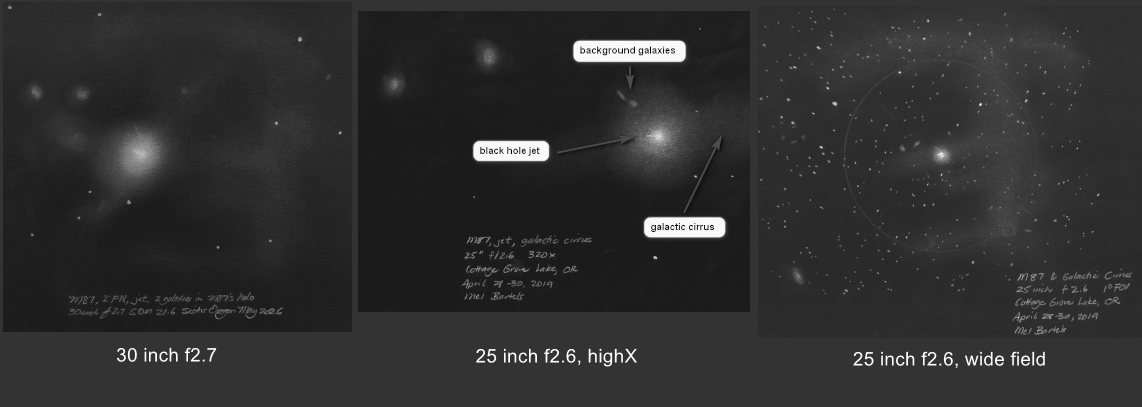
M87 is huge in the 30 inch! My gosh. It hardly ends. Plus more IFN than I'd seen before with my 25 inch 7 yrs ago. Markarian's Chain in a 30 inch is too much: the galaxies are huge, almost bumping into each other, massive splatters of stars and gas field after field.
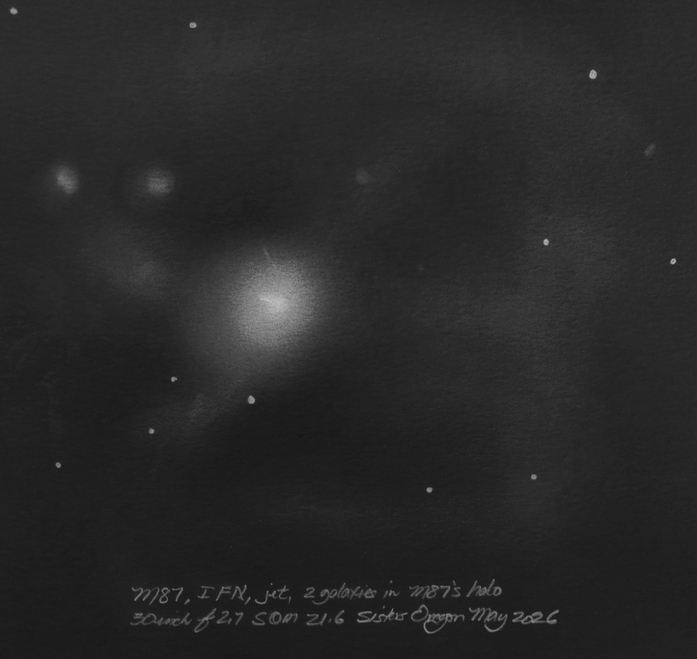
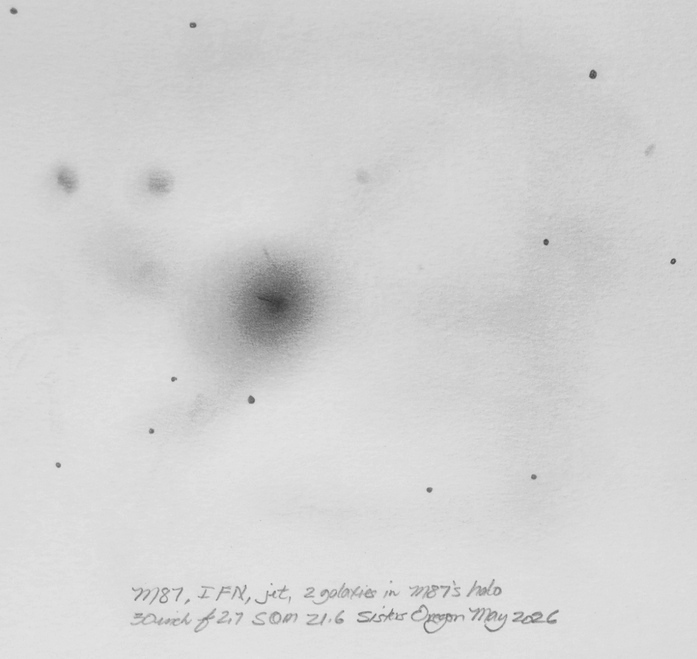
Since M87 is in the news with the dramatic image of its black hole, and since I've never observed it with my fast 25 inch F2.6, I devoted a few nights to observing. The black hole's jet is quite the observing challenge. The first night was hopeless because seeing was not good enough. The last night seeing improved to where the stars would sharpen nicely for a few seconds then fuzz out again. Trying to see the jet consisted of watching the stars for sharpening then settling in to catch a second or two glimpse before it all fuzzed out again. The jet appeared quite faint and dark gray in color. Quite surprisingly, I saw it disconnected from the galaxy's nucleus. I found proper magnification to be key: too much magnification resulted in no observation presumably because even during the sharp periods, the jet was too fuzzy, and too low of magnification made the jet just too small to see. 320x worked but slightly higher and slightly lower magnifications were not successful. I managed to see the jet several times; this is indeed a difficult observation at the limit of possibility that took me a couple of nights to succeed. To relax, I scanned the broad area, delighting in every single field of view filled with many galaxies of different morphologies. Richest Field Galaxy Observing at its best!
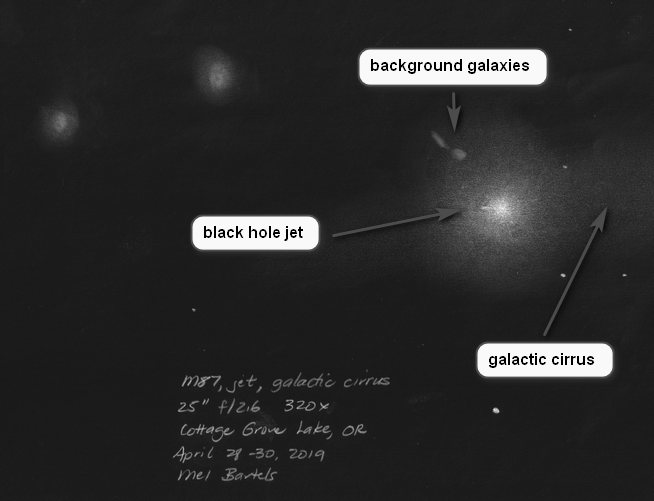
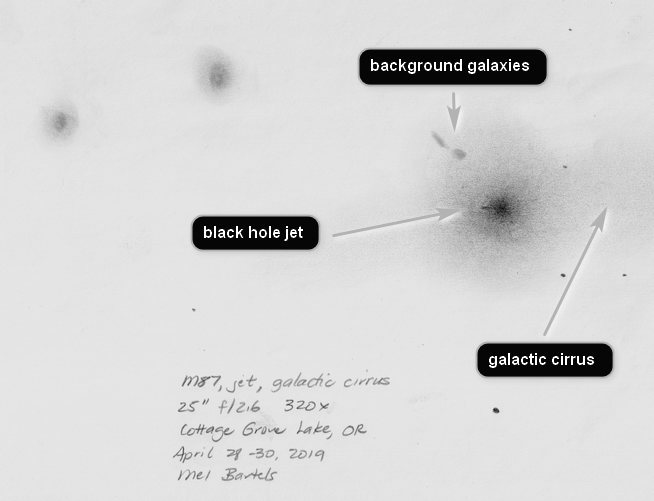
M87 with IFN, wide field. 25 inch f2.6.
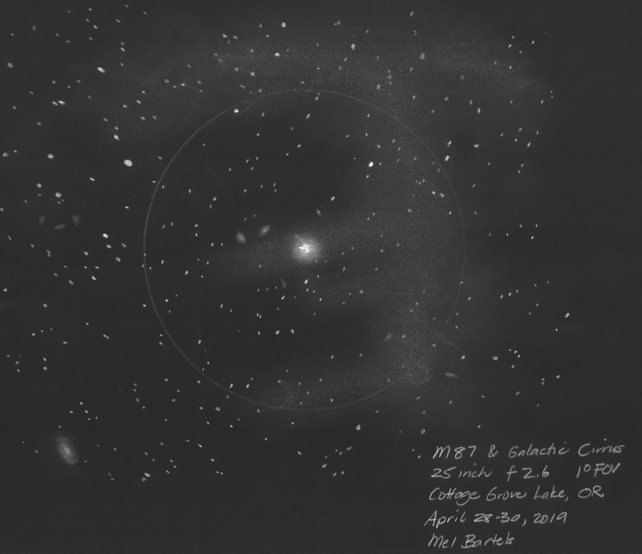
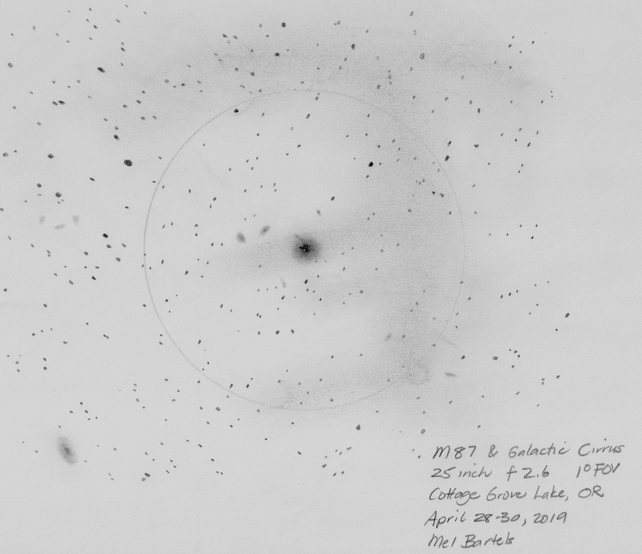
Comparison of M87 + jet + IFN in the 25 inc h f2.6 to the 30 inch f2.7.
Cygnus X-1 shockwave annotated. 25 inch f2.6.
Really thrilled to see the shockwave, relatively easy with a filter in dark skies. Both my OIII and NPB filters showed the arc.
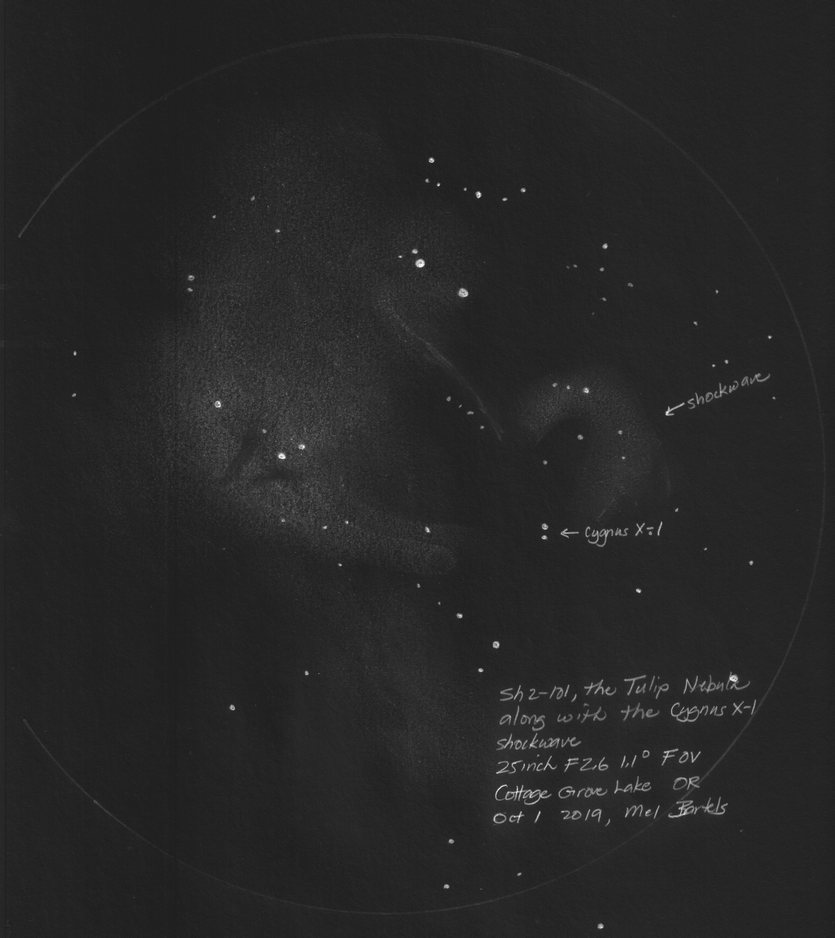
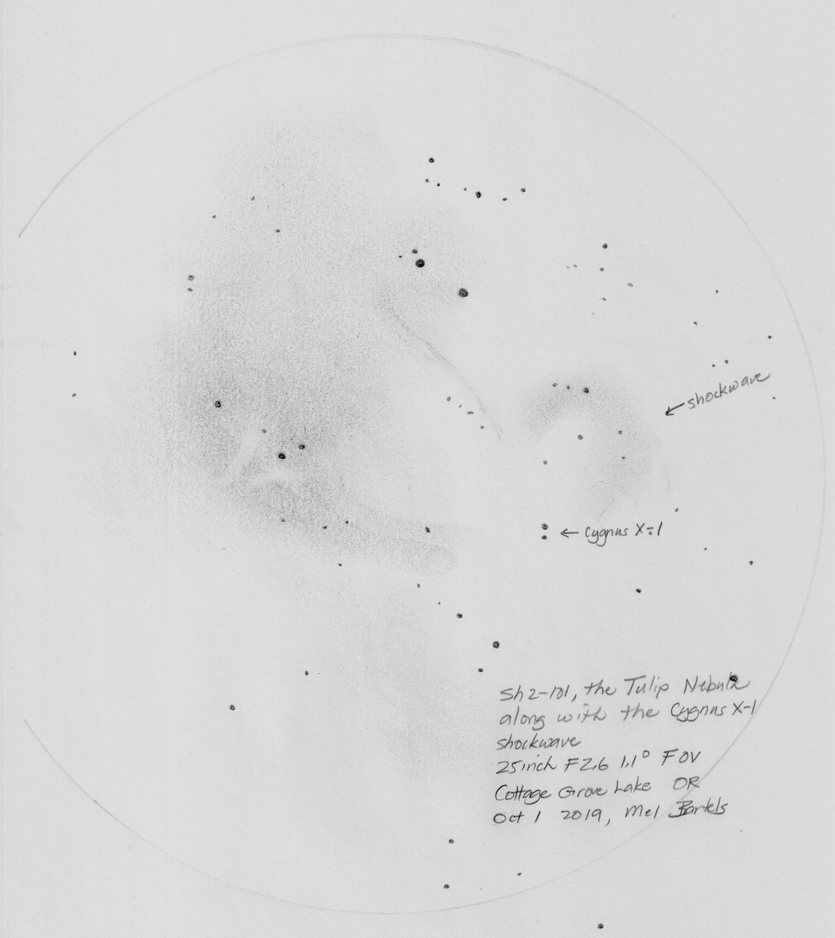
Sh2-101, the Tulip Nebula, containing the Cygnus X-1 shockwave, not annotated. 25 inch f2.6.
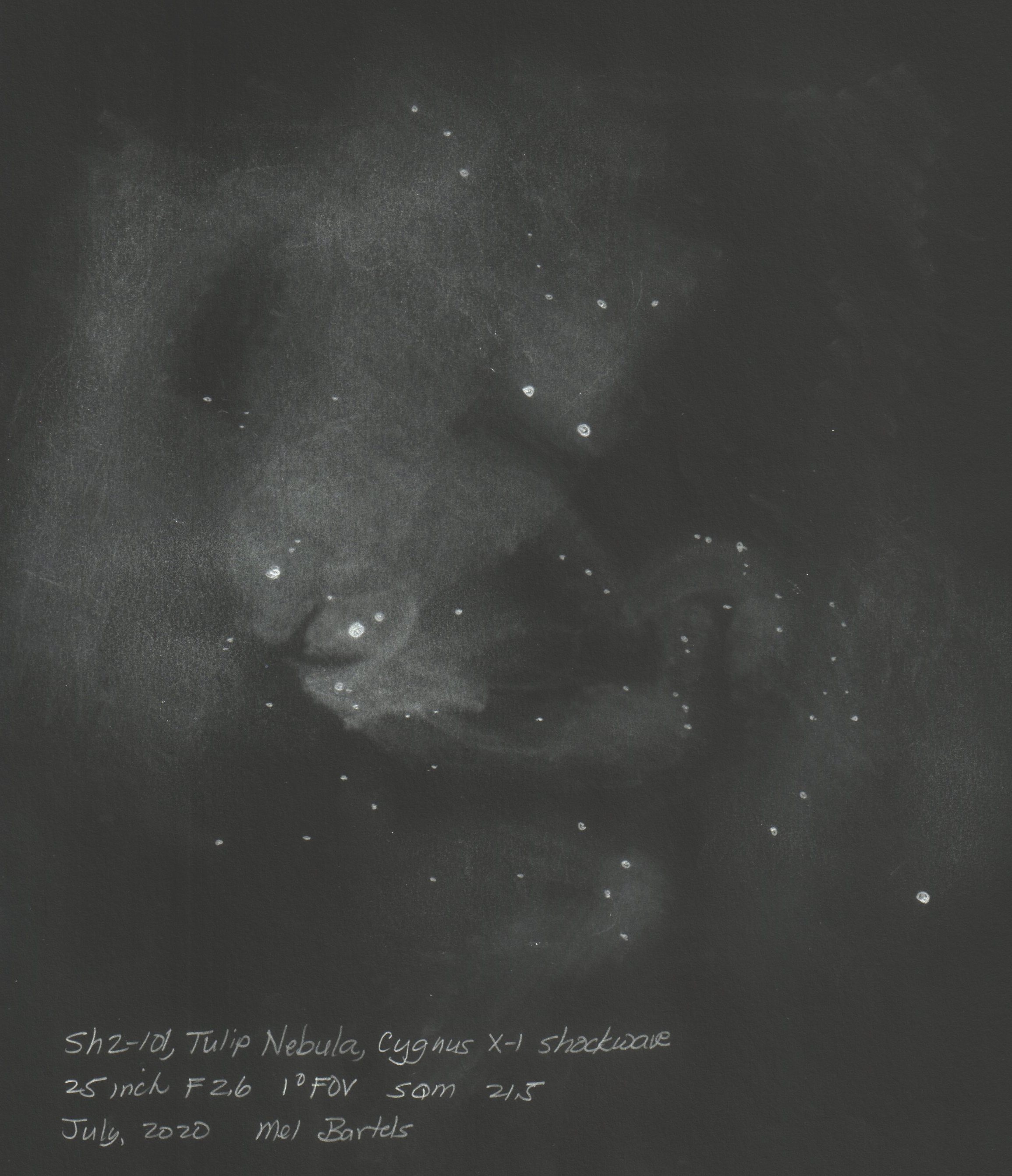
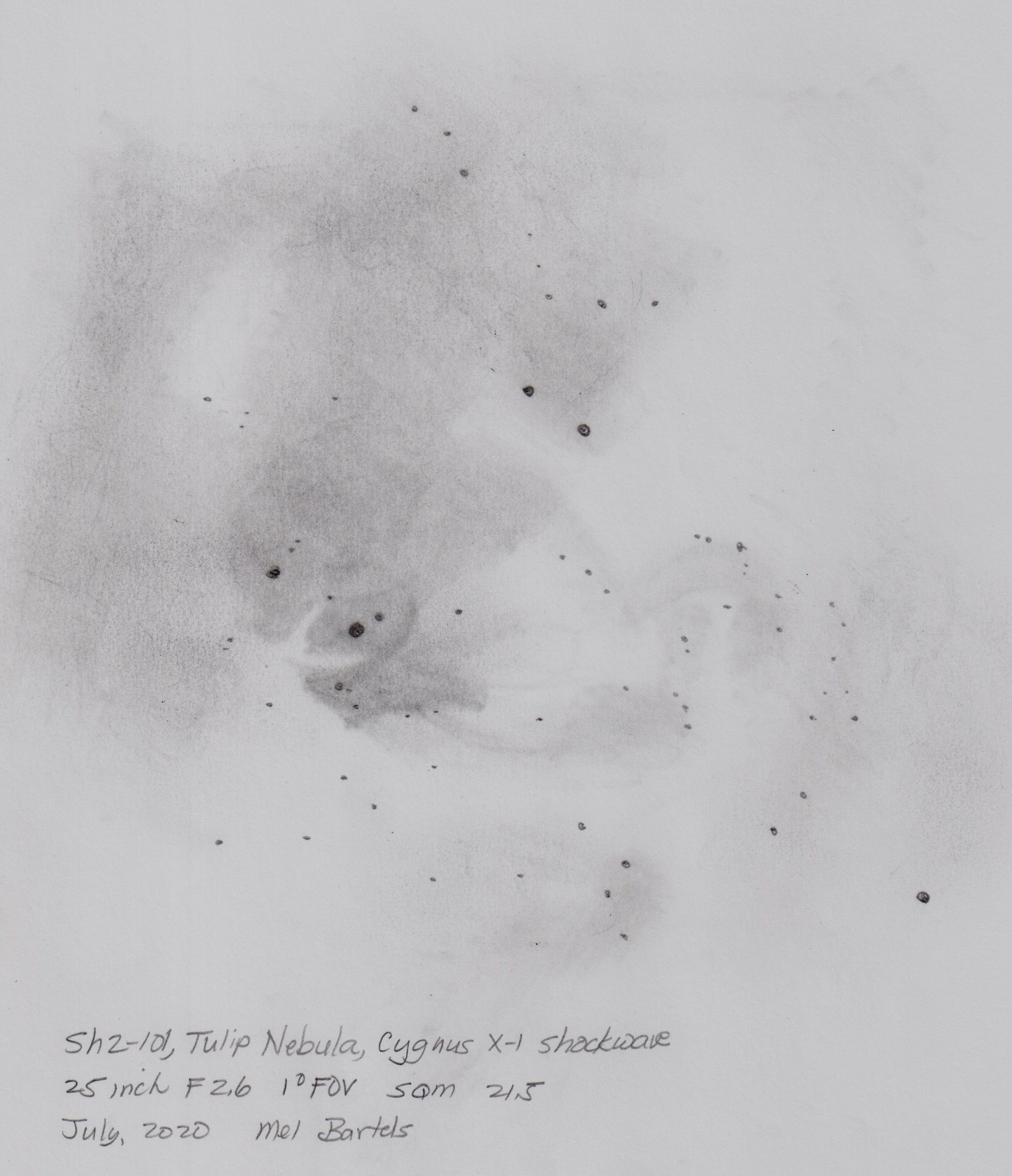
Cygnus X-1, 25 inch f2.6 high power.
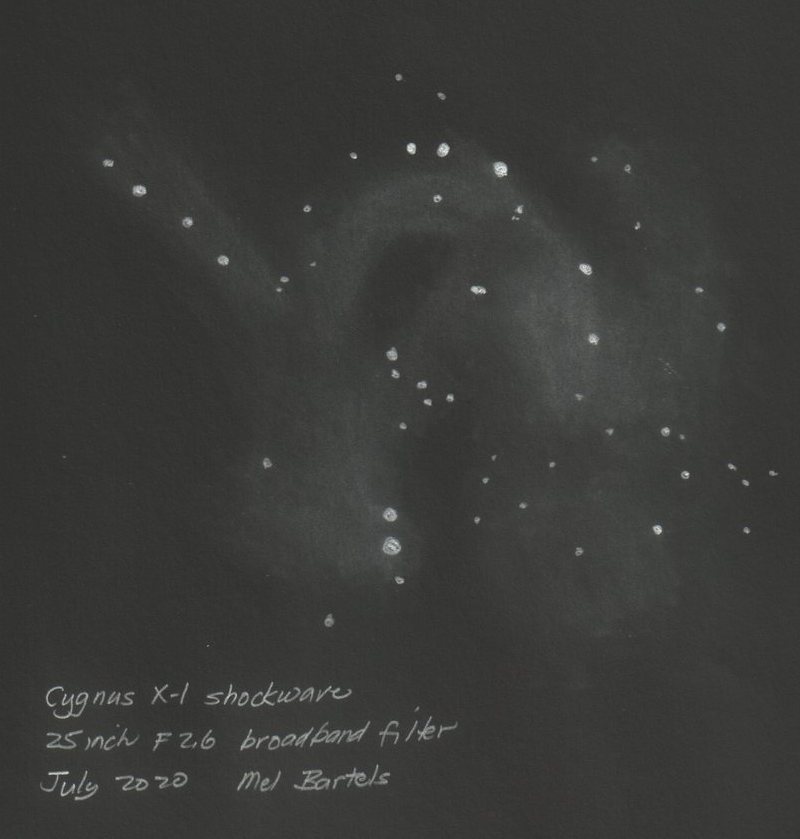
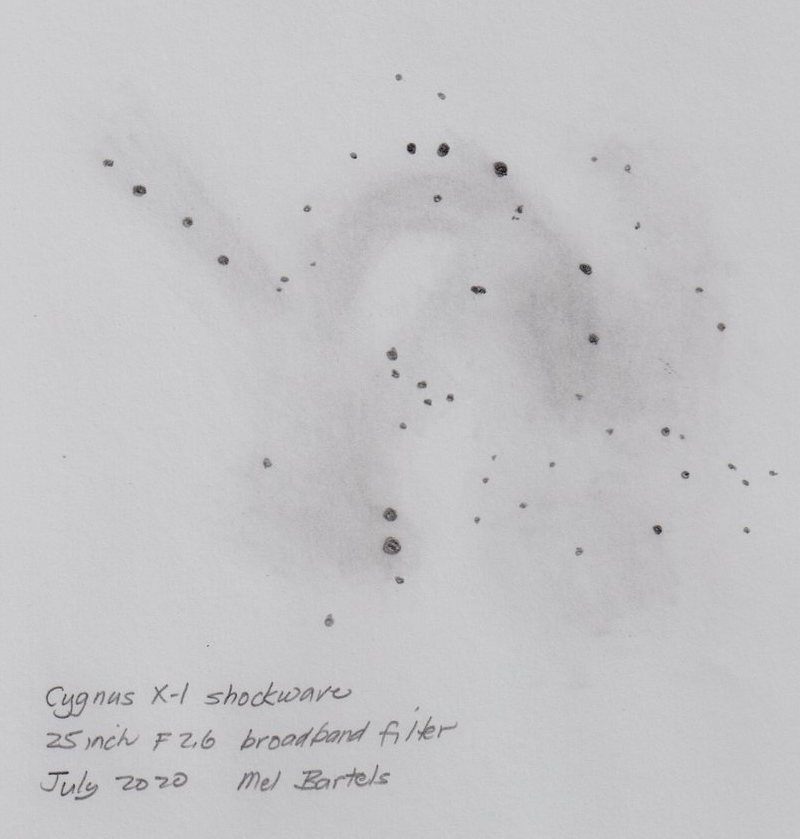
Cygnus X-1. Here is the progression, from easy to difficult, to see the X-1 shockwave.
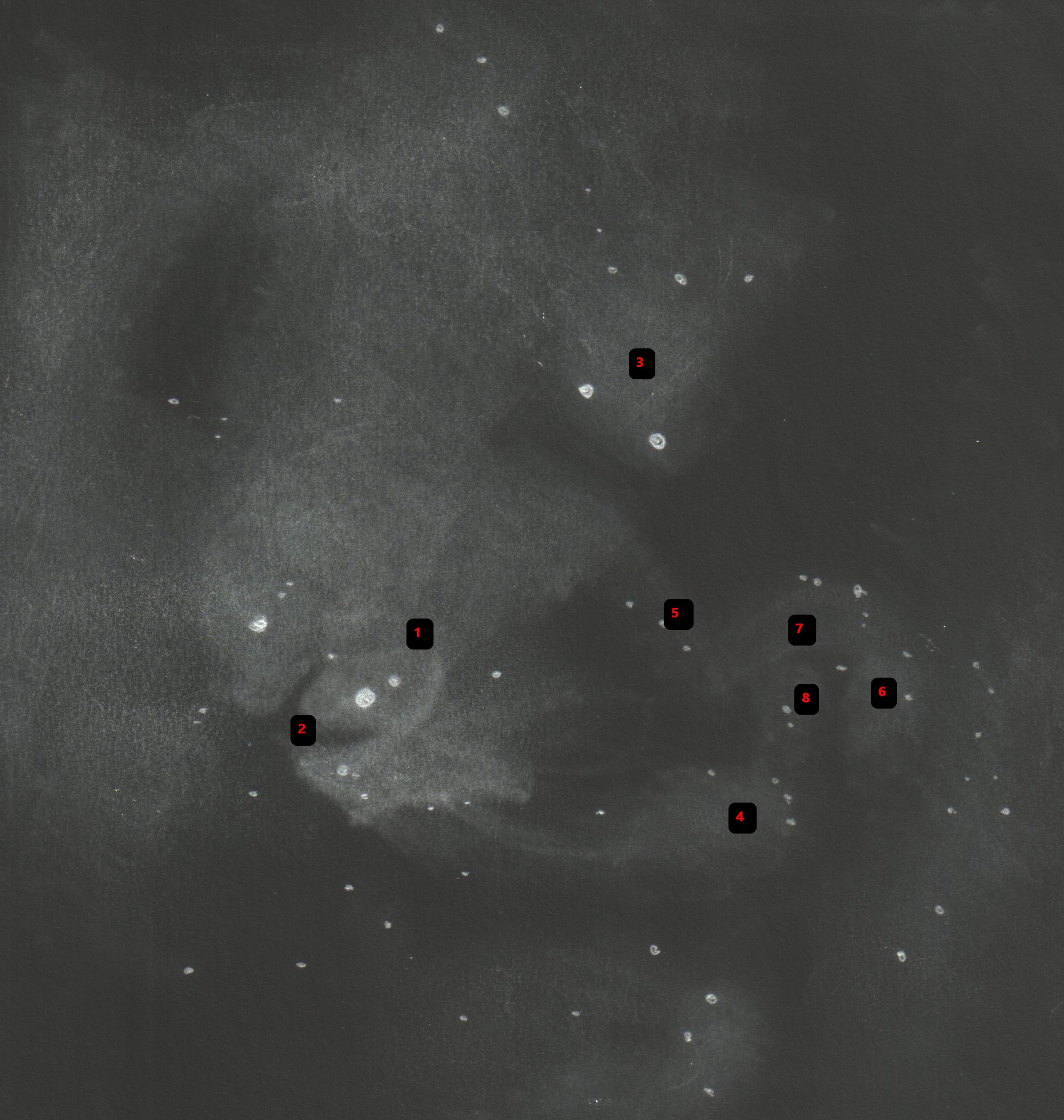
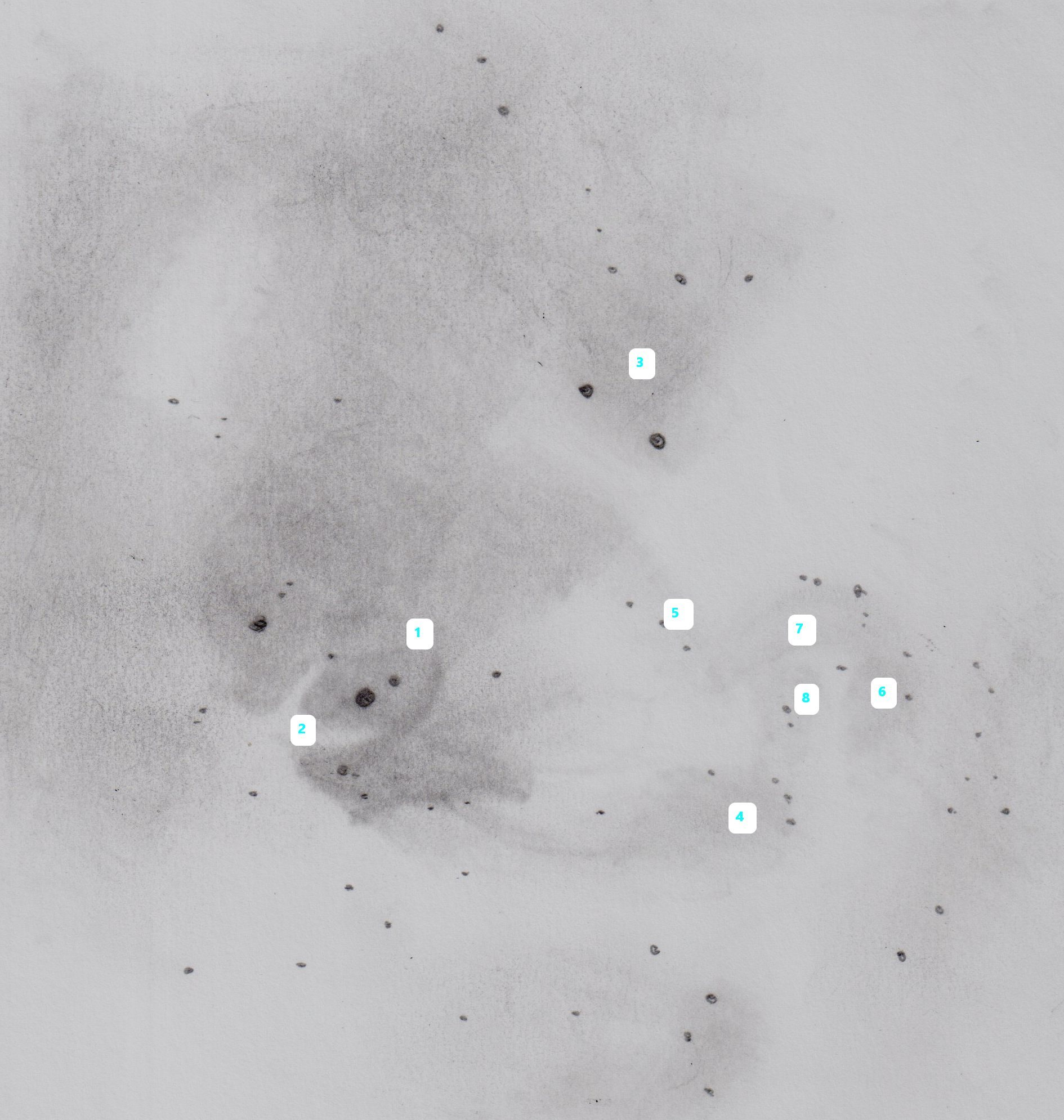
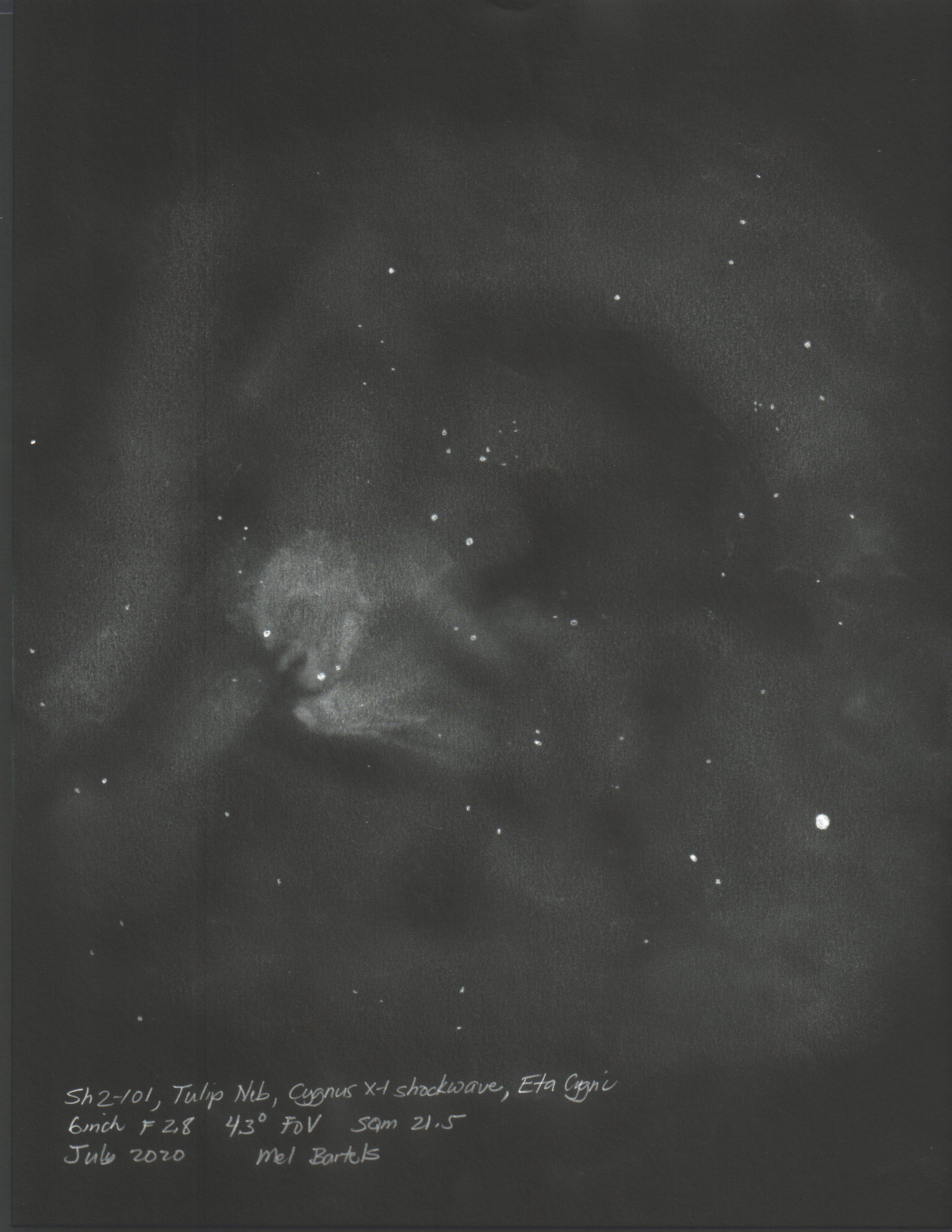
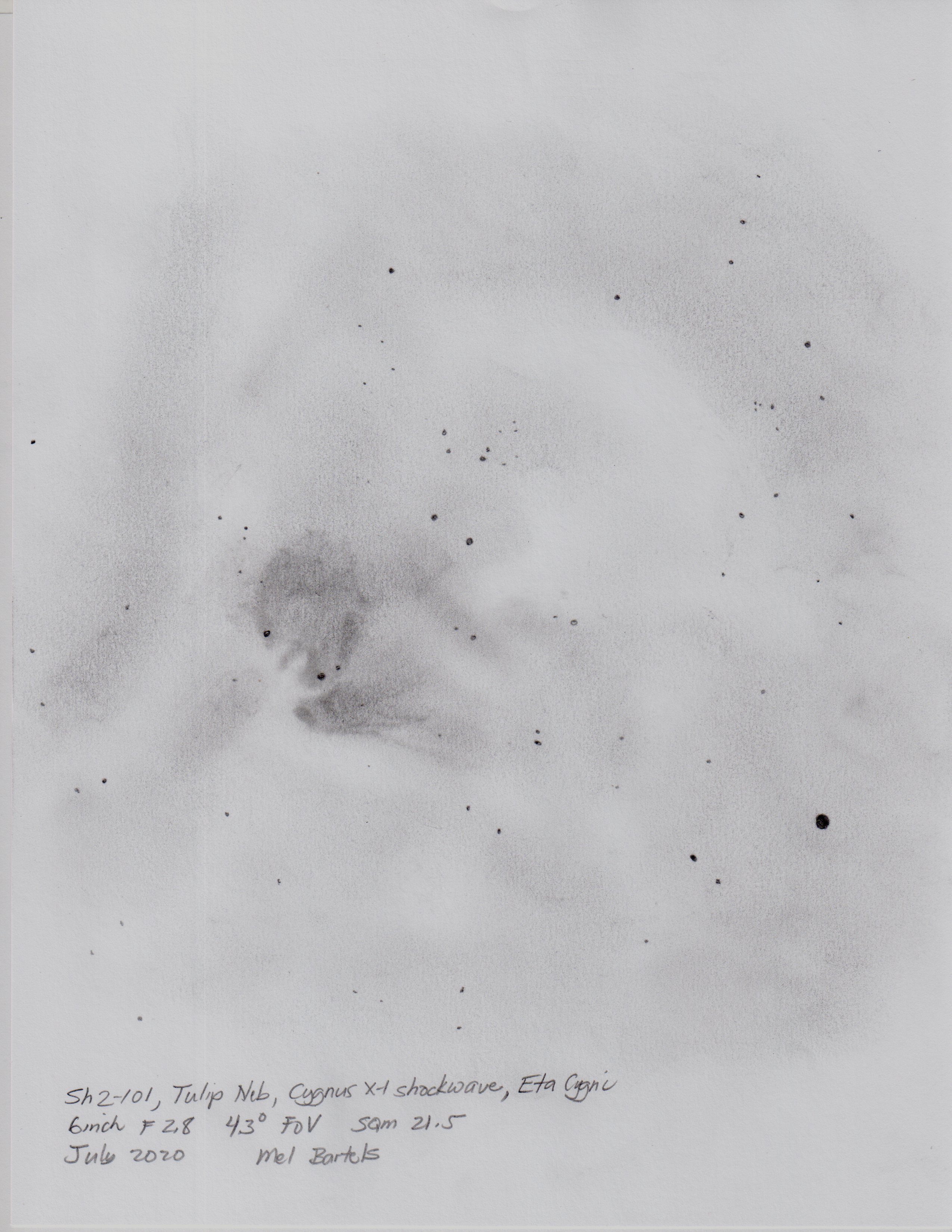
Sh2-101 Tulip Cygnus X-1 as seen through my 6 inch f2.8. Compare to the 25 inch views.
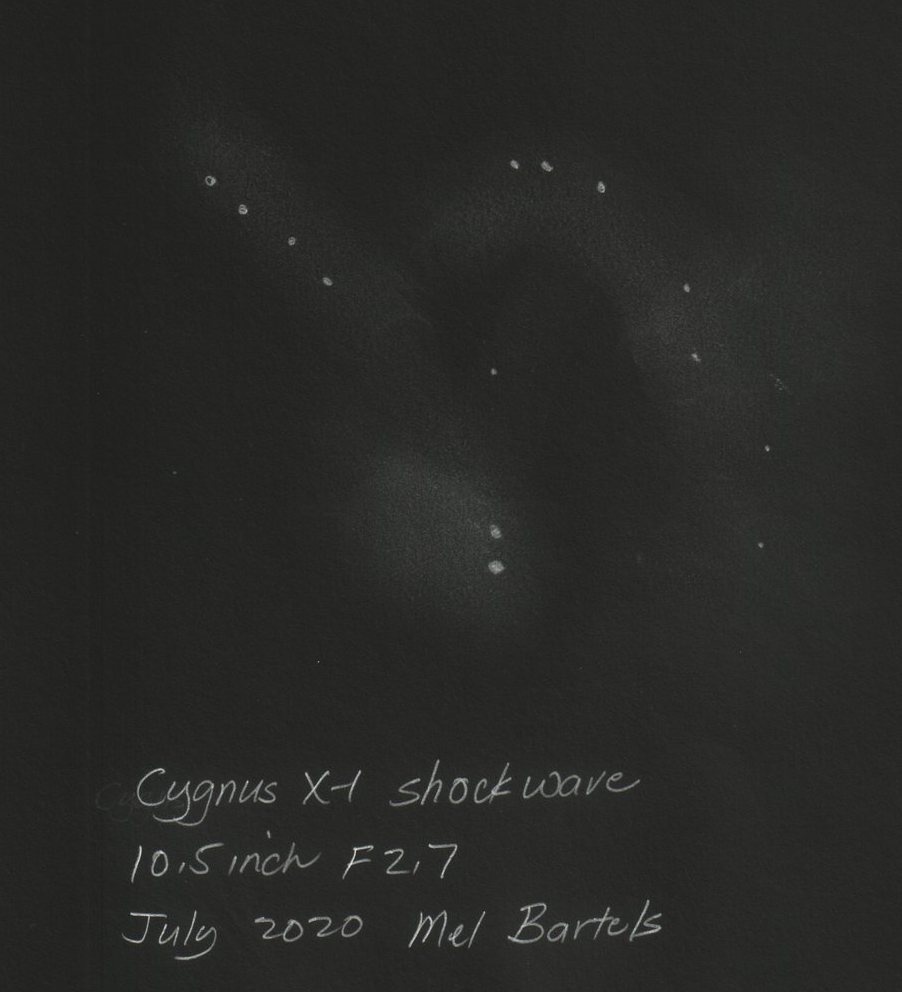
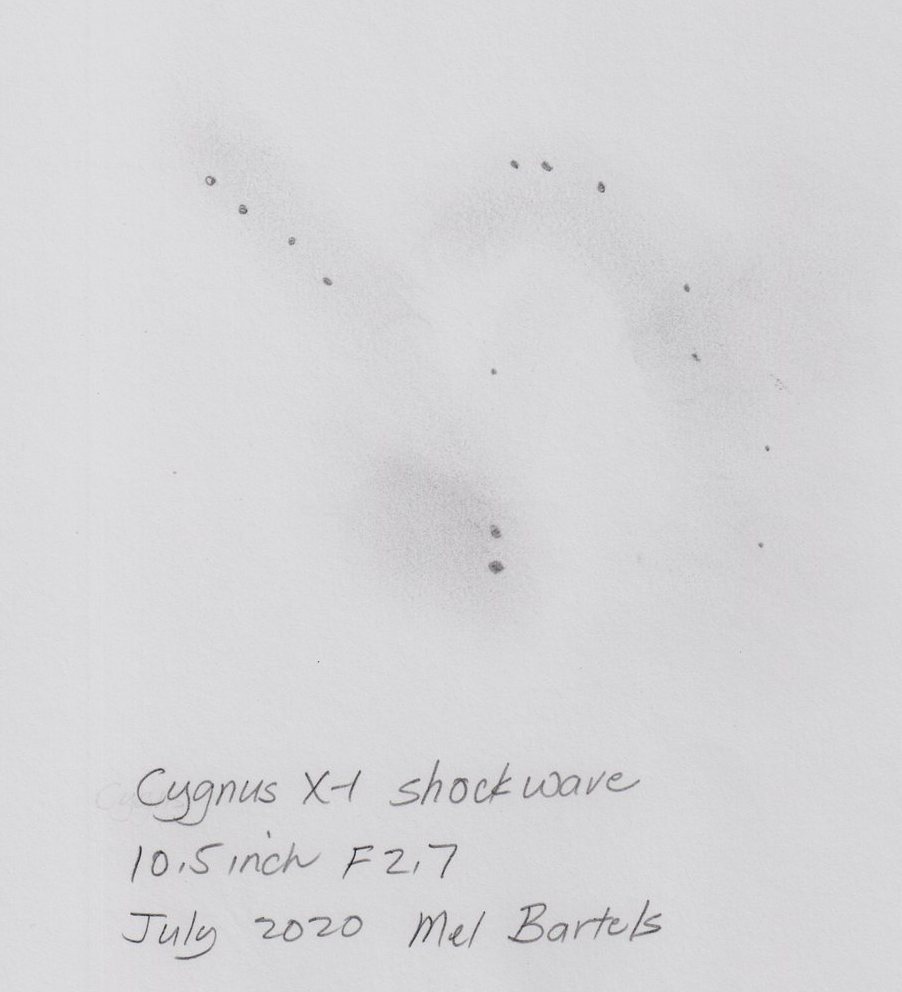
Cygnus X-1 shockwave as seen through my 10.5 inch f2.7.
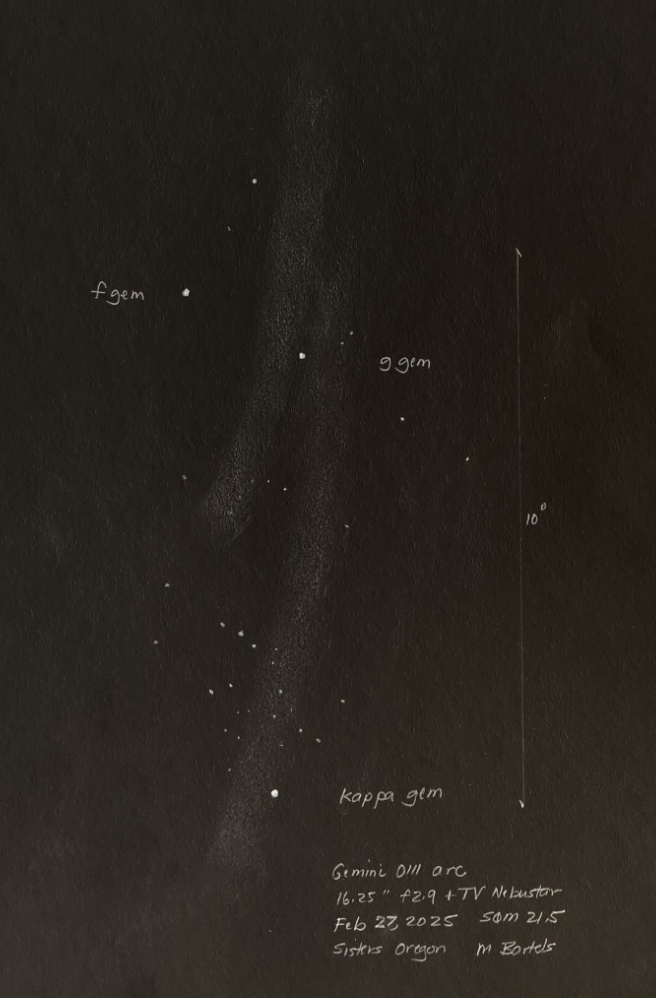
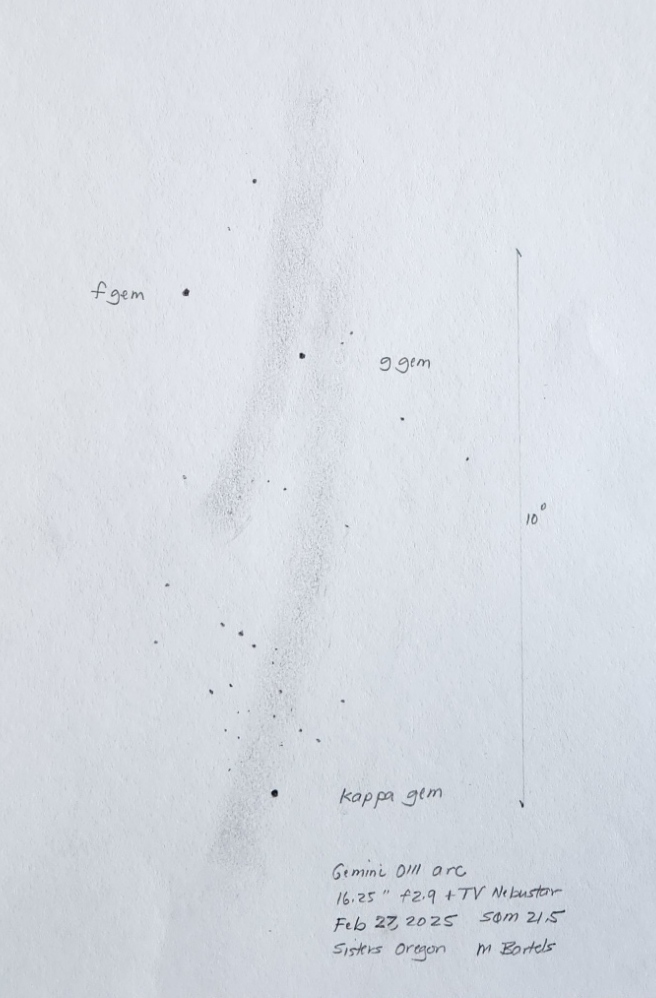
The newly discovered OIII arc in Gemini, possibly a part of a very large supernova remnant. This segment is 10 degrees long. 16.25 inch f2.9 with TV Bandmate nebula filter.
Once again leaning on my SkySolve camera finder, I point to the star g gem. Really? I see two strands immediately and fairly bright to boot. I also see a bright streak near the star kappa gem. Now that is really something - 10 degrees long. See the Cloudy Nights discussion along with this very large scale image . These objects are not that dim. Dark skies, wide field eyepieces with aperture, observer experience --- go see for yourself --- experience exhilaration.
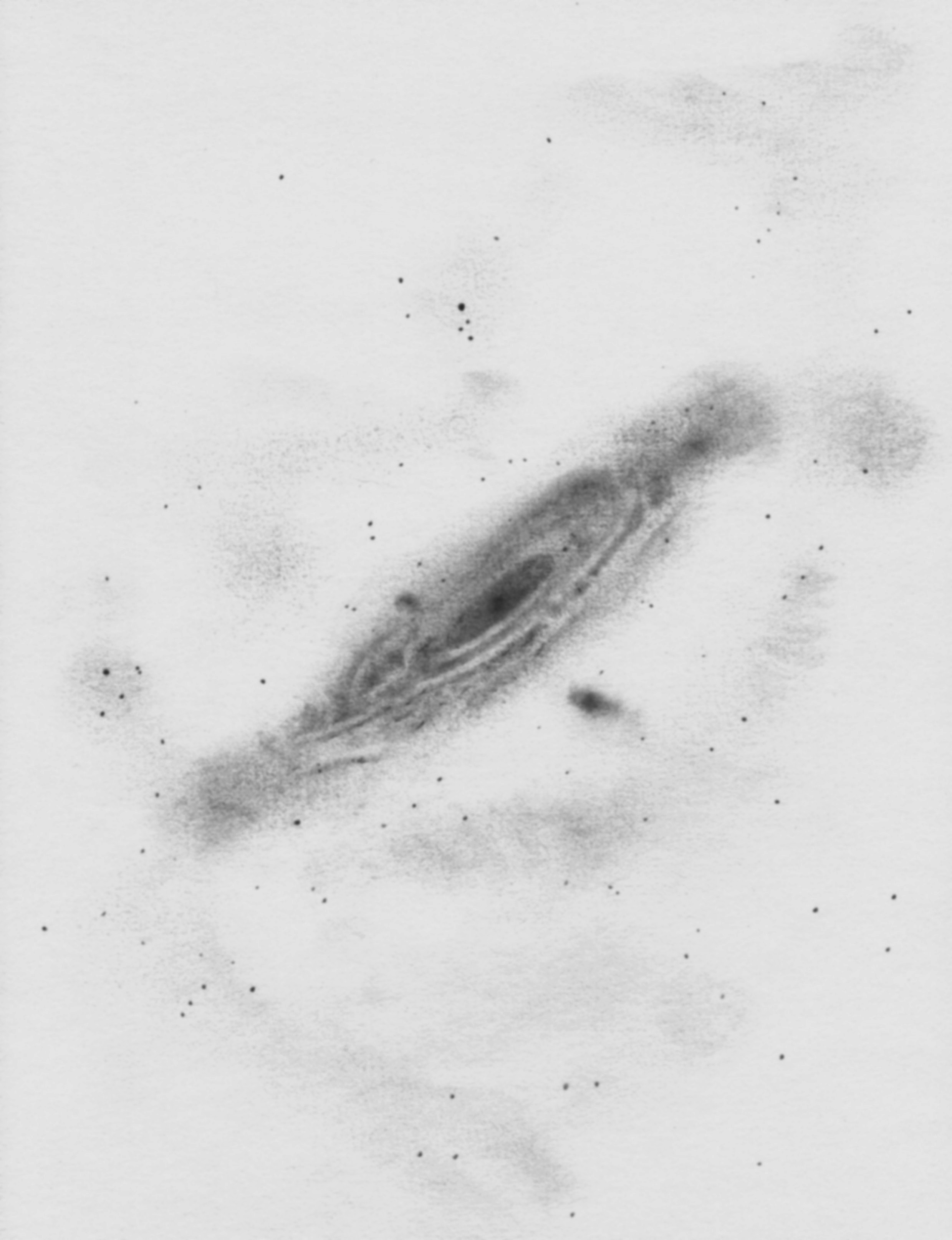
M31 with the 30 inch f2.7 including the Clouds of Andromeda. An accumulated drawing of previous observations with the 30 inch.
Compare with this digital image that took two years and 250 hours (came out years after my drawings).

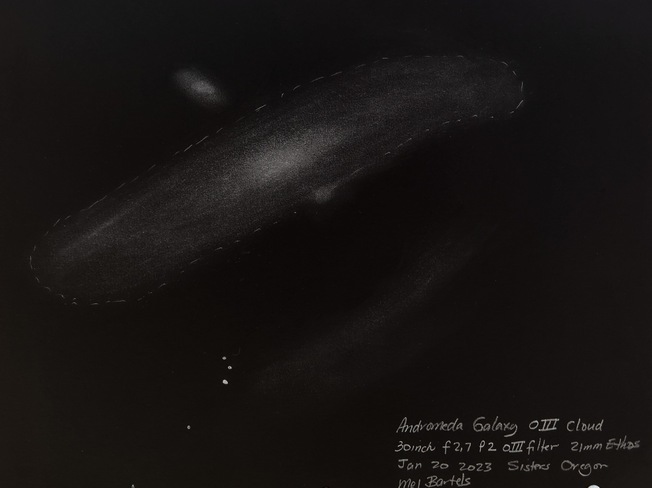
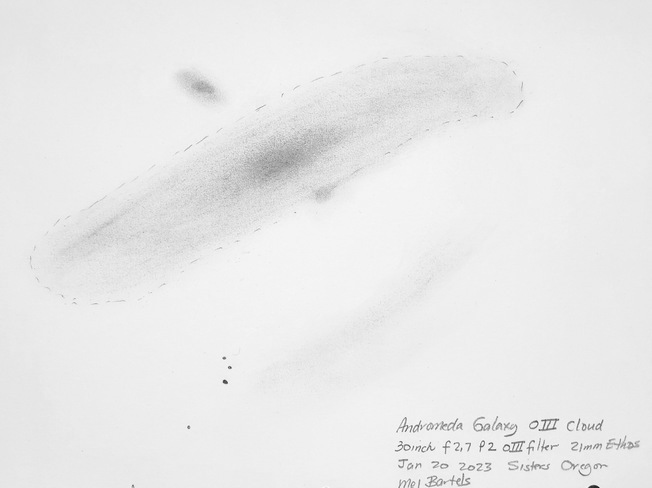
OIII cloud next to the Andromeda Galaxy as seen through the 30 inch f2.7.
Bob Grossfield, Director of Sunriver Observatory and Lynn Carroll, a highly experienced amateur, were with me. Bob also saw it immediately with the curve, it took Lynn two looks. There are no boundaries or edges: one must move the scope back and forth to 'shake it loose' then it can be studied. The M31 / M32 / M110 portion is drawn 'conceptually'. Very exciting observation !!! Now, the race is on: how small of aperture is needed? BTW, M31 and M110 show nice detail in OIII - never thought to look before.
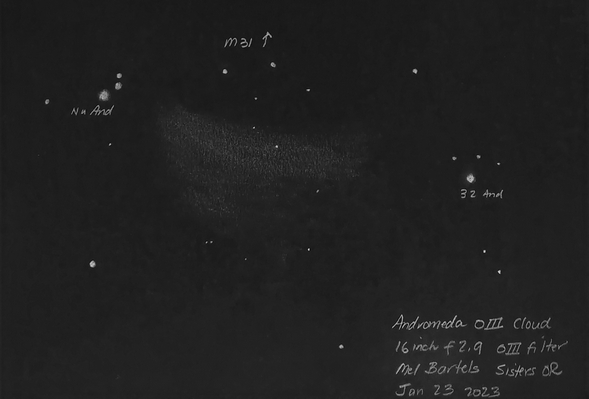
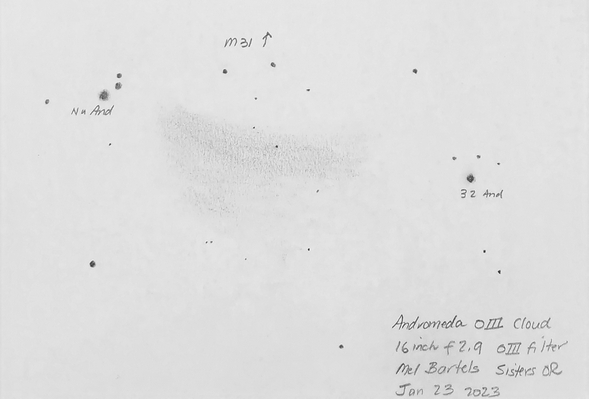
OIII cloud next to the Andromeda Galaxy as seen through the 16 inch f2.9.
Exceptional transparency! The view through the 16 inch was both easier (able to see the full extent in the 2 deg field) and harder (a little dimmer) compared to the 30 inch. I could see the cloud without the OIII filter - I've seen this a number of times before and showed it to others at the Oregon Star Party, calling it the Andromeda Shelf (not knowing that it is an OIII cloud though) :( The OIII filter made for a very nice view. Zane says he saw this in his 14 inch f3 a couple of weeks ago.
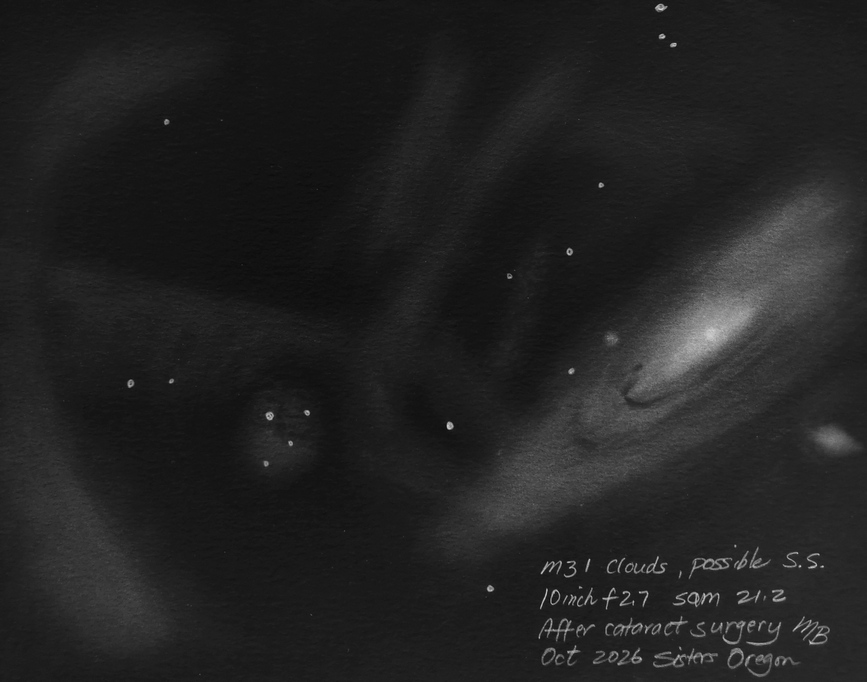
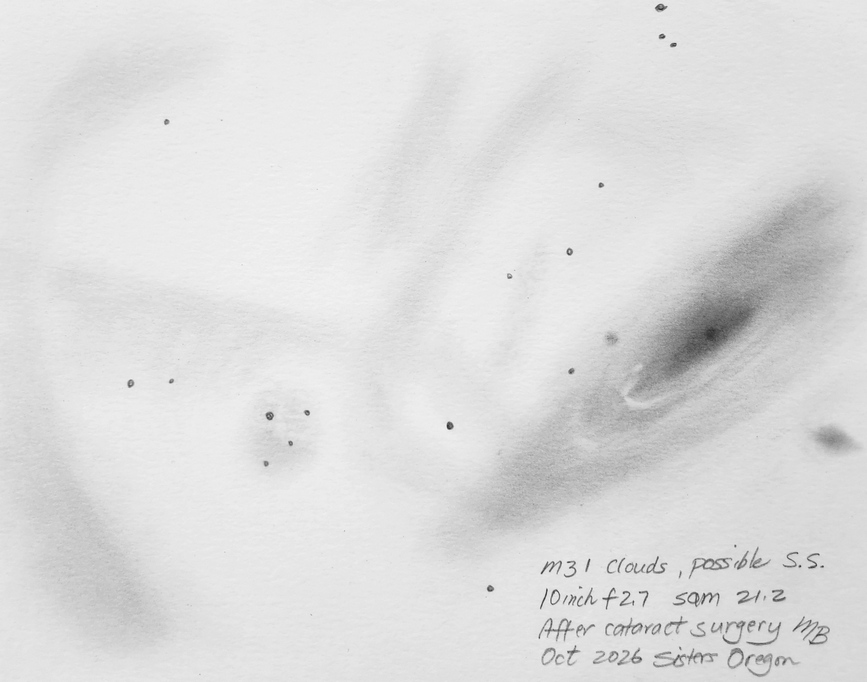
M31 stellar stream (?) with the 10.5 inch f2.7. SQM 21.2. No filters.
To relax after three challenging objects, I swung over to M31. Unexpectedly dazzling! The OIII arc(s) were obvious (no filters!) though I couldn't see the double feet as in the 30 inch recently. I attribute the ease of seeing the OIII with recent eye cataract surgery (the blues now are intense) along with familiarity as to their appearance. I thought I'd try for M31's stellar stream, but once again, ran into clouds of nebulosity that complicated the view. There did seem to be a straight band emanating from the direction of M31's nucleus -> M32. And to my delight I saw that one edge was sharp and the other side diffusing into nothingness. Later checking the graphic I indeed saw this feature in the correct orientation. So maybe I am seeing the stellar stream? The complicating factor is that the stream runs into this wall of nebulosity, which I am guessing is H-Alpha. The next night I looked with my 16 inch F2.9. I could not see any additional detail; the field of view is too small. Seems that the 10.5 inch is the largest aperture to try for Andromeda's stellar stream.
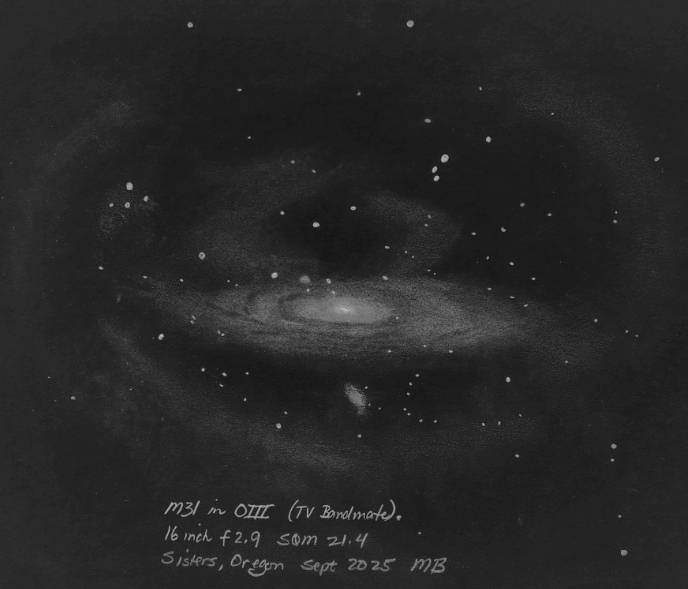
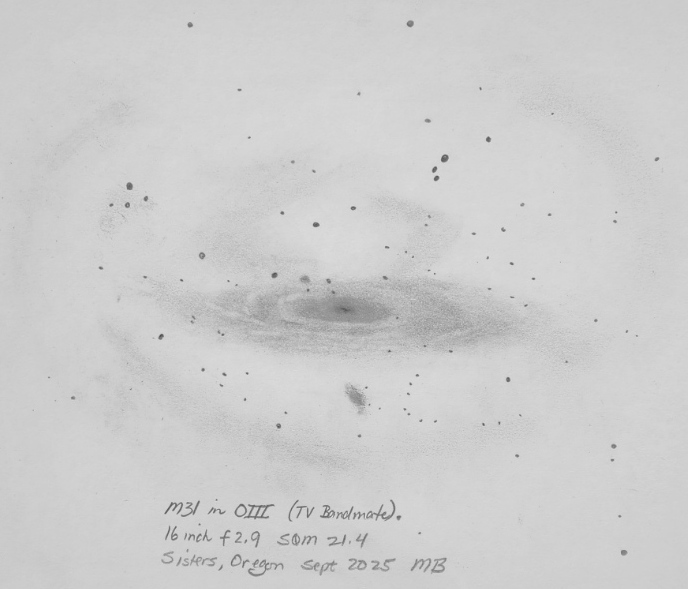
The Andromeda Galaxy with the TV Bandmate filter (OIII) as seen through the 16 inch f2.9.
I'm curious how galaxies look in OIII - the same or different? Having studied the Andromeda Galaxy for a few nights with my 16 inch F2.9 scope that gives me a 2 degree field at lowest power, I felt ready to draw what I see. Using a TV Bandmate OIII filter I see what I call 'genie swirls' and giant arcs.
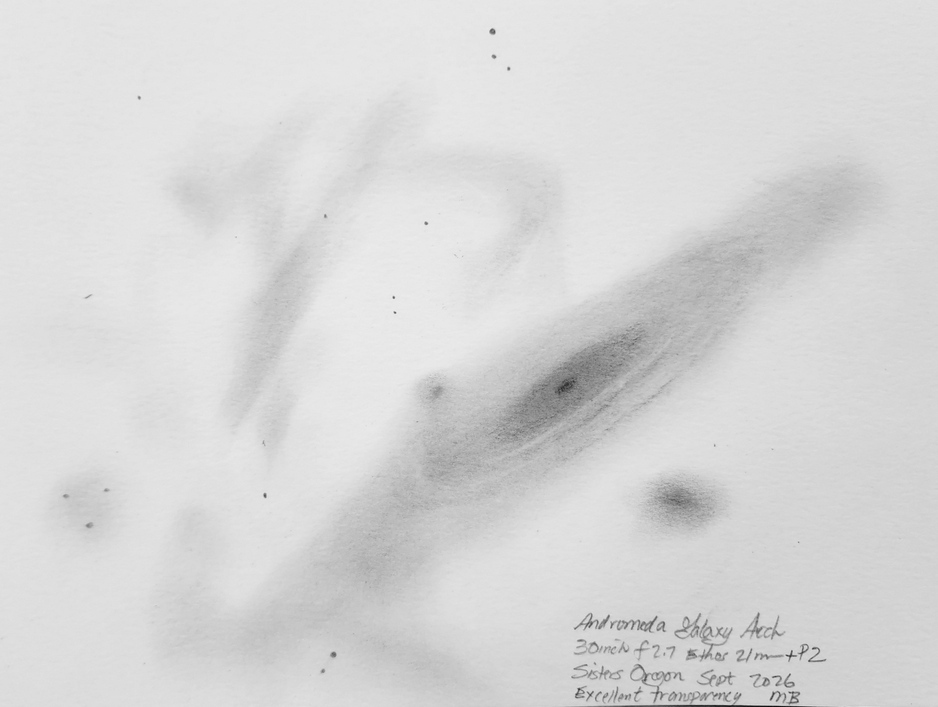
The Andromeda Galaxy's Arch on the M32 side. 30 inch f2.7 with the TV Ethos 21mm eyepiece and P2 coma corrector.
I was looking for Andromeda's Giant Stellar Stream, presumably a galaxy torn apart and stretched out past M32. See this article for more on the stream. But a bunch of other stuff, what I am calling 'Andromeda's Arch', got in the way.
The sky in M31's direction became marvelously transparent even though the galaxy had not yet reached its zenith. The 21mm TV Ethos + P2 coma corrector gave a slightly more magnified view and slightly wider field of view than the Houdini 20mm; the Nikon 17mm with the P2 coma corrector was too narrow. Even so, the arch extended for several fields. Sadly, high clouds drifting in from the east (our weather typically comes from the west) precluded me from trying the 25mm ES 100 deg eyepiece with the MPCC coma corrector. This combination doesn't give the sharpest stars at the edge of the field and aperture is clipped due to my aging pupil, but the 1.14 deg FOV compared to the 0.83 deg FOV of the Houdini and 0.87 deg FOV of the Ethos can't be beat.
I was shocked by how easy the Arch was to see. The doubled legs at both ends, the multiple streaks in the OIII cloud, other patches: so easy to see. And no filter. Just a completely rare sight. It is thought that the Arch is the remnants of an intervening planetary nebula. The next day I received my Sky and Telescope magazine in the mail. I always read the observing articles and the telescope making column first, then scan the magazine's pages for what next to read. To my utter surprise there is an article on software processing using a very deep digital image of the Andromeda Galaxy displaying the arch in narrow band filters just like I saw it!
Looking at my past drawings, I see the Arch, but not near as detailed and bright. I have pointed it out to fellow observers, calling it a 'shelf'. It's amazing to think of all the times I've looked at M31, starting as a child with a 4 inch reflector.
I saw an extension that could be the Giant Stellar Stream, but the incoming high clouds said, "wait for another night". Such is astronomy. One does not demand or command.
I drew M31 proper superficially, with just enough detail to make the Arch's relationship clear.

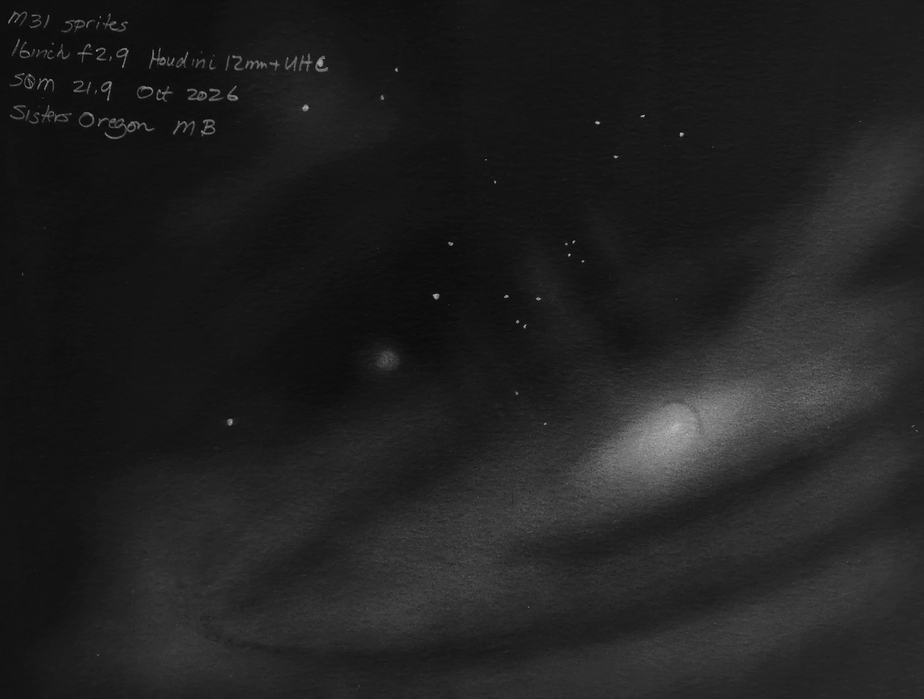
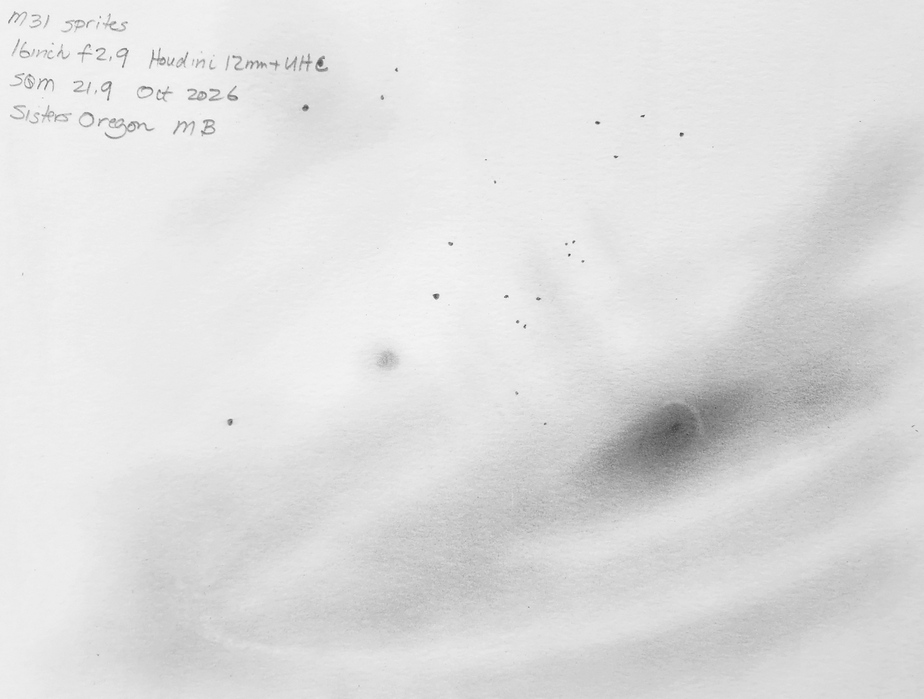
Andromeda's blue sprites. 16 inch F2.9 with Houdini 12mm eyepiece + UHC filter. SQM 21.9.
With my blue sensitivity restored after eye cataract surgery, I thought I'd see if I can see the blue sprites as shown in a couple of deep narrowband digital images. Using filters, I could see that the south side of the nucleus appeared on fire, with suggestions of long hairy flames. As I looked over a period of time, the view became better and better, to the point where I was amazed. I pulled out my SQM and it read 21.9. The evening had started rather blase at 21.2. Interestingly, at the start of the evening the SQM feature on my PiFinder said 20.9, close to the surface brightness of M31 with the sky background added. The galaxy filled the PiFinder's view. The PiFinder SQM feature read darker when pointed away from the galaxy. These sprites or flames of fire were unmistakable given time and averted vision. Additionally there was an unmistakable angled spike heading to the east. And the outer edge of the galaxy sported a rather narrow outer arm that touched M32. Finally I could see the innermost edge of the curved dark band that appears to sit upright at a 90 degree angle. I didn't draw it, but M110 was spectacular: spiral arms and dust lanes. Overall probably the best view of M31 et al that I've ever had.
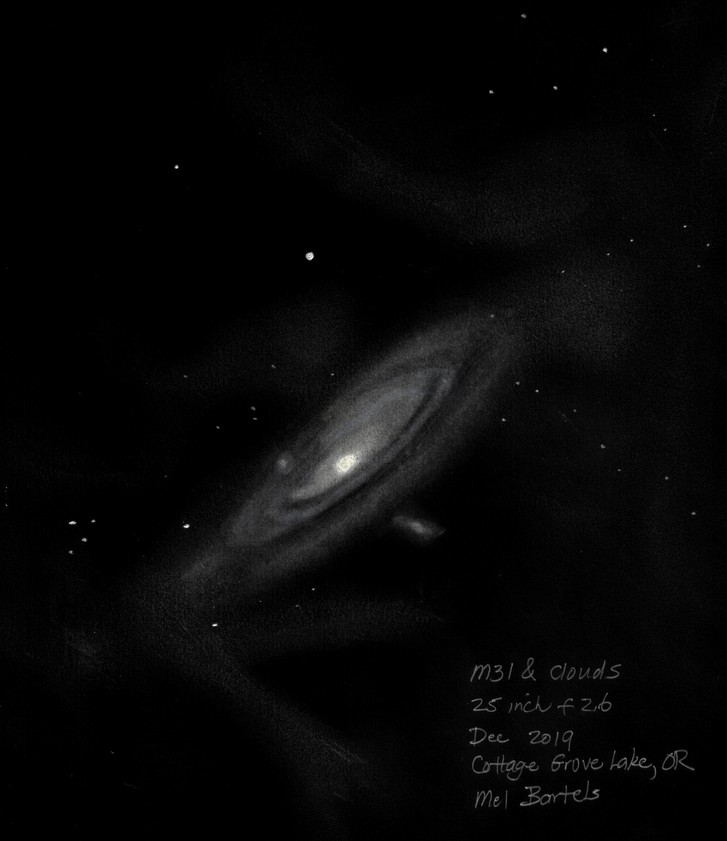
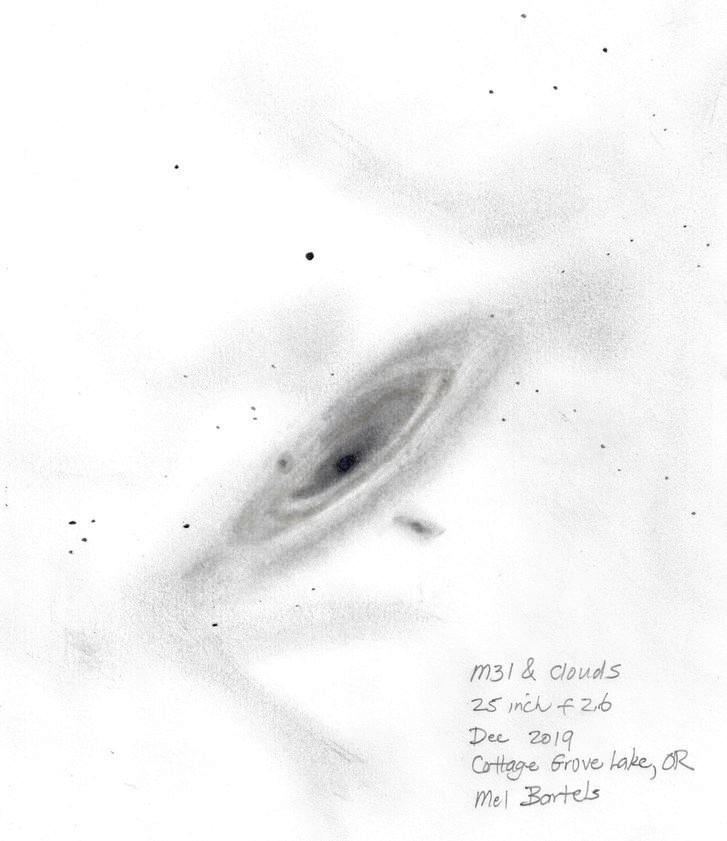
M31 and clouds with the 25 inch f2.6.
The galactic cirrus / Integrated Flux Nebulae (IFN) are in our galaxy and make a beautiful pairing with the more distant M31 and companion galaxies. I first observed M31 54 years ago in a 4 inch Tasco telescope from a suburb in SE Portland. Amazing that half a century later I am still seeing new detail. Stage one is just seeing the smear of light, stage two is seeing the dark lanes, stage three is using large aperture to view individual stars and clusters, stage four is the galactic cirrus/IFN and stage five are the hues. I tried to give a sense of the slightly yellow core and bluish hued inner arms in the sketch below. A hypothesis of mine is that a larger subF3 scope would show more detail in the galactic cirrus. That is the case: te broad sweeps in the smaller scope break into more detailed streaks and blobs in the larger scope. I continue to look for correlation between good star images and tight focus and seeing detail. It's astonishing how much detail disappears when the scope is ever so slightly defocused. Richest Field Observing calls for good tight star images and high quality optics along with a well-adjusted scope. Finally, the way I see it, the value or 'rating' of a telescope is in the observations accomplished with the scope.
The west side of the Andromeda Galaxy with its clouds.
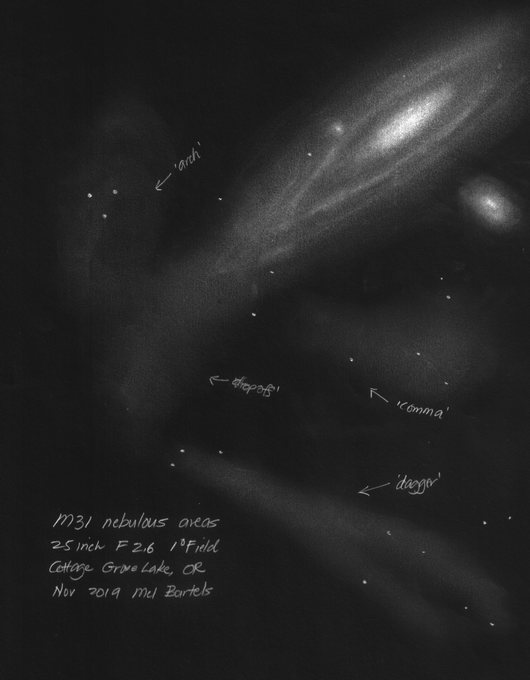
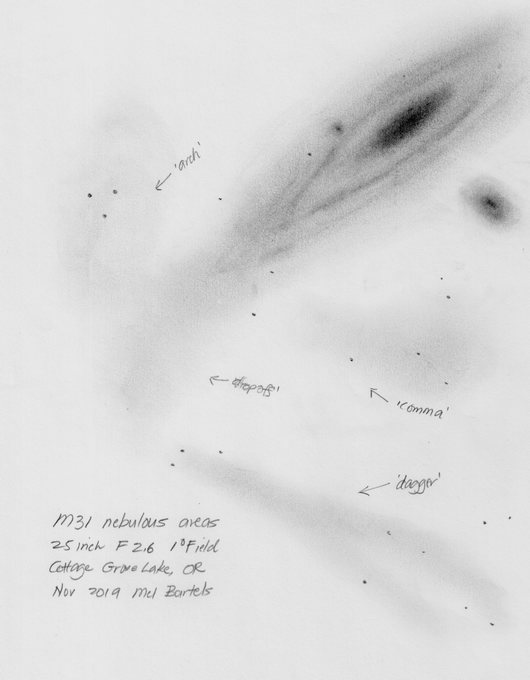
I wondered if I could see detail in the nebulous areas next to M31 with the 25". I see the nebulosity with smaller scopes but no definition to speak of really. The nebulous regions are beautiful: a dagger shape, a comma shape, an arch and a drop-off. I enjoyed showing this area at recent Oregon Star Parties - experienced observers called these nebulous areas 'bright'. These areas are fairly bright in a dark sky - I encourage others to look.
M31 with the 6 inch showing the 'Andromeda Twist'.
I suspect that the variation in M31's width that people mention historically could be that some of the Milky Way is being picked up. My 6 inch field of view is 4.5 degrees - about where the Milky Way merges into the extreme edges. Overall, M31 in the 6 inch looks to be nearly 5 degrees long. The coolest neatest part of observing M31 with these good aperture super wide angle scopes is the 'twist' in M31's arms. That is super cool.
You can see the broad band of nebulosity, the Shelf, below M31, such that M110 is floating above it. Of course at first there's nothing. Then a hint of nebulosity appears. As I observe, and others see and compare notes, I see more and more. The Shelf was first, followed by the extension on the east side. I hope to see more as I get more hours on it. In particular there's a fainter extension reaching up to M31 in the image that I haven't seen. Perhaps it is visible, perhaps not. Also there's more detail in the Shelf ion general that I hope to see. It consumes a lot of hours and there are precious few under great conditions; plus many objects that I take for granted that I have to observe again for these very faint broad extended features, usually extensions of the Milky Way.
The best contrast of the Andromeda Shelf came in the 12 inch binocular scope. We could get M110 on one side with the Shelf on the other side of the field of view. Though the scale was really too large, luckily we familiarized ourselves with the smaller scopes I mentioned earlier. BTW, the dark lanes of M31 were simply fabulous in the 12 inch binos.
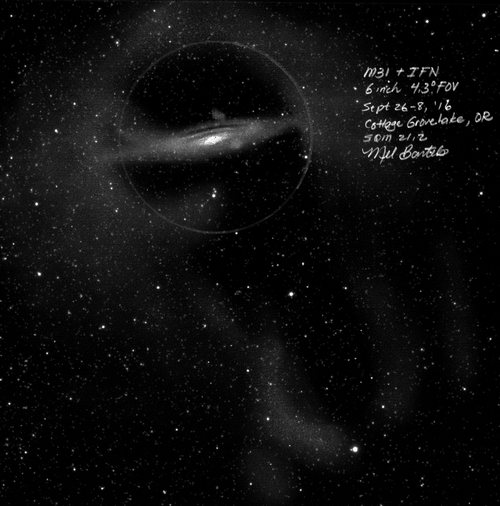
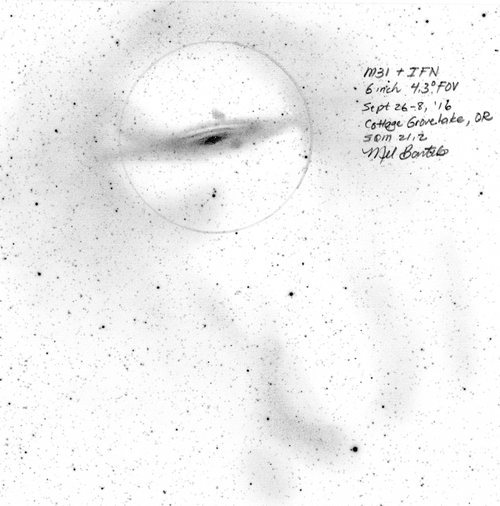
My first drawing of M31 with my ultra-wide-field 4.2 degree 6 inch f2.8 in 2014. Basically first light.
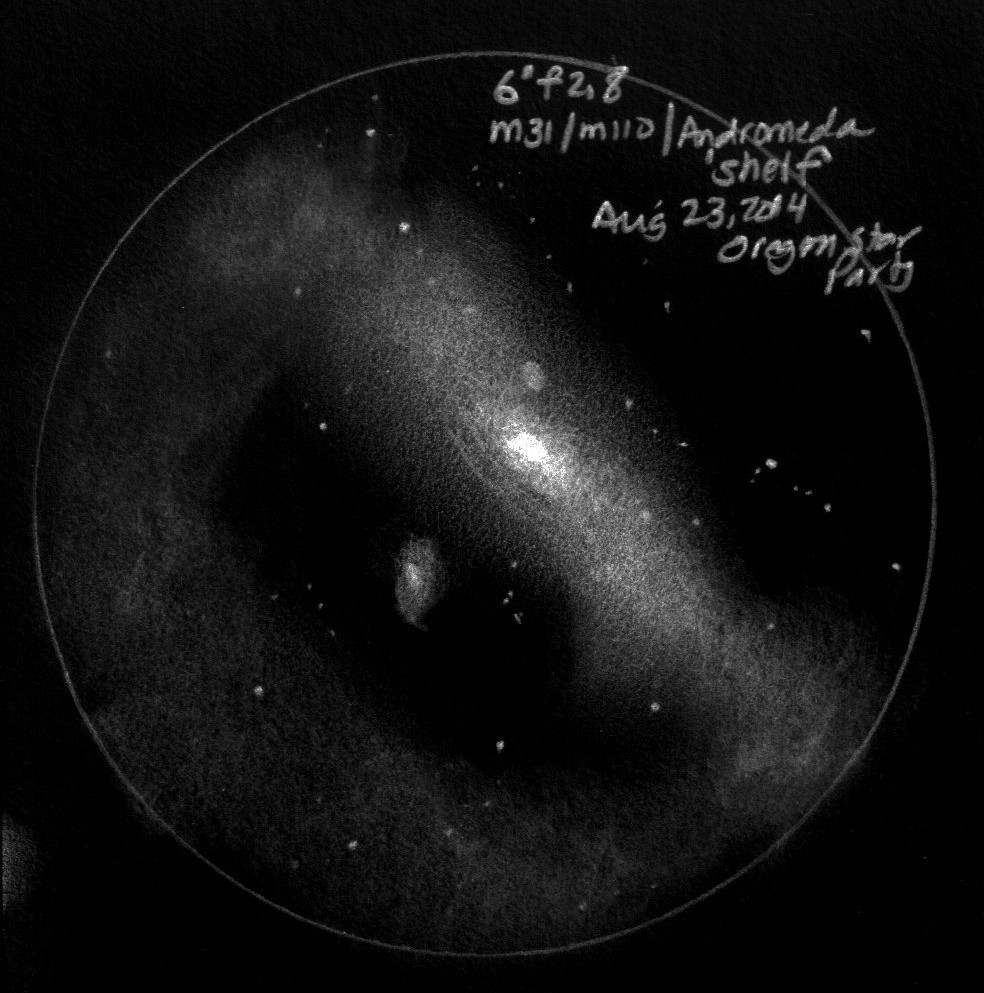
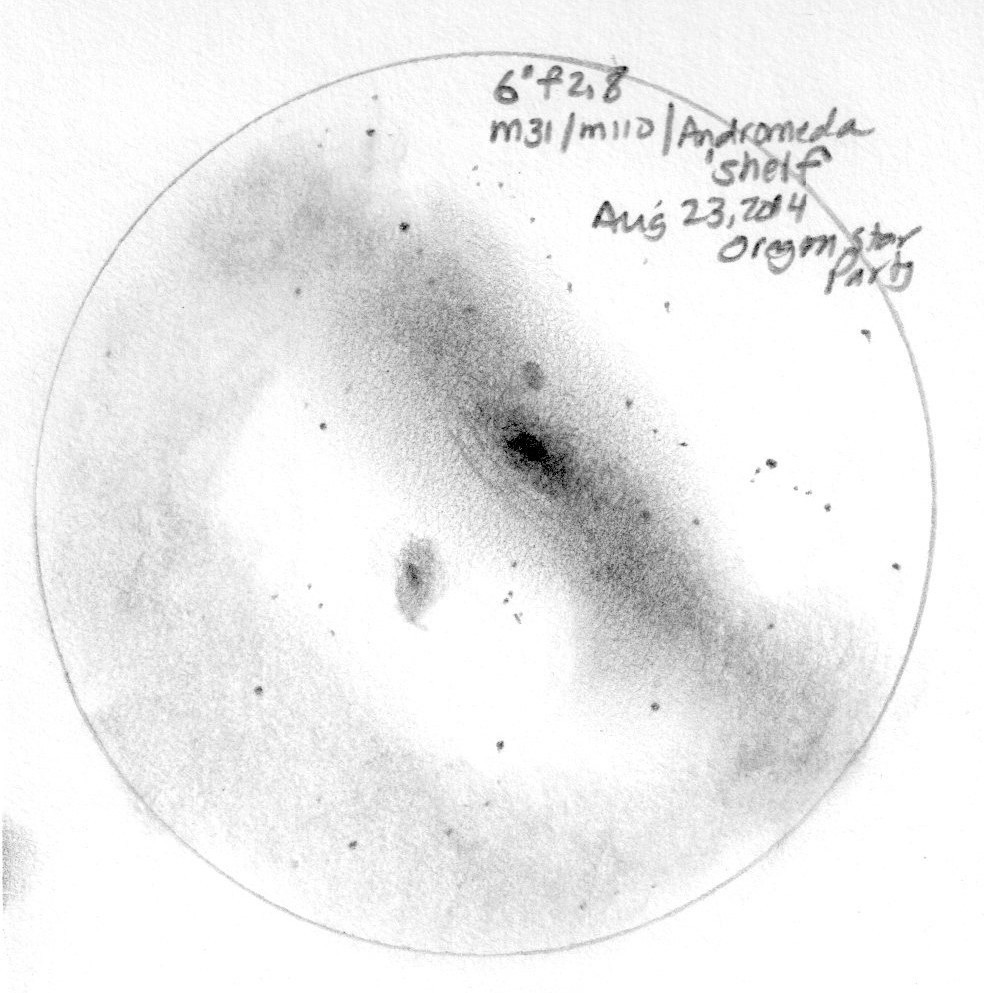
M110, a companion to the Andromeda Galaxy, showing hints of dust lanes and spiral arms.
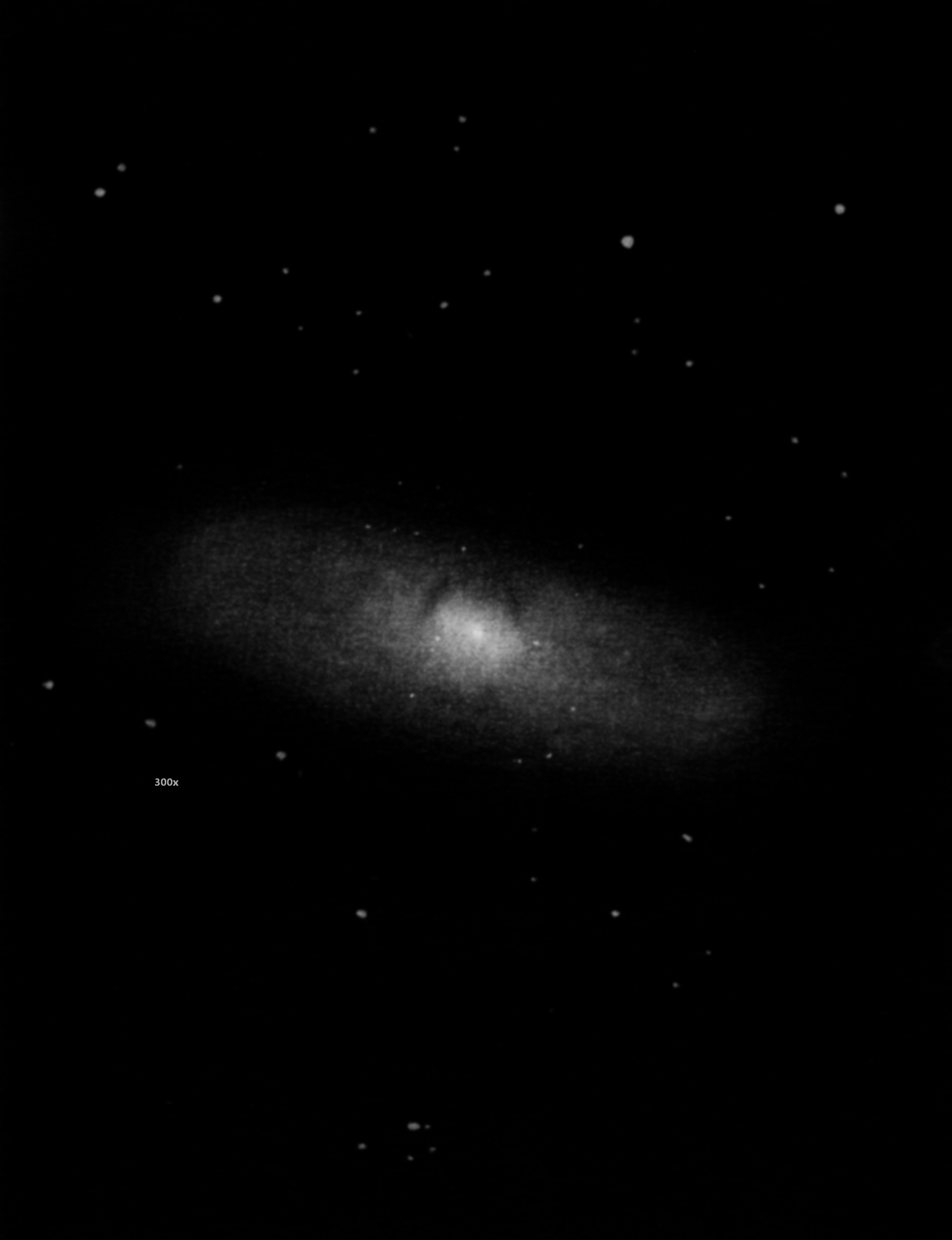
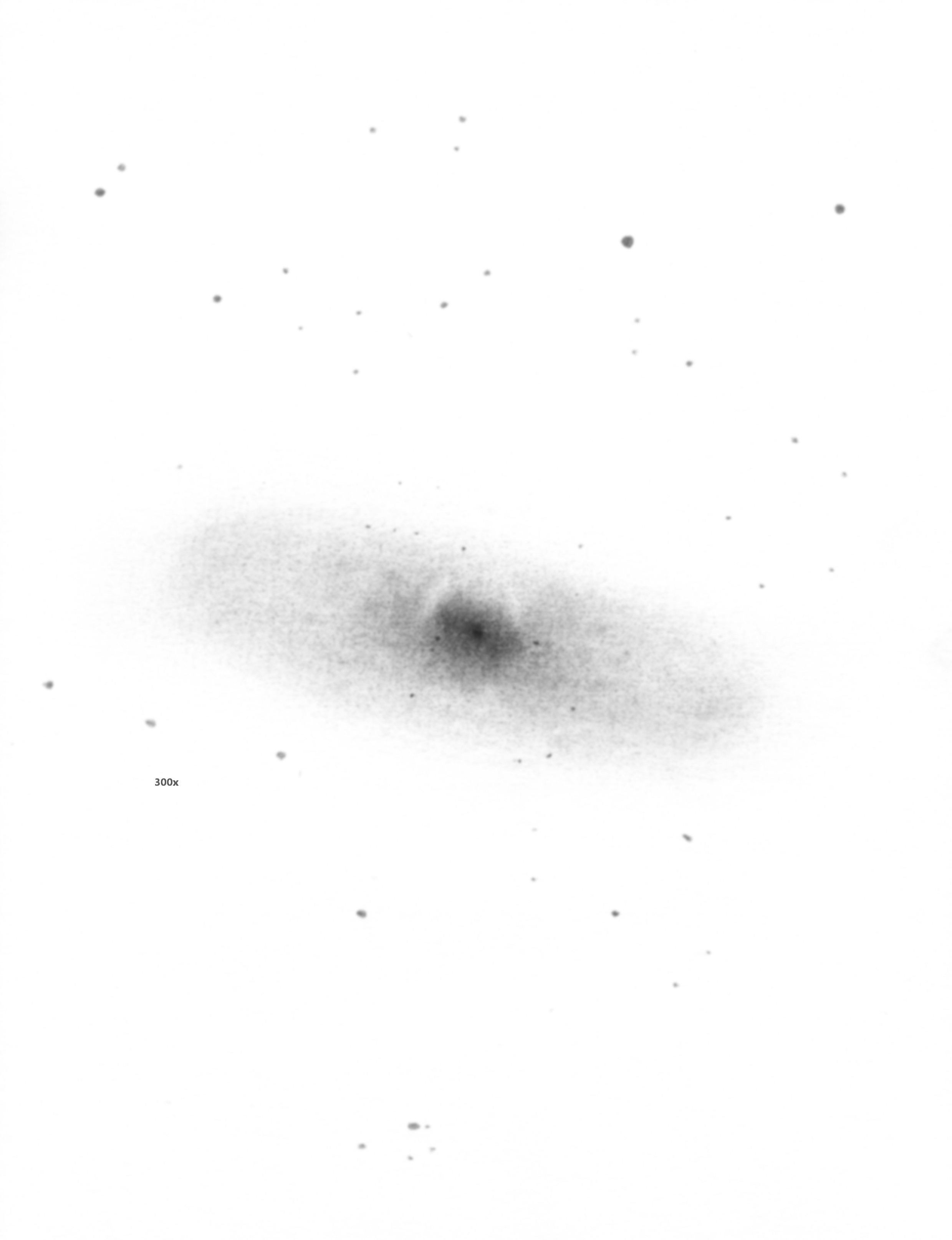
Shenron OIII region, NGC 7094 planetary, M15 IFN 'Z', IFN near Enif including Herschel's region #48; 30 inch f2.7.
A lot going on here...
- Newly discovered Shenron Nebula (an OIII cloud) surrounding NGC 7094: seen right away in the 30 inch with no filter, NPB made it more visible; the planetary had that nice blue-green color --- a cool observation
- The IFN next to M15 had a 'Z' zigzag shape
- I found an oval patch of light devoid of stars where Herschel's region #48 is listed; surely Herschel could see this as it is just the right size, stands out, and is relatively bright --- yea Herschel
- and a fainter smaller patch of presumably IFN light closer to Enif
All these I am sure can be seen in much smaller scopes in dark skies (mine were 21.5 at the time).


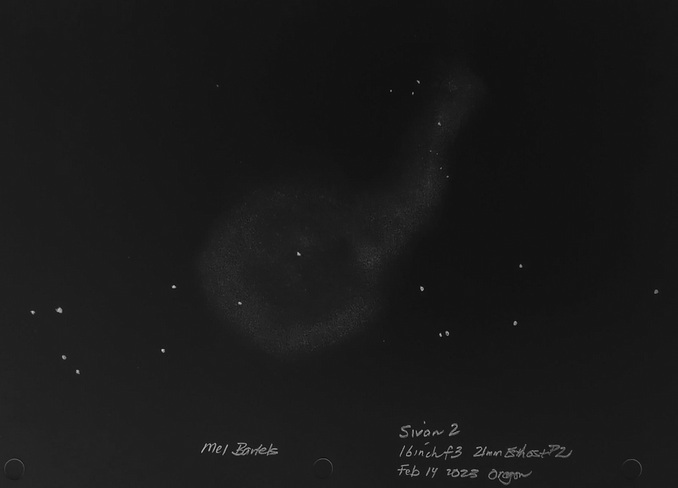
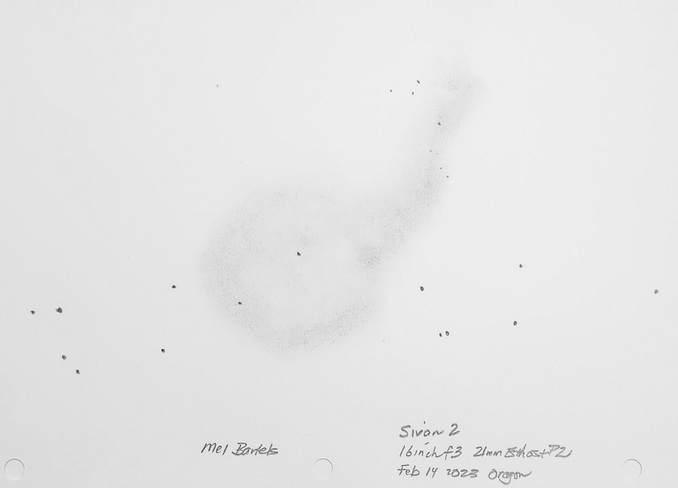
The Sivan 2 object: looks to be partially OIII. Drawn with the 16 inch f2.9.
Five to six inches of snow fell the night before. Mostly cloudy all day. At sunset, the sky cleared beautifully and soon the Zodiacal Light dominated the sky. If I had known I would have shoveled snow to wheel out the 30 inch. Instead I resorted to a tarp and carried out my 16 inch and plopped it down. The 16 inch f2.9 is the size and weight of an 8 inch. Oh my, the transparency is exceptional! M42 nebulosity stretching all the way over to Barnard's Loop; the Horsehead sharply delineated without a filter - better than many nights with the HBeta filter. The 16 inch is a perfect size: large enough to show star colors and faint small stuff, yet has a 1.5 deg to 2 deg wide field at lowest magnifications/max etendue. Caroline's Rose was beautiful with streaks of dark nebulae and beautiful reddened star colors. M35 bright and companion cluster a resolved sprinkle of fainter stars. I had resolved to galaxy hop using NGC 147, 185 to make my way to Sivan 2. The two galaxies were really pretty: both in the same field of view, NGC 147 fainter and larger. And unexpected streaks of IFN with some blobiness. The OIII filter made all invisible; the NPB dimmed the galaxies and clumped up the IFN. I planned to hop on over to Sivan 2. But I hadn't really nailed down the angle so I took a few tries to find it. And needless to say, I wasn't sure I could see Sivan 2.Eventually I got the angle from NGC 147/185 correct and swinging back and forth, I satisfied myself that I was viewing Sivan 2: the round portion was unmistakable. I sketched out the star pattern and what was visible of the nebula. The next day I redid the sketch for accurate star positions. I often have trouble with sizing star patterns when sketching at the eyepiece. The cool thing is that Sivan 2 responded to filters. The NPB didn't do much but the OIII! It made the long side really stand out from the main circular head region. The next day I looked around but didn't see much other than narrow band H-alpha. I did find this S&T article.
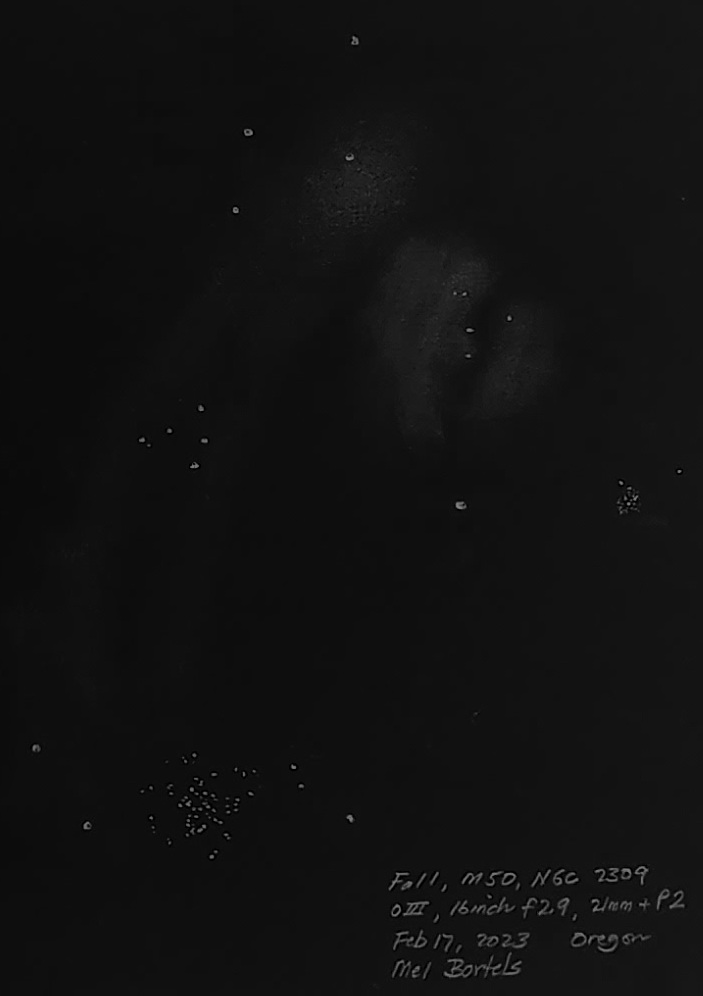
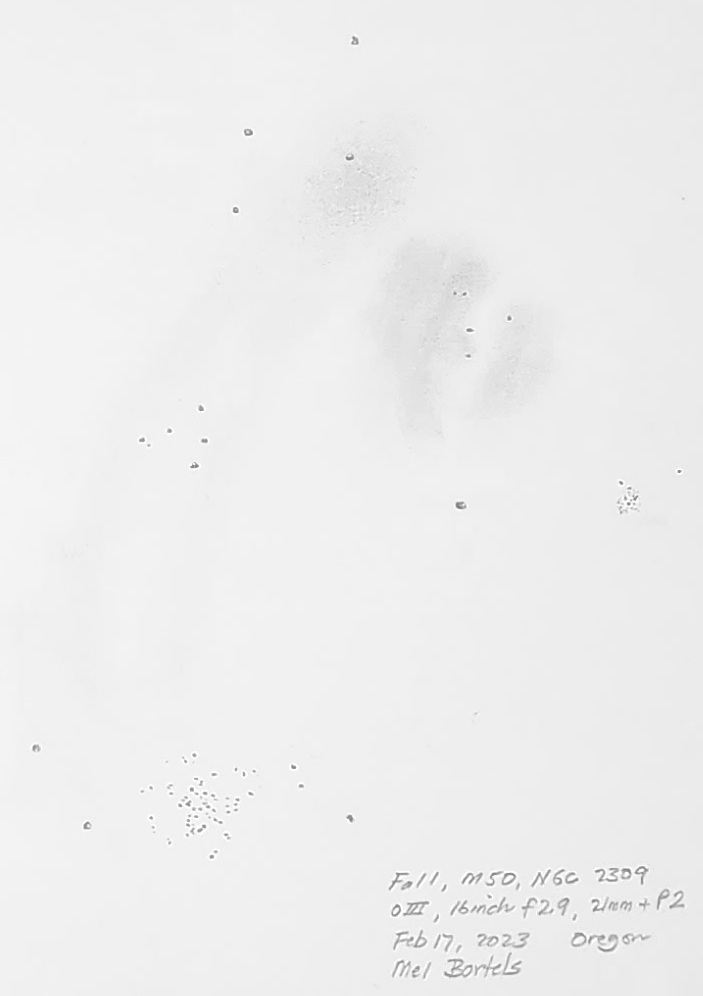
The newly discovered Fal 1 OIII object north of M50.
Immediately seen w/o filter; OIII pumps it up but more seen than the discovery image; also glows in HBeta; NPB also shows. One hour of great transparency (my test is Horsehead w/o filters) before skies deteriorated. This makes 3, well 2 1/2, OIII clouds: M31 OIII, Sivan 2 (at least one side of it) and now Fal1.
That's M50 at the bottom of the sketch, NGC 2309 to the right side of the sketch. NGC 2309 is a beautiful sprinkle of stars, like salt spilled on the table.
Above M50 is a triangle of stars with a brighter star to the right passed the center line of the sketch.
The triangle and star point to a 'Y' or 'T' that's the center of the OIII cloud.
There's a little OIII hook that goes to the center of the 'Y' or 'T'. Need averted vision for that.
The main part of the OIII cloud is obvious and doesn't really need much averted vision.
The blob to the upper left is quite distinct in my OIII filter but doesn't show on the discovery image!?
Are these a harbinger of a new class of object? Twitter thread on discovery image and the Cloudy Nights discussion.
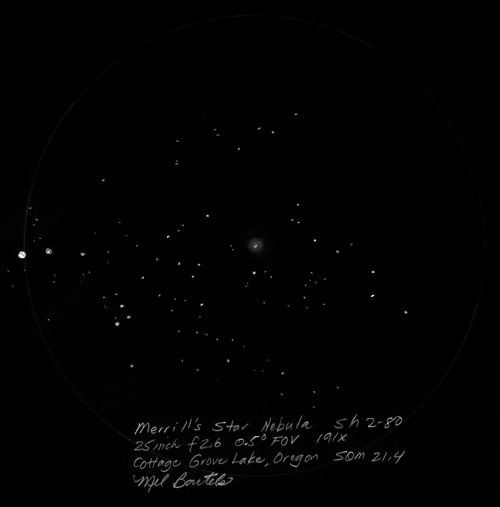
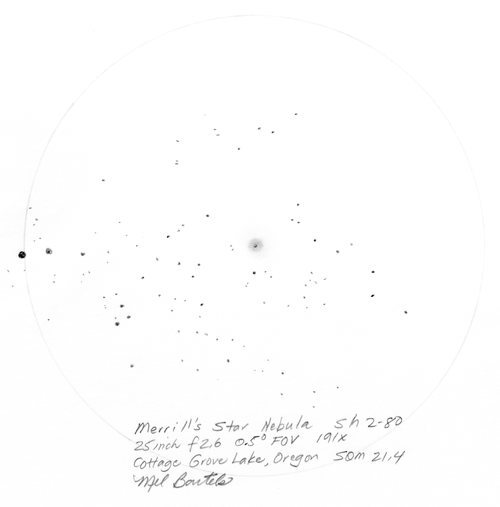
Merrill's Star Nebula. 25 inch f2.6.
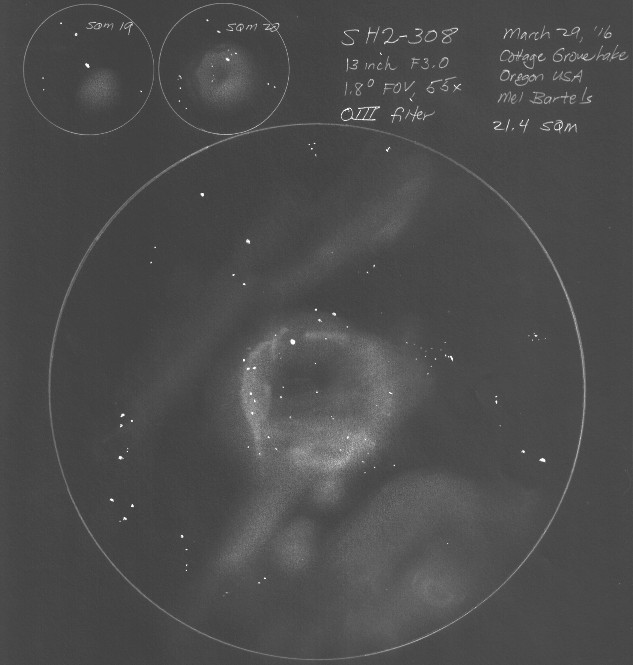
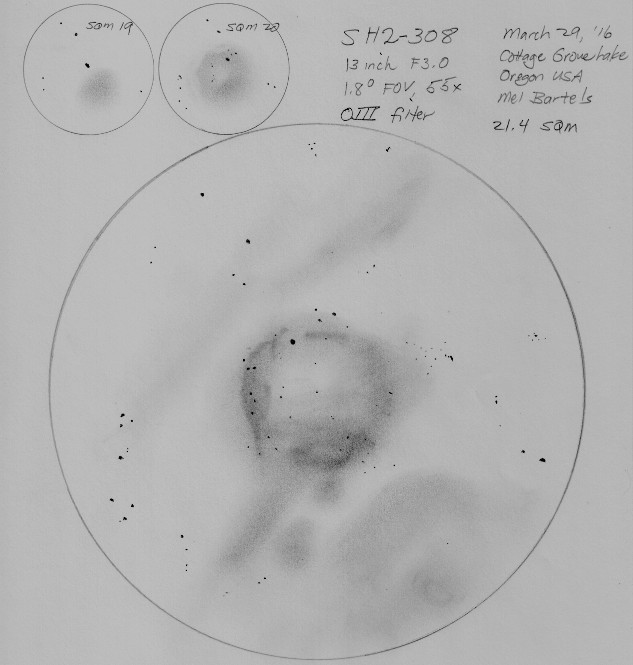
SH2-308, a Wolf-Rayet shell. Really beautiful with my 13 inch f3.0.
My sketch of SH2-308, a shell surrounding the Wolf-Rayet star, EZ Canis Majoris. Setting up for the evening I thought that the 1.8 degree field of view of my 13 inch F3.0 might be too big, but as it turns out, there is interesting and unexpected nebulosity in the field. I also included small sketches showing what I could see as twilight deepened, with SQM of 19 then SQM of 20. The sketch was made under superb conditions, SQM 21.4. While deep digital images are full of exquisite colorful detail, either the imagers are processing out the fainter stuff or cannot pick it up with their narrow band filters. The result is that visual observations can 'go deeper', show unexpected nebulae and are something to get excited over. Dark skies are a must, as well as a wide field and a good OIII filter.
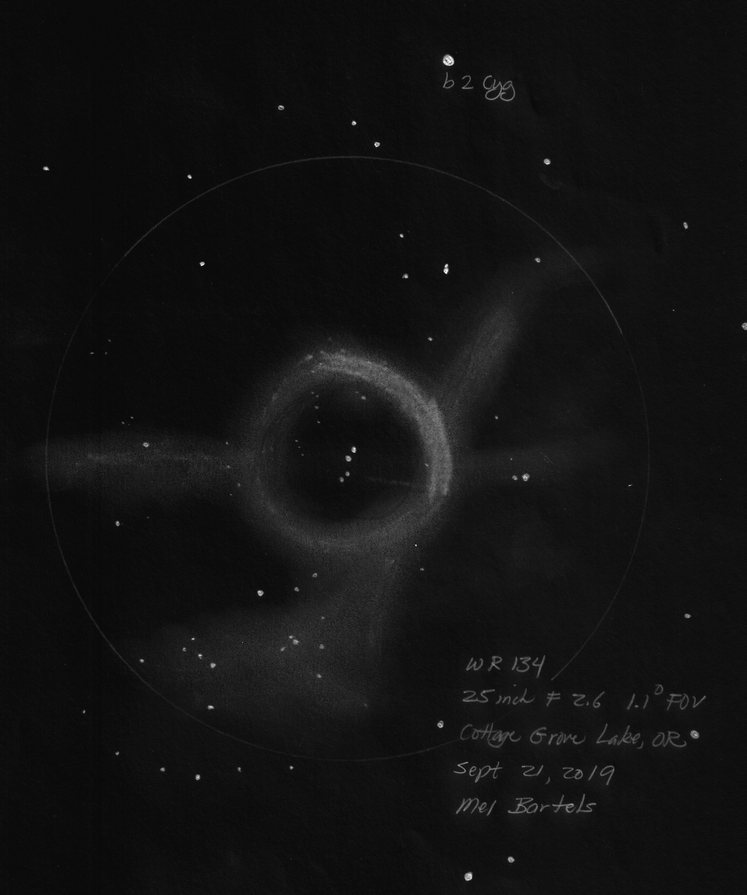
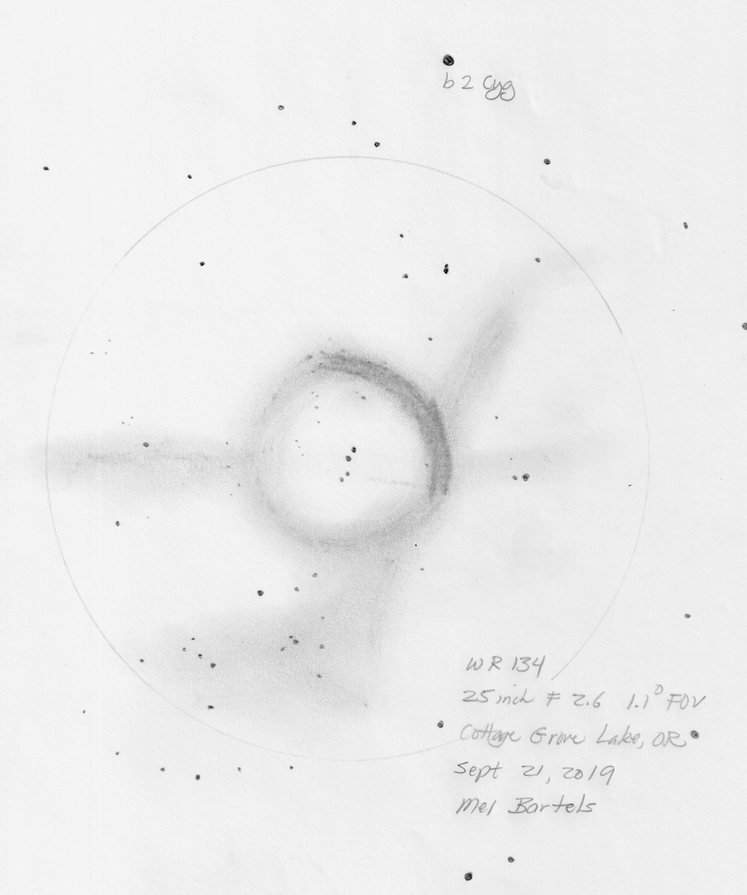
WR 134 (V1769). A complex ring as seen in my 25 inch f2.6.
With my 25 inch. The double stranded arc is very nice and the overall ring best seen with an OIII filter. The NPB filter included the surrounding nebulosity. Digital images on the web are beautiful: it's a relief that my visual results match up well. Squinting until the nebulosity almost disappears resembles the visual appearance: fine details disappear, nebulosity is coarse grained, but faintly still visible. As someone else once said, "We're gonna need a bigger boat".
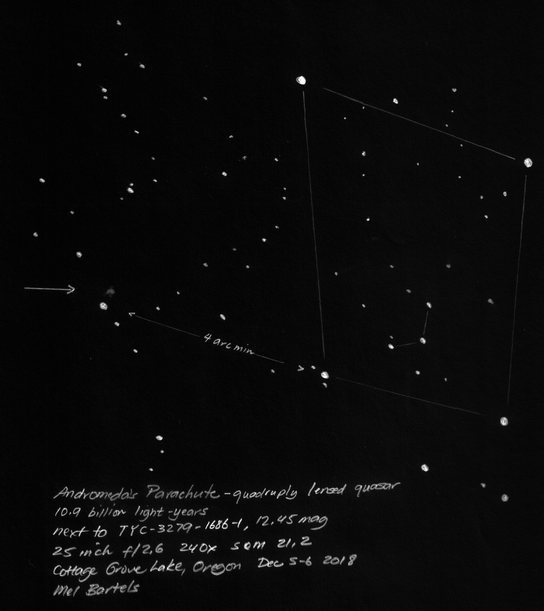
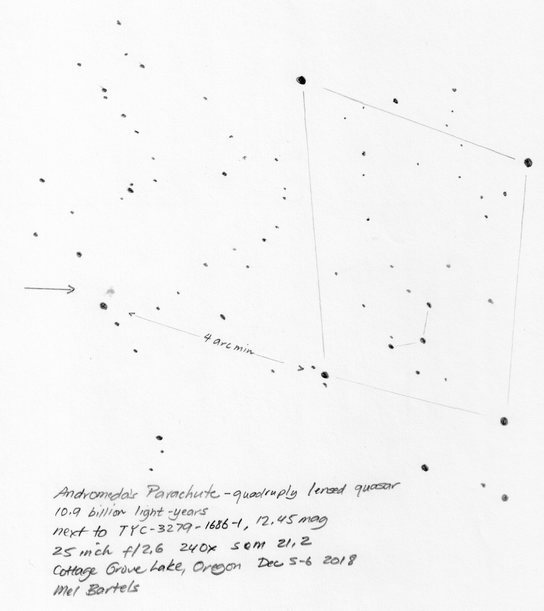
Andromeda's Parachute, a quadrupuly lensed quasar 10.9 billion light-years away. 25 inch f2.6.
(It's now 19 billion light years out). Easy to identify the star field after a rather long star hop, I could see the boomerang shaped smear with averted vision straight away. It is faint. I could not resolve the curved smear into the individual components though.
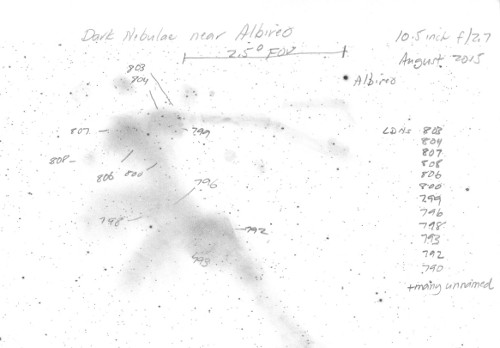
There is such a wonderful tableau of stars, groupings, Milky Way and dark nebulae right next to Albireo. Who would have thought? If you have a scope with a two degree field or larger, check it out! It's perfectly placed.
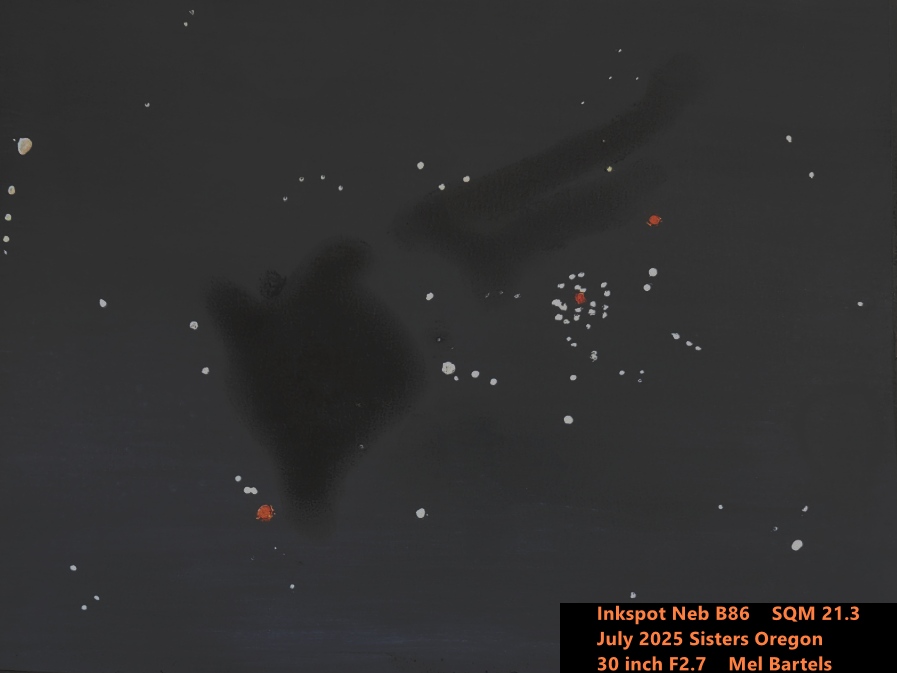
Barnard 86, the Inkspot Dark Nebula. 30 inch f2.7.
I wanted to capture the dark nebula floating in a sea of gray Milky Way background. And the colors of the stars. Pastel on black paper.
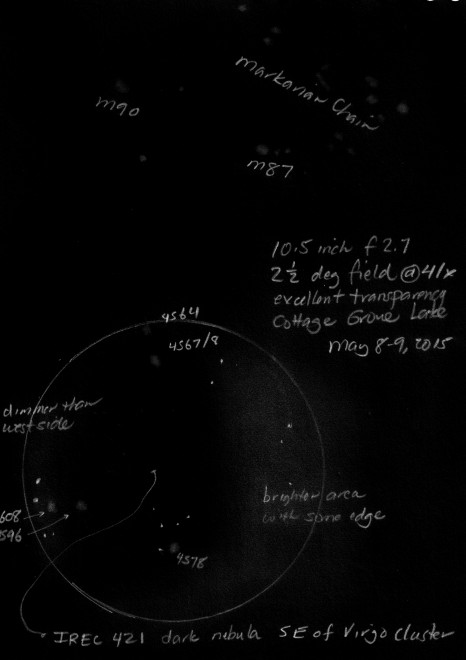
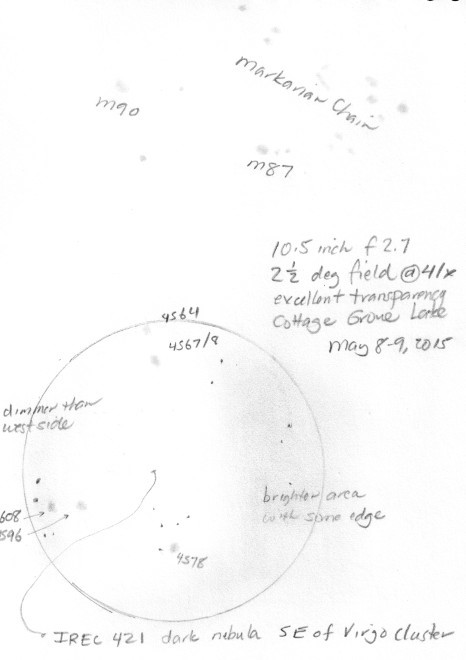
IREC 421, a dark nebula SE of the Markarian's Chain of galaxies.
Richest Galaxy Observing. RFT's are good for more than just the Milky Way. Scanning from Virgo to Coma Berenices, 5-20 galaxies in every field. Came across this dark nebula. Cannot find a deep enough digital image to compare with.
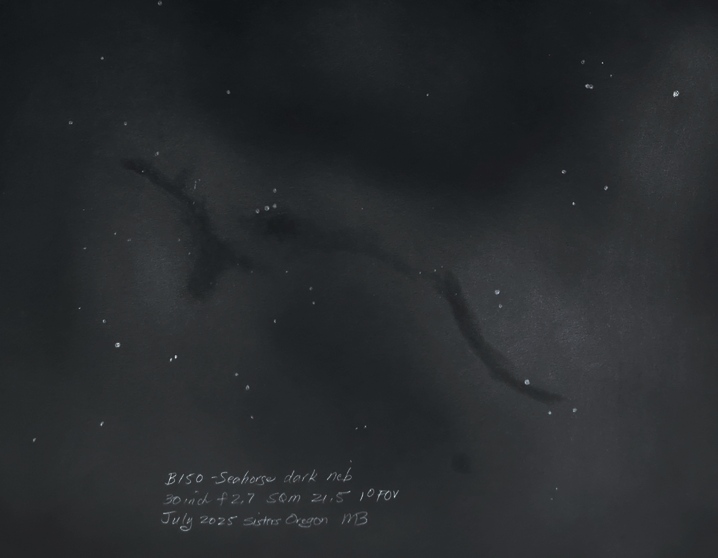
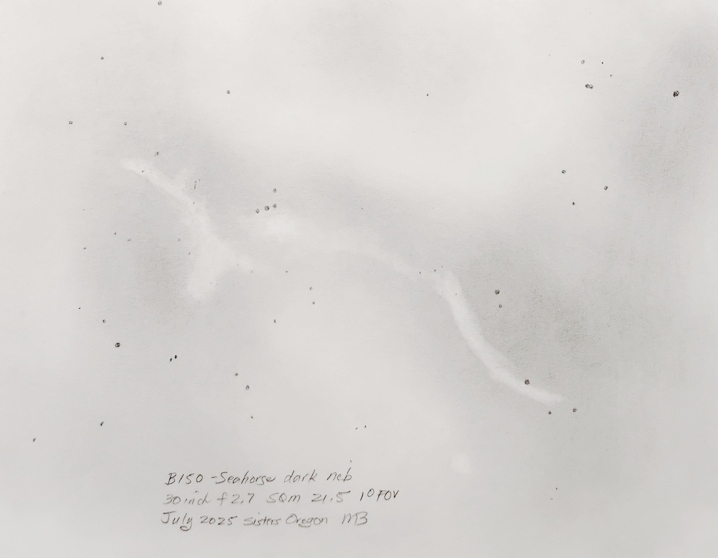
Barnard 150, the Seahorse Dark Nebula. 30 inch f2.7.
It's a big object with varying intensity of light around the dark nebula. Charcoal on white paper.
The 'Ring' of Betelgeuse is broken into clumpy dark nebulae with B36 the dominant feature on the western side as a long diagonal streak. There are offshoots to the northwest, one leading to B35. The arced bell to the north of Betelgeuse is clumpy and splotchy. The long curved section to the south of Betelgeuse is beautiful - subtle, mottled, striated.
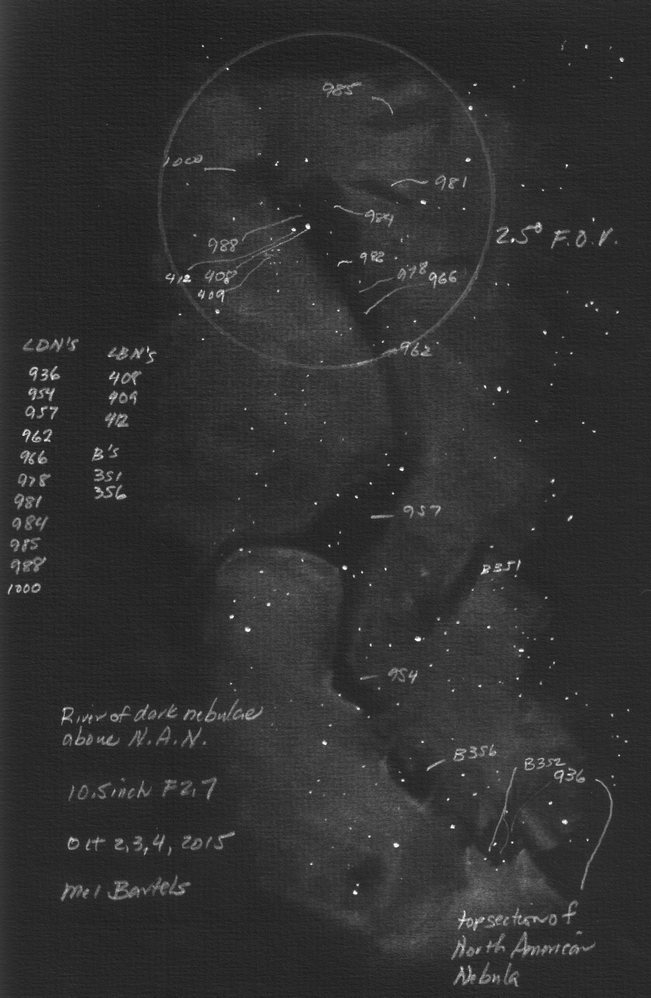
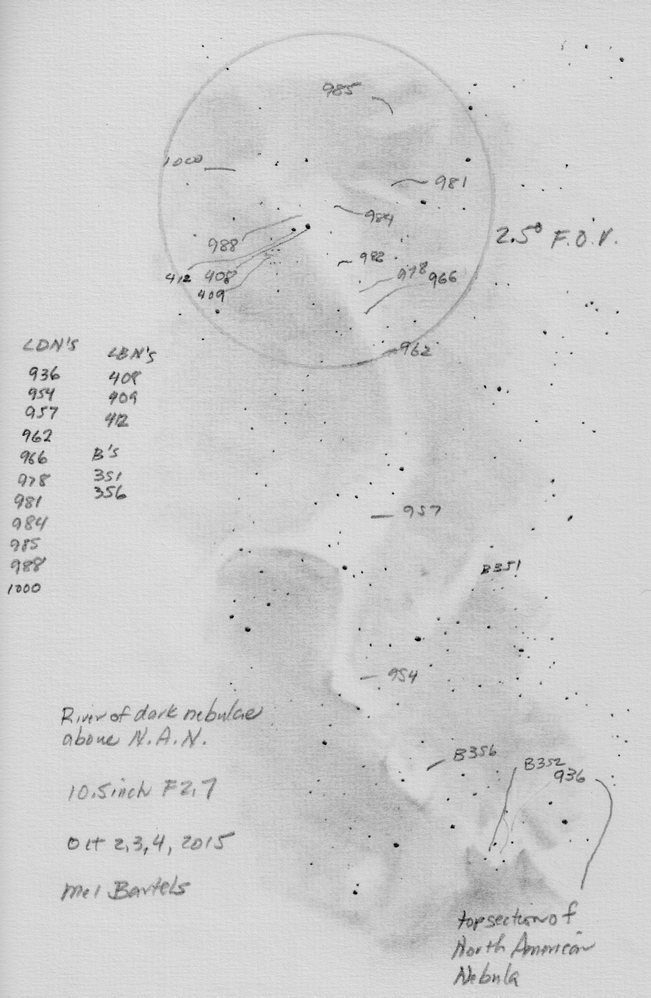
The 'Dark River'. Dark nebulae pouring from the North American Nebula.
Clyde Tombaugh was right - Cygnus is the favorite constellation for dark nebula.
Accumulated drawing over three nights with my 10.5 inch F2.7 scope at 2.5 degrees field of view. I am able to trace the black river from the top of the North American Nebula through LDN 1000 and beyond. The river continues intermittently into Cepheus, but basically ends at the explosion of dark nebulae just past LDN 1000. You can backtrack through Gamma Cygni and south of Albireo, then into Scutum et al.
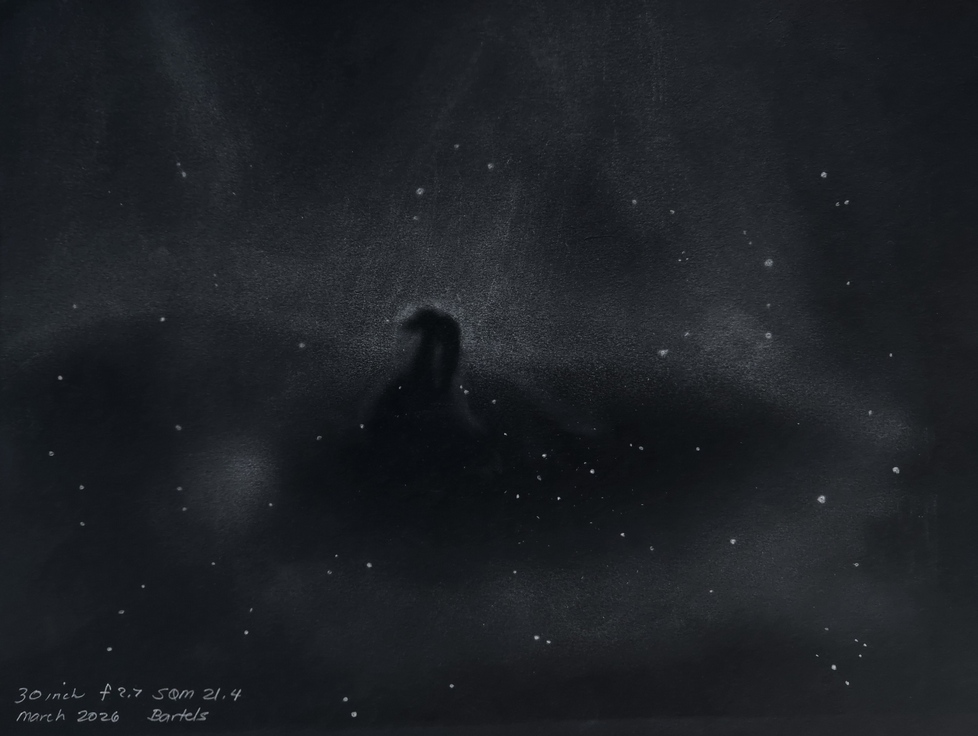
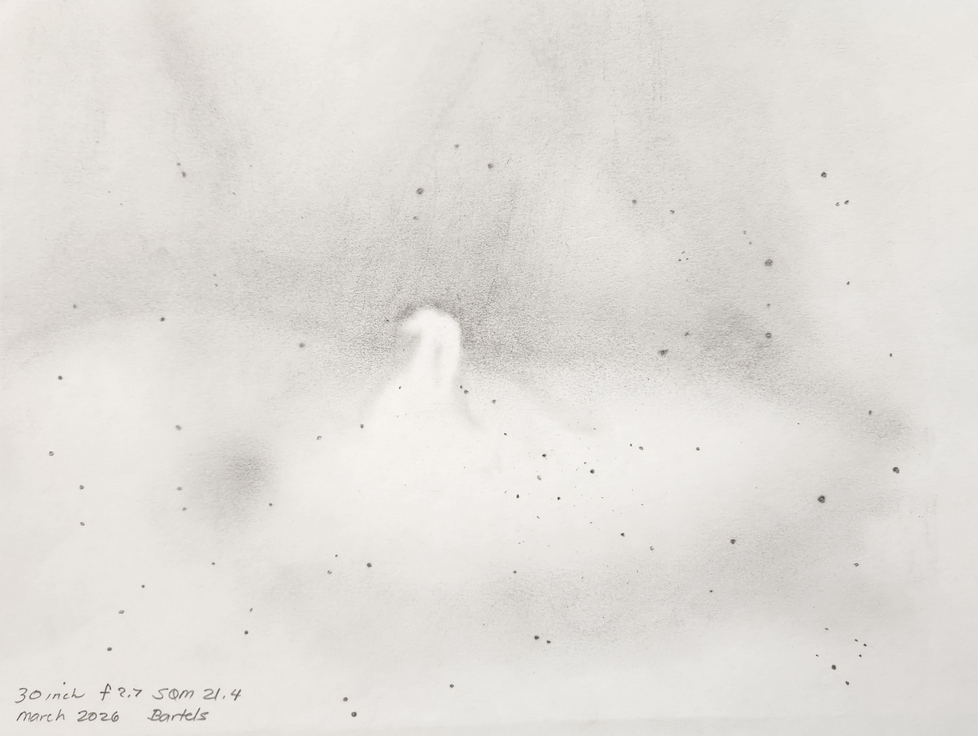
The Horsehead as seen through my 30 inch f2.7 with H-Beta and TV-Bandmate filters.
You know, I'm not fully dark adapted when I first start viewing, so not much can be seen, just a black intrusion into the glowing mist that stretches across the field of view. But gradually nice nebulosity emerges. The glow around the horse's head, the streaks in slightly different directions stretching above the HH. And in particular, the rather bright blotchy nebulosity that stretches below the Horsehead. This with the usual suspects: H-Beta and TV-Bandmate filters. After about an hour of inspecting the field, it was quite the wonderful view, one I will remember.
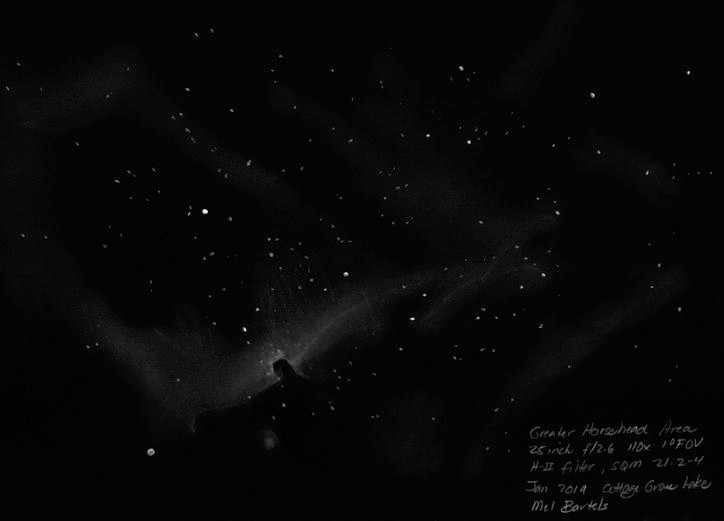
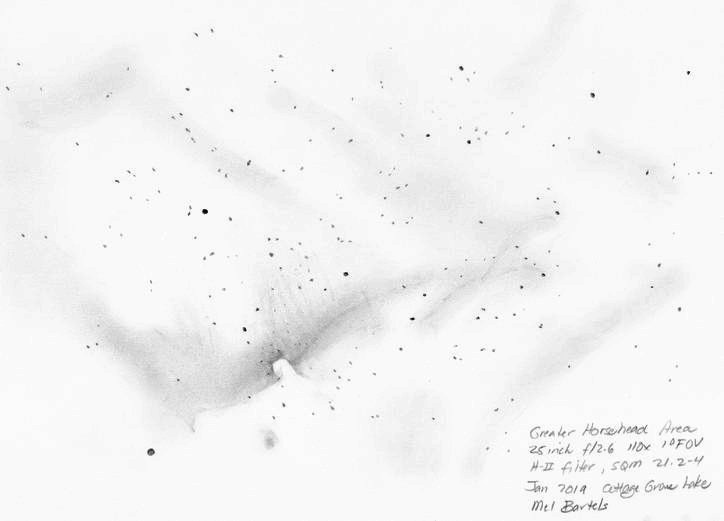
The HorseHead Nebula area (IC434) with my 25 inch f2.6.
Over 40 years ago I first glimpsed the Horsehead with an 8 inch scope on a below 0F winter night in the Oregon Ochoco Mountains. The absence of filters made detection very difficult - just a subtle change in the field brightness. My interest today is the area surrounding the Horsehead. Imagine if the dark nebula did not exist - how would we see the nebulosity as a whole? Frustratingly the cataract in my dominant left eye gave a distinctly inferior view. Precisely centering my right eye, an act quite difficult for a f2.6 scope with a 100 degree eyepiece, changing my averted vision angle, and pushing the scope every so often, cut down on the moments of clarity, but I have no choice right now.
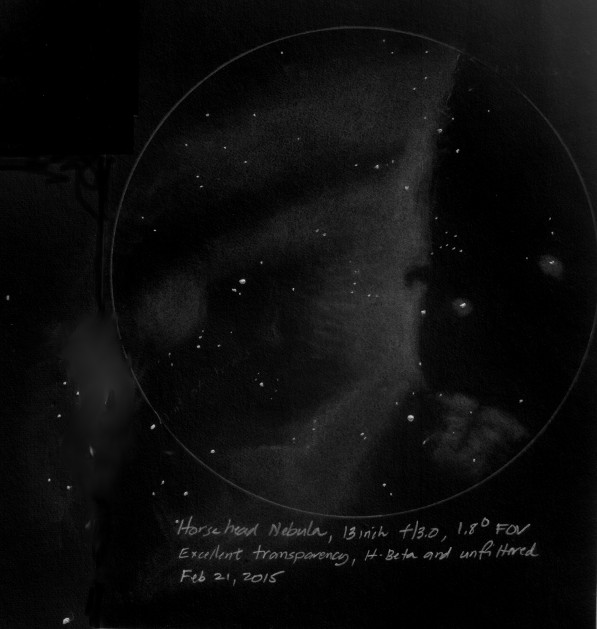
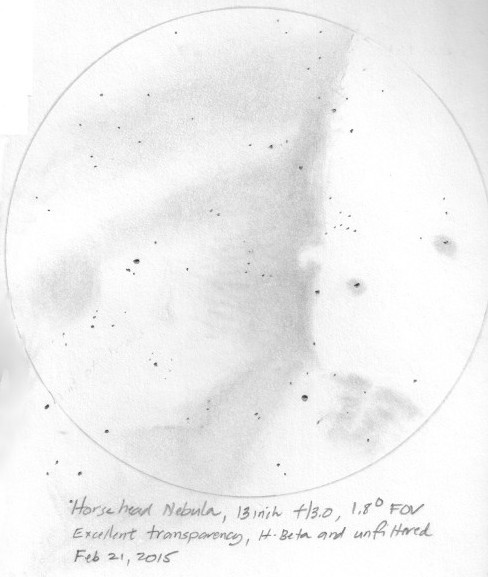
The HorseHead Nebula area (IC434) with my 13 inch f3.0.
With an H-Beta filter, the nebulosity that the Horsehead is embedded within stretched on and on. I've never seen anything like it. There's more to the Horsehead than the notch or head itself. Last night I found that the nebulosity extends almost to the middle star of Orion's Belt. Contrast with my sketch with my 13" f3.0. They are not that dissimilar. With the 25", a bright arc points to B33 and the looping nebulosity is thinner; plus the very faint nebulosity below right of the Horsehead is clear. I also changed sketching thinking: with the 13" I tried to show all that I saw, with the 25" sketch I tried to portray a more realistic view through the eyepiece, so the dimmer arcs are, well, dimmer!
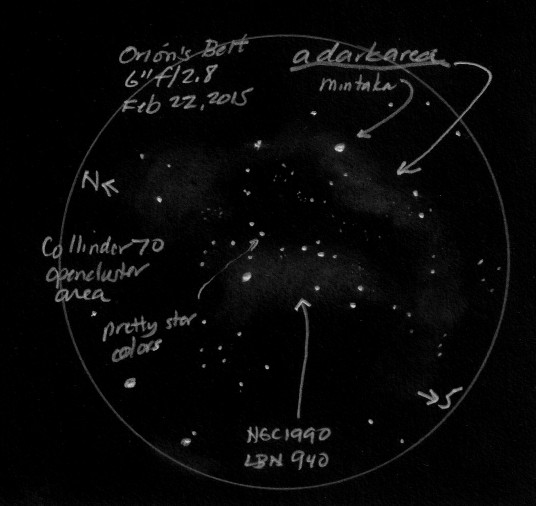
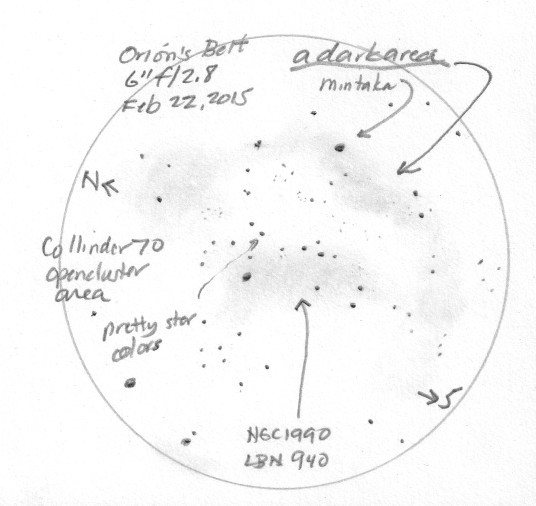
A dark area in Orion's Belt as seen in my 6 inch f2.8.
CTB1 the Medulla Nebula with the 30 inch f2.7.
In my 30 inch f2.7 with silvered primary in SQM 21.2 skies, the supernova remnant CBT1, the Medulla Nebula, was quite visible, especially with an HBeta filter. At first when I swept through the area I readily saw the curved arc of nebulosity which looked like the edge of CBT1 but the shape wasn't quite right. Scanning around I found the SN remnant just beyond. I found a thick perimeter to the SN. The majority of digital images don't show the false wall and don't show a thick enough edge.


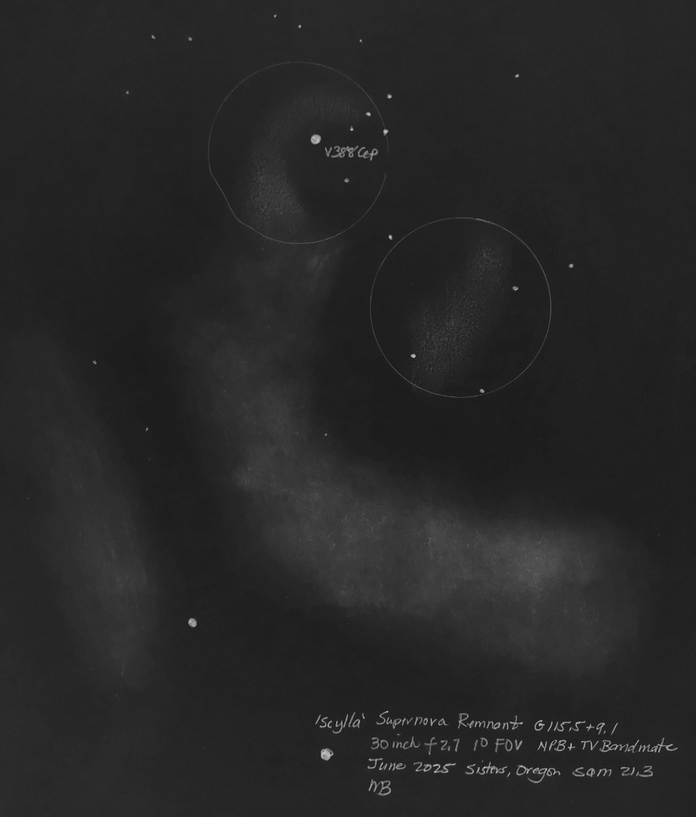
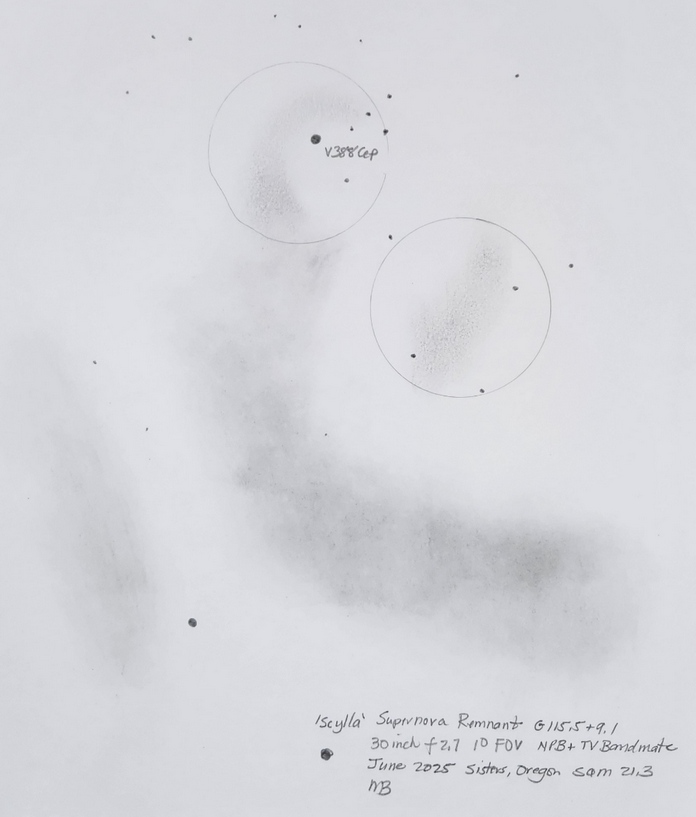
Scylla G115.5+9.1 with the 30 inch f2.7. The two portions of the SN remnant candidate are lightly circled. The discovery image can be found here.
Best views were with the NPB and the TV Bandmate filters. The ISM is fairly bright. The SN remnant candidate is fainter but clearly seen after a few moments of averted vision.
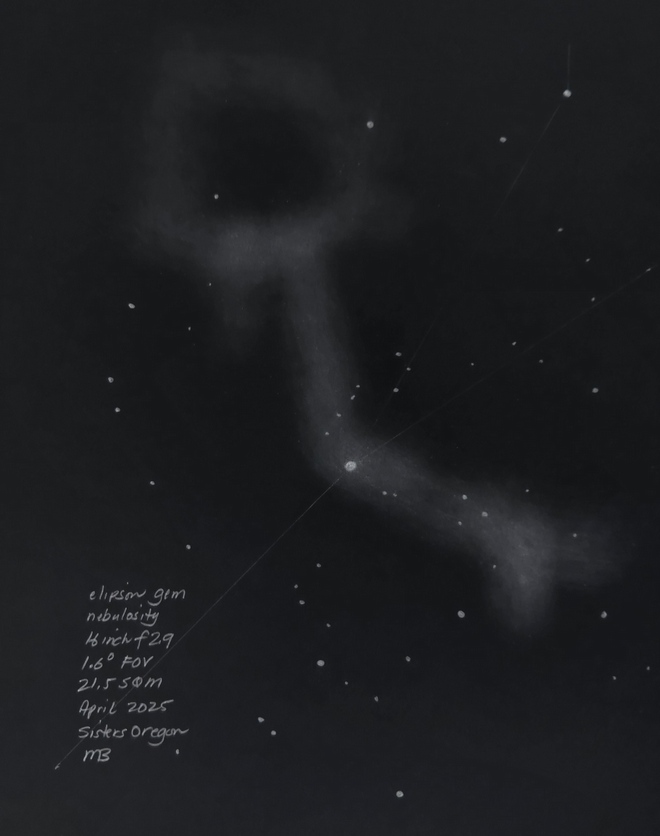
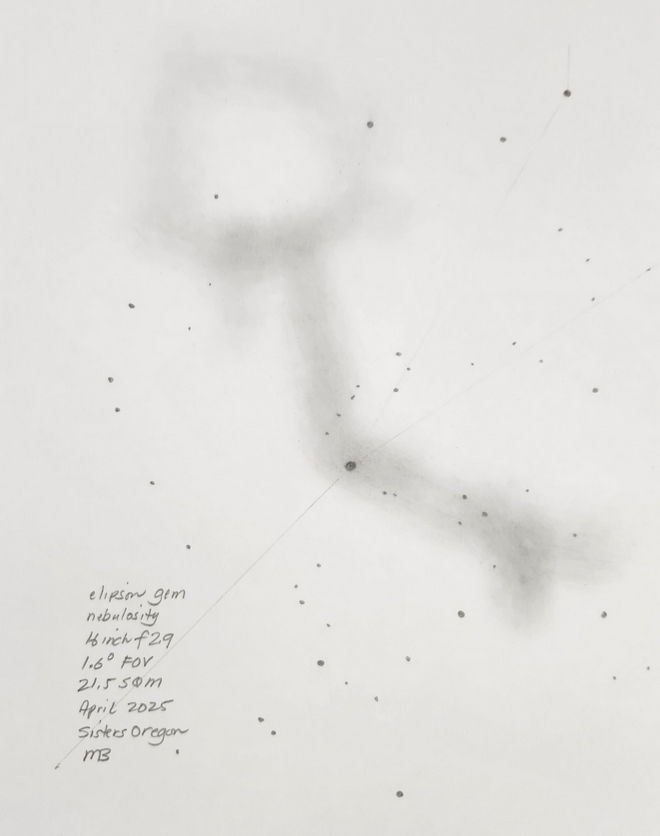
Unnamed nebulosity flowing through epsilon gem. 16 inch f2.9.
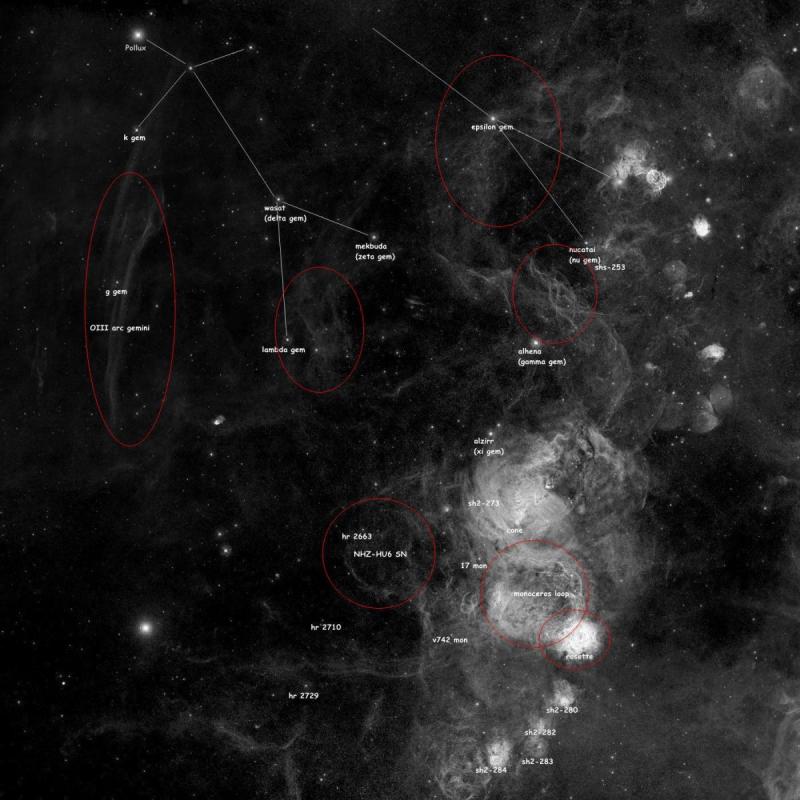
Said nebulosity cuts through epsilon gem. Easily seen in the 30 inch but way too big to sketch. But in trying to trace out the nebula, I came across field after field of faint little galaxies at the edge of visibility at low magnification. Noteworthy for sure. Next night / last night I took out my 16 inch with a field of view double that of the 30 inch. Success. I am including a finder chart, a marked up digital image where I circle the nebulae that I've seen, in case any of you want to go after these rather new nebula. They are surprisingly visible.
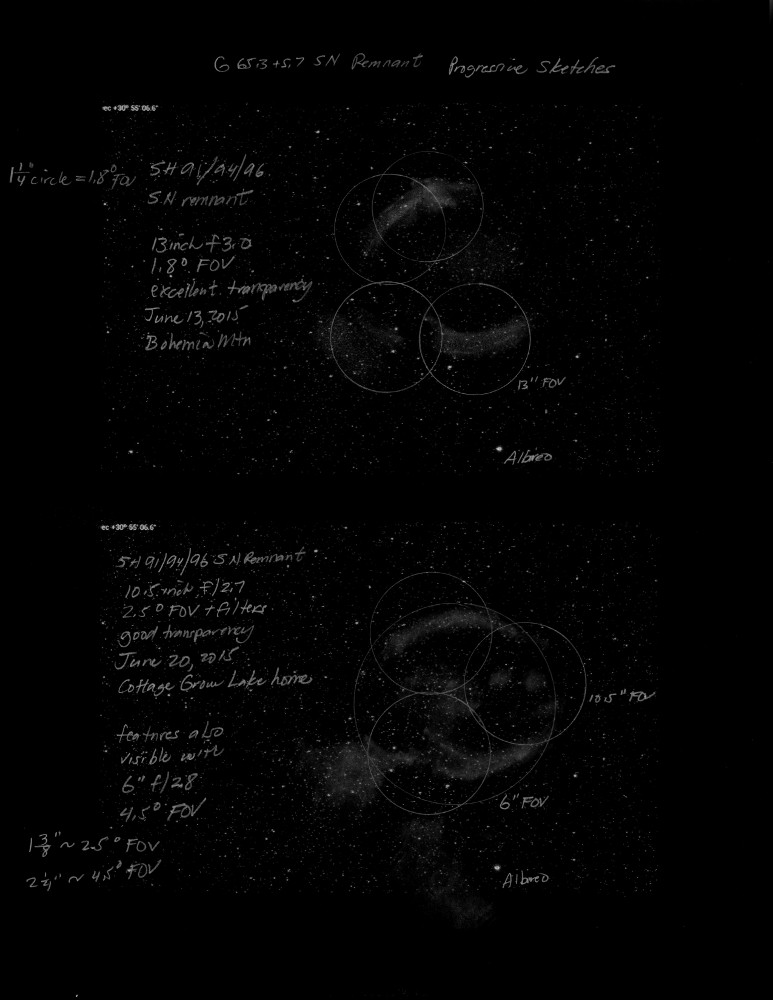
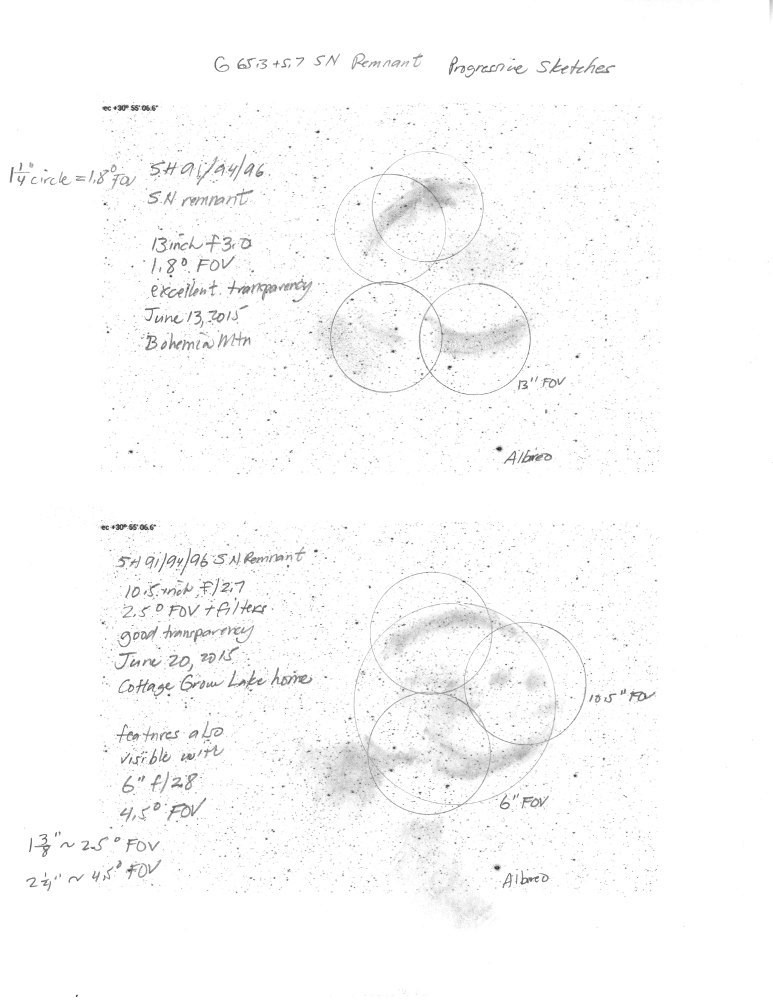
Progressive drawings of SN remnant G65.3 5.7.
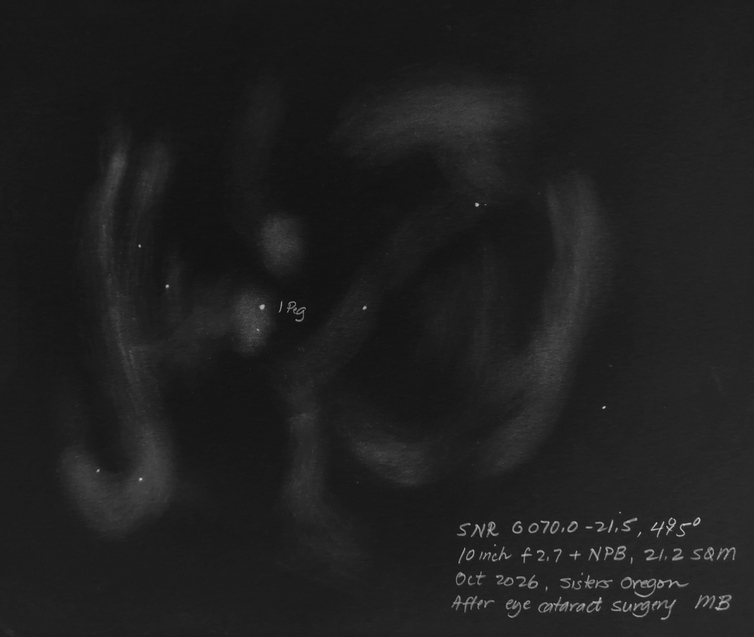
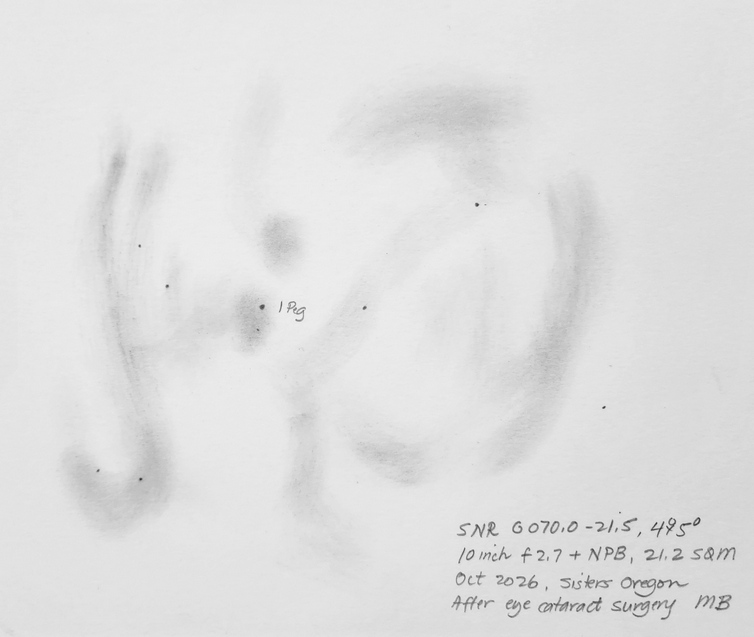
G070.0-21.5. 10.5 inch F2.7, NPB filter. SQM 21.2.
Immediately visible; no effort in tracing the arcs and hot spots. First telescope object after eye cataract surgery. Stars in the scope are bright! Lots of bluish hues to stars here and there. Pupil seems to be at least 6mm. In my much younger days I had a 8mm pupil. More recently it had shrunk to 6.5mm. That means that my lowest powers lose some light from the periphery of the mirror; on the other hand, the illumination across the field is improved. And I can always switch to my 6 inch F2.6 with 4+ deg FOV if necessary.
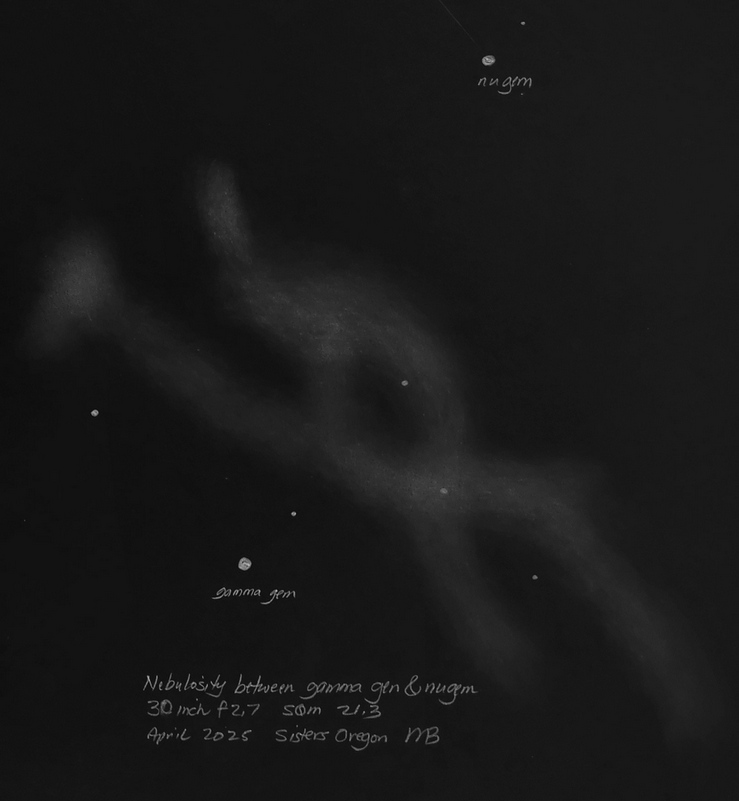
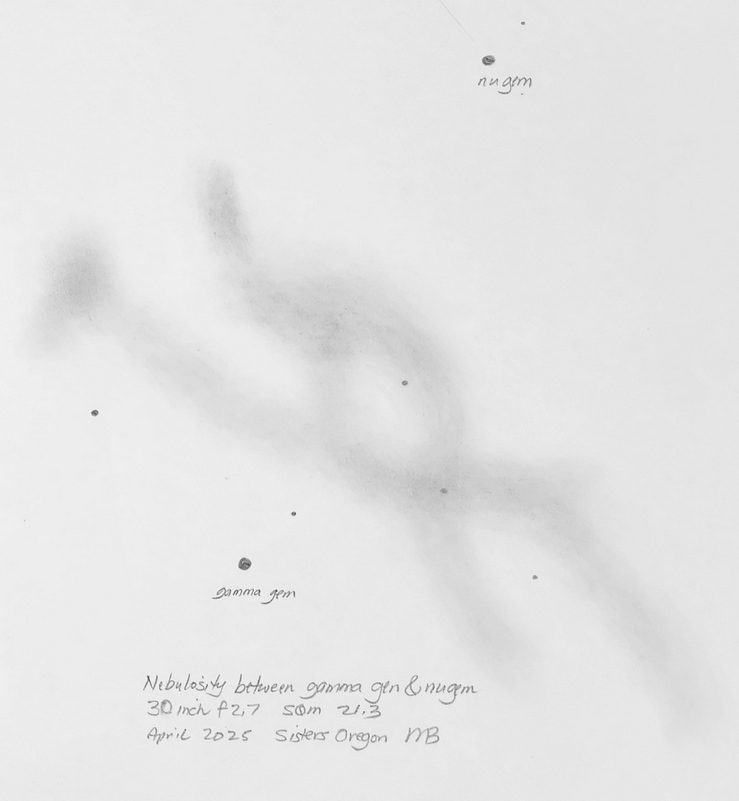
Unnamed nebulosity between gamma gem and nu gem. Part of a SN remnant?
Inspired by this CloudyNights post. I looked to see if the nebulosities next to lambda gem and between gamma gem and nu gem were visible. Yes! And fairly easy to see with interesting detail. I tried several filters. The NPB brought a bit more contrast but the un-filtered view was best.
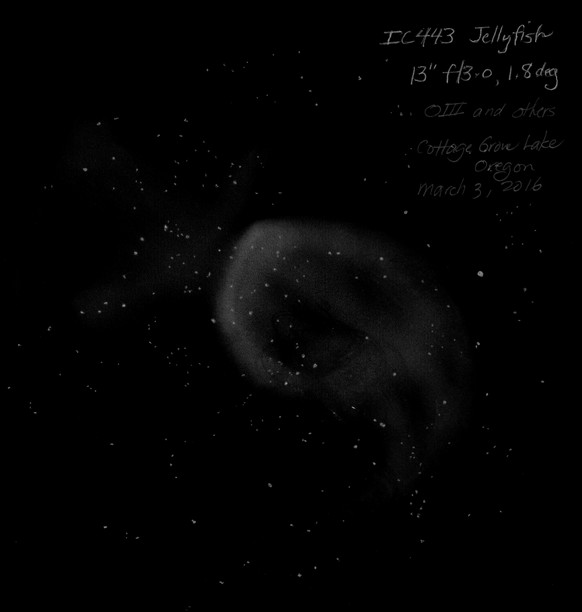
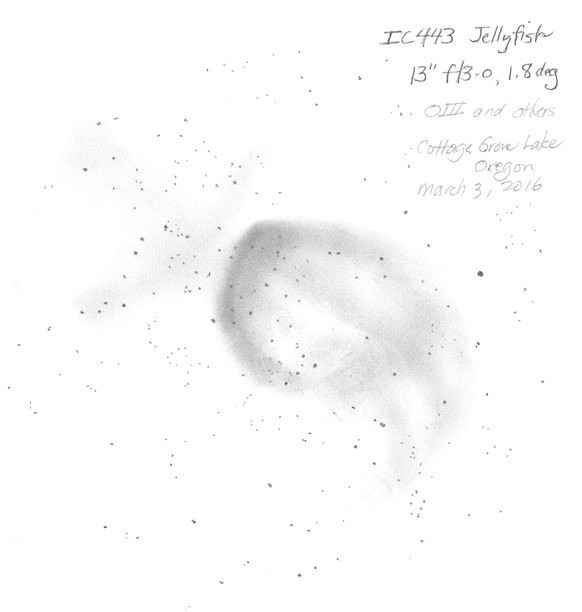
IC443, the Jellyfish Nebula as seen in my 13 inch f3.0.
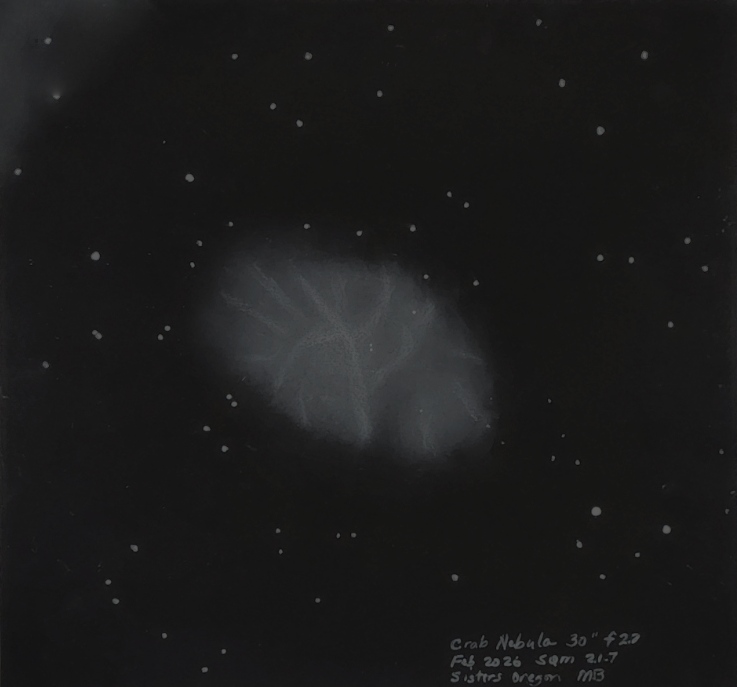
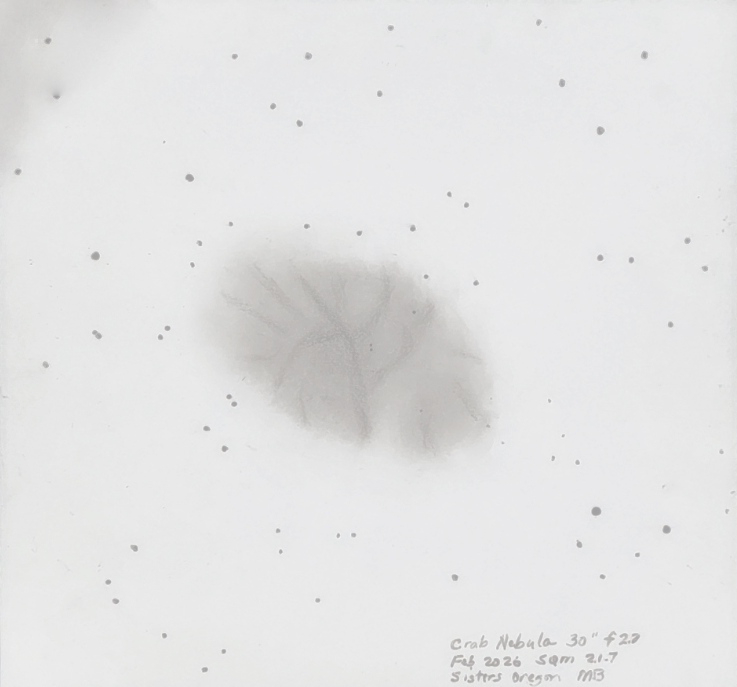
Crab nebula, 30 inch f2.7.
Transparency really nice at 21.7, seeing good. I could see a wealth of filaments in my 30 inch f2.7. And a sprinkling of very faint stars: impossibly tiny sparkles of light. Very cool view. Reminded me of my view 40 years ago with my old 24 inch F5.5. And there is faint ISM in the upper left corner - bands that extend quite a distance. Best view in the 30" was 250x-ish, for the 24" my notes say 135x. I had hoped to see the pulsar flash but it was so faint. It and the star next to it were barely visible with averted vision, so no chance to catch 30 times a second flashing. Which brought to mind, what have I gained 40 yrs later? 30 inches aperture vs 24 inches is a modest gain, depending on the object. Field of view is greater in the 30" at 1 deg vs 0.7 deg in the 24", stars are infinitely sharper at the edge of the field of view thanks to the coma corrector and modern eyepieces vs the war surplus 38mm Erfle. Scope weight lightened from 350 pounds to 100 pounds. Probably the biggest difference is feet on the ground observing vs a 12 foot ladder. Which I once forgot I was on and stepped off into the void. Luckily only had bruises. Best not to do that today! Darker skies are harder to find today for sure. I remember a time when motivated amateurs had observatories in their backyards. But I can't forget that I've had a load of fun and satisfaction building all these scopes in these last 40 years. And all the unique views, regardless of aperture or speed. My greatest sadness is that Steve Swayze never got to look through the 30". His 40" was really something along with his 16 foot orchard ladder, which sometimes tipped backwards when trying to push the scope on around in azimuth when pointing near zenith. We conspired for several years to get 50" blanks but back in the day, just too $$$ for our pocketbooks.

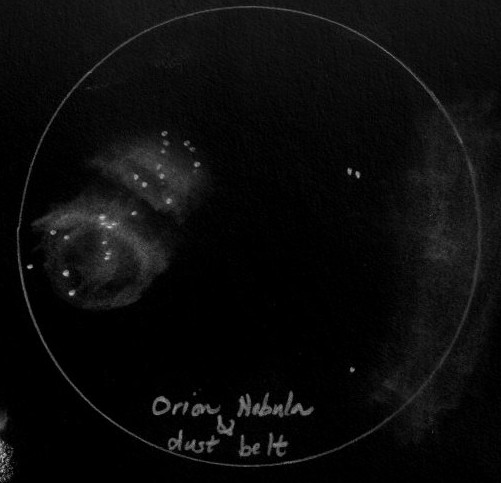
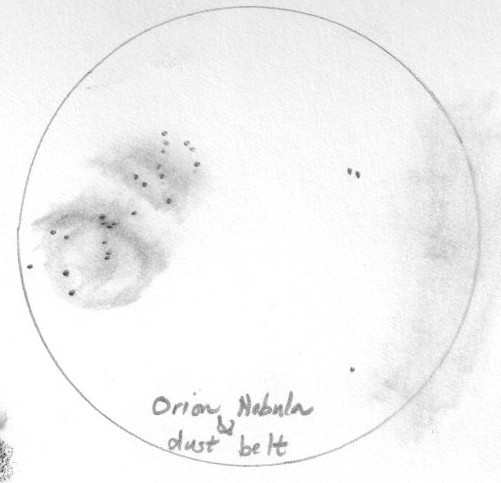
There's a dust belt to the west side of M42, the Orion Nebula with Barnard's Loop curving to the east and below. Two drawings with my 6 inch f2.8.
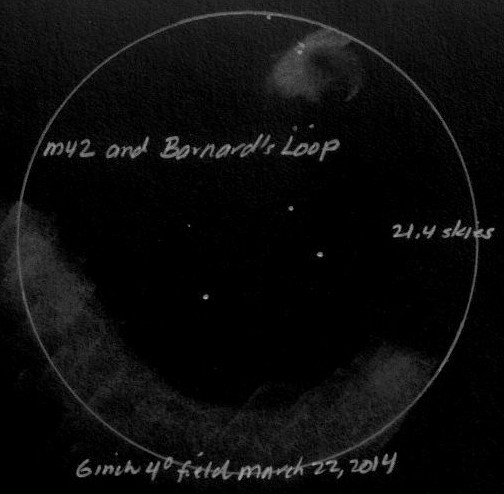
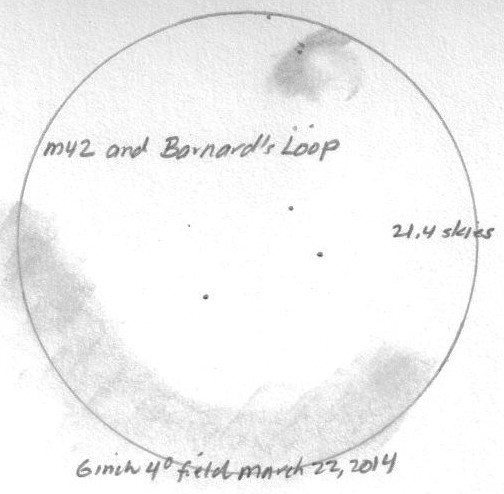
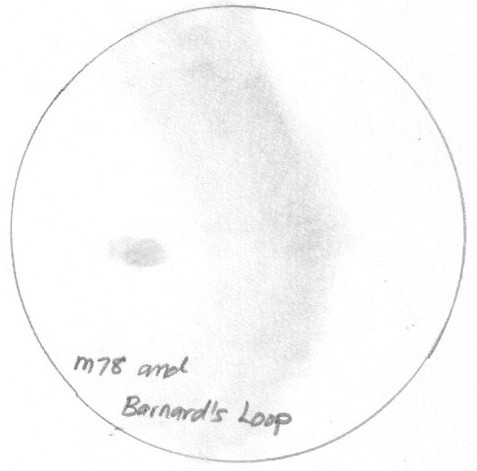
M78 and nearby Barnard's Loop.
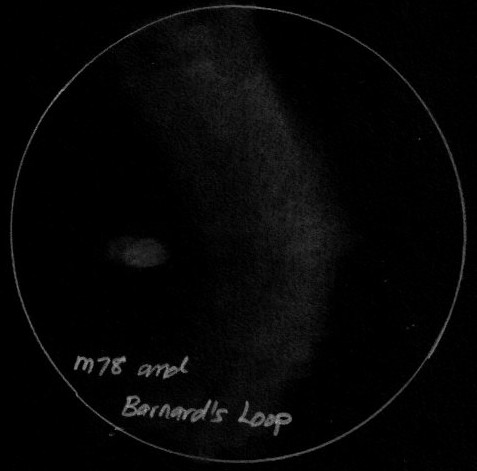
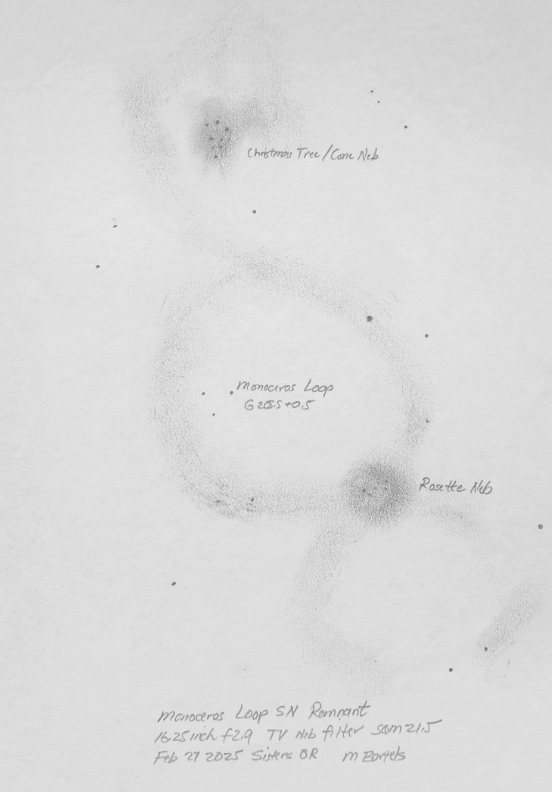
The Monoceros Loop, G205.5+0.5, a very large supernova remnant between the Rosette Neb and the Christmas Tree cluster / Cone Neb. 16.25 inch f2.9 with TV Bandmate.
Beautiful nights. SQM 21.5, lots of faint stars inside Orion's outline, transparent. Urged on by Howard Banich's sketching article in the March 2025 Sky and Telescope on the Rosette Nebula and the Monoceros Loop supernova remnant, I slide over to the Rosette for a deep glance. Wow, one simply cannot glance at the Rosette in dark skies with a big scope. A quick sketch ensues. I use white paper, dim red light and a ballpoint pen. I'll make a better final charcoal sketch the next day. Howard shows that the Monoceros Loop formally known at G205.5+0.5, extends from the Rosette to near the Christmas Tree Cluster and the Cone Nebula, several degrees in diameter. Oh, did I say that the Cone Nebula was instantly viewable with my new nebula filter? Yeah, nice. I looked for the Monoceros Loop by starting at the Rosette but I headed in the wrong direction. Turns out that this 'false loop' is composed of several Sh2 nebulae. Back on track I head in the proper direction. I trace the loop at first view, finding more nebulosity here and there.

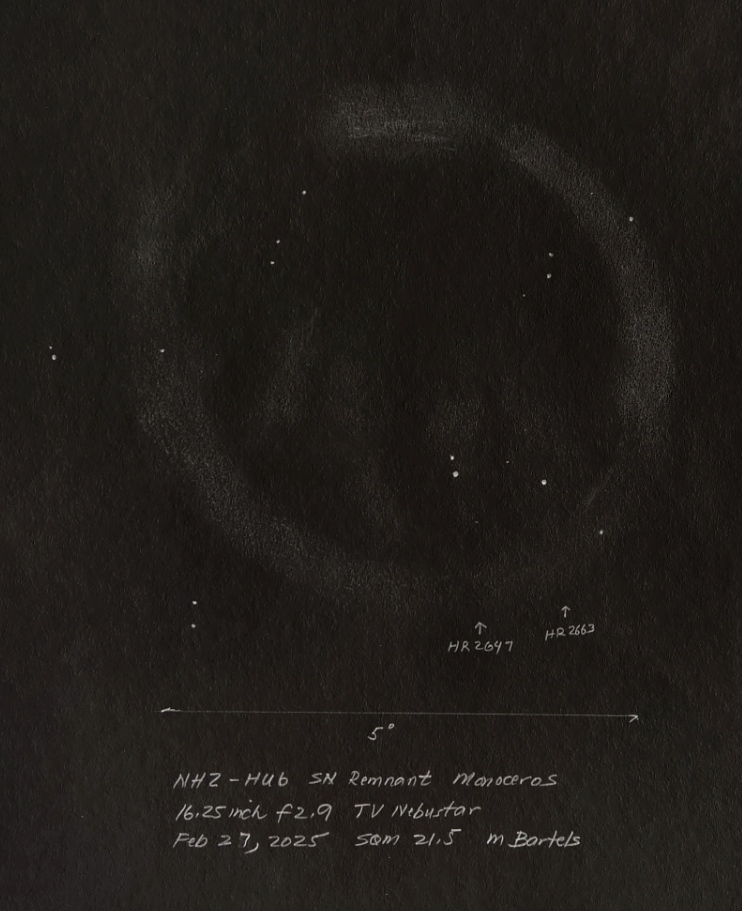
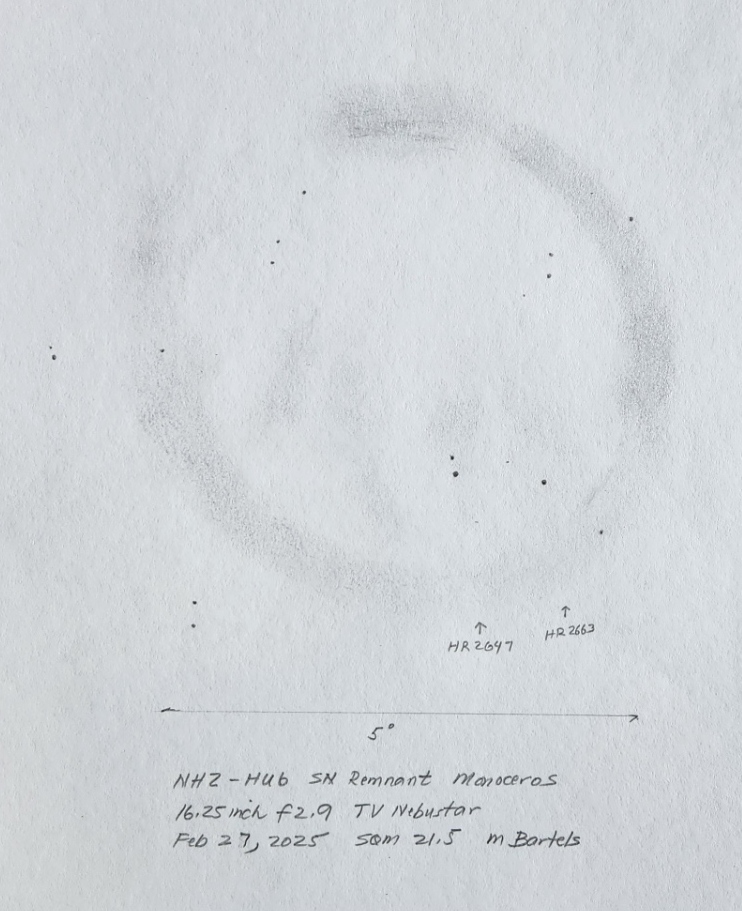
The NHZ-HU6 supernova remnant bubble, 5 deg diameter, 16.25 inch f2.9 with TV Bandmate nebula filter.
I aim for the star HR2647 in the middle of NHZ-HU6 with my SkySolve plate solving camera finder. I'm there in moments avoiding what would have been a long chained star hop. Discovered by amateur Laurent Huet in 2019, a 215 hour digital image was taken a year ago claiming to be the first clear image. The digital image can be found here. I was thrilled to see it right away in my 16 inch, actually fairly bright for a faint nebula and with interior nebulosity. That was easier than I anticipated. I look for some time, building a visual memory, taking some notes and making some rough pen drawings. A real high seeing this one.
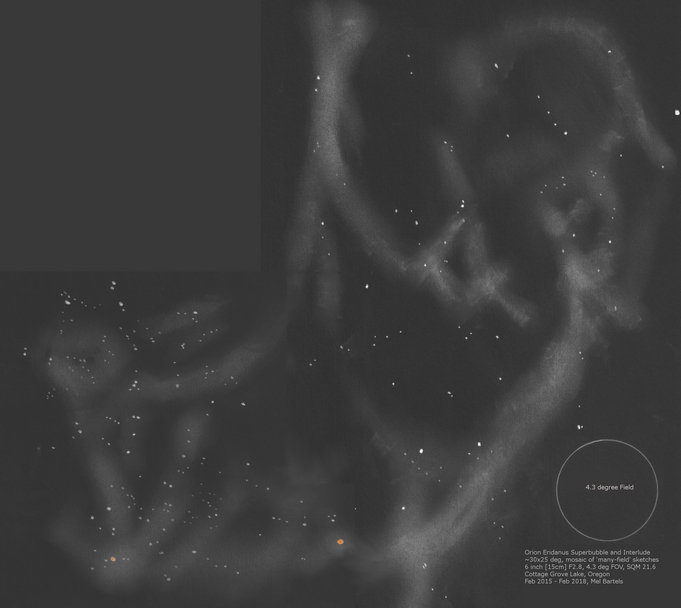
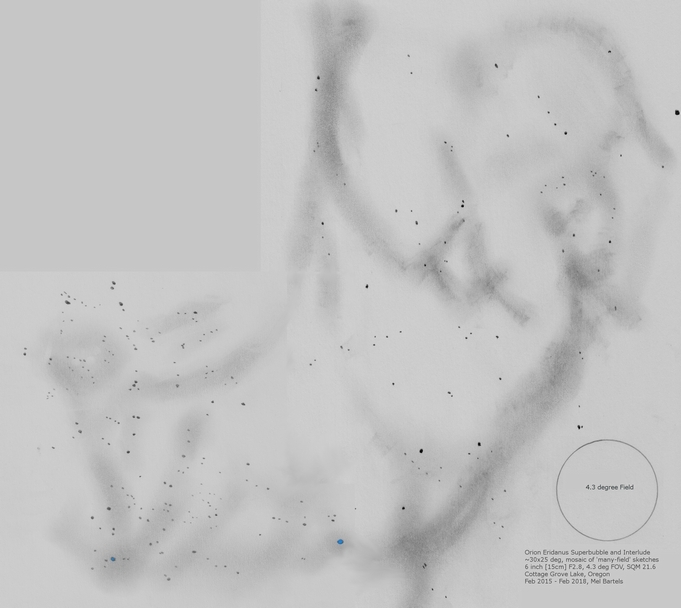
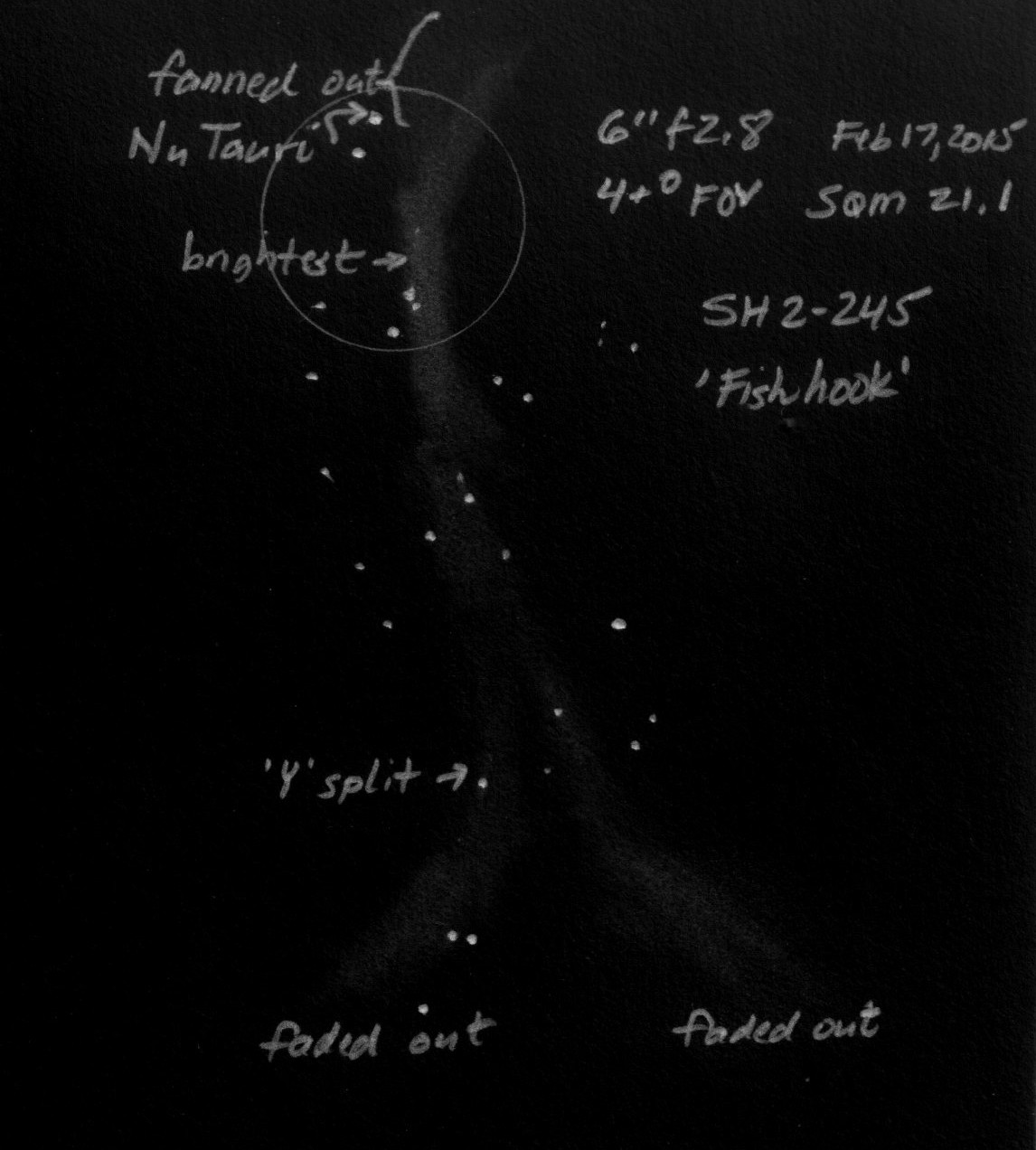
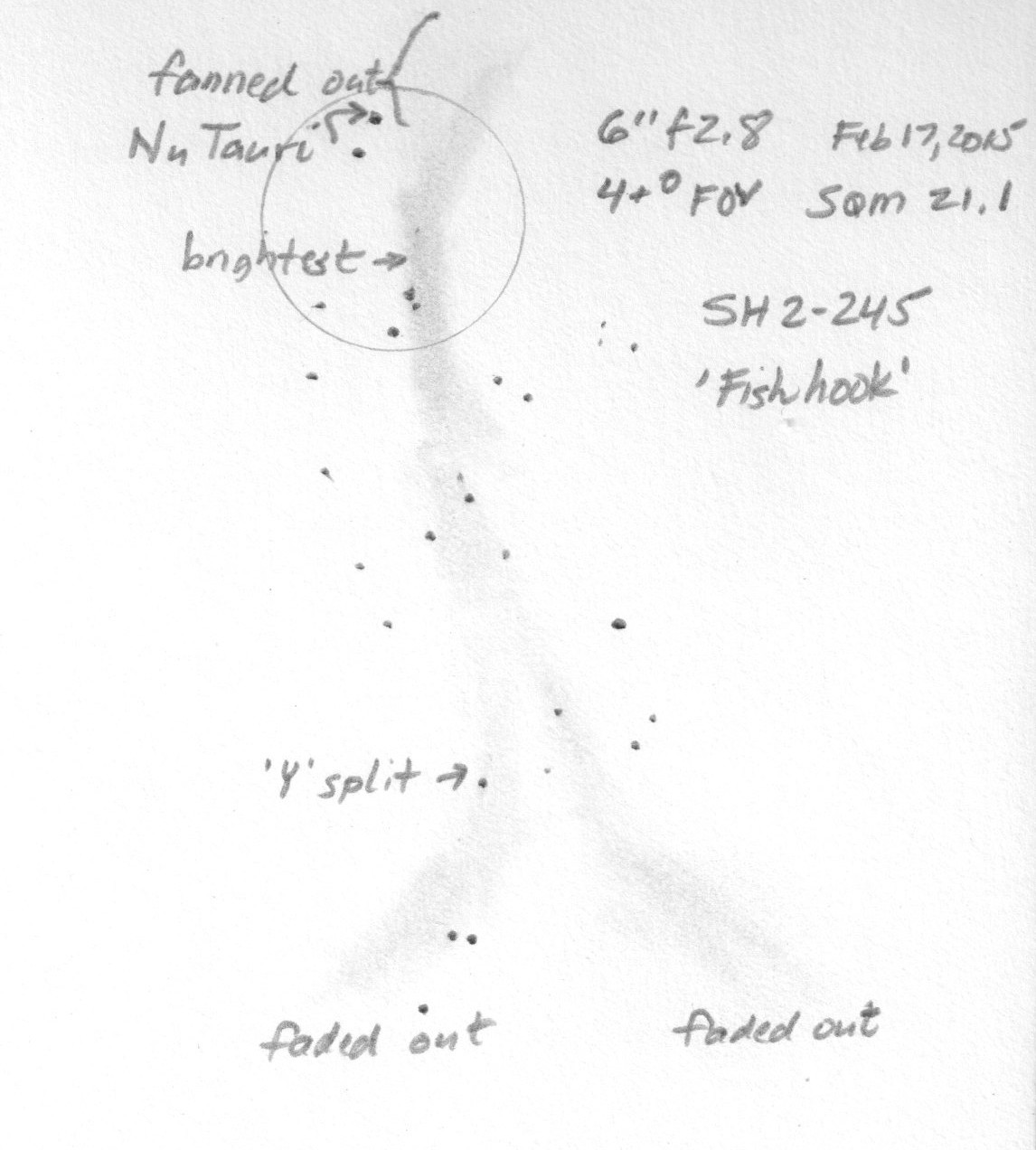
Orion-Eridanus Super Bubble, SH2-245, SH2-264 and the southern arc of Barnard's Loop. This is a mosaic of many sketches with the 6 inch f2.8.
SH2-240, the Spaghetti Nebula (Simeis 147). My impression through my 10.5 inch f2.7 2.5 degree field telescope is first, one of many bright stars with faint broad nebulosity that upon closer inspection shows brighter knots and upon lengthy investigation reveals filaments, particularly the double filament on the SE side. Also visible are several dark splotches. Digital images with narrowband filters show sharp filaments. Do they merge to form the broader streaks that I saw, considering that the 10.5 inch F2.7 2.5 degree field was at 41X? Interestingly, through a 28 inch at higher magnification, we could only see a few thin narrow fragmentary filaments (a couple of observers couldn't see anything), giving the impression of a difficult object. Uwe Gahn's drawing with a 27 inch is consistent with what we saw in the 28 inch. Jay Freeman's observations are most consistent with what I saw in the 10.5 inch. A CloudyNights report describes the view through 60mm binoculars and a 6 inch binoscope. Shows the importance of matching object to scope, field of view and magnification.
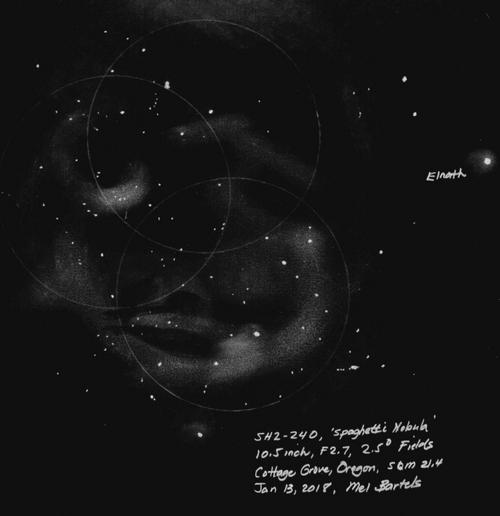
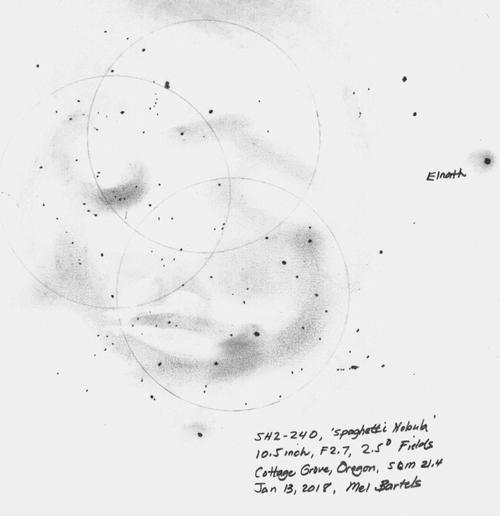
SH2-245, the Fish Hook, part of the Eridanus Super Bubble.
North of Albireo is the supernova remnant S-91 or G65.3 5.7. Fields sketched with my 10.5 inch f2.7 and my 13 inch f3.0.
Veil Nebula, an integrated combined sketch with the 30 inch f2.7 and the 25 inch f2.6.
Not long ago I declared my Veil Nebula sketching days complete. So what did I do? Go back with the 30 inch and see if there was more to see. Darn it, there was. So, a 2nd ultimate Veil Nebula sketch. In particular I found a broken 'crown' to the Veil and extensions outside the broomstick that I hadn't noticed before. The tail was quite challenging because it is a sea of countless stars so locating the fragments was frustrating. The 22x28 inch drawing is done with white pastel on pastel sanded black board.


Veil Nebula, complete, a mosaic of drawings with the 25 inch f2.6.
I completed the eastern arc and added it to my other drawings. The Veil, of all the wonderful views in the 25 inch, is my favorite. The windswept perspective, the detail at every scale and brightness, is really something. I've spent something like 8 nights on the detail sketches.
Western Veil with the 30 inch including the dust cloud to the outside Veil Nebula section, the Witch's Broom, with 25 inch f2.6.
The view of the Veil and similar nebula pretty much by themselves makes the three years it took to grind and figure the 25" f2.6 mirror and build the tube assembly and mount worth it. Here's my effort to portray the wind swept view I see; filaments twisting and puffs of nebulosity blowing off the edges. Just spectacular, the dynamism of the view through the eyepiece.
Veil Nebula section, the Witch's Broom, with 25 inch f2.6. Veil Nebula, 25 inch f2.6, eastern arc. Veil Nebula section, the triangle tail, with 25 inch f2.6. Though well known, it's rare to see this much detail in the Veil Nebula in a single field of view. Drawn with the 6 inch f2.8. Clouds of nebulosity float around the Veil Nebula. 10.5 inch f2.7 with a NPB filter.
Robert Asumendi mentioned that he saw a digital image showing h-alpha clouds near the Veil. I just had to take a look. But first, the transparency last night was wonderful. I simply stood, looking up, taking in the stars. My 10.5 inch F2.7 with its 2.5 deg field seemed ideal to explore the area. It was. I used a NPB filter to help increase contrast. The Veil itself was surprisingly detailed for a 10 inch scope, though I didn't see the 'helmut' feature. The inner two bands, including Pickering's Triangle, were bright and detailed, more prominent than the western Veil. I didn't spend hours drawing in stars, but believe me, the star density was incredible. The clouds north and west were easily visible. I am never endingly surprised at how much new stuff there is to see. That bright star at the top is Epsilon Cygni and the star cluster, very pretty in the 10.5 inch with an outer band of brighter stars surrounding a dense cluster of dimmer stars, is NGC 6940.
G82.2 5.3 W63 SN remnant. Drawn with the 25 inch f2.6.
On a wonderfully transparent night, immediately noticeable but took NPB filter to bring out the streaks, surprisingly beating the OIII. A little too big for the 25" which necessitated me moving around the scope quite a bit. Luckily I have a 3 axis mount that works perfectly for this!
The blue sprites of the Small Sagittarius Star Cloud with the 30 inch f2.7, 1 deg field.
After several evenings of great transparency, I finally saw an impression (at best, an impression, not a clear view) of the blue sprites (the red sprites are fairly easily seen). I had to use medium high magnification with doubled filters: NPB and an OIII stacked together with the 30 inch. The 16 inch showed no hint. So I think for a potential better view, the only way to go is up in aperture. Perhaps someone can try a large binoscope? The stars are so manifold, so bright, so colored, so chained together, that interesting nebulosity fades in comparison. So, I used various filters to reveal interesting variation in the nebulosity. By comparison, the Trifid Nebula revealed its true hues - never seen it so clearly, even with the NPB filter. It's a really pretty area, one that I hadn't really dived into deeply before. See https://www.astrobin.com/full/hirvty/E/
The California Nebula with a 30 inch f2.7, 1 deg field.
I am surprised by how much detail I can see compared to my smaller scopes. The swirls and streamers that go on and on are wonderful. I employ a 'Goldilocks and the three bears' richest field / high etendue strategy. One eyepiece, the 25mm ES 100 deg, has an oversized exit pupil, which surprisingly does really well. The 1 deg FOV is simply wonderful. The next eyepiece, the 21mm Ethos, fits my pupil 'just right', giving a little more detail but narrower field. Finally the 3rd eyepiece, the Nikon 17mm 102 deg, gives much more detail but the cost in field is noticeable. In contrast, the next eyepiece up, the 12mm Nikon 102 deg, gives more of a medium power view that makes the broader fainter detail harder to see, so not a richest field eyepiece for this scope.
And the California Nebula is framed nicely in the 4+ degree field of view of the 6 inch f2.8. Cocoon Nebula, 16 f2.9 and 30 inch f2.7 scopes.
The Cocoon Nebula must be popular because it's also known as IC 5146, Caldwell 19, Sh2-125, Collinder 470, and the dark lane, B168, is a stellar nursery.
I combined the quite different views in the 30 inch and 16 inch into a single drawing that took several multiple nights. Drawing bright and dark regions and streaks is difficult. Best filter was the NPB. SQM varied from 21.5 to 21.6 over the several nights. In the 30 inch the Cocoon was surrounded by bright regions and had a slash of light through the Cocoon. Detail including dark regions in the Cocoon was visible. In the 16 inch the Cocoon lacked the detail seen in the 30 inch. But the tail was readily visible in the 16 inch, displaying a dark obscuring wandering river which broke into tributaries. I left the Oregon Star Party early because of smoke. The skies were clear at my home, two hours away, where I finished the drawing. One of the best views I've ever had of the Cocoon is in Robert Asumendi's small 3D printed binocs. The nebulosity and wandering dark line stood out surprisingly so.
Crescent Nebula, 30 inch f2.7.
Looked for half an hour for the Bubble. Turned out I had not star hopped accurately. Once I got to the correct spot, there it was. Not as rimmed as I anticipated; more of a smudge, and larger than I expected too. I started from the Crescent. I was going to just take a perfunctory look then move on, but the view was so stunning in my big scope that I ended up studying and drawing. The Crescent deserves to be right up there with the other show objects. In the end, I made a combined drawing showing the proper star hop to the Soap Bubble! Afterwards I zipped around the sky using my plate solving finder. M3 with bright IFN nearby, the Whirlpool, the Bubble Nebula, M52, the North American, some bright double stars, the usual suspects. Going quickly like that is a great way to survey and compare what's out there.
Cederblad 214 (NGC 7822). 25 inch f2.6.
A region of broad nebulosity. Beautiful in its subtlety.
The Eagle Nebula, OIII filter, 30 inch f2.7.
amazing view through the 30F2.7 with OIII filter. Just astonishing. One of the sky's true beauties. And not mentioned much 100 years ago in observing comments - hmm. Despite spending a lot of time on the sketch, it is somewhat lacking because it doesn't convey the incredible dynamic range in the eyepiece. Definitely a bucket list object. Charcoal on white paper.
The Elephant's Trunk, 30 inch f2.7, 1 deg field, unfiltered.
Surprisingly, best seen without a filter though the tiny nebulosity VdB 142 is best seen with the H-Beta filter. Much easier in the 30 inch compared to the 20 inch. Next, IC 1396 that contains the Elephant's Trunk. 30 inch, 1 deg field. The Elephant's Trunk is not the dominant feature, instead it is the ghostly dark nebula to its upper right. The entire region is sublime with numerous dark nebulae and bright nebulae, some with defined edges, others with undefined transitions. Double, triple stars abound. Star colors are really something with aperture. The overall shape is more of a Christmas tree to me. The dimming in the middle that one sees in digital images is more of a couple of dark patches visually. The nebulosity's overall brightness is rather dim, much of it not varying much from the mean. Meaning that if you can see some, then you have good chances of seeing more. An interesting effect with filters. At first I could see more definition and contrast. After a few minutes it seemed to fade. Using another filter brought more definition and contrast. Then it faded. And so on. I used NPB, OIII, HBeta, and SkyGlow filters. After the filters, the unfiltered view looked best. I could see what the filters showed plus the stars. It's a great area to explore over many nights and has become one of my favorite objects.
The Elephant's Trunk, 20 inch f5, 4mm exit pupil with OIII filter.
The Iris Nebula. 13 inch f3.0. With my 10.5 inch [27cm] f2.7 Richest Field Telescope, placing the Lagoon Nebula, M8 and the Trifid Nebula, M20, in the same 2.5 degree field of view reveals a curved bridge between the two. A nebulosity (LBN891) next to lamba gem. 30 inch f2.7.
Inspired by this CloudyNights post. I looked to see if the nebulosities next to lambda gem and between gamma gem and nu gem were visible. Yes! And fairly easy to see with interesting detail. I tried several filters. The NPB brought a bit more contrast but the un-filtered view was best.
The Lion Nebula, Sh2-132. 30 inch f.2.7 with the Houdini 20mm eyepiece and NPB filter.
Not recognizable as a lion in the eyepiece. For one thing, upside down. But pleasantly surprised at how bright it was. The field of stars is overwhelming even with the filter. It took time and effort to look past them. Very good transparency (better than the SQM's 21.3 suggested) and good seeing.
Lower's Nebula Sh2-261, LBN 863, with the 25 inch f2.6.
Lower's Nebula, also known as Sh2-261 LBN 863. The OIII filter was clearly best. There are several nebulous patches in the area. I used 91x for a 1.1 degree field with the 25 inch scope. The object is about a half degree in size. The description for it in catalogs says, faint, irregular, round, use UHC filter. One source says a brightness of 10mag, which over its size, calculates to a surface brightness of 25.8 MPAS. The object is faint for sure, but it's not the faintest I've seen. I suppose I'd place it as a little fainter than the Horsehead. I think the object could be visible in scopes from medium to large as long as you have good skies (Bortle 3 or better), use a OIII or UHC filter, and stay at low power with at least a degree field of view.
The Orion Nebula and surrounding area, 30 inch f2.7, in pastel color.
My goal is to portray the beautiful swirling colors visible in a large aperture scope in dark skies. The flowing rivers of varying brightness are endless. Very challenging to capture even a sense of the eyepiece view. This is my first attempt.
LL Orionis bowshock, 30 inch f2.7, pastels.
After seeing Hubble's pic of LL Orionis bowshock, I had to see how much, if any, I could see of it in my scope. Here's my pastel drawing. I could see hints of it after two nights of observing. I could barely see a slight curved darkening in front of the star after some study, and see the upper curved arc (pretty easy) as well as the smear leading backwards. The Trapezium is just out of the field of view to the right. Such a beautiful area to view, such colors, not a waste of time at all, for sure.
The M42 Finger. 25 inch f2.6.
I came across a faint curved arc of nebulosity that I cannot find a designation. It lies between two broad streams of nebulosity emanating from M42 and M43, about 3/4 degree east-northeast of M42. It is rather pretty as it sits in a dark lane between the two streams. I'll say one thing about M42. It is staggeringly bright in a big scope; literally hurting night vision, the hues and brightness is breathtaking.
North American Nebula, Yucatan portion. North American Nebula, SE of Yucatan portion. Nebulae in the NW Cygnus area near Omicron Cyg and the Propeller, 16 inch f2.9.
Nebulae in the NW portion of Cygnus near Omicron Cyg goes on and on: endless fields of beautiful stars and patchy / streaky nebulosity. The open cluster NGC 6866 is very pretty. I tried to label some of the LBNs. The Propeller nebula is too bright in my sketch.
The Pelican Nebula, 30 inch f2.7, 1 deg field.
The dark areas are actually a dark nebula obscuring the bright nebulosity. I try hard to adopt this perspective while looking through the eyepiece, but I end up with seeing nebulosity with darkness, ie, nothingness, between.
Propeller Nebula, Simeis 57, DWB 111/117.
...but fainter than the typical IFN I find. The NPB and no-filter gave the best views; the HBeta narrowed the nebula and dimmed the stars. Transparency on the edge of not-usable for this type of object and seeing was horrid. A surprisingly challenging object both in detecting and in finding. More nebulosity visible than commonly depicted.
The Raspberry Nebula and Bigfoot. 25 inch f2.6. Sh2-115 area. 10.5 inch f2.7.
Turn left to the North American Nebula and Pelican. Turn right to find an unknown treasure, Sh2-115, -116, Berkeley 90 open cluster and pretty, dark nebulae. I think this region would be much more appreciated if the NAN weren't nearby.
Sh2-119. 6 inch f2.8.
I observed SH2-119 over several nights with the 25" but the object is just too large to get the contours. The view through the 6" is marvelous. The nebula connects all the way over to the North American Nebula. The 6" way out does the 25" on objects like this.
The Trifid Nebula, M20 and the open cluster, M21, in color, as seen through the eyepiece of my 30 inch f2.7.
The Wizard Nebula and NGC 7380. 30 inch f2.7 with Nikon 17mm + NPB filter.
The cluster embedded in fairly bright nebulosity was overwhelming in the numbers of stars. The dark sections were striking. Very good transparency (better than the SQM's 21.3 suggested), seeing was softening.
Zeta Ophiuchi shockwave (inner), 30 inch f2.7. Zeta Ophiuchi Sh2-27. 16 inch f2.9.
Inspired by Scott Harrington's article in the current Amateur Astronomy magazine (summer 2024, #123), I observed Zeta Ophichi's shockwave and the Zeta Oph nebula, Sh2-27. First night, the 30 inch f2.7, with the newly resilvered (after 2 1/2 years on the original home silvered coating) 5/8 inch thick meniscus mirror. I could see the inner shockwave immediately! The intense brightness and resulting glare of Zeta Oph was a huge problem. Not with the scope because the sky was black to the star's edge, but with my eye. I had to constantly blink and switch eyes. It helped to move the star just out of the field of view, making a full circle with the scope's motion. It also was confusing because I saw unexpected nebulosity in general in the field. An NPB filter helped modestly. Other filters no. The surrounding nebulosity extended everywhere in broad strokes, exceeding the degree field of view of the 30 inch. So the following night I used my 16 inch f2.9 (also a meniscus mirror that's 3/8 inch thick) with its 2 degree lowest power field. The unfiltered view gave the best view of the general nebulosity which I traced for field after field. Really pretty with the unexpected cluster and the nearby globular too.
The newly added fans (4 small cpu fans) on the 30 inch that blow air in a circular motion across the front of the mirror work! This based on Mike Lockwood's experiments and video presentation. As customary, after an hour, the mirror began overcorrecting. As soon as I turned on the fans the stars tightened up. Amazing to watch the process unfold in seconds. I had some of my sharpest views ever. 2-3 minutes of fan action was enough for the next hour of observing.
Abell 12, a faint planetary almost touching Mu Orionis. 13 inch f3.0.
Immediately noticeable though quite faint and touching the scattered light glow that surrounds Mu Orionis. I found the OIII filter a must along with high magnification.
Abell 21, Sh2-274, the Medusa Nebula. 10.5 inch f2.7. Abell 39 with IFN, 30 inch f2.7
Abell 39 is a faint planetary, perfectly round; did not see the outline (very poor seeing?). A wall of IFN almost reaches out to touch.
Charybdis, a newly discovered PN candidate with nearby ISM (InterStellarMedium), 30 inch f/2.7, NPB and TV Bandmate filters. The discovery image can be found here I took two nights on Charybdis, a newly discovered PN candidate. First night under 21.3 I had a hard time with the PN because I kept seeing it displaced from where it was supposed to be. Later, reviewing the discovery image here, (it's that tiny dot in the upper right of the discovery image), I saw that I'd likely been seeing the ISM (InterStellarMedium) in the field. In very good 21.5 skies on the second night, the PN candidate stood out immediately at high power, exactly where it was supposed to be. Curiously, the ISM was fainter. The PN was larger than I anticipated, too. The NPB filter worked best, the TV Bandmate also helped. I marked the name of the finder star that I used. Interesting the difference between 21.3 and 21.5 skies.
The Ghost of Jupiter, NGC 3242, and a little known nebulosity next to it. The planetary nebula is intense in the 30 inch.
NGC 3242 is bright enough to affect your night vision in a 30 inch. You have been warned. There's an arch of nebulosity next to it that I find no mention of except in a few digital images. So I took a look. It's pretty bright - between the winter and summer Milky Way, I judge. The planetary revealed some irregularities around the perimeter. That was cool.
Hartl-Dengel-Weinberger 3 PK149-09.1, 30 inch. TV Bandmate and NPB filters.
I could tell that there was 'something' there immediately upon arriving on target. But large and complex --- took time to tease out. I saw two broad bright knots in the planetary's arc (hardly noticeable in digital images), but for the life of me I could not see the narrowed doubled curves within the arc with are usually featured in digital images. The squarish nebulosity surrounding the planetary is obvious and spills out of the field of view. I also spend a lot of time enjoying the Orion Nebula and its strong colors. Later on Jupiter was spectacular. On another note, The 30 inch f2.7 is now into its 5th year of life. It's had two silverings. The current silver coating is starting to age so probably this spring I'll do the 3rd silvering. That's 2+ years per coating, much longer than I anticipated.
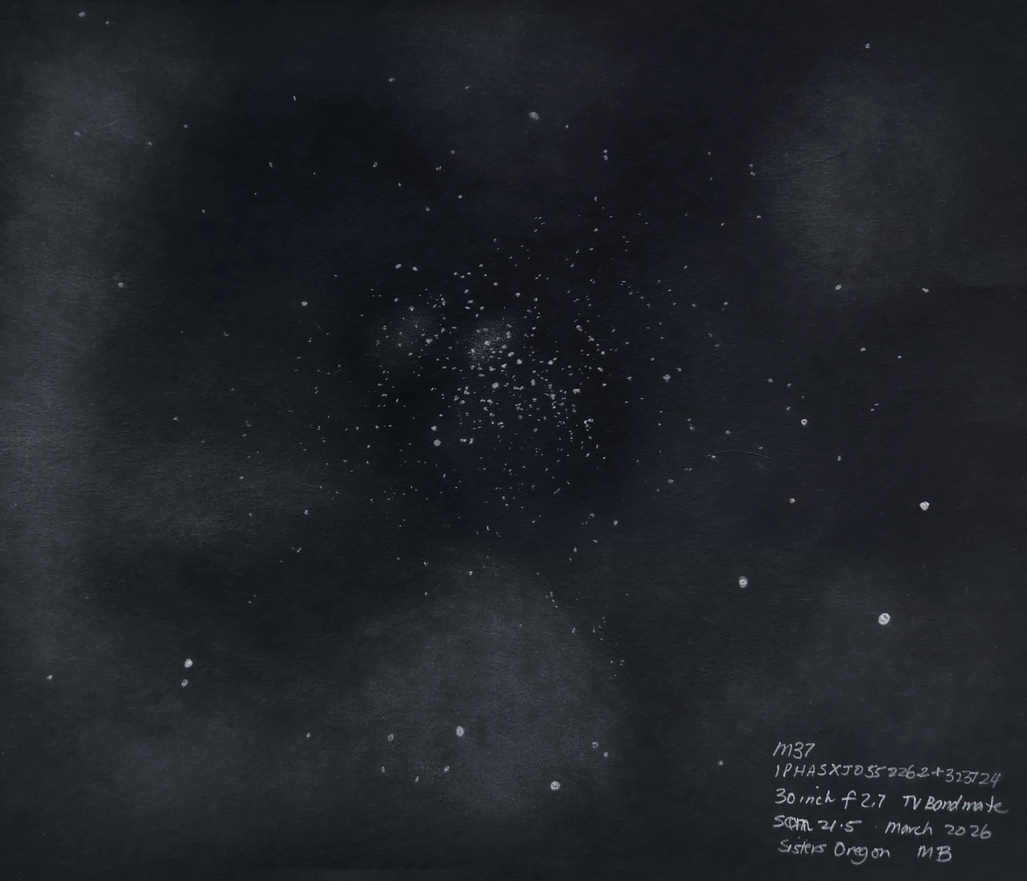
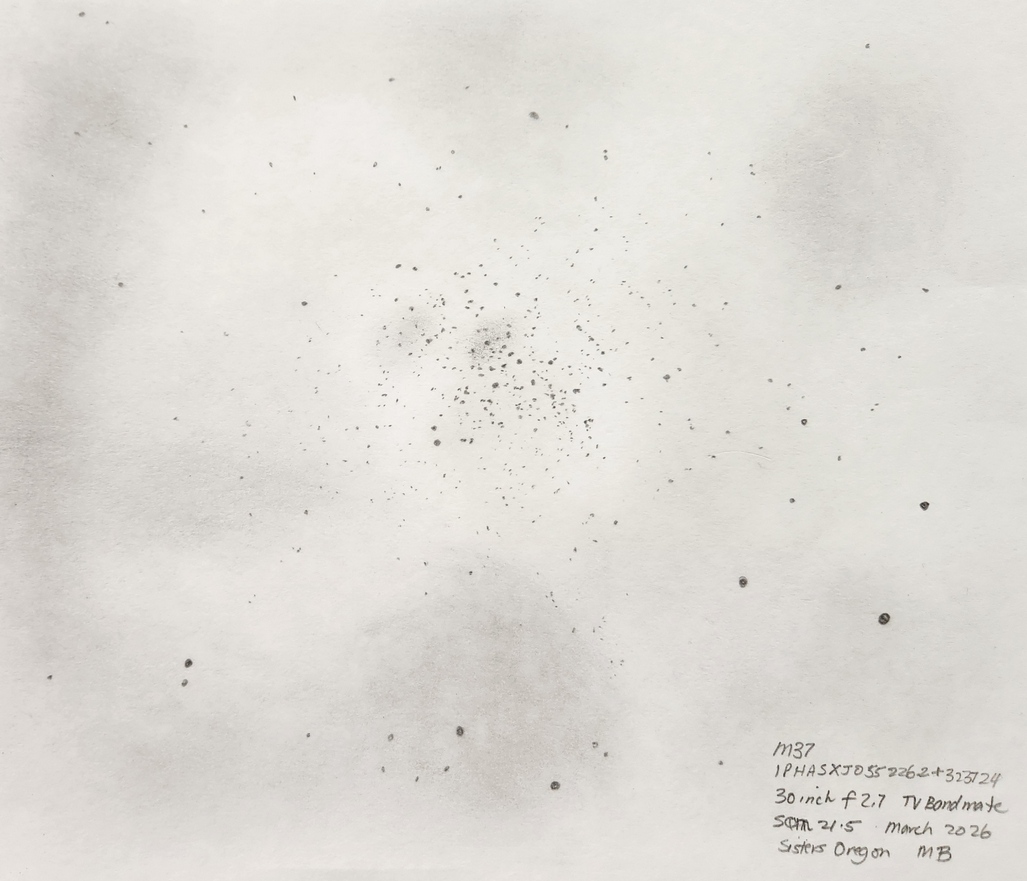
M37 and IPHASX J055226.2+323724, 30 inch. TV Bandmate. The recently discovered planetary is the two blobs of light on the top left side of M37.
That's quite the name for a newly discovered planetary that's been deemed the oldest found and only the third in a cluster. It's a challenging observation because there are so many faint stars so close together. But filters make the indistinct double glow barely noticeable. The TV Bandmate along with the NPB filters did the best job. I did not see donuts like some of the digital images suggest. And M37 itself is beautiful in a big scope: the star colors, the density of stars, the range of magnitudes, and the surrounding Milky Way gas and dust.
Here's my finder chart. Look for the four stars to the side, then on the other side of M37, look for the two stars and the peaked chain of stars. The planetary is right below (assuming your are using a reflector). Use a filter, flipping back and forth. The surrounding MW nebulosity is brighter than the planetary. So check that out too.
Kohoutek 3-82 planetary. 25 inch f2.6.
A charcoal gray little circle of light with an embedded star that comes and goes depending on seeing (UHC filter in use). A satisfying view considering that it took careful star hopping to find. My 25 inch on its 3-axis mount really helps when the scope is near vertical.
M27, the Dumbbell, with interstellar medium. 25 inch f2.6.
After seeing the extended faint ring around M57 and finding the inspiring website, I decided to go for M27. I tried for a couple of average nights but it was only after a night of fantastic 21.85 skies that I was able to see the hairy projections popping out of the bright arcs and the outer shells clearly with an OIII filter at relatively low power. There is also beautiful glowing Milky Way variability in the background.
M57 the Ring Nebula along with IC1296 and IFN, in color, using the 30 inch f2.7 along with the 25 inch f2.6. The extended ring's rim is visible in 21.7 skies with OIII filter at 6mm pupil; high power and good seeing for interior stars; intense blue-green with red tinged color. After cataract lens replacement, my wife sees this as blue, but to me it's green. The reddish tinge is quite noticeable to most who have looked through my 30 inch.
It takes me two nights to thoroughly observe an object; I spend two hours each night with the object. The 2nd night is crucial to confirm the first night and answer all the questions that are raised. First night 21.7 but mediocre seeing, second night 21.5 but good seeing. I am surprised by the visibility of the outer ring's rim in the 21.7 skies, OIII filter, 6mm pupil. Never seen it before. The rim was hardly visible the 2nd night in 21.5 skies. The flaring coming off the ring proper is more pronounced in 21.5 skies. The intense color is striking: I see blueish-green with a red tinge, my wife sees the ring as very blue. The curtains that cross the center of the ring are more striking than I've ever seen. High power and good seeing are necessary for me to see the 2nd star in the ring; however I am surprised that the central star is visible at lower powers. The nearby galaxy IC1296 is surprisingly hard - I mean really hard for me. I saw it better on the 2nd night: is seeing more important than transparency in a big scope? On the best moments I saw a surprisingly huge splotch of light that was quite faint. Quite a difference comparing this drawing to what I saw in the 25 inch. I wouldn't think that the jump from 25 to 30 inches aperture and the increase in focal length from 65 to 81 inches would make that much difference. The 30 inch does have a home spray silvered coating that is just outstanding. The number of stars visible in the 30 inch in the Ring's field is amazing. Note the IFN nearby!
M57 the Ring Nebula along with IC1296, 30 inch f2.7. M57 the Ring Nebula with the 25 inch f2.6, in color. The extended rim is faintly visible.
I mentioned that the Ring glowed a blue-green in my 25" f2.6. I didn't think much of that but a few can see the color and many cannot. One very experienced observer said that he thought he could see red on the outer edges. So I went back to observe explicitly for the colors. Yes, indeed, the blue-green fades to a muddy red at the extreme edges. Here's my attempt to portray the color that I saw. I saw the color best at low power with a 6mm pupil. I'm thinking that the enhanced coatings make a difference here.
Extended M57 area with the 25 inch f2.6.
Last night was another night of superb transparency. I've adjusted the 25" mirror cell - the images are nice pinpoints from zenith to horizon again after stumbling and dropping the scope recently. I decided to look for extensions to the Dumbbell and the Ring. The Dumbbell at medium power was incredible - faint extensions leaking out of the sides. Too much effort to draw though without spending the whole night on it. I went on to the Ring to see if I could see the faint extension. Pretty quickly I saw an unmistakable glow around the Ring. But was it glare from the Ring itself in my eye or real? I went through my filters. The NPB filter gave the best view with slightly sharper edges on the diagonal corners of the Ring. After my session I came in and took a look at deep digital images. Sure enough, those diagonal corners are more sharply defined in the digital images. So after thinking about it for quite some time, I think I really did see the faint extension around the Ring. I'm hoping to get even better views at the Oregon Star Party in a couple of days with other experienced observers to get their impressions before I say with more certainty. Comparing images with other scopes, I attribute some of all this to the enhanced coatings on the primary and secondary. By the way, the background field brightness varies beautifully in the area - lots of brightness variation. Along with the faint galaxy and the planetary, it makes for a just a wonderfully pretty view that I can stare at for hours.
Broad M57 region showing the IFN and the extended ring with the 15.25 inch f2.9.
Recently Rob Brown mentioned to me that he thought he saw IFN near the Ring Nebula (I presume in rather poor skies). We took a look together with our 16" F2.8/F2.9 scopes set up side by side. Sure enough, IFN. I got a better look last night, enough to draw the area. I was surprised that the SQM was only 21.0 despite the Milky Way looking sharp and the sky dark. I had very good seeing. The central star was a steady pinprick of light. The extended ring jumped out at me - I wasn't looking for it because I didn't think it was viewable in a 16 inch and because I was sweeping more broadly. The fire swept areas extending out from the main ring leading to the extended ring's pencil thin boundary were clear. The whole constellation of Lyra is filled with faint barely visible IFN.
Several friends have been over the past week or so; each readily saw the extended ring and the IFN. Not an impossible observation by any means.
Background area around the Ring Nebula.
I was out the other night with Rob Brown's Spectra on my 10.5 inch f2.7 scope (Oct 2021). I turned my sight to M57, which was a faint ghostly shape in the green. I noticed though while swapping eyepiece for the spectroscope that there was pretty background variation. It took a while for my eye to settle on the major features - there was so much variation just beyond my reach.
The Ring Nebula with my 24 inch f5.4. White on black drawing. The Ring Nebula with my 24 inch f5.4, 2nd drawing. Patchick 165, also known as PNG 072.0-24.6. 10.5 inch F2.7 with TV Bandmate filter. SQM 21.2
Very faint non descript circular patch of light. Difficult. A faint large extended cloud almost touches on top (eyepiece view). Faintest stars that I could immediately following eye cataract surgery were 15mag at low magnification.
Zie 1, also known as the Dreamcatcher nebula. 16 inch F2.9 with NPB. SQM 21.2
Immediately visible; took a few moments to trace out the ring and extensions; hints of inflowing nebulosity. Easy to find. Big!
Hickson 50 in the lower left, M97 to the IFN, bathed in faint IFN, 30 inch f2.7.
Last night was really good, but the Milky Way lacked the spectacular detail of the previous night; the SQM said 21.7, not 21.8 of the previous night. Hickson 50 is said to be the toughest of the Hickson's. It is a tough observing target! The galaxies are quite faint, 18-19th mag. The brightest dot in the tight little grouping to the lower right is actually a star. Because the galaxies are so faint, serious averted vision is required, meaning that looking away from the initially seen grouping of sparkles makes it difficult to see the individual galaxies clearly delineated. Higher power makes the grouping easier but runs amok of seeing. So I tried sitting on the object at different magnifications. Higher power made the counting and separation easier but because of seeing they were more transitory. Indeed, they disappeared for 15 minutes when the sky turned bad. I wanted to see them and M97 in the same visual field, which I could do but it was right at the edge of my abilities. There's also a little 16.5 mag galaxy just above the closest bright star of the finding asterism next to Hickson 50. I could see that it is elliptical. There's also IFN that stretches from Hickson 50 to M97, brightening as it goes.
Two planetaries: MWP1 and ALV1 (MWP1 is the large 3 column planetary centered in the drawing while ALV1 is the small circular planetary to the lower right). Streaks of InterStellar Medium also appear. Best viewed with no filter and NPB filter. Both immediately seen while sweeping the area. ALV1 was recently discovered by a Portuguese amateur. These planetaries are just north of the Veil Nebula, so still viewable in the early evening. The upper star is Upsilon Cyg and the middle star is HD 202811.
Necklace Nebula. 25 inch f2.6.
This is a beautiful faint glow with sparkles in an incredibly rich star field. Easy to find, was on the OSP advanced observing list. I loved the feeling as I went from wide field star hopping to the star triangle nearby to the surrounding ring of stars to the nebula itself. It was flying into space.
NGC 40, CTA1. CTA1 is a supernova remnant. 30 inch f2.7.
After seeing Nightowl99's and JMSchwartz's inspiring drawings of NGC40, I had to see for myself. A clear night with SQM 21.4 and very steady seeing. When seeing is poor I sometimes curse large aperture. But when seeing is good, it is so nice to see stars that are sharp tiny little specs at high power. Sometimes I can hardly believe that I made two of these ultra-thin 30 x 5/8 inch meniscus mirrors and that they can work so well. Since they cover the high X view, I'll concentrate on the low X perspective. NGC40 is a miniature Ring Nebula only with an intense central star. There are two rims that have hot spots. And there's a faint quarter ring tacked on to one side, and an extension on the other side. Overall, the planetary is embedded in a glow that has a sharp edge to it on one side. I used OIII and NPB filters. Is the glow part of the planetary or is it part of something else? And there are patches and streaks of nebulosity throughout the low power field. Looking online the next morning, I am surprised to read that these are part of the CTA1 supernova remnant, which extends much farther afield. Sadly, I was going to look for these out-of-field extensions, but last night was stymied by an exploding fire 20 miles away that sent dense smoke over the region.
CTA1. CTA1 is a supernova remnant. 16 inch f2.9.
While drawing NGC40, a nifty little planetary, through my 30 inch F2.7, I noticed faint nebulosity in the field. Way bigger than the field. Researching later, I discovered that this is the supernova remnant CTA1. Intending to draw it the next night, I was thwarted by smoke from the newly started Flat Fire, 20 miles away. Two days later the fire was rapidly approaching and we were evacuating. Go now, imminent threat, the emergency message said. I only had time to grab the 16 inch. The other scopes were left to face their fortunes. The fire reached to within a few feet of our back property boundary. I was told that at one point there were five fire trucks in our driveway. Point protection, they call it. Thanks to the heroism and skill of the firefighters, and our hardening (removing trees next to the house, trimming trees up further away and removing brush) our home was saved. The worst was the uncertainty while evacuated. Was our house still standing? And neighbors? Finally, a month later we're back home, the skies have cleared and I'm back to drawing. It was a transparent night. Not only was CTA1 'not that dim' but the clouds of Andromeda were easily visible and the double cluster burned through my eyeballs.
NGC 6210. 25 inch f2.6.
Hard to see much detail even at high power because it is so tiny. I checked out M57 afterwards and it looked gigantic in comparison. The insert shows the high power view. There are bands of galactic cirrus IFN next to the planetary in the low power wide field view.
NGC 6751, Hulo 1, V Aquilae carbon star, 30 inch f2.7 at high X.
Hulo 1 was surprisingly easy to see. Transparency was excellent. The North American Nebula's Gulf of Mexico was broken up into patches and streaks - as good as I've ever seen.
Sh2-216, the largest planetary nebula in the sky.
At nearly 2 deg extent, Sh2-216 is large but it is faint. I saw it in my 25" and 6" best with my NPB filter. Surprisingly the 6" saw it as well as the 25" but with thinner filaments and much fainter stars!
The Blue horsehead nebula, IC4592 and IC 4601.
Big with diffuse borders, but gradually comes into view with studied effort.
Rho Ophiuchi region 6 inch f2.8.
Rho Ophiuchi region 25 inch f2.6.
Brighter and more muscularly defined in the 25 inch than the 6 inch. A nice area of gentle flowing nebulosity with a couple of dark regions.
vdB 152, 30 inch f2.7.
vdB 152 was an exercise in confusion that turned a tad frustrating. Turns out that I saw it immediately upon pointing the scope, but SSP says a tiny 6x12 arcminutes. After much consulting star patterns then finally turning to digital images I realized that it is a giant object, the one I first saw! Plus my e-finder was misfiring. But finally I confirmed it. Years on my list but never got around to it 'till now.
The Witchhead nebula with my 6 inch F2.8, 4.5 degree field of view. Not much detail but pretty obvious in dark skies.
Cone Nebula, Christmas Tree cluster, 13 inch F3.0. Best view was with the 13mm Ethos and UHC filter at 1.1 deg FOV and 90x. The view at lower power with the 21mm Ethos and 1.8 deg FOV at 55x showed more of the surrounding nebulosity but made the Cone too small and indistinct. At the lower power, the NPB filter worked best. Without a filter, the Cone was hardly there. Cone Nebula, 24 inch, first drawing. IC 1470, NGC 7510, K17, Sh2-157, BFS 19, 30 inch f2.7
The IC 1470 is a stunning area: beautiful tight bright clusters, small knobby bright nebulae, and the giant Sh2-157 on the side. So many star colors!
Lagoon Nebula and area, 30 inch f2.7 with Houdini 20mm eyepiece and NPB filter.
The NPB filter did better than the TV Bandmate, perhaps because of the fast focal ratio, the filters being screwed onto the bottom of the Houdini, whereas typically I screw the filters onto the bottom of the eyepiece that then goes into the TV P2 coma corrector. With the filter between the P2 and eyepiece, the focal ratio is relaxed a bit.
The entire area is beautiful with great dynamic range. I spent the entire evening on it, until the nebula sank into the distant trees. The SQM was only 21.3 but the MW transparency seemed quite good.
NGC 6544 is the small cluster at the top.
I decided long ago to 'break free' of the eyepiece apparent field of view. Besides that I also move the scope to 'shake lose' faint hidden nebulosity. So my final drawings done afterwards usually combine several sketches at the eyepiece. The biggest issues for me are: how to show the fine detail visible at high magnification when making a wide field drawing, and, how to convey the dynamic range that's so incredible through the eyepiece. I aim for realism (draw what I see, no more, no less) at the same time relaying the overall emotional sense. I want my drawings to serve as an accurate record of what one person happened to see through their telescope one night under the stars. Besides the drawing, I end the night with a visual memory. I can recall the experience later. And I have a base to start from next time I observe the object.
Besides being an accurate depiction, I want my drawings to convey a sense of what it is to look at the object, the emotion, the story behind it. And then there's the tension between displaying the paltry contrast as seen vs making the object more easily visible at first glance, not to mention the extreme dynamic range visible to our eyes. I've thought about making two drawings, one as difficult as the object was in the eyepiece and the other more of a 'this is an accumulation of what I saw' made easier to see in the daytime. So we all do the best we can.
And finally, I mainly draw to observe, the hand motions of pencil on paper, the attention to this zone then that zone, all makes a huge difference in what I see and what I remember. So I could skip making final drawings completely, but then the scratches and scribbles at the eyepiece are not sharable. Making finished drawings at the eyepiece is okay, particularly lunar and planetary. My problem for deep-sky is that these drawings tend not to look 'right' the next morning.
M17 widefield and closeup, 30 inch f2.7. 5000 ly from Earth, 15 ly in diameter. One of great show objects, if not the greatest nebula, especially in large scopes.
The detail, the dynamic range, the contrast, is just incredible in the 30 inch. I tried a variety of magnifications and filters. The two best are the low power 17mm Nikon 103 deg eyepiece with the P2 coma corrector and the TV Bandmate filter, and the high power 7mm Houdini (built-in coma correction) and a NPB filter. These drawings are the results of many hours. They give a good hint of the view. To do better, I should divide the field into a grid, sketch each grid then combine them into a mosaic. The problem of balancing brightness levels across the nebula would be exacerbated though. The final night was superb: Zodiacal Light stretching into the Milky Way, and the Gegenschein on the other side. Good seeing too.
The last couple of nights I shuttled back and forth between M17 and M16, winging it using muscle memory at high X. M16's Pillars were incredible - best I've ever seen in a non-NV view. I still have a visual memory of the Pillars through Howard Banich's 30" f2.7 and Ed Allen's 24" f2.75 with their NVs. Hubble like. Just mind blowing.
M16 to M17 to M18 stretch, 16 inch f2.9. Note that I turned the drawing upside down from how it looked in the eyepiece so as to label the nebulae which makes north to the top. Best view was with the Houdini 20mm eyepiece with built-in coma corrector and the NPB filter.
After seeing my M17 drawings, Howard Banich mentioned that there is a stretch of nebulosity between M16 and M17. There is! I had been rapidly moving between M17 and M16 with my 30 inch, using muscle memory, the stars zipping by, not noticing any nebulosity. Switching to the near 2 deg field of view of the 16 inch f.2.9, I saw the nebulosity that Howard mentioned.
Once I adjusted my eye to the relatively extreme brightness of M17 (so bright that it began to affect my night vision), I could see these nebulous areas. Sh2-49 is large and sports these dark spots like eyes. To the east is the Milky Way, a bright thick band. Sh2-50 is a knot just ahead of this Milky Way band. Sh2-48 a loose knot between M16 and Sh2-50 and finally Sh2-47 is a tiny blob of nebulosity. There are several other unnamed nebulae that run between M16 and M17 and that run perpendicular.
Faint H-Beta nebulae from M43 to the Horsehead. 25 inch f2.6.
The Zodiacal Light arced up through Venus and into the Milky Way, exiting the other side and continuing on past the zenith, forming an ‘X’ in the sky. This a sign of a clear night. The four Trapezium stars were crystal sharp; additional stars are steady tiny specks. Dimmed Betelgeuse is an intense orange dot, black sky right up to the edge, the diffraction spikes from the wire spider faintly visible. Pushing over to Sirius the star shines intensely white-blue, with the Pup companion awfully close. I like exploring little known paths, especially near bright show objects. Everyone stops at the scenic point; I like to wander. Between M43 and the Horsehead are several faint H-Beta objects that I sketched using the 25 inch F2.6 scope with one degree field. Each nebula is uniquely shaped and glows faintly compared to the Horsehead. I find these faint off the beaten path nebulae fascinating. I ended with a wonderful view of M41 - such bright reddened sharp looking stars in a group that fits within the field.
The Rosette Nebula with my 16.25 inch f2.9 and a TV Bandmate nebula filter.
Beautiful nights. SQM 21.5, lots of faint stars inside Orion's outline, transparent. My 16 inch is working nicely. The mirror was silvered a year ago and picking up some haze. I see extra stars in Orion's Trapezium. Wow, one simply cannot glance at the Rosette in dark skies with a big scope.
The Seagull Nebula. 6 inch f2.8. Sh2-54. 16 inch f2.9.
A dim nebula but with bright and dark detail north of M16, 16 inch f2.9. Extending my observations and drawings of faint nebulosity to the north of M16, I found Sh2-54. According to Wikipedia, the chain of nebulae is actually a single nebula stretching from Sh2-54 to M17.
Combined drawings showing the chain from Sh2-54 to M16 to M17 to M18. 16 inch f2.9.
Sh2-82. 25 inch f2.6.
I found the nebula not much brighter than the surrounding nebulosity. Still, a nice region of brighter and darker areas.
SH2-264 (Lambda Orionis) wiht the 6 inch f2.8. The Flying Bat and Giant Squid, 13 inch f3.0. The Flying Bat is the huge arc to the left of the field and the Giant Squid is the bipolar nebula in the middle of the field. They are known as SH2-129 and OU4. The red carbon star is V419 Cephei. The Flying Bat is the huge arc on the left side of the field and the Giant Squid are the curved features in the middle of the field. OU4 was discovered recently and is thought to be a bipolar nebula. The Sagitta Bubble (and M71), a large scale object, drawn with the 30 inch f2.7.
Beautiful night with the 30 inch f2.7 and its aux scope, the 6 inch f2.8. Came across this discussion earlier. Intrigued, I looked myself. Both scopes contributed to my sketch. I am surprised at how differently the bubble looks through the two scopes. An NPB filter helped increase contrast and delineate some of the boundaries. I did not try an H-Beta. It's quite faint but distinctly visible. Back and forth with the scope really shook loose the nebulous smears. And M71 was beautiful in the big scope: such resolution and interesting star chains. The whole area is studded with so many bright stars from orange to white across a panoply of countless fainter stars.
A sketch of the newly identified H-alpha bubble, WD-1, using the 10.5 inch f2.7.
WD-1 is a newly identified hydrogen-alpha emission nebula about 20’ round associated with the star HD 237299, an early-type emission-line B3 star, first identified by the MDW Hydrogen-Alpha Sky Survey but visible in earlier H-Alpha surveys.
The first night I could not see WD-1 using a 13.2 inch [34cm] F3.0 telescope under good transparency (SQM=21.5). I tried DGM’s NPB and Orion’s SkyGlow, the latter providing a slightly more contrasty view. I did find a band of nebulosity, likely InterStellarMedium (ISM) because of its proximity to the galactic plane.
I don’t mind negative observations – I’ve certainly made enough of them – but I have more objects to sketch and time under transparent skies is precious. Plus a Geminid blazed across the center of the field, staggering me backwards and leaving me with an after-impression that lasted for a couple of minutes, ruining my dark adaptation.
Needing to confirm a detail in my sketch, the next night I grabbed my 10.5 inch [27cm] F2.7. The skies, filled with cirrus earlier, were unexpectedly clear. SQM was not quite as good as the night before (21.3 vs 21.5) but the air was drier.
I employ a different finding technique than most in that I identify an unusual star asterism nearby, point the scope in the proper direction with a red dot finder and then scan for the asterism: I don’t star hop. I centered the star asterism almost immediately and to my utter surprise, there it was, WD-1, sharp edged, faint but clearly distinguishable from the jet black sky background to the southeast. There was more ISM than the night before, brighter with more delineation. Particularly interesting was the impression of hue. The ISM was grey-white, the background black, but WD-1? It was a charcoal hue, different from the ISM.
I am struck by the sharp difference between the eyepiece view and images that more and more are composed of narrow-bands. Digital imagers invariably heavily processed the sky background so as to hide sky noise. Digital images rarely mirrored the visual experience; now they deviate to the point where they no longer serve as guides to the visual experience. They are their own experience; not superior to visual, just different truths.
Perhaps I should have used a camera and H-alpha filter but I would have missed the ISM crossing the field. New experiences are exploding in the amateur astronomy world: near real time imaging through seamless stacking, video cameras, narrow-band imaging. Novel experiences sit just over the horizon like virtual imaging via data mining using tremendous data repositories that LSST and others will soon build.
Experiences in my lifetime have disappeared: building a cold camera, manually guiding an exposure, developing in the dark room, enlarging with burning and dodging, perhaps even a little crude unsharp masking; hypering film; grinding a 6 inch [15cm] F8 mirror, building the tube assembly and equatorial pipe mount, tracking down M13, the Hercules Cluster. Millions of variable star observations have been submitted to the AAVSO, first visual, now digital. Some experiences such as stepping outside into truly dark skies are profoundly missing from our shared experience.
Would you give up all our modern experiences to return to a dark night? I would, without a doubt, I think. New experiences come at us faster, our attention shifts quicker, there is less time to truly master. We break apart into silos rarely able to appreciate the experiences of others.
M3 + IFN using the 30 inch f2.7.
I started the night on Venus, maximum magnification on the 30 inch with a 12 inch off-axis unobstructed mask, and stacked blue filters. Clouds on the bright side of Venus and a few of them, but seeing was not good enough to definitely sketch them. As the night wore on, the sky darkened. The 30 inch said, "How about the Whirlpool?" Just a fabulous sight: low power for the field of surrounding galaxies and IFN; high power for detail in the galaxy. I eventually settled on M3. A wall of faint IFN nearby; a beautiful red star just out of the field. Striking is the swirling brighter stars stretching across the globular, uncounted faint stars as little specks. As with the Whirlpool, low power 1 deg field for the IFN, and high magnification for the globular. I went on to more galaxies, globulars and double stars before calling it good.
M5 + IFN using the 30 inch f2.7.
Messier 5, which is stunning in a big scope, also sports a nice IFN nearby.
Palomar 5 with the 30 inch f2.7.
Palomar 5 is tough! I had to look exactly in the correct location then with a bit of patience I saw three layers that I tried to illustrate: bright white stars nearby with a couple across the globular (probably not cluster members), a scattering of very faint dark gray stars at the limit of visibility, seen at higher X, a background glow, seen at lower X (the glow seems harder in the big scope).
The clouds of M13, the Great Hercules Cluster, with the 30 inch f2.7.
A typical comment from a fellow amateur: "...thank you for letting me observe M13 and M57 through your 30". The view of the Ring Nebula "on fire" with the flame of red all the way around the perimeter was a sight to behold. M13 was astonishing, the star colour sparkling in red/yellow/blue with so much brightness, resolved right to the core, not to mention the arcing IFN around the glob... Two of the finest views I've had through any telescope."
M13, the Great Hercules Cluster, with the 25 inch f2.6, followed by the greater M13 area, 13 inch f3.0. M15 with the 13 inch f3.0.
Before I went to high power, I centered M15 in my 13 inch RFT. Unexpectedly, a beautiful band of Milky Way appeared to the side. Not that hard to see!
M22 with the 16 inch f2.9.
Just a beautiful object in the 16 inch. While the cluster looks very round, one side seems to have more of the brighter stars while the other side of the cluster has a tiny knot of them. The cluster gradually fades to countless little specs of light at its edge. Very 3D looking, really get that 'ball of stars' impression. Dark banding on both sides of the cluster too, something I've never seen before. I had just come from M28, which looked very tight and rather blasé at low magnification. What a difference between these two clusters.
M53 with IFN. 30 inch f2.7.
what a beautiful picture perfect symmetrical globular. And three IFN streaks to boot. Really pretty. Charcoal on white paper.
This is how it works for me...
The IFN next to M15 is fairly bright but is broad with no boundaries. So, I first note that the sky background is brighter to the west of M15, then move the scope to confirm that the brighter sky background stays with the sky and not the scope. Then I move the scope on past the brighter sky background to see that the sky background transitions back to the darker color that I observe behind M15. I go back and forth like this gradually tracing out the extent of the IFN. I've shown this IFN to a dozen or two at the Oregon Star Party. It's just a broad indistinct brightening that has a 'Z' shape. Key for me is maximum pupil and widest angle eyepiece. Aperture is not as important. Sometimes a NPB helps. A couple of others have found that a HBeta helps.
21.8 skies --- IFN really begin to stand out
Once you see a couple of them then one gets the hang of it and other IFNs begin to pop into view. It's a process.
M75 with the 6 inch f2.8, wide field.
I see that the area has been imaged in the deep sky experienced imaging forum here on CN. It's a very pretty image - nicely done. My drawing (6 inch F2.8, 4.3 deg FOV, 9 years ago) shows that the IFN is readily visible in a small scope in dark skies. I think you have to reverse left to right in one of the images to make them align. Should make a nice presentation in a much bigger wide field telescope too.
M92 with the 6 inch f2.8, wide field. M92 with the 30 inch f2.7 and IFN. M92 is beautiful. An inner globular, intense and packed, faced with a broader panoply of bright stars backed with countless tiny specs. 3 dimensional.
NGC 5053 with IFN, 30 inch f2.7.
NGC 5053 is a surprisingly beautiful globular cluster in a big scope! Should be more widely talked about. And a nice IFN nearby. I know the SQM said 21.4, but through the eyepieces, it seemed more transparent than that. The frustrating thing was the howling gusting wind, sometimes knocking the scope askew off target a bit.
NGC 6229, 30 inch f2.7.
NGC 6723 with the Corona Australis IFN The Perseus Double Cluster clouds with the 30 inch f2.7.
After James Pelley's astonishing image which suggests that the dark areas are dark because they are between clouds as opposed to dark nebula, I decided to take a look visually. Lots of clouds. Some areas do seem dark because they are between clouds and other areas seem to be genuinely dark clouds. For example, check out the vertical dark streak above the rightmost cluster: where there is a sharp edge on the left hand side. A dark cloud on top or just a sharp edge to the bright nebula?
The Perseus Double Cluster has a wall of nebulosity to one side with a patch of nebulosity to the west side. 6 inch f2.8. The Pleiades in pastel white on black with a hint of color in Merope's nebula. Combinated sketches from 6inch f2.8, 16 inch f2.9 and 25 inch f2.6 telescopes. Pleiades, naked-eye, immediately following eye cataract surgery.
The day after 2nd eye surgery I could read the 20/15 line (after some blinking to clear away the eye drops) with the prospect of improving; I can see Haidinger's brush again.
Stars at night are beautiful and sharp with striking colors, eg, some of the Big Dipper stars are blue-white; I can see faint stars in the Little Dipper and I can resolve naked-eye double stars again despite only 21.2 SQM. Watch those eye drops - one night I saw double until I put eye drops in. Apparently the eye can dry leaving an uneven layer on the cornea that can cause astigmatism!
The clouds of the Milky Way were beautifully detailed; meteors more numerous and brighter.
The Pleiades are once again a eye-catching swarm of stars embedded in obvious nebulosity. I counted 16-17 stars, which is 6.5 to 7 mag limit. There is a blue-ish tint to the stars and glow. Stand back until the cluster looks tiny. That's a very close approximation to what I saw in the morning sky.
The Pleiades Bubble.
First light with the 6 inch f2.8. I rediscovered the Pleiades Bubble. Walter Scott Houston mentioned it in his Deep-Sky Wonders column in a Sky and Telescope article, maybe in the 1940's. German astronomer Wilhelm Tempel (who found the Merope Nebula in 1859) discovered brighter sections of the Bubble.
After the success of my 13 inch f3.0 scope, I decided to build a bigger scope. But first I wanted more experience grinding mirrors at f3.0 and faster. Maybe it was a fluke that I got a good figure. I made two very fast mirrors in tandem, a 6 inch f2.8 and a 10.5 inch f2.7. Both turned out beautifully. The very first object I aimed my 6 inch with its 4+ degree field of view at was the Pleiades. It was a very good night. I was astonished: nebulosity surrounded the Pleiades. Never seen it before, never heard of it. Later I finally found deep digital camera images that showed faint dust bands surrounding the Pleiades. Wow. Over time I've come back to the Pleiades and observed quite a few hours, gradually getting used to the dust clouds to where I can see them rather easily. By the way, a number of people have looked through the scope and seen them too, so I don't regard them as impossibly difficult. The other night was among the best transparency I've seen in a very long time so I made a concerted effort to truly map out the dust bands as they look through the 21mm Ethos eyepiece. This is pretty close to what I see. I find it quite beautiful in a subtle kind of way.
I used black graphite and charcoal on white sketching paper, then inverted the image after scanning it. Yes, at f3 or faster, a coma corrector is required. The stars fade into nothingness because of coma somewhere around 25 degrees off axis. I haven't found collimation harder. It certainly has to be perfect. If you can handle a f4 then a f3 is not fundamentally different really. If you've made a standard mirror, then you can try for a fast mirror on your second go. Really it is the parabolization of a larger mirror squeezed into a smaller diameter. The tolerances are very tight but then we all enjoy a challenge. I would say that clarity or transparency of sky is more important than scope, as is observer experience. I've looked at the Pleiades for decades and didn't notice the surrounding nebulosity until I used the 6 inch f2.8. Now I can see it in other scopes, but it's harder.
Pleiades Merope Nebula with the 25 inch f2.6.
On a particularly transparent wintry night, I looked at the Pleaides with the 25 inch F2.6, 1 degree field. The beauty was beyond. I thought it impossible to sketch, but I determined to return and try one section at a time. I started with the beautiful Merope region, which sometimes looks like a waterfall and other times, because of the wintry beauty, looks like tears.Though woefully insufficient, I worked up this sketch to give an impression of the complex filaments and regions of varying density. The brightness of the stars in contrast with the cold nebulosity is quite astonishing.
The greater Pleiades area with my 16 inch f2.9.
Drawing made last night of the greater Pleiades area. The 16 inch worked wonderfully. The star images are crispy, contrasty with nice color. The nebulosity extends everywhere in the guise of streaks and blobs and indistinct zones. I suspect there is an equal amount of galactic cirrus on the other side of the Pleiades, possibly forming a gigantic circular conglomeration centered on the Pleiades. No need to use a finder to locate the Pleiades: I simply went in the direction of increasing nebulosity - the Pleiades sliding into view.
M6, M7, 16.25 inch f2.9.
Taking advantage of a gap to the south between two trees, I compared two of the brightest open clusters in the sky. M7 is to the south and embedded in nebulosity. M6, the Butterfly Cluster, has a noticeably darker background. M7's stars are slightly brighter and the cluster itself is much larger. Both are standout beautiful. I used the Houdini 20mm which gives me a 1.5 deg field. This is a dense area of the Milky Way with nebulae, clusters and dark patches abounding.
When the first digital setting circles came out in the 1980's, made by Roger Tuthill, Rob Adams installed them on his 14 inch F5 (mirror came from me). We had a blast going through maybe 50 globular clusters in Sagittarius et al in a single night. The idea was to compare clusters. Rapidly finding the next cluster meant that we could compare mentally the shapes, density, brightness and size. I really got a sense of when a cluster was non-circular, the density of stars, resolvability, colors and so forth. It was an interesting way to observe. So, I did the same here with M6 and M7, shuttling back and forth.
Skies were 21.4 SQM with a faint aurora behind my back to the north. The scope performs admirably aimed horizontally: stars are perfectly round, intense, and colored.
Incidentally, when Rob and I opened Tuthill's unit, we discovered that he had ground off the identifiers on the ICs! Prior to Tuthill, there was an article or two in the Amateur Scientist column at the back of the magazine Scientific American (see Feb '79', for example). Also see Microcomputer Control of Telescopes by Mark Trueblood and Russ Genet (1985). Eventually I developed an open source (software and hardware) computerized telescope control system with motors and encoders. About 1000 installations of my system were sold and built around the world. Tuthill's early digital setting circles was an important step in the evolution of marrying electronics, encoders, motors to telescopes.
M44, the Beehive cluster with IFN, 10.5 inch f2.7. M103 and Trumpler 1, 30 inch f2.7.
M103 is special to me not only because of its beauty but also because it was the first object that I saw in John Dobson's 24 inch. I became an instant believer. In the 30 inch, 1 deg field, when M103 is moved to one side of the field, the tiny intense and very white Trumpler 1 comes into view, quite the contrast.
Melotte 111 with my 6 inch f2.8. M39, NGC 7082, NGC 7067 with my 16.25 inch f2.9.
While studying the Cocoon Neb and dark tail, I pushed past the tail to find three open clusters. M39 is intensely bright with similarly bright stars, NGC 7082 is a nice sprinkle of stars and NGC 7067 is barely noticeable as a tiny spot of a few tightly grouped stars. The three clusters don't quite fit into the 1.5 deg field of view of the Houdini 20mm coma correcting eyepiece. The 16 inch f2.9 will reach 2 deg field of view with the ES 25mm and MPCC but the view is not as sharp. Here I elected to go with the widest sharpest field using the 20mm Houdini eyepiece. There are so many stars in the field that at first glance mimic lose open clusters. SQM was 21.4 with a low grade aurora to the north.
NGC 7209 with my 16.25 inch f2.9.
On the other (west) side of the Cocoon Neb is a nice open cluster that contrasts with the clusters to the west of the Cocoon. SQM was 21.4 with a low grade aurora to the north.
NGC7788, NGC7790, Be5, Fr1 open clusters with the 30 inch f2.7.
It's been clear day after day here in central Oregon. Cold though: 22F after sunset down to 8-12F in the morning. Last night was particularly transparent. I cruised near Beta Cass. What a wonderful area. Open clusters, a supernova remnant,and one of the most beautiful double stars (one star being a carbon star). Stars as thick as pudding. The open clusters NGC7790, NGC7788 and Be5 are breathtaking - all in a field of view or just beyond with bright stars and dim stars. The cluster Fr1 hardly looked 'clustery' to me; there were other groupings in the field that looked as much.
NGC 7789, Caroline's Rose with the 30 inch f2.7., a pastel on black drawing. The broad area of Orion's Belt with the 6 inch f2.8.
I've found fertile hunting grounds just to the side of famous objects. Maybe we have some sort of 'pretty object' myopia where fainter nearby nebulae are overlooked. Orion's Belt features some nice larger scale nebulae particular to the west. Gentle nebula filters may help may help in these darker winter skies. Shivering may increase blood flow if one can steady the eye!
Big Dipper IFN - 7x50 binoculars
With the 25" I saw galactic cirrus next to M109 and M106. I traced nebulosity between the two galaxies but it was too wide to make out the edges with the 25". I then used the 6" to trace the cirrus in a marvelous loop from the bowl of the Big Dipper down to Canes Vanetici back to the tail of the Big Dipper. I grabbed my cheap 7x50 binocs and was surprised that I could see much of the arc, particularly the sides. With the binocs I checked out other IFN that I had seen before. Some of them were visible in broad outline though they were so indistinct that I would be hard pressed to without knowing of their existence ahead of time. Apparently aperture gives narrower definition to the filaments. By comparison the North American and Pelican Nebulae were quite bright in the binocs. I experimented with shutting one eye then the other in the binocs. The cirrus disappeared - both eyes really make a difference when observing low contrast objects. Tried to see galactic cirrus with my unaided eye but no luck. Maybe some day in better skies, though the skies in my driveway were 21.8 MPAC these past nights.
Polaris IFN - 7x50 binoculars
Polaris IFN - naked-eye
So, I went out under 21.8 skies and managed to see substantial parts of the M81-81 to Polaris IFN with 7x50 binocs. Not quite as much or as detailed as J Gardavsky's inspiring observations and sketching. Then I began to look with my unaided-eyes. I have to block out the extraneous light like the Zodiacal and Milky Way to the west - way too bright - destroys my night vision really. Over a good period of time I managed to see some sections of the IFN. Note that M81-82 were faintly visible as a fuzzy elongated patch. I strongly suspect that others have seen this. For example, several times at the Oregon Star Party experienced observers have commented that they can see the Milky Way stretch all the way into Polaris with their naked-eyes.
Because the field of view is spread over 100 degrees of apparent angle, detail is enhanced. Albireo is especially pretty with pinpoint star images from center to edge. A swoosh of nebulosity lies at the bottom of the field of view. 6 inch f2.8, pastel on black drawing. The Garnet Star. Pastel on black. WZ Cass, a beautiful double star, one being a carbon star, 30 inch f2.7. Donatiello 1, Mirachs Ghost and IFN. Donatiello 1 is a recently discovered dwarf galaxy - see the Sky and Telescope article. With the 30 inch f2.7.
SQM said 21.5 and the Zodiacal stretched to the meridian. I think I saw Donatiello 1, a recently discovered dwarf galaxy with SB of 26.5 mag/arcsec^2. I only saw it once briefly, but later I compared my sketch with stars and it matched the image perfectly (I actually had mis-remembered the exact location at the eyepiece). The IFN to the south was bright enough to be distracting. The distance from Mirach is about a degree to the south. Mirach's Ghost was clearly a galaxy and had some shape to it.
The Draco Dwarf Galaxy proved very difficult and fairly confusing: difficult because it was so faint and confusing because of the brighter nearby IFN! In the end though a rewarding view. The galaxy, comprised of old stars, is thought to be one of the most dark matter dominated known. 13 inch f3.0. The Ursa Minor Dwarf galaxy. 25 inch f2.6.
As I was watching the twilight fade away, I saw two areas of roughly equal brightness. Some sort of spiral arm to the Dwarf Galaxy? As the night darkened, I could see that the Dwarf Galaxy and the IFN had different hues. First IFN uncovered with the 25". The IFN has an hard edge against the stream of bright stars.
Leo I with the 30 inch f2.7.
Howard Banich has a wonderful article on observing and drawing the dwarf galaxy Leo I in the March 2026 issue of Sky and Telescope.
Leo I with IFN. 10.5 inch f2.7. Leo II. 30 inch f2.7.
elliptical and a little larger than the typical digital image suggests. These ghostly objects are strangely appealing. They are truly ghosts because of the lack of distinct boundaries: at some point they fade into the sky background.
NGC 404 Ghost of Mirach, 16 inch f2.9.
The Ghost of Mirach was neato because it had this bright nucleus that faded away. Normally I see just a patch of light.
UGC 4879 + IFN. 30 inch f2.7.
A night of great transparency - as good as I've had in recent memory. I wasn't that interested in star hopping tonight - I wanted to observe. First up the dwarf galaxy UGC 4879, now thought to be 4 million light years away hanging on at the edge of the local group of galaxies, equal distance from our Milky Way galaxy and from the Andromeda Galaxy. An indistinct but obvious elliptical shape. Some faint IFN.
AquariusDwarf, 30 inch f2.7.
Immediately seen though at the edge of visibility. Important to see the relatively large oval glow to distinguish the galaxy from an surrounding overlay of very faint stars. The IFN is brighter than the galaxy at low power / high etendue and looks differently (hue? texture?). I'd settle my eye and see the oval shape, then it would sink into oblivion. Moving the scope slightly or moving my eye slightly then settling in almost always revealed the galaxy again. The fainter stars are best seen at higher magnification. Easy to find because the star asterisms in the area are distinct.
Arp 87 + tidal stream. 30 inch f2.7
I drew Arp 87 to give an idea of how distant these galaxies are. They come across a little too prominent in my drawing, so maybe squint! I have to say that the Houdini 7mm eyepiece with built-in coma corrector works marvelously in my fast scopes.
Fireworks Galaxy (NGC 6946) sports a complex of bright Integrated Flux Nebula. Combined with the bright open cluster, NGC 6939, it's a wonderful view in a wide field larger aperture telescope. Hickson 10 + IFN. 30 inch f2.7.
200 million L.Y. away cluster. At first I hardly saw anything but high power and decent seeing gradually peeled away at least some of the curtains. Several times I caught glimpses of NGC 536's very faint extended arms. And yes, the IFN is aligned parallel with the previous IFN.
Hickson 44 + IFN. 30 inch f2.7.
Prompted by a friend's surprisingly fine image taken with his Seestar50, and because I don't have a drawing of this nice galaxy group, I drew it. The galaxies were in the field of view after aiming the 30 inch f2.7 with my Quinsight zero power finder. All four were visible along with a fairly bright IFN to the side. The image looked a little soft, so I turned on the front fans. These are four small corner fans ala Lockwood that gently blow air across the face of the mirror. Presto! Instantly the view cleared, the stars tightened. A panoply of faint stars made their appearance and the galaxies looked brighter too. Whereas the galaxy NGC 3187 only hinted at the direction of the bent edges, now I could see both bent extensions. Amazing.
Hickson 56, NGC 3718, NGC 3729, IFN. 30 inch f2.7.
Hickson 56 is a surprisingly difficult little galaxy grouping. While I found the field by seeing the grouping of stars, detail in the group was hard. The edge-on pancake galaxy I could only see 50% of the time with averted vision. I was able to use max magnification in the 30 inch - seeing was pretty good. And there is a faint IFN to the side.
M61 + tidal tail + IFN with 30 inch f2.7. This website presents a digital image that is close to the visual presentation.
A night of great transparency - as good as I've had in recent memory. SQM 21.6 but it looked more like a 21.8 night. And seeing was steady. The 30 inch f2.7 meniscus mirror was producing tightly focused stars from the moment I wheeled it out. Gratifyingly, the mirror' star test was great all night long. Sharp snap focus, the familiar per the star test slightly undercorrected 70%-ish zone and a slightly overcorrected center (diagonal breakout ratio ~1.3:1).
The treat of the night was M61. A beautiful tightly wound face-on spiral, embedded in a circular glow with a bright tight nucleus and a couple of foreground stars. Two nearby galaxies made their appearance: the surprisingly large and diffuse NGC 4301 and the more star like and angular NGC 4292. A bright streak of IFN nearby M61 caught my attention. I knew from last year from the Vera Rubin image of M61 that there was a tidal tail stretching northward. Immediately Inserting my medium power eyepiece, I could see an indistinct streak of brightening downward from the galaxy sliding along just to the right of two guide stars. And that with some study the tail expanded into a knot and seemed to go further and broader. But this part was more felt than seen. Seeing was steady so it wasn't so much a matter of glimpsing a momentary view of clarity; instead it was more of moving the scope, looking around the field and gradually noticing where the background brightened. And at the limit of my vision, it was more felt than seen. I'm sure that experienced observers will know what I am talking about. I was most gratified to check the digital images afterwards and find that the tidal tail was in the exact location as I had drawn it and that there was an ending knot to the streak. As to the hint of an extension beyond that, well, perhaps others can observe and try their had at very deep digital images to investigate further. Initially I suspected some blotchy IFN. I had to stop here because a lot of time had elapsed, it was getting cold and most importantly, if I seriously observed more objects, I could lose my visual memory's connection to my scratch sketches. What you see attached are final drawings made from the scratch drawings and from my visual memory. I encourage other visual observers to give M61's tidal tail a serious lookover, especially if you have aperture on a very transparent night.
M64 + IFN with 10.5 inch f2.7.
I've discovered IFN immediately south and east of M64. There is a spur of galactic cirrus or Integrated Flux Nebula that stretches into the eastern portions of Leo and on into Coma Berenices. It runs adjacent to M64. My first sketch shows the dim glow under SQM 21.1 skies; the last sketch shows how much more can be seen in better skies of SQM 21.4. I also include the matching area from the Plank Thermal Map. With the brightest regions of the IFN clocking in at 24.5 mag/arcsec^2, every bit of better sky reveals more. I suspect that with a 3 magnitude difference, the main reason the IFN is faintly visible at all is that it is so broad and wide. My second sketch shows a glow adjacent to the east that's missing from the infrared map. This must be blue light reflected from dust that comprises the IFN. The spur just to the west of M64 is clearly visible, starting offset from the galaxy and sliding just over the star to the west. It matches the infrared map nicely.
M74 + IFN with 30 inch f2.7, followed by M74 + UGC 1176 + IFN + Eta Piscium. M81 with 30 inch f2.7.
SQM = 21.8 (!) First of all, M81 in my 30 inch f2.7 looked like the Andromeda Galaxy in smaller scopes. I really got the feeling that the point of aperture is to draw you in tighter. I felt like I was in a spaceship approaching M81. According to a paper I read recently, M81 is one of the 12 council of heavyweight galaxies that surround the Milky Way and the Andromeda Galaxy. We all lie in a plane that's called the 'local sheet'. It's thought that the Milky Way and Andromeda, a binary pair of galaxies destined to merge, may have formed by outflows of the surrounding galaxies. The main takeaway from my M81 drawing is how beautifully smooth the billions of stars look as they concentrate towards the center of the galaxy and the two main spiral arms. Definitely not the look of a nebula. I wonder if the visual observers in the late 1800's saw this? Digital imagers who extract tiny low contrast features necessarily miss this big picture perspective.
M82 with 30 inch f2.7.
Massive! An NPB filter helped with the jets emanating from the nucleus. And the galaxy seems to have a bit of a 'S' shape at the extreme edges. Never saw that before.
Two drawings of the M81, M82 area with dramatic IFN, my 10.5 inch f2.7. Markarian's Chain: M84, 86, M87 et al + IFN
The Virgo Cluster Markarian's Chain Integrated Flux Nebula is surprising, both for its distance from the galactic plane and for its relative brightness. Though sparse in detail, the juxtaposition of the nearest galaxy cluster with our own Milky Way's galactic cirrus makes for a busy field.
M94.
21.75 SQM reading last night! But the wind was howling and gusty. Had to hold on to the eyepiece to steady my eye. Annoying. But not complaining toooo much. M94, at first, seemed to have a ring around it. IFN surely can't form a perfect ring around a galaxy that's 16 million ly away? Looking later, found a deep digital image. That ring is part of the galaxy!
M95, M96, M105.
I was surprised to see M95,96,105 embedded in a pretty field of IFN. The IFN are fairly bright - should be accessible in dark skies with wide angle, decent aperture scopes.
Barnard's Galaxy with IFN in my 16 inch f2.9 then using my 10.5 inch f2.7 followed by a drawing using my 6 inch f2.8.
The 30 inch F2.7 is too narrow of a field. Pulled out my 16 inch F2.9 that has double the field (or is that 4x the field?). Anyhow. Started at SQM 21.3 - made progress over a couple of hours. Then viewing worsened - could hardly see the IFN. SQM said 21.1. Then just as I was about to give up, viewing greatly improved - SQM 21.5. Amazing how much of a difference a few tenths of sky brightness makes. Sketching to observe - been doing this for over 50 years - what I can notice now compared to way back when is so astonishing. It does come slowly. I heartily encourage any interested to take up the discipline.
The IFN in front of Barnard's Galaxy is among the most beautiful sights I've ever seen through the eyepiece.
M101, the Pinwheel galaxy with IFN using my 10.5 inch f2.7.
Here's my sketch of the galaxy M101 with very faint Integrated Flux Nebula. IFN is gas and dust flung far above the Milky Way's plane, which reflects the light of countless millions of galactic stars back down to us. This with my 10.5 inch F2.7 reflector with 2.5 degree field. My SQM read 21.8 so this IFN is very faint indeed. I loved how M101 sat in a circular glow with embedded spiral arms. The sky was so transparent that I thought high clouds were passing through - turned out to be very faint extensions of the Milky Way that I don't normally see.
M101 with SN, May 2023, 30 inch f2.6.
The wind howled, partly pulling my shroud off the 30 inch's upper ring. No need to run the fan to keep the mirror in good correction: the wind reaching into the scope's every crevice. The telescope never quivered. And the 3-axis alt-alt-az mounting excelled dealing with M101 being overhead. The transparency was incredible, at one point I measured 21.8 on the SQM. The SN in M101 is quite bright. I was surprised to see a blob of IFN between M101 and NGC 5474. Galaxies, little groupings of galaxies, were at the field edge. I've previously detected IFN skirting nearby with a 10 inch.
A beautiful chain of bright galaxies starting with the M105 group, continuing onto M96 and finishing with M95 with faint IFN. M106 with IFN using my 25 inch f2.6.
With the 25" I saw galactic cirrus next to M109 and M106. I traced nebulosity between the two galaxies but it was too wide to make out the edges with the 25".
M109 with IFN using my 25 inch f2.6.
With the 25" I saw galactic cirrus next to M109 and M106. I traced nebulosity between the two galaxies but it was too wide to make out the edges with the 25".
NGC 147 and NGC 185. 16 inch f2.9.
The two galaxies were really pretty: both in the same field of view, NGC 147 fainter and larger. And unexpected streaks of IFN with some blobiness. The OIII filter made all invisible; the NPB dimmed the galaxies and clumped up the IFN. Five to six inches of snow fell the night before. Mostly cloudy all day. At sunset, the sky cleared beautifully and soon the Zodiacal Light dominated the sky. If I had known I would have shoveled snow to wheel out the 30 inch. Instead I resorted to a tarp and carried out my 16 inch and plopped it down. The 16 inch f2.9 is the size and weight of an 8 inch. Oh my, the transparency is exceptional! M42 nebulosity stretching all the way over to Barnard's Loop; the Horsehead sharply delineated without a filter - better than many nights with the HBeta filter. The 16 inch is a perfect size: large enough to show star colors and faint small stuff, yet has a 1.5 deg to 2 deg wide field at lowest magnifications/max etendue. Caroline's Rose was beautiful with streaks of dark nebulae and beautiful reddened star colors. M35 bright and companion cluster a resolved sprinkle of fainter stars.
NGC 891. 30 inch f2.7.
The Outer Limits Galaxy is surprisingly faint and yet takes high magnification well. There's a series of very faint stars and a corrugation to the dark lane. And yes, a nearby IFN, perpendicularly aligned with the M.W.
Arp 205 NGC 3448 UGN 6061 + IFN, 30 inch f2.7. NGC 3506 NGC 3492 group (IC663, IC664, IC666, UGC6093) + IFN, 30 inch f2.7. NGC 3506 is a nice though faint and small face on spiral and the NGC 3492 group is easily seen. Looking the next morning, I see that large scope images of NGC 3492 show a tripled galaxy group, but I only noticed two galaxies. There are two bands of bright IFN that connect 3605 to 3492.
NGC 3893 3896 3906 3932, 30 inch f2.7.
A couple of spiral arms are faintly visible in the galaxy's overall glow.
NGC 3893, NGC 3877 with IFN using my 30 inch f2.7. NGC 4244 with IFN, 30 inch f2.7.
21.75 SQM reading last night! But the wind was howling and gusty. Had to hold on to the eyepiece to steady my eye. Annoying. But not complaining toooo much. This edge-on galaxy is the Silver Needle Galaxy. Can hardly keep up with all these names. NGC 4244 to the rest of us. It was huge in the field, very pretty.
The double-double galaxy grouping with IFN, 30 inch f2.7.
For 2 hrs then clouds rolled in. Seeing was poor but fast so was able to use up to 300-500x. Northing extraordinary about the double-double galaxy grouping in terms of each individual galaxy, but taken as a whole, a spectacular view in a big scope: all four galaxies in the same field. The size of the galaxies is just tremendous. There's an IFN too, a broad arc between the doubles.
NGC 6946, the Fireworks Galaxy. NGC 6951 with IFN, 13 inch f3.0. NGC 7331 and Stephen's Quintet, 10.5 inch f2.7.
Came across some pretty streaks of nebulosity near NGC 7331 and Stephan's Quintet. The nebulosity grows brighter outside of the field to the left. It's a pretty view. 10.5 inch, 2.5 deg field, SQM 21.2. The SQM was not outrageous so I am thinking that you do not need a super transparent and dark sky.
NGC 7771, 7769 + IFN, 30 inch f2.7.
Galaxies NGC 7771 and 7769 are the center of a beautiful region of galaxies, stars and IFN.
Bright IFN, among the easiest to see in the sky, 13.2 inch f3.0. Abell 1367 galaxy cluster, part of the CfA2 great wall, 30 inch f2.7, low power drawing Abell 1656 galaxy cluster, part of the CfA2 great wall, 30 inch f2.7, low power drawing Abell 2151 galaxy cluster, part of the CfA2 great wall, 30 inch f2.7, low power drawing Abell 2197 and Abell 2199 galaxy clusters, part of the CfA2 great wall, 30 inch f2.7, low power drawing Abell 2152 and Abell 2147 (includes Arp 324) galaxy clusters, part of the CfA2 great wall, 30 inch f2.7, low power drawing Arp 330, a faint chain of galaxies, 30 inch f2.7, high X drawing.
I could tell at low power that there was something there, maybe a couple three small faint fuzzies. At high power, the ghostly little galaxies appeared. More difficult than I thought, but you know, the chain of galaxies is pretty cool. And they come in individual flavors, some bigger, some smaller. I tried to capture the ghostly apparition and tiny sizes, even at high X, of the chain of galaxies.
The Great Wall, CfA2, mosaic with the 30 inch f2.7.
CfA2 is the Great Wall of galaxies. This was a wonderful observing project, one that I will remember. The sense of looking across the sky, west to east, across 500 MLY was really something. Some observing notes are on the mosaic.
A field of very faint galaxies in Gemini near HD 47176. The area is filled with field after field of galaxies. 1 degree field of view, 30 inch. Hoag's Object, a ring galaxy, 30 inch. Hoag's Object, a ring galaxy, 20 inch, I could see the ring about 20% of the time with an eyepiece yielding a 4mm exit pupil. IC10, 30 inch, f2.7.
Leo's Triplet plus 1, 10.5 inch f2.7. Markarian's Chain of galaxies in Virgo with my 10.5 inch f2.7. M64, the Black Eye Galaxy, 24 inch f5.4, early 1980's. M96 with faint embedded galaxy in the outer ring, 30 inch f2.7. The Sombrero Galaxy, compared with different apertures: 6 inch f2.8, 13 inch f3.0, 30 inch f2.7. NGC 459 with the 30 inch f2.7. NGC 4565 the Needle Galaxy with 30 inch f2.7.
The transparency and seeing were so good recently that I just had to go back and enhance my drawing of NGC 4565 from several years ago. Visually the galaxy stretched across the field of view with all sorts of details in the dark lane, and a twist to the galaxy's ends. The galaxy was quite bright. There was a bright lip to one side of the dark lane crossing the nucleus. And that little cluster of galaxies was visible at the edge of the galaxy. It was truly 'Hubble-ish' in detail - astonishing.
NGC 6028, a ring galaxy with the 30 inch f2.7 at high X. Not as difficult as Hoag's Object! The Tadpole galaxy, UGC 10214, Arp 188, 30 inch f2.7, high X.
At lowest power, I saw a fuzzy elongation with hints of the tail extending to the left. I didn't know the orientation beforehand so had to study the field carefully. At highest power the galaxy resolved into a central bar with a shell. The tail was fuzzy. This with my 30 inch f2.7 in good skies, SQM 21.5.
A tight little grouping of galaxies called Zwicky's Necklace maybe 1.75 billion lightyears distant, 30 inch f2.7.
The main thing is to make it to your eyepiece. Last night was average transparency at best and poor to medium seeing. My 30 inch with its 81 inch focal length is not the ideal telescope to look at a tiny grouping of distant galaxies. Enough of my griping. The main thing is that I made it to my eyepiece and I really enjoyed the result. Here's my sketch. Sometimes the little galaxies looked like scattered glittering dust and other times more like dim dark little charcoals. Sometimes it was a blur next to the dominant galaxy. I included NGC 5584 which is on the way: I stuck it on the drawing but it is far far away at this scale.
Pastal drawing of the annular solar eclipse, the ring of fire, Oct 2023, from Fort Rock, central Oregon Lunar sketch of Birt and the Straight Wall using my new 25 inch f2.6 with a 10 inch unobstructed off-axis mask to reduce brightness. Nearly full lunar eclipse from Sisters Oregon, evening of Aug 27, 2026.
The eclipsed moon was surrounded by stars with the Milky Way arching overhead in bulbous clouds. After a hot smoky summer, the early evening air was windy and cool. From Sisters Oregon. Pastels on black paper.
Lunar eclipse from Sisters Oregon, morning of March 3, 2026.
The eclipsed moon and Leo along with the snow capped mountains made for a very pretty scene from Sisters Oregon. Pastels on black sanded pastel paper.
Lunar eclipse of January 31, 2018. Thrilling to watch the Beehive Cluster gradually emerge next to the Moon as the sky darkened. Pastel on black. Lunar eclipse of Oct 8, 2014. Pastel on black. Venus May 25 2023, 12 inch off-axis mask on the 30 inch f2.7.
Venus was remarkably sharp, thrilling me that the 30 inch was resolving nicely and performing quite well considering being pointed low to the horizon. I should have known when my coat showed a bright white spot as I approached the eyepiece after centering in the finder. My eye and brain were drilled. Ouch. I used doubled blue filters at high power. Shading on the planet was pretty evident.
Venus, 24 inch, 8 inch off-axis mask. Venus, Mars, Jupiter and Saturn, 8 inch F6. The Moon occults Venus, re-emergence, 10.5 inch F2.7, June 17 2026, 12:50pm PDT.
A pastel drawing. Venus was so startlingly bright against the Moon. Just an incredibly beautiful sight.
Thin crescent Moon and Venus, unaided-eye 8 drawings of Mars during 1986 with the 24 inch f5.4 and the 8 inch F6. 4 drawings of Mars during 1988 with the 24 inch f5.4 and the Pine Mountain Observatory 32 inch. Mars. 24 inch with 8 inch off-axis mask. Mars, Phobos and Deimos, 12 inch f6. Occultation of Mars by the Moon, January 13 2025, 6 inch f2.8 on the pan mounting, re-emergence Jupiter. 9 inch off-axis mask, 24 inch. Jupiter 1986 with pastels, 8 inch f6. Jupiter 1983 in pastel on black, 8 inch f6. 4 drawings of Jupiter, 8 inch f6 and 24 inch f5.4, 1986-7. 2 drawings of Jupiter and Mars, 8 inch f6, 1986. Saturn's spooky satellites, Oct 30 2025, 10.5 inch F2.7. Titan transit, Sept 19, 2025, 16 inch f2.9.Charcoal on white paper.
Two nights ago it was great seeing. Last night, the transit night, not so much. A Charlie Brown aargh. The universe gives and the universe takes away. Or maybe I should start, "It was a dark and transparent night; the stars held forth in torrents - except during occasional intervals, when they were checked by bad seeing which swept through the air". The rings were narrower than last transit, the moons on a string, and the drift not aligned with the rings (usually one follows the rings to recenter Saturn). No planet shadow on the rings either. And the dark shadow of the ring across the planet was very thin. This with the 16 inch f2.9.
Titan transit, Aug 3 2025, 30 inch f2.7. 300x with polarizer. Pastel on white paper. Used a template for the ball and rings.
Got the scope out at 2am. SQM was 21.6. Nice. But this was a planet morning, so the 21.6 was wasted. But seeing was steady. I tried to capture the experience. Titan's shadow was not as black as I expected. And it was a tad shy, the seeing causing it to go in and out of view. The ring's shadow on Saturn itself was sharp and remarkable. The ring's outer extensions were interesting. By the way, Titan is the moon to the lower right in my drawing. Was able to track the shadow across the planet. Next chance the night of Aug 18th, midnight to 2am ish.
Saturn's moons with the 30 inch f2.7. Saturn with my new 25 inch f2.6 using a 10 inch unobstructed off-axis mask. Saturn's spokes, along with the Moon and Pluto, 24 inch f5.4. Saturn, 24 inch with 8 inch off-axis mask. Saturn and Mars, 24 inch f5.4, 1986. Saturn and Mars, 2 days later, 24 inch f5.4, 1986. Saturn 1983 in pastel on black, 8 inch. Saturn's rings, edge on, 1980, 14.25 inch f5. Saturn comparison, 4 and 8 inch scopes, 1978. Conjunction of Saturn, Mars, Uranus. Pastel on black. Drawings of Mercury, Venus and the Moon with the 24 inch f5.4. Makemake, 30 inch.
Makemake is easy to see in a 30". And Haumea is just a tad fainter. Took a second for seeing to steady to pick it up. Could see them at low power. Both are 17+ mag. Twice I've seen nine planets all in one night. So now, three dwarf planets. Seeing them is thrilling because they are so far out there. I used to find Pluto by drawing the field over a few days then seeing which 'star' moved. Now, with plate solving finders, I simply align then use SSP to check out the exact star pattern to see which dot is the planet/asteroid. Literally takes seconds. Amazing.
Haumea, 30 inch.
Haumea is just a tad fainter than Makemake. Took a second for seeing to steady to pick it up. Could see at low power. 17+ mag. Twice I've seen nine planets all in one night. So now, three dwarf planets. Seeing them is thrilling because they are so far out there. I used to find Pluto by drawing the field over a few days then seeing which 'star' moved. Now, with plate solving finders, I simply align then use SSP to check out the exact star pattern to see which dot is the planet/asteroid. Literally takes seconds. Amazing.
Comet 2022 ZTF with my 30 inch f2.7.
Naked-eye: barely visible. Binos: hint of tail, nice green ball. 6 inch: brighter green ball, hint of tail and anti-tail. 30 inch: wow - bright nucleus, bright ball surrounding nucleus, bigger area displaced towards the bottom, tail and anti-tail extending for several degrees in each direction. One of the best tail/anti-tail comets I've ever seen.
Comet 2022 ZTF, 7x50 binoculars. Comet Giacobini Zinner, Aug 1985 Comet Halley Aug 15 1985 first drawings showing 1 night movement (fainter than 15th mag) Comet Hergenrother Oct 7, 2012, Cottage Grove Lake, 13 inch [34cm] f3.0. Comet Lemmon, Oct 17 2025, Sisters, Oregon, 30 inch f2.7 Beautiful colors; a brightening in the field to the right side of the comet that we saw readily. Nice in binoculars. Borderline naked-eye visual. Comet was moving fast. Comet Lemmon, Oct 22 2025, Sisters, Oregon, 16 inch f2.9 Comet Liller, 24 inch, April 1988. Comet Liller and comet McNaught, 24 inch, March 1988. Huge symmetrical coma; ultra thin tail; next to M16. Quite the contrast to Comet Lemmon. 30 inch f2.7. Comet Tsushinshan ATLAS 2024, Oct 14 2024, 16 inch f2.9 Comet Tsushinshan ATLAS 2024, Oct 17 2024, 30 inch f2.7
Beautifully clear though windy and cold night. The temp eventually dropped to 14F. I was surprised to see the comet readily with the naked-eye with a beautiful tail. Through the 30 inch the comet was bright - even stunning. The anti-tail was like a faint mirror image of the main tail, growing fatter further from the coma. The anti-tail stretched maybe 5 deg in the scope, the main tail maybe 10 deg in the scope. The coma/nucleus appeared spiky at times.
Comet Tsushinshan ATLAS 2024, Oct 23 2024, 30 inch f2.7 The Gegenschein to the northeast (left) of Capricornus with the Milky Way to the northwest (right).
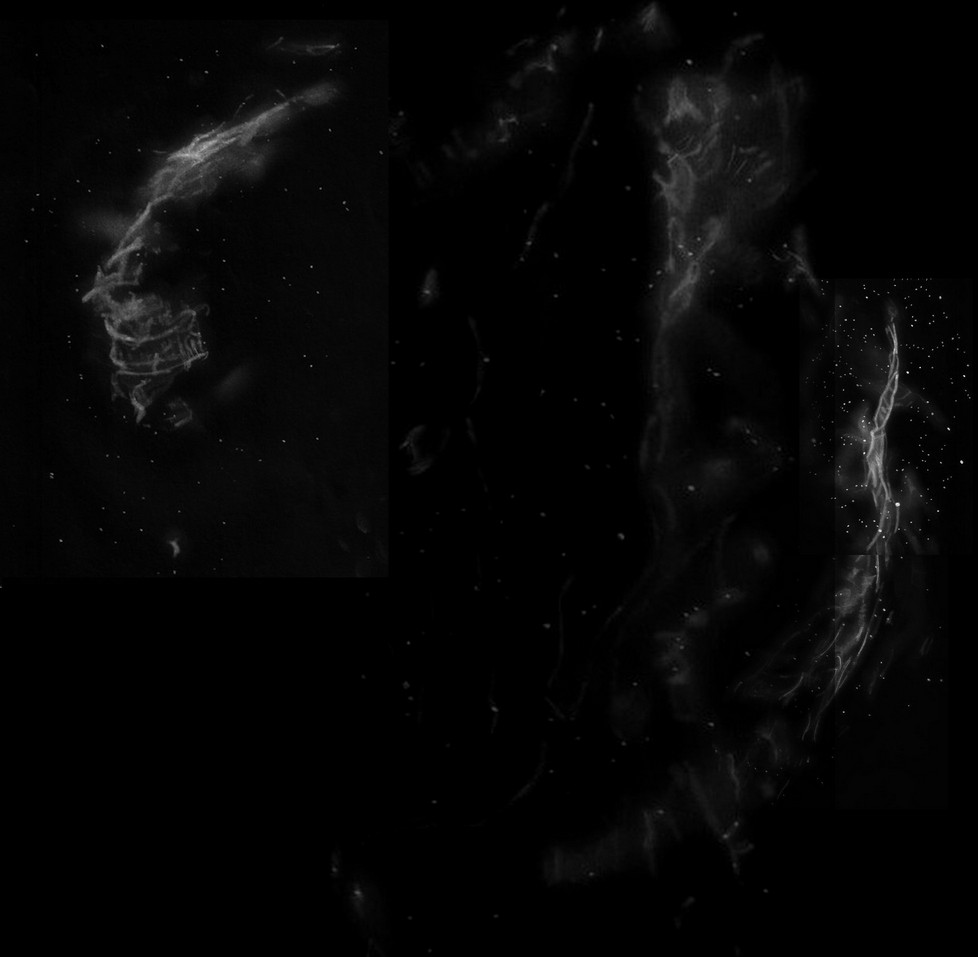
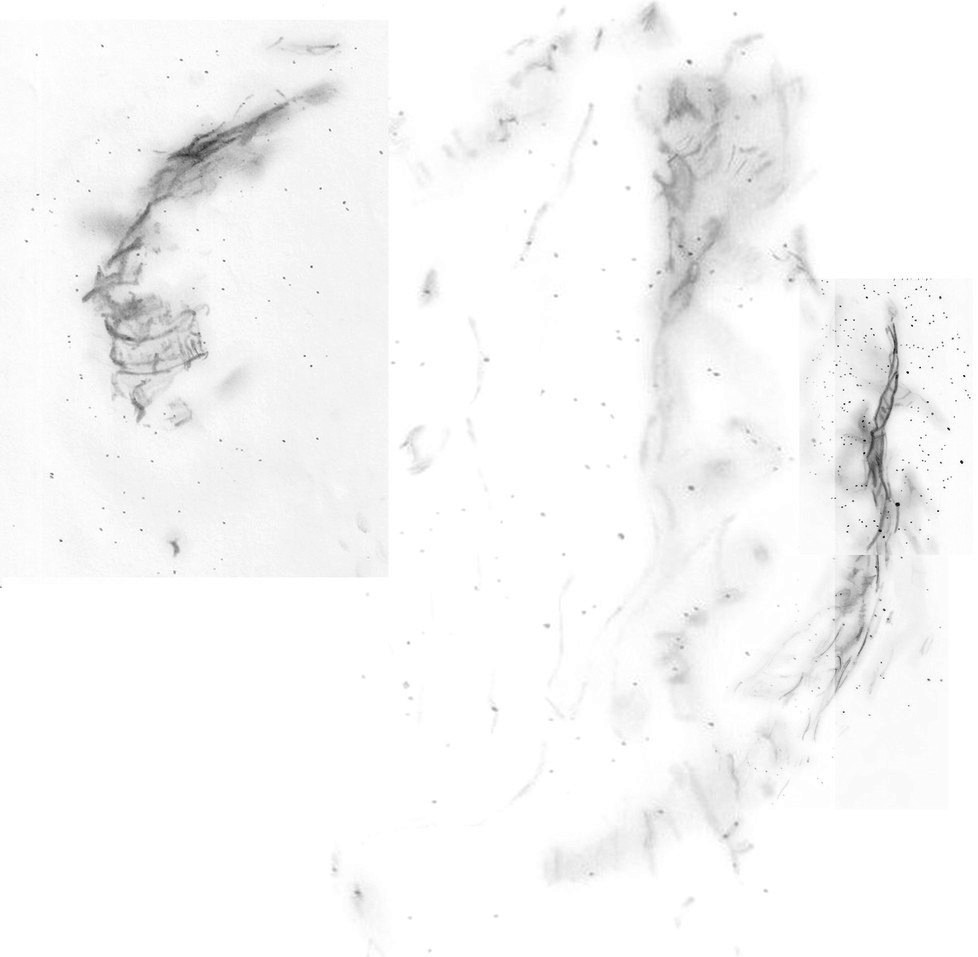
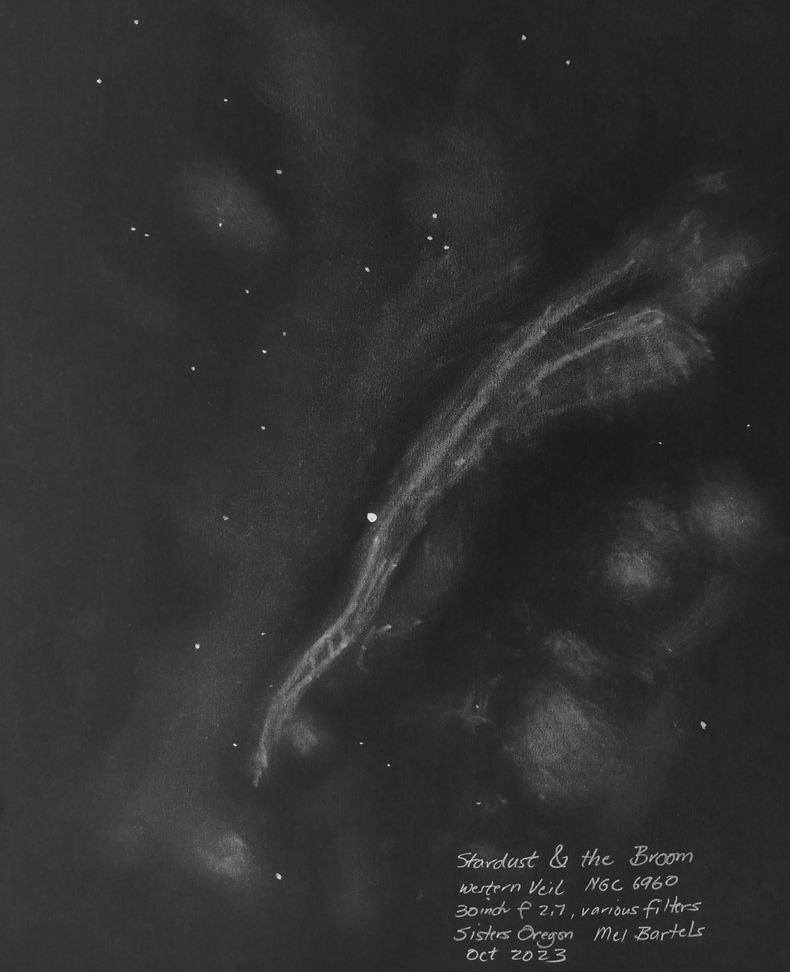
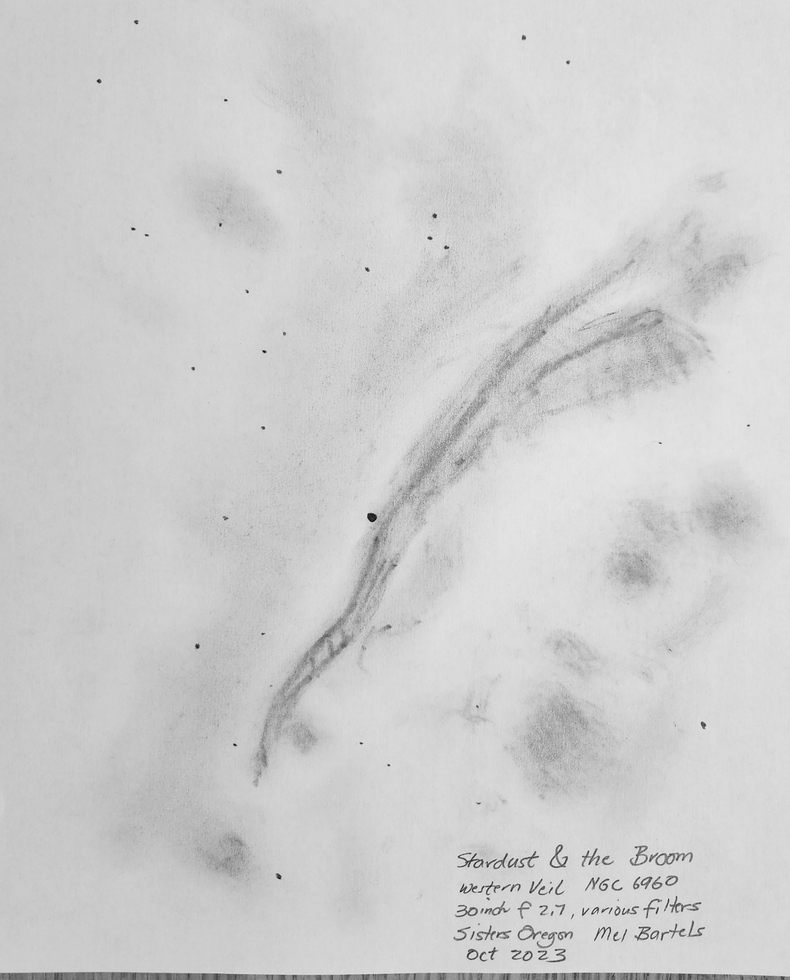
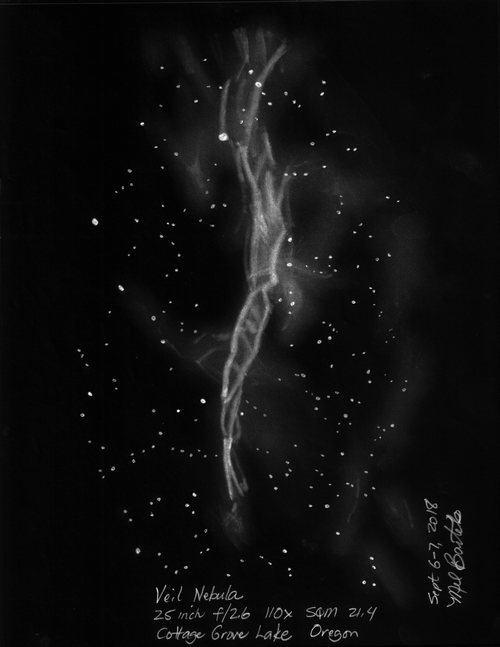
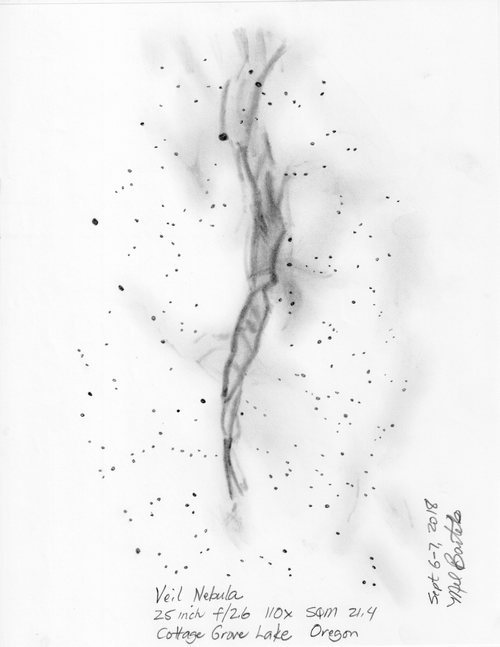
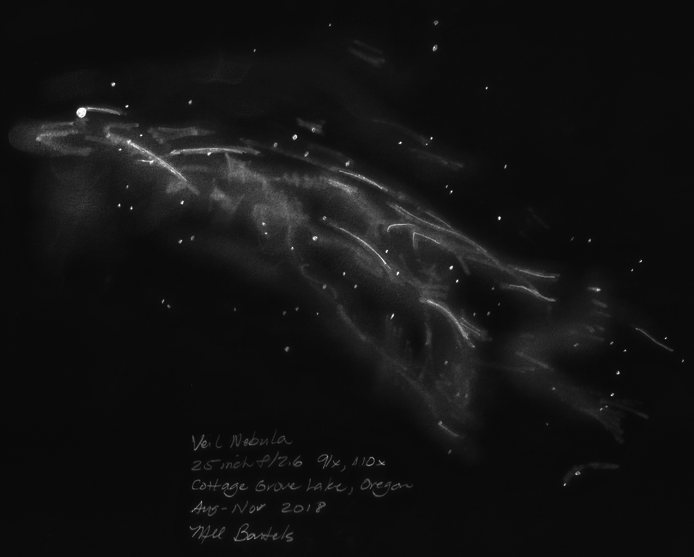
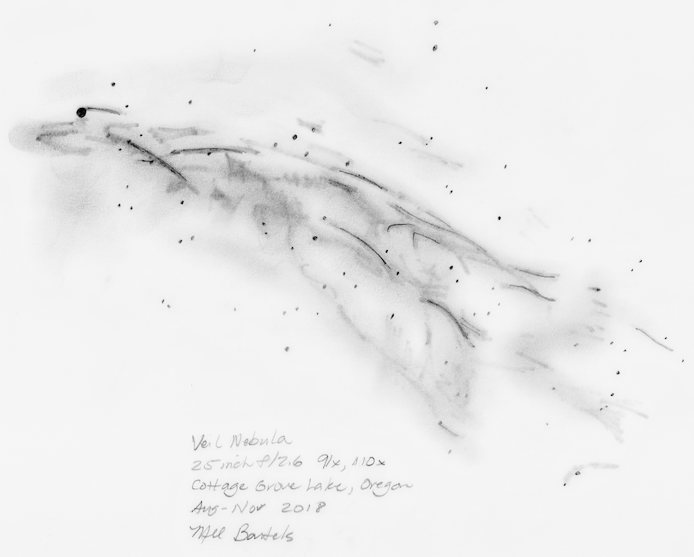
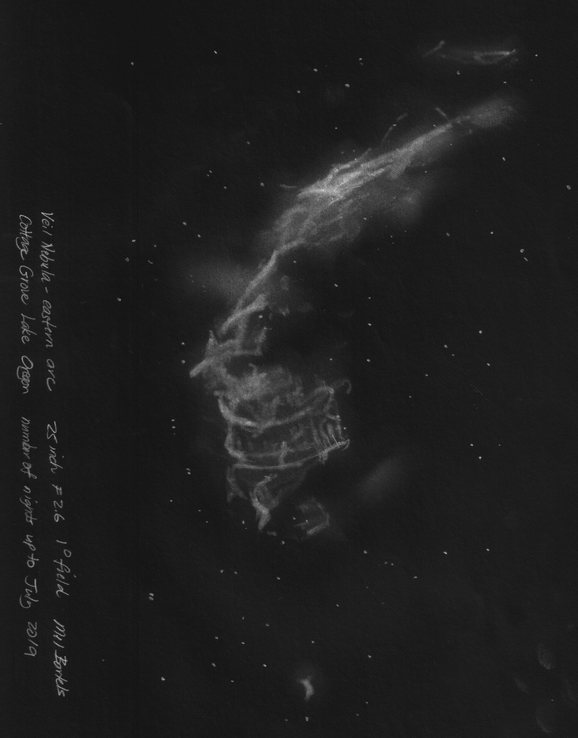
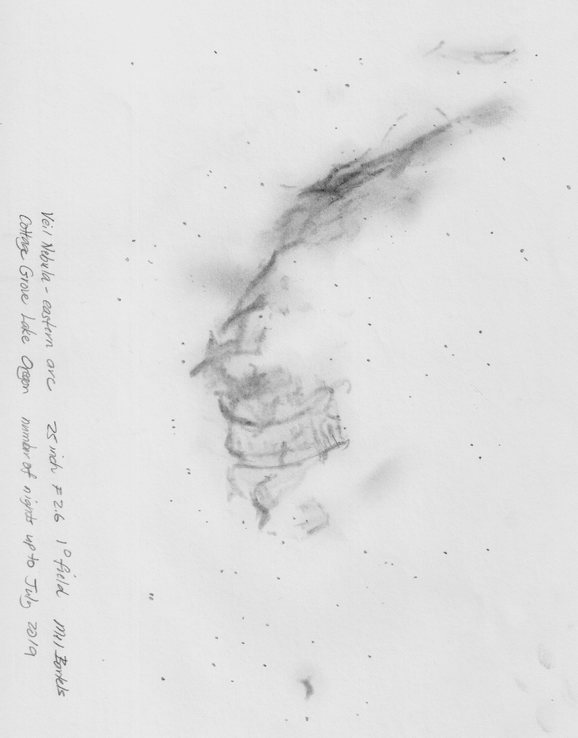
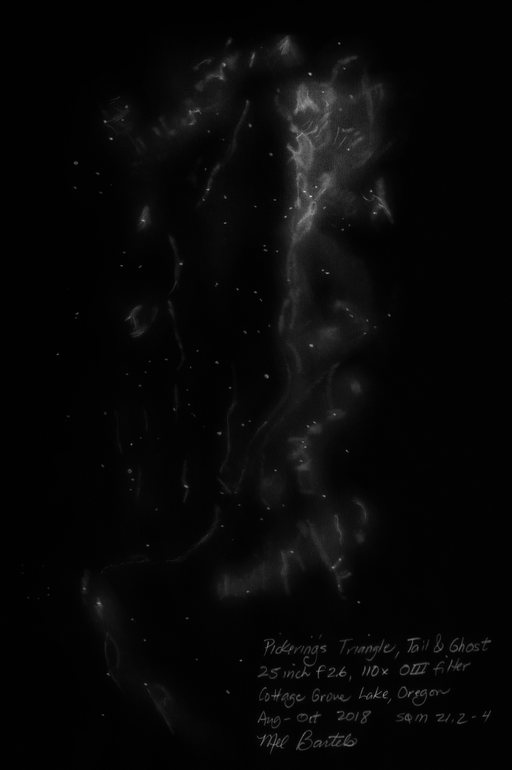
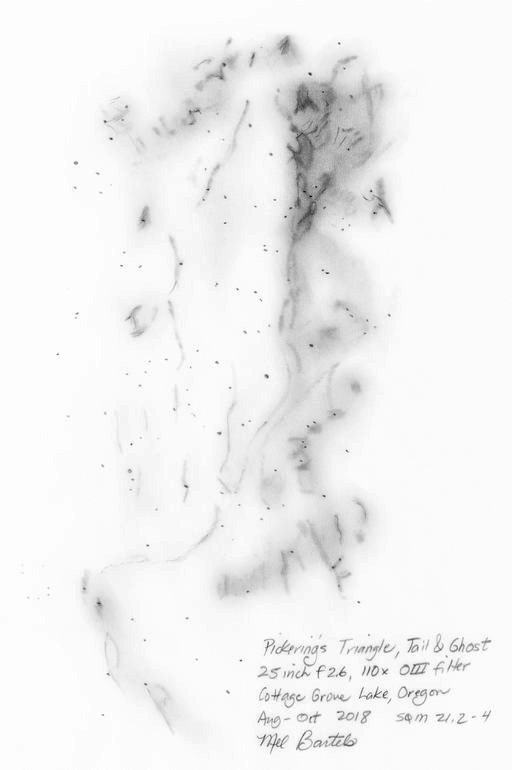
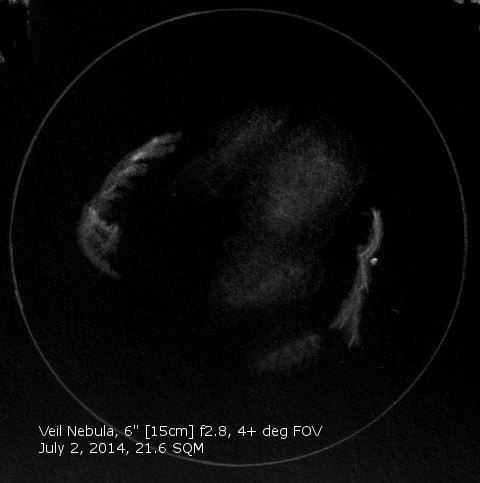
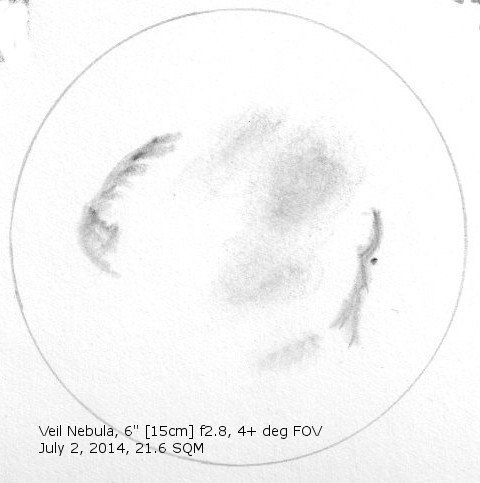
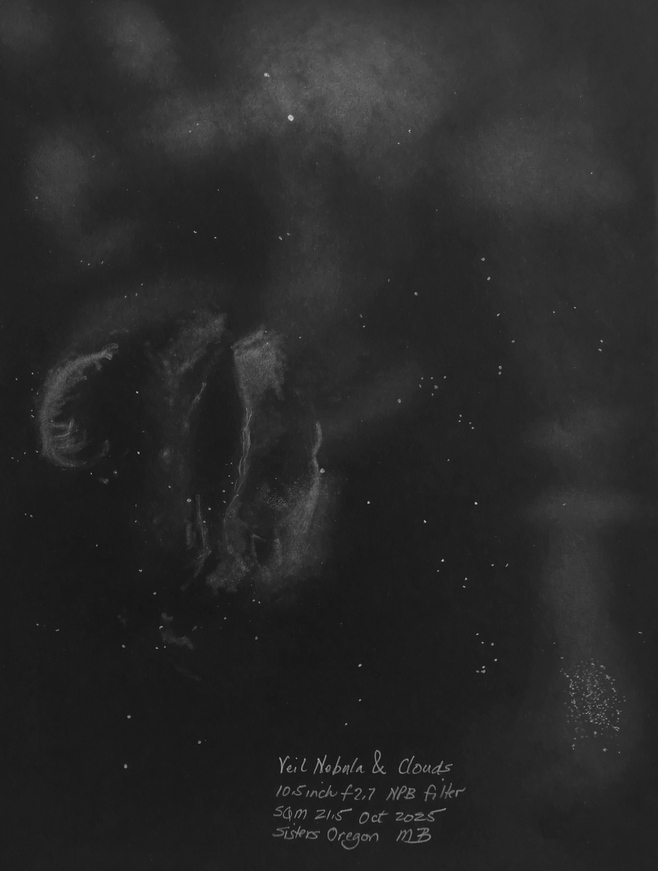
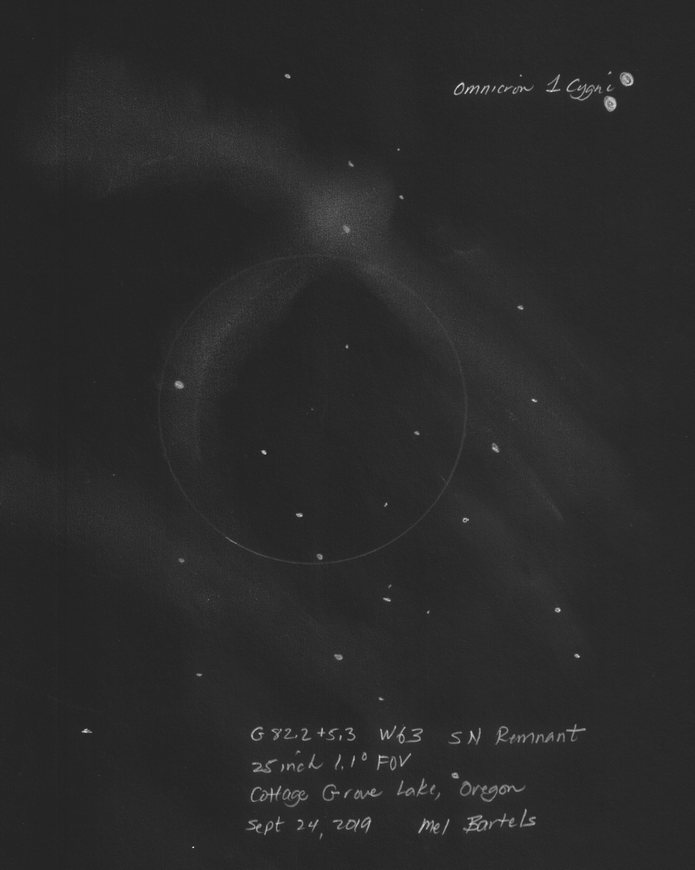
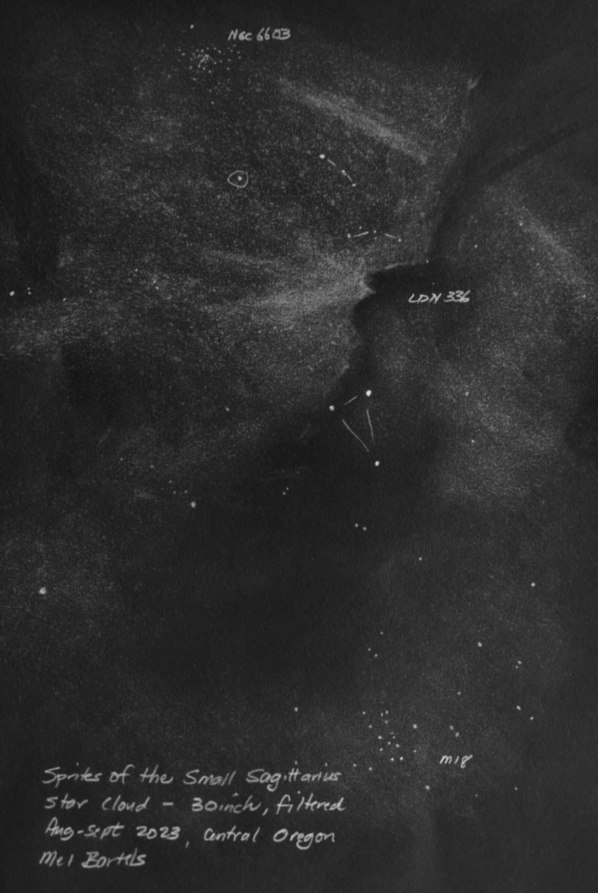
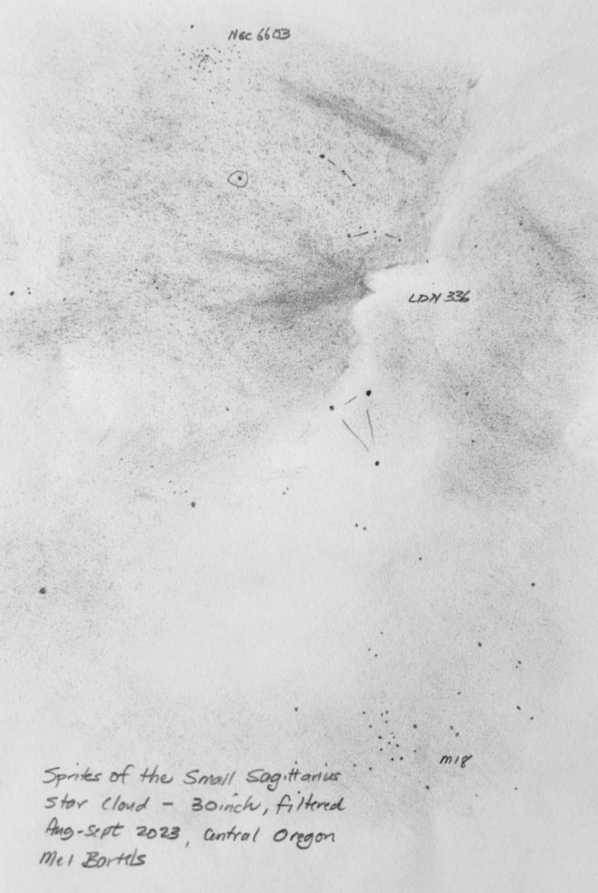
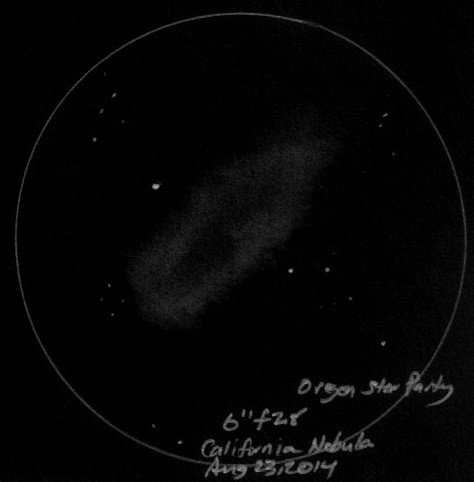
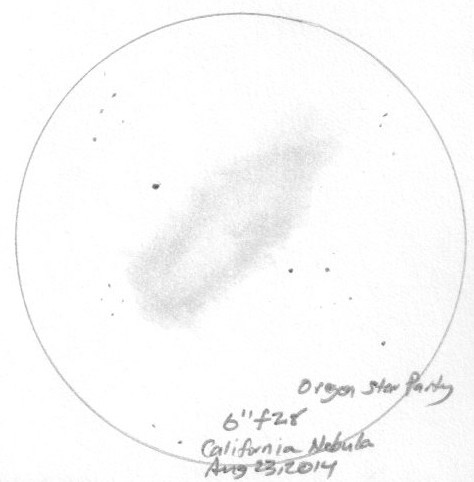
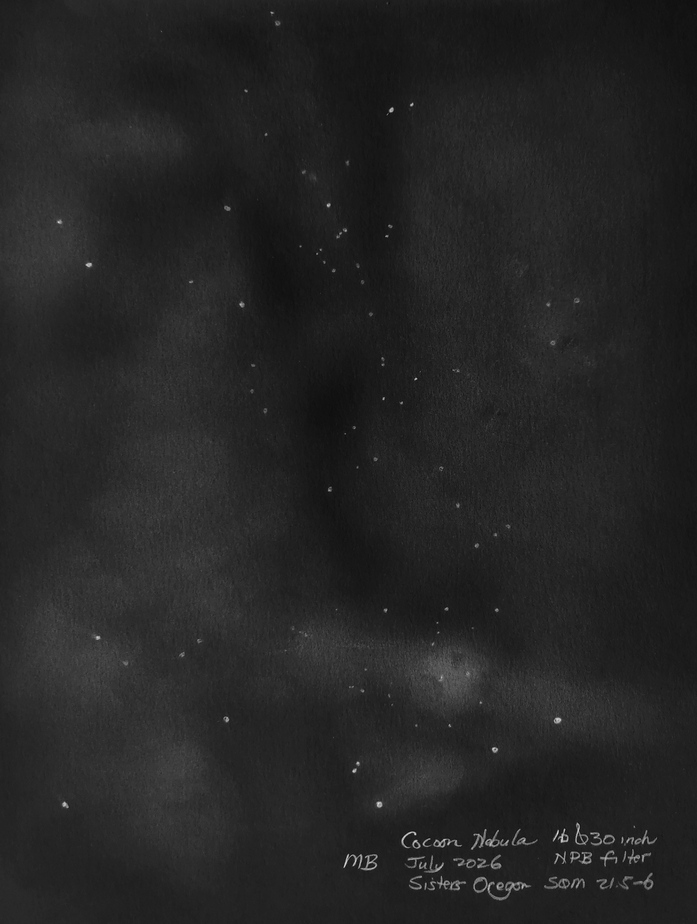
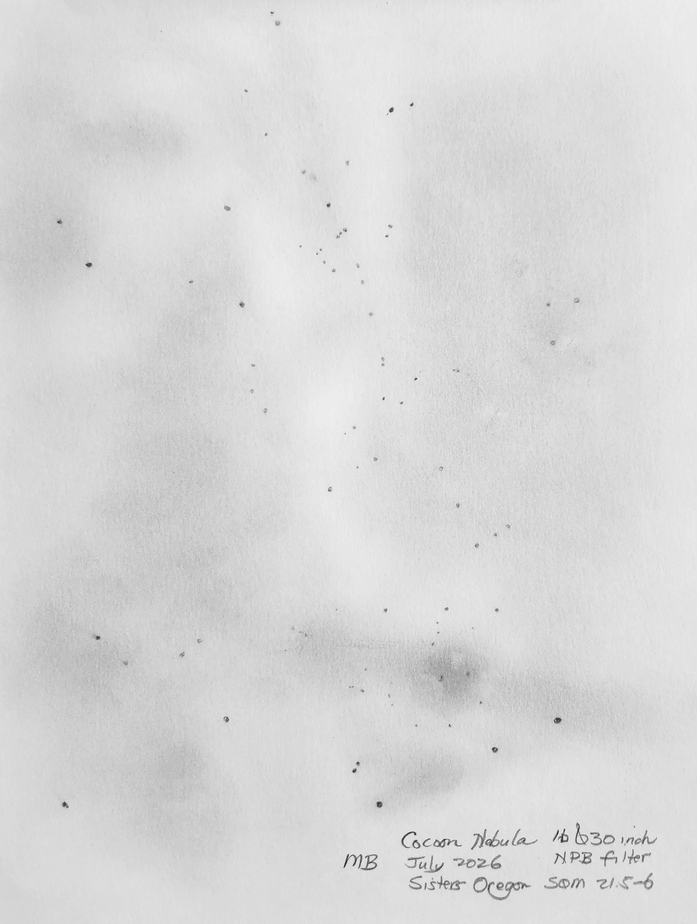
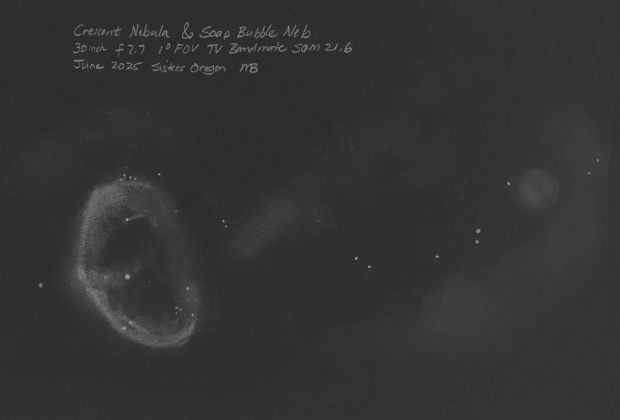
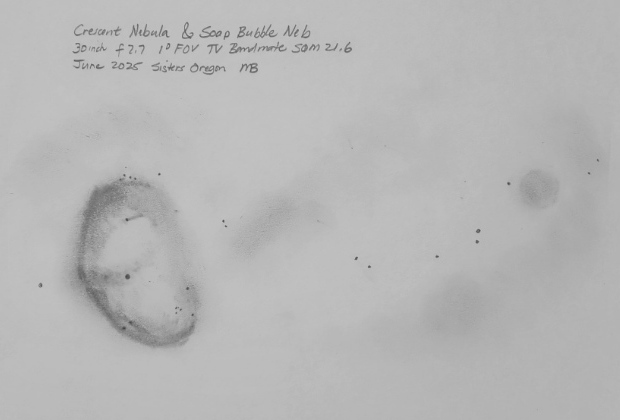
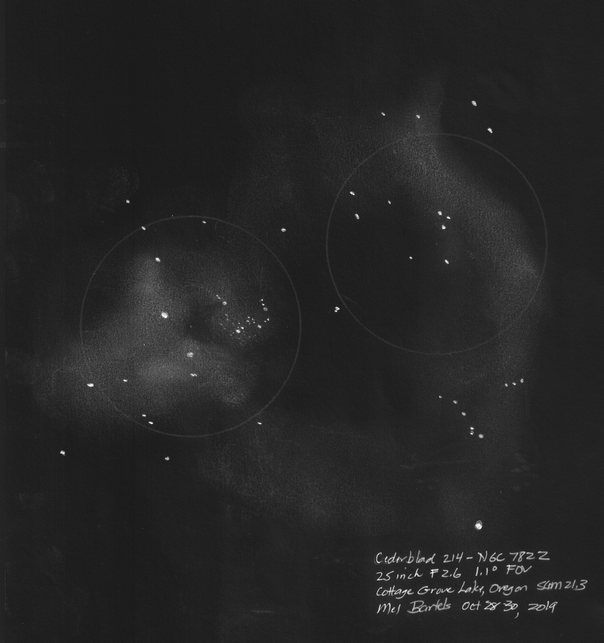
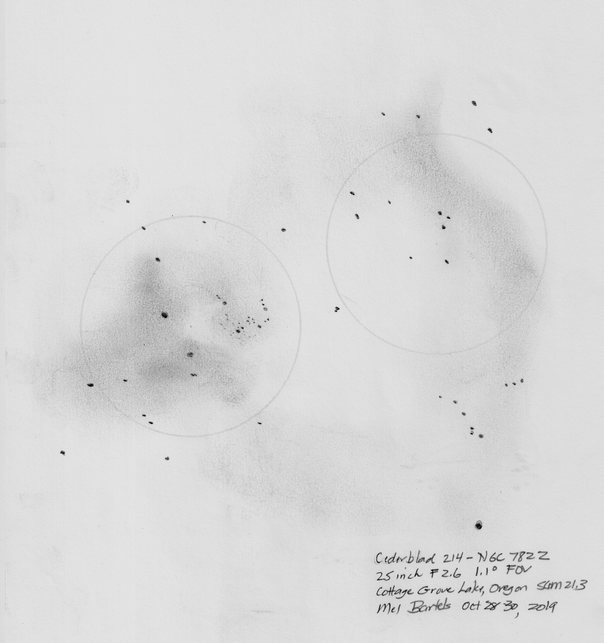
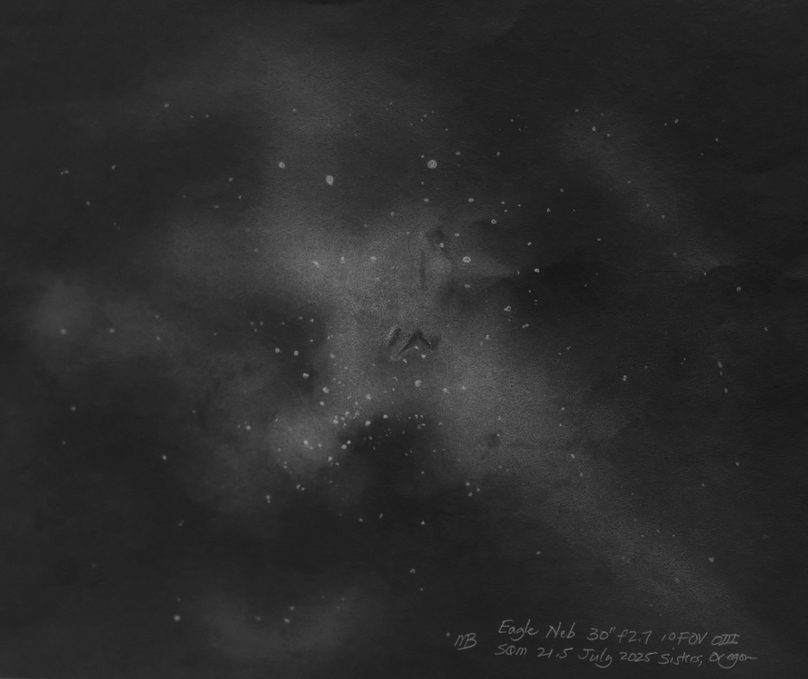
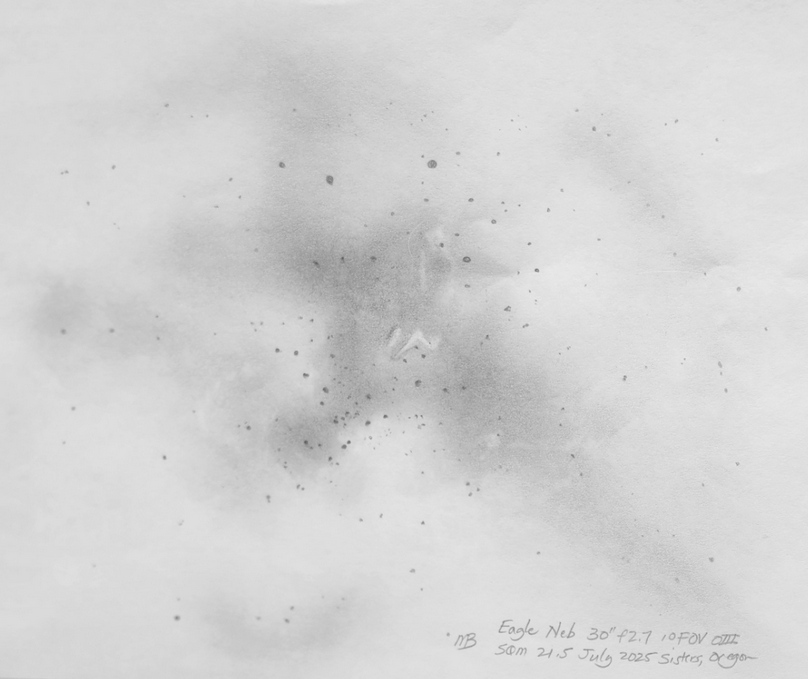
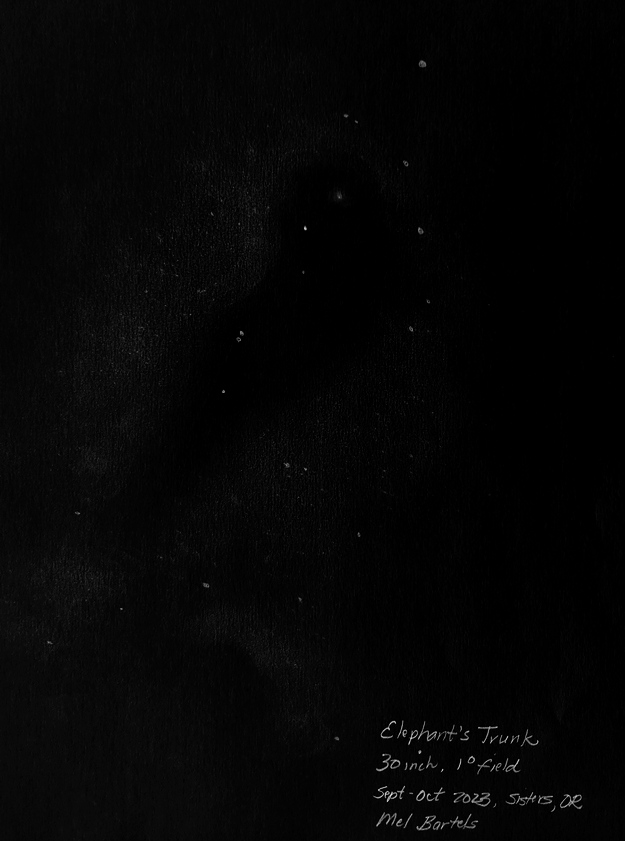
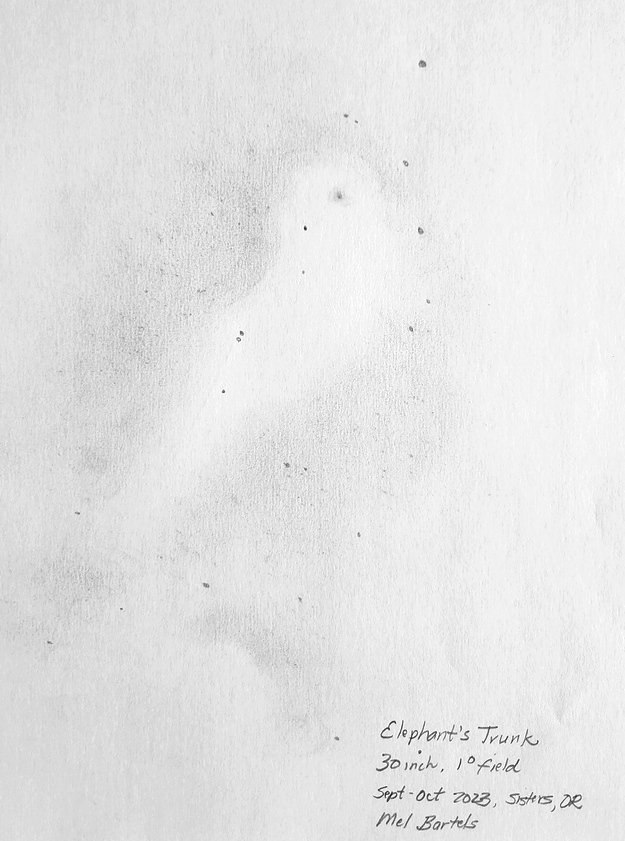
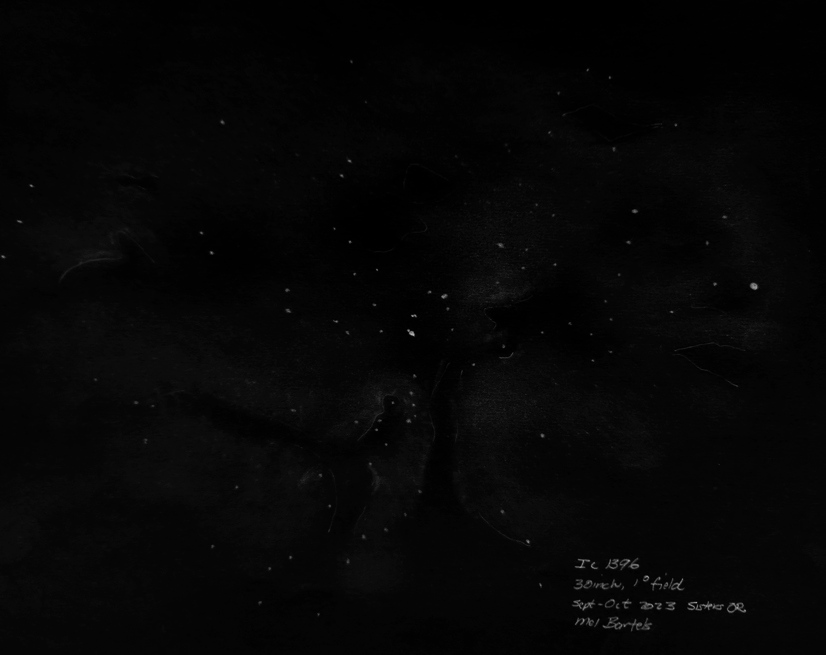
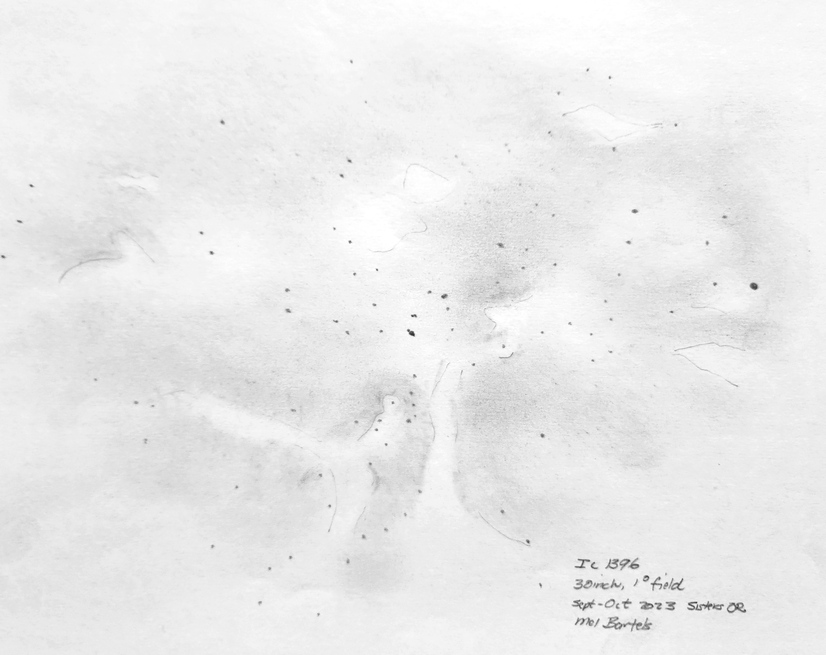
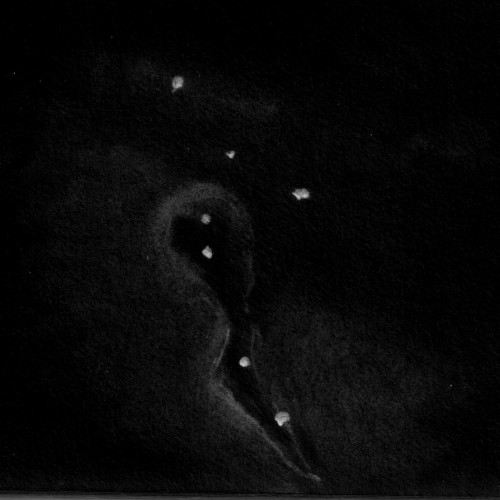
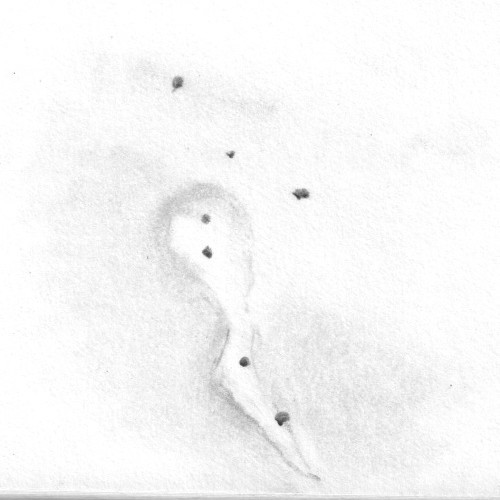
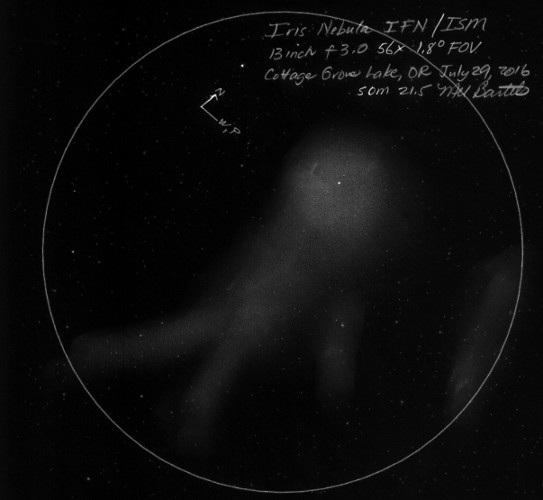
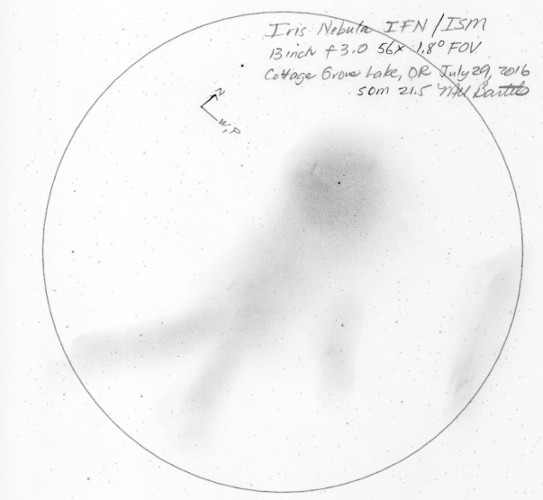
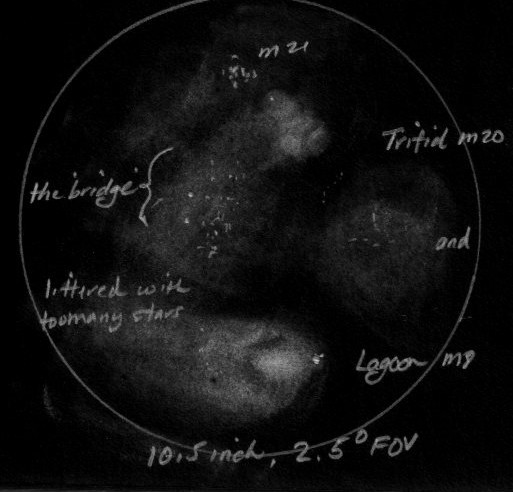
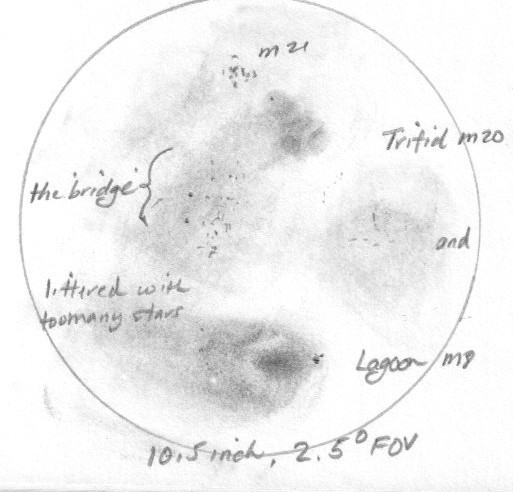
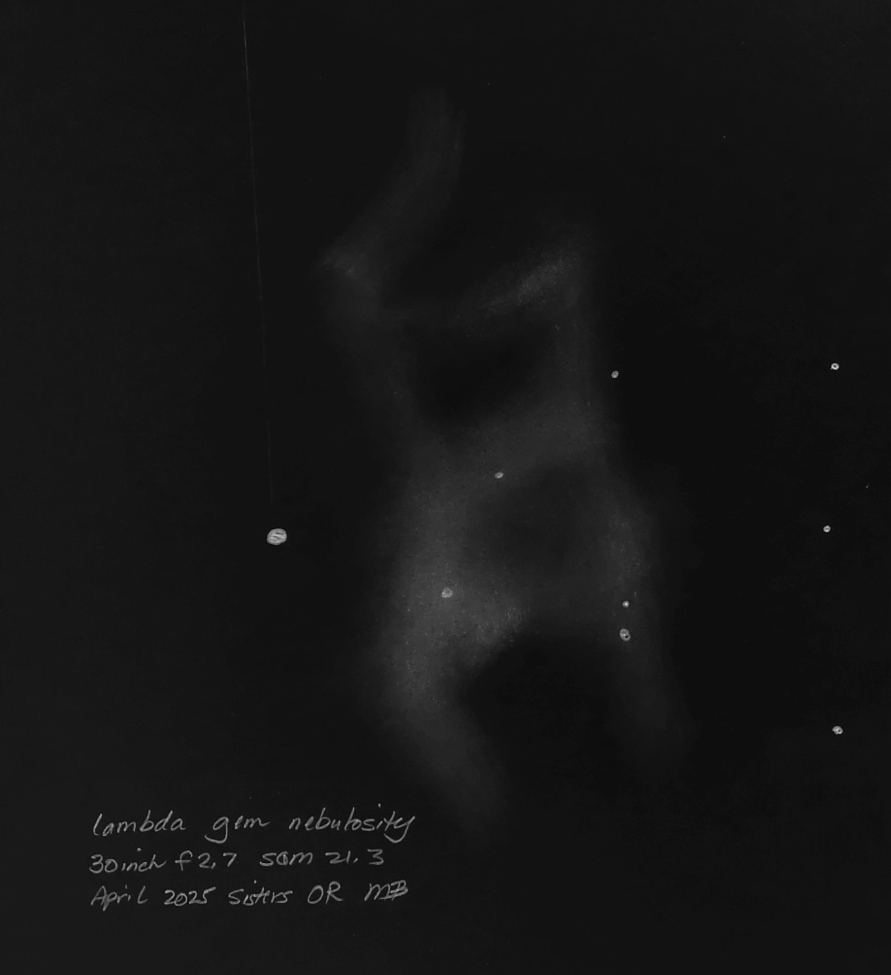
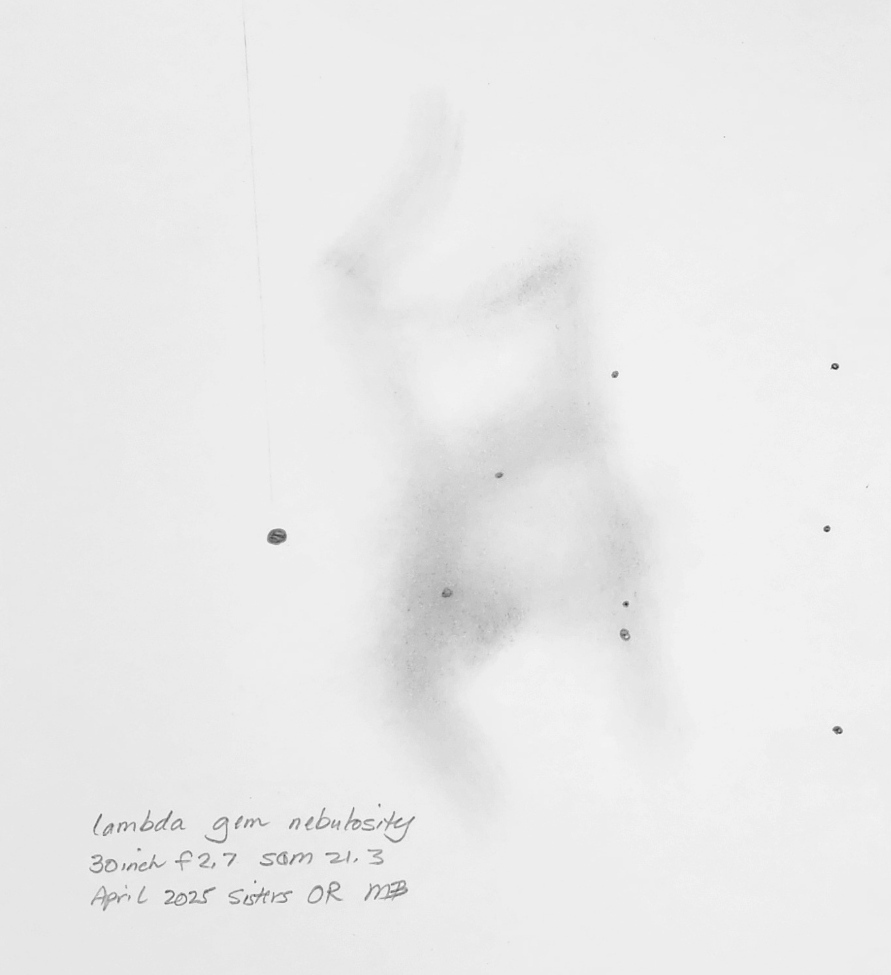

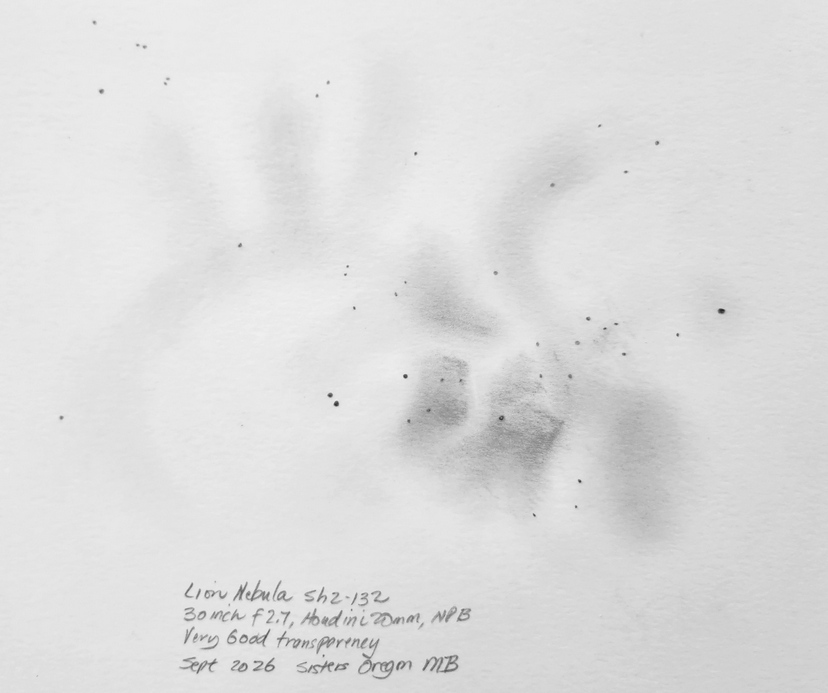
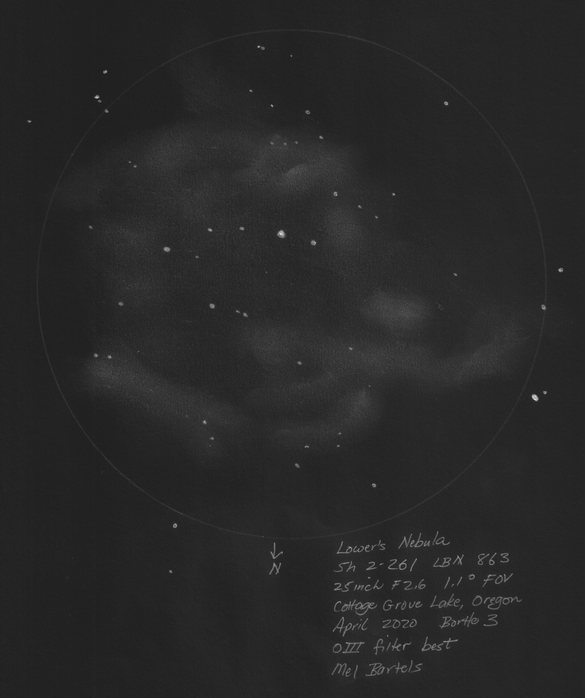
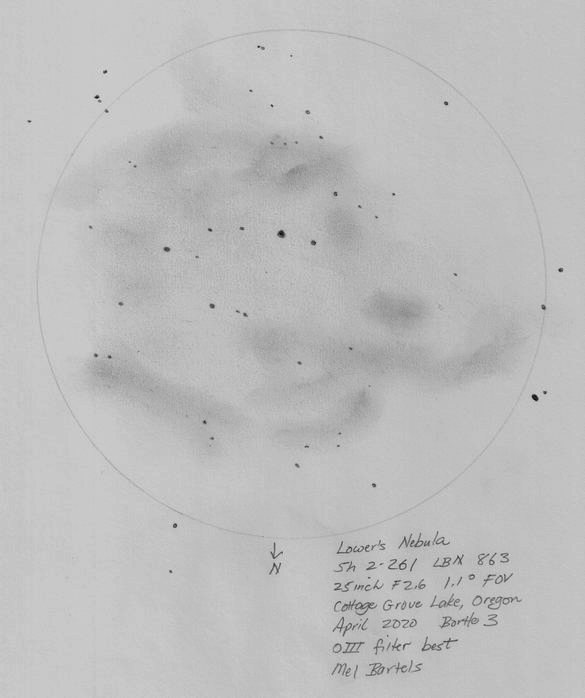
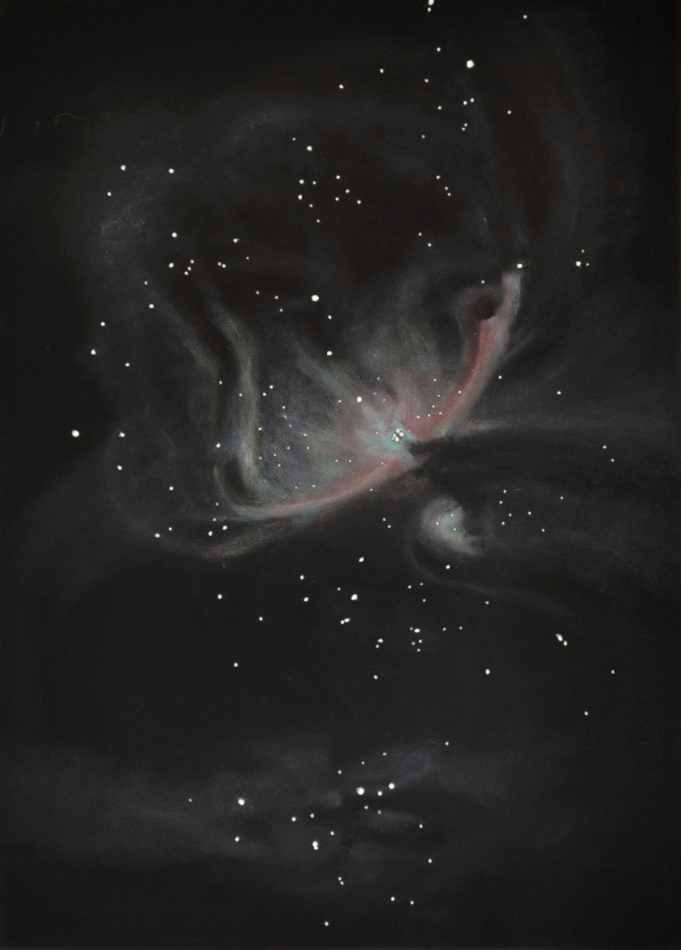
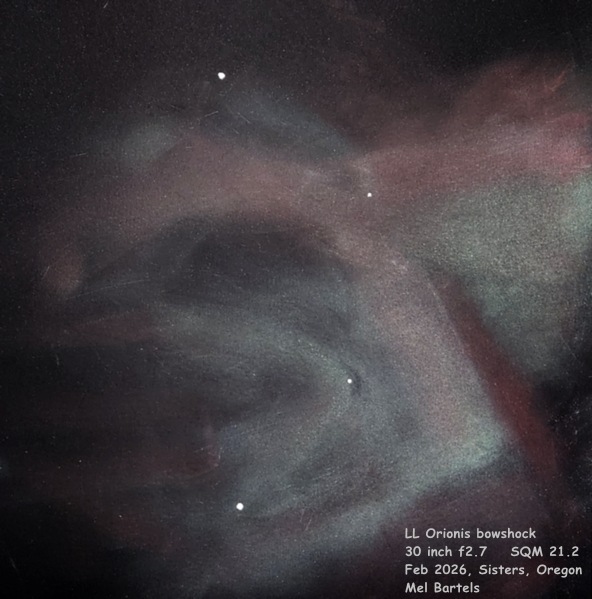
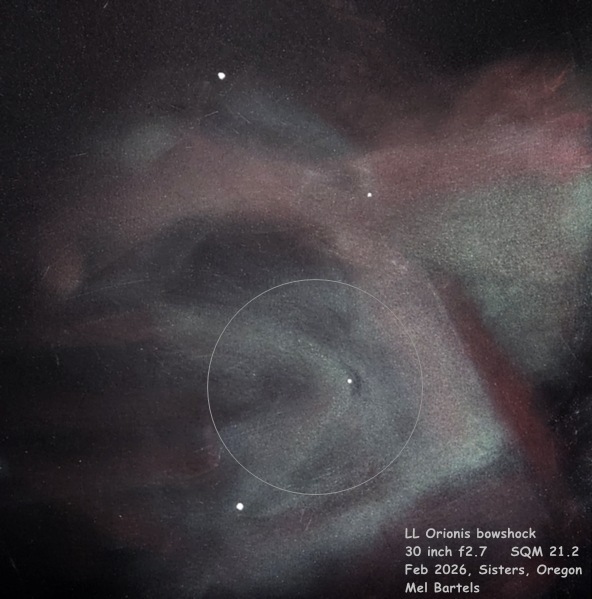
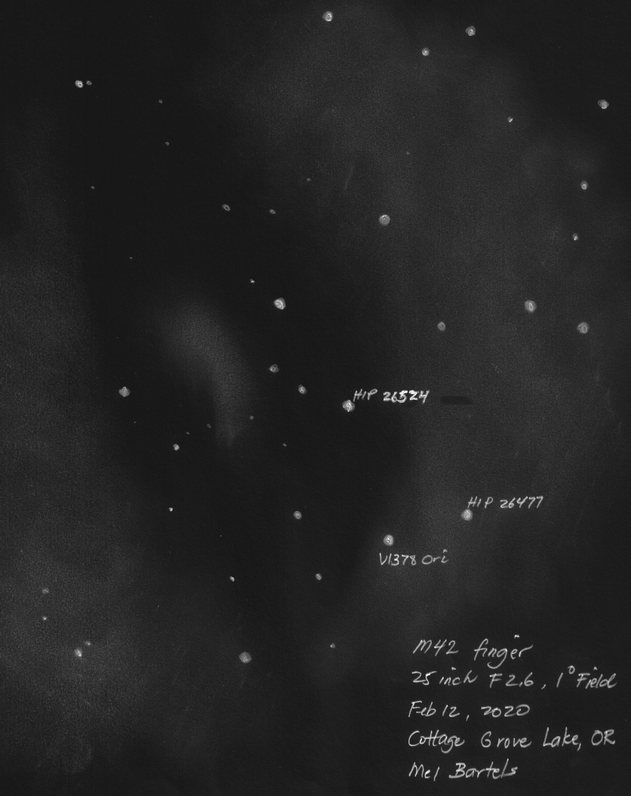
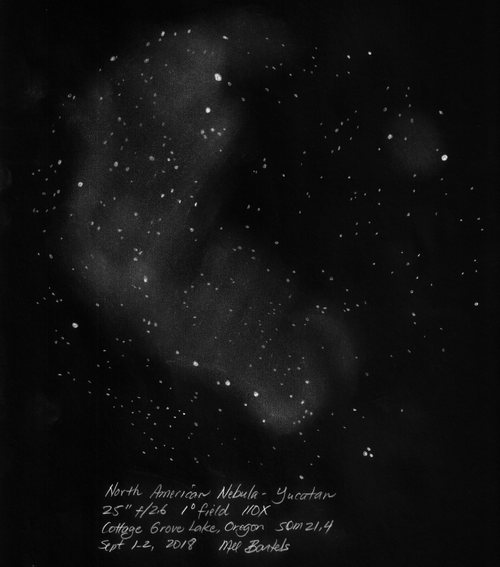
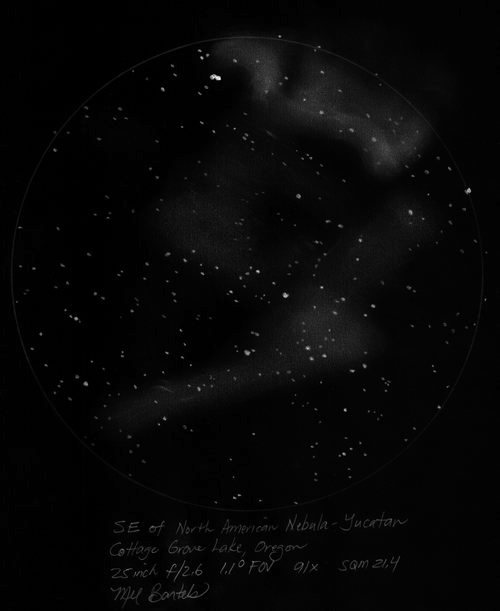
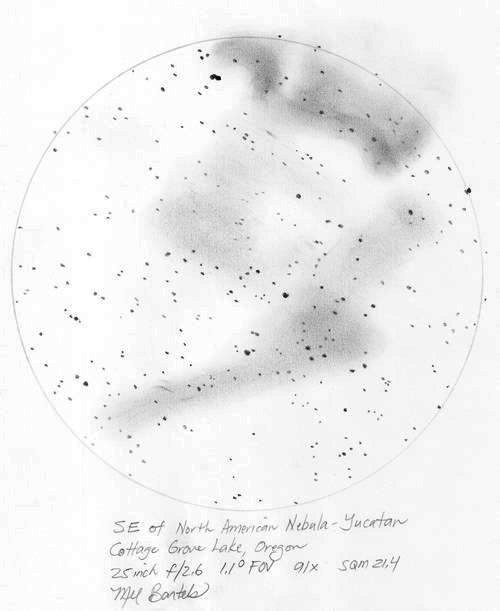
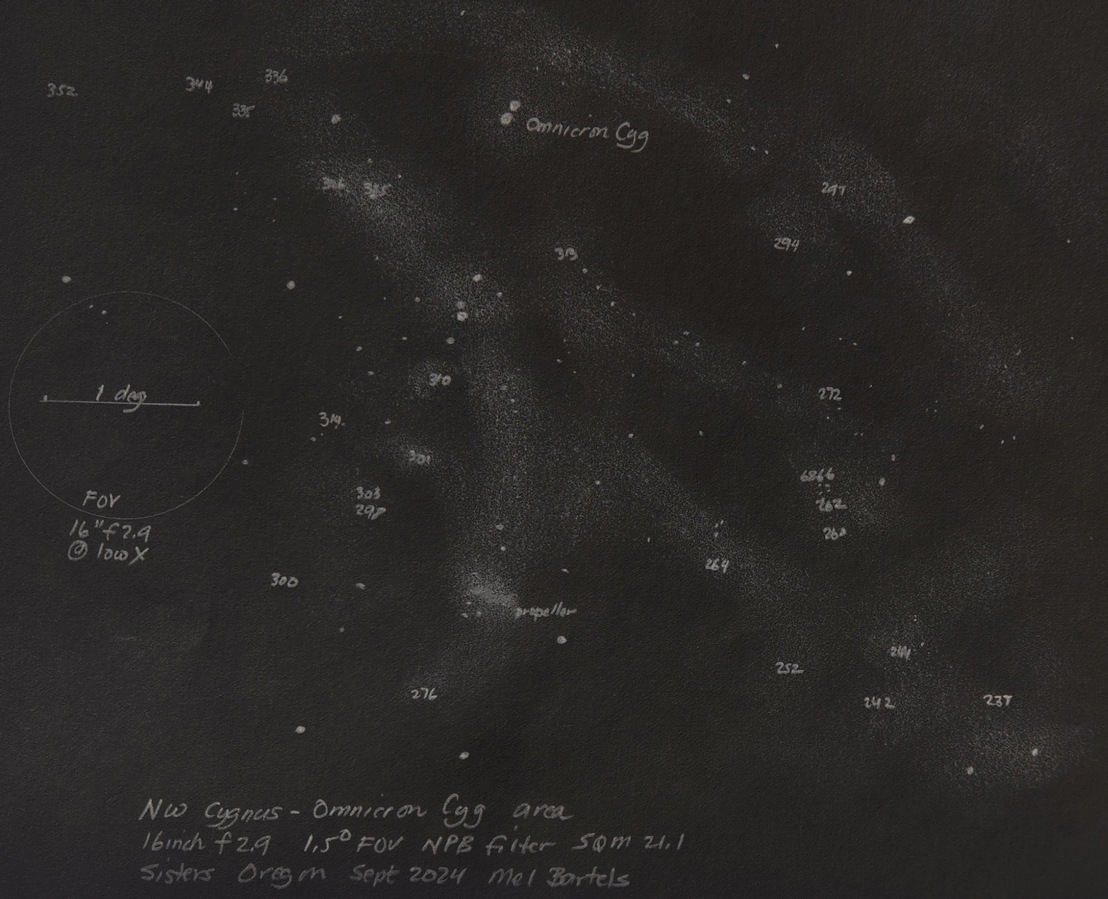
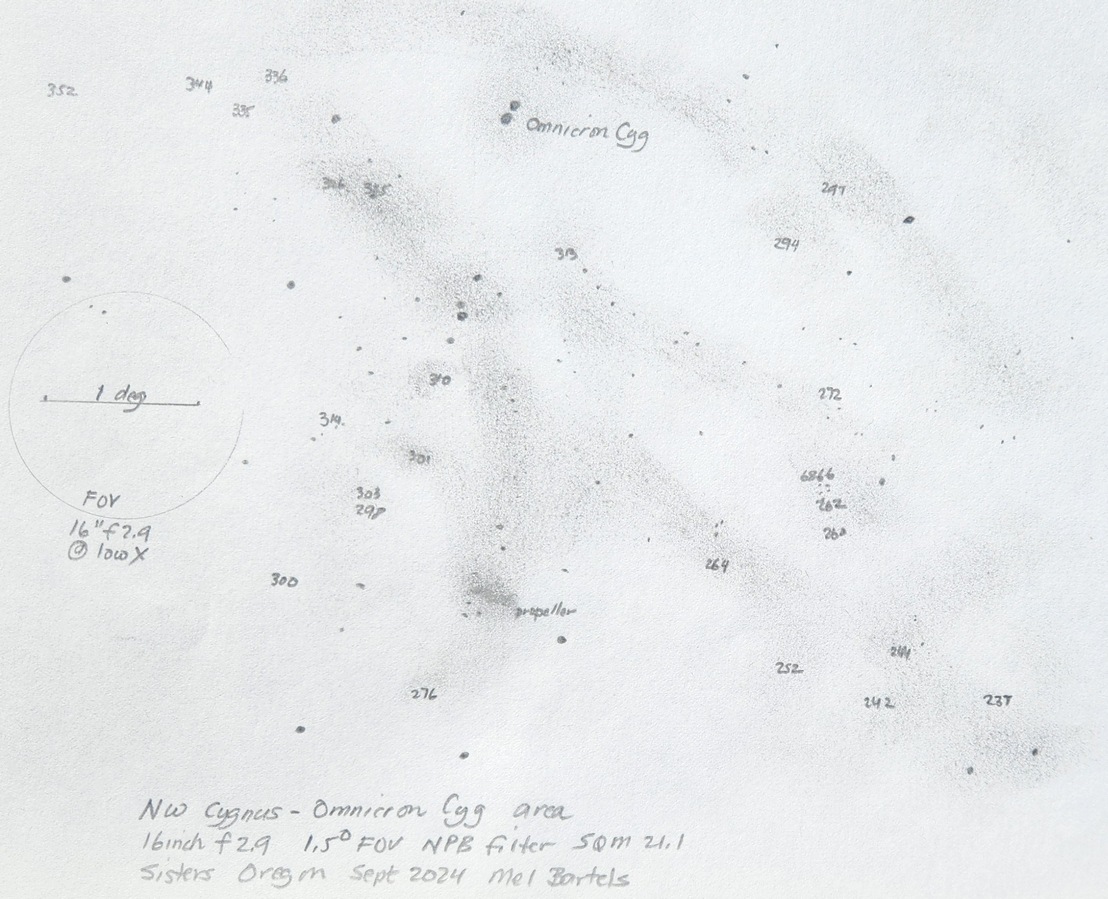
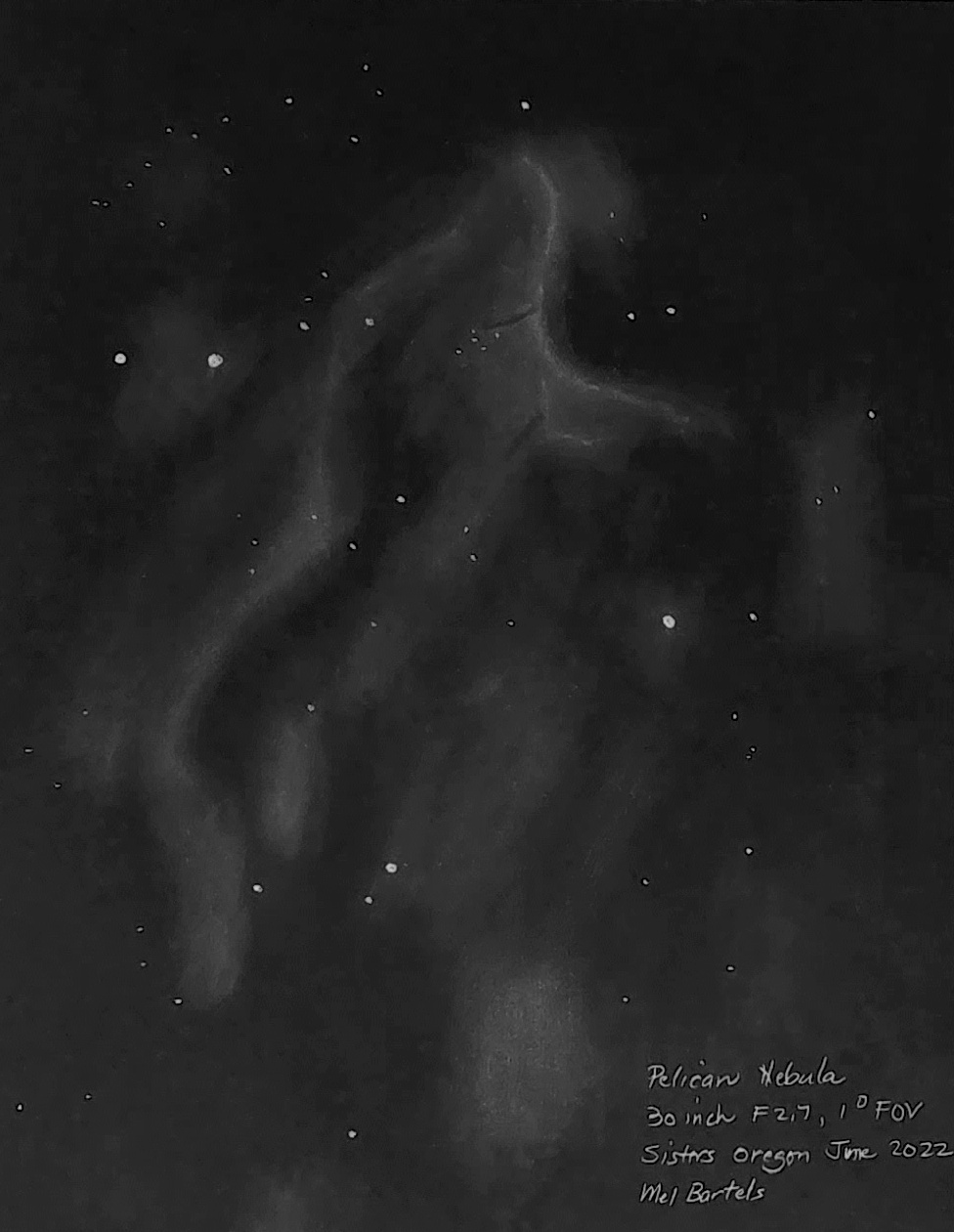
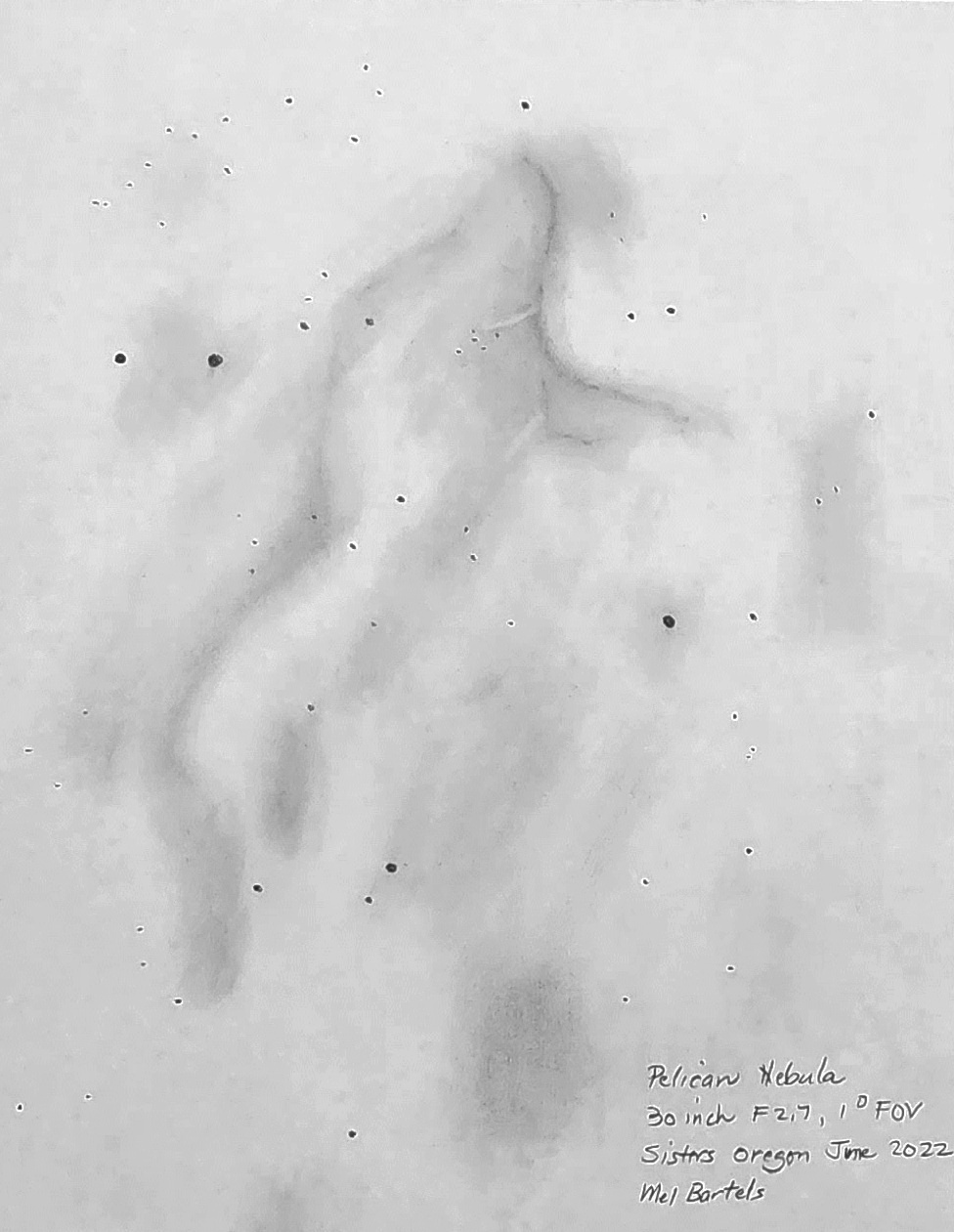


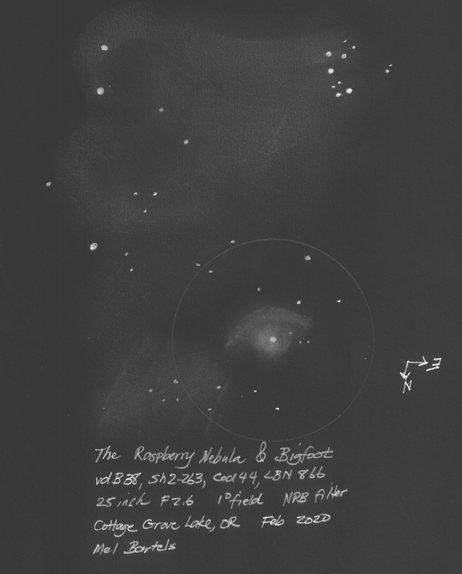
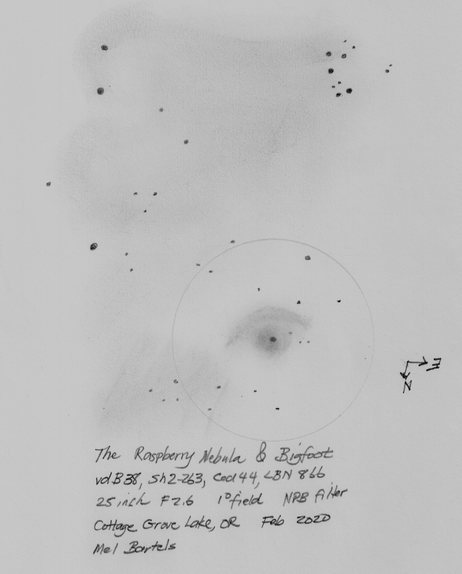
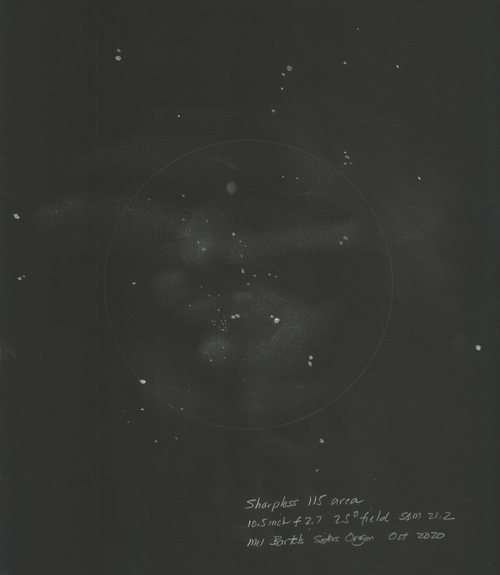
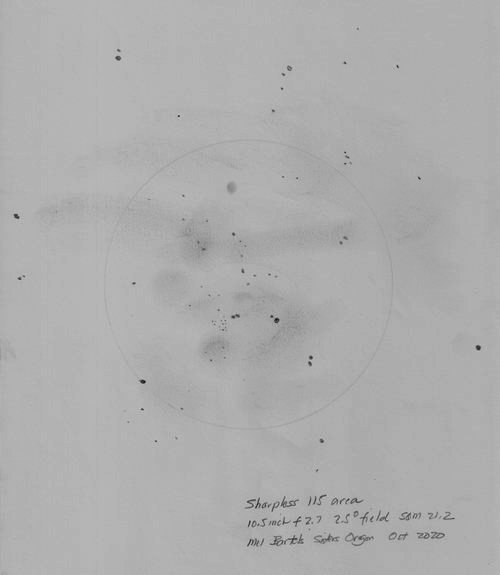
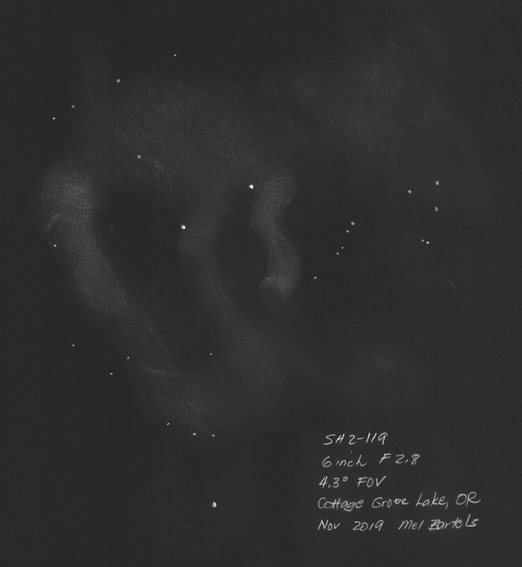
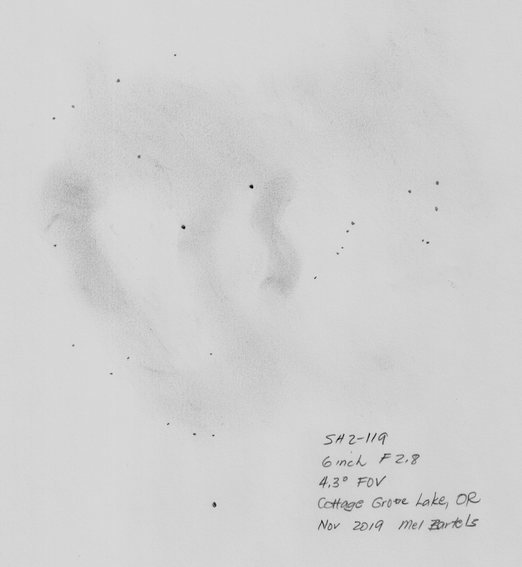


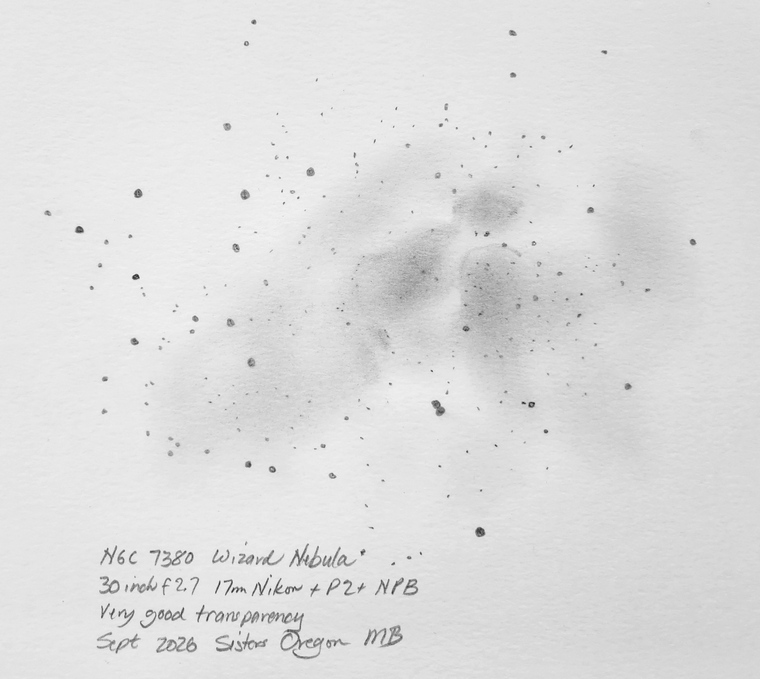


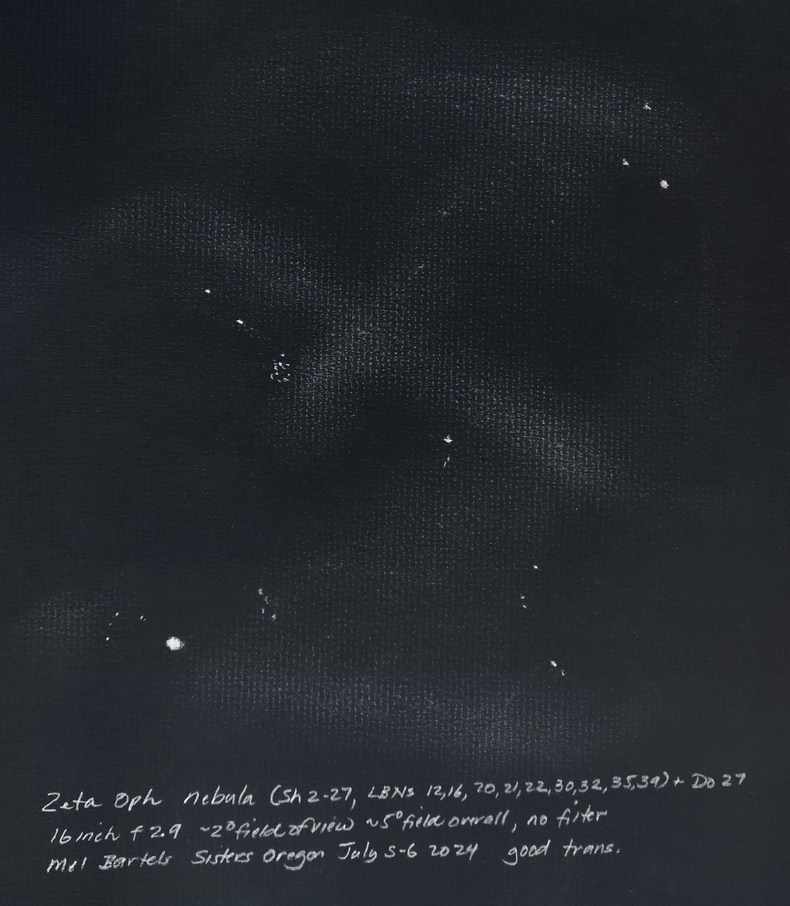

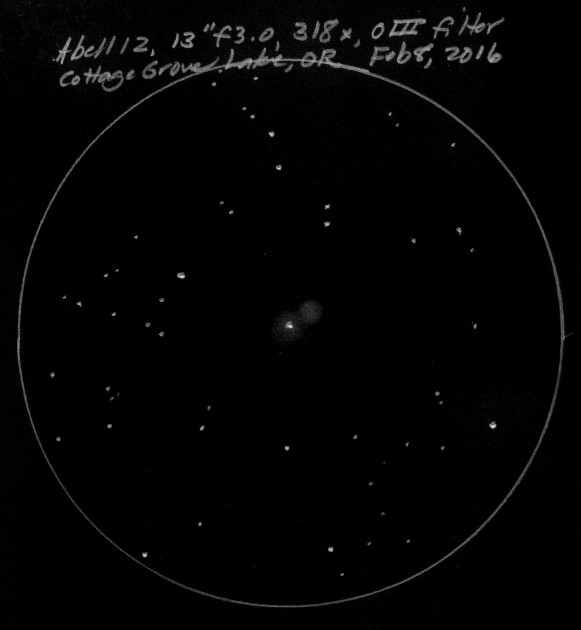
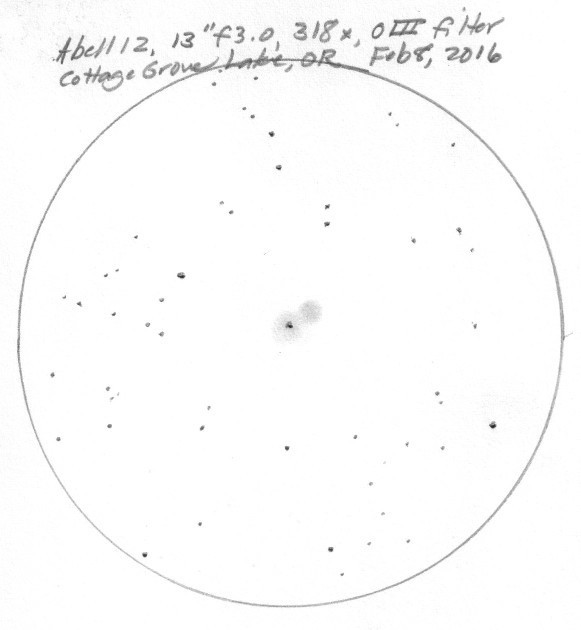
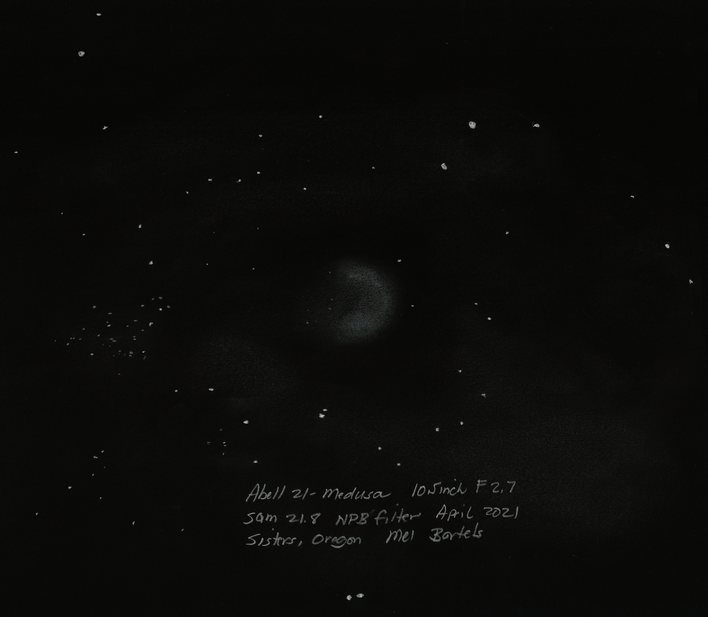
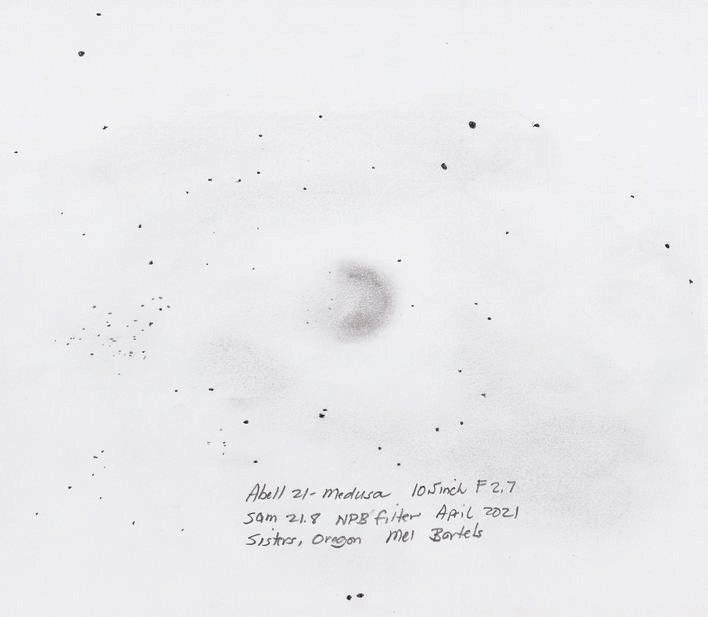


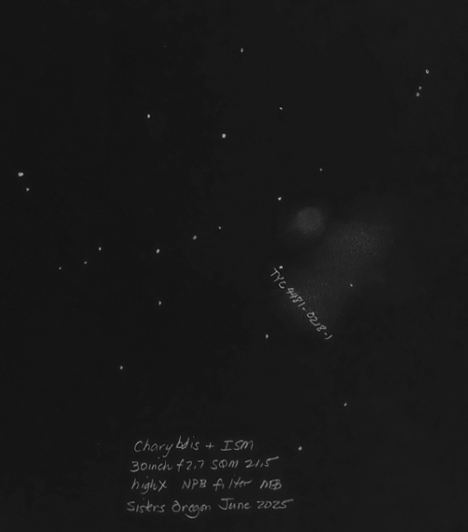
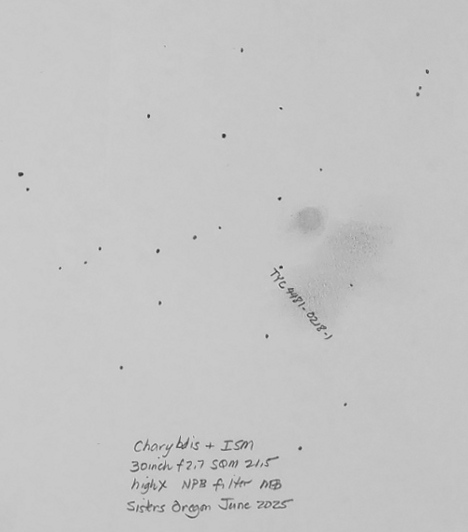
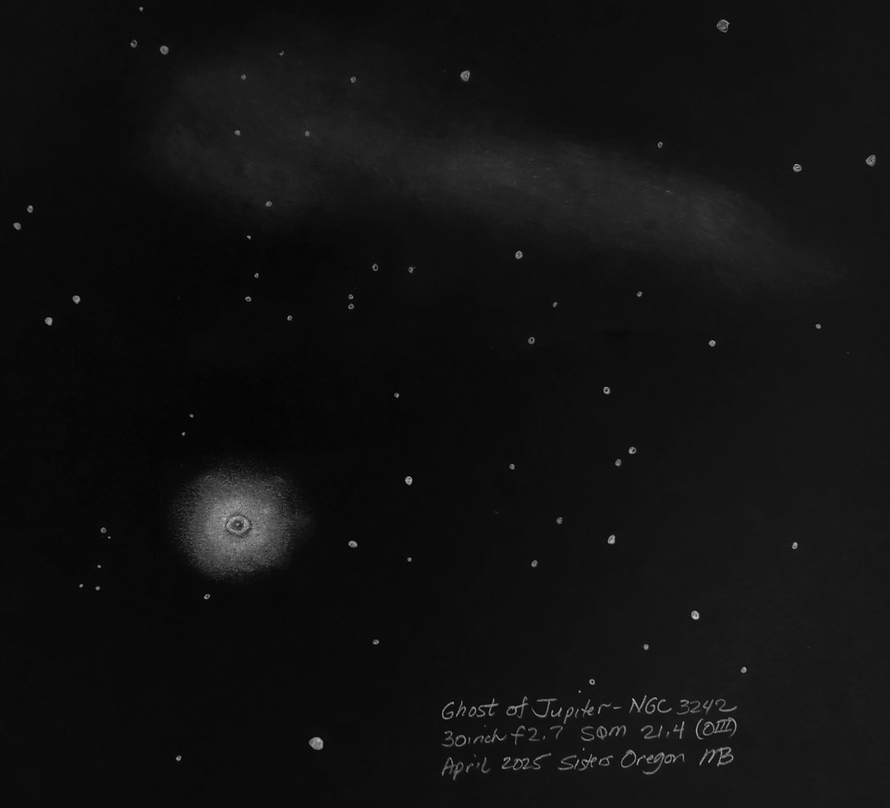
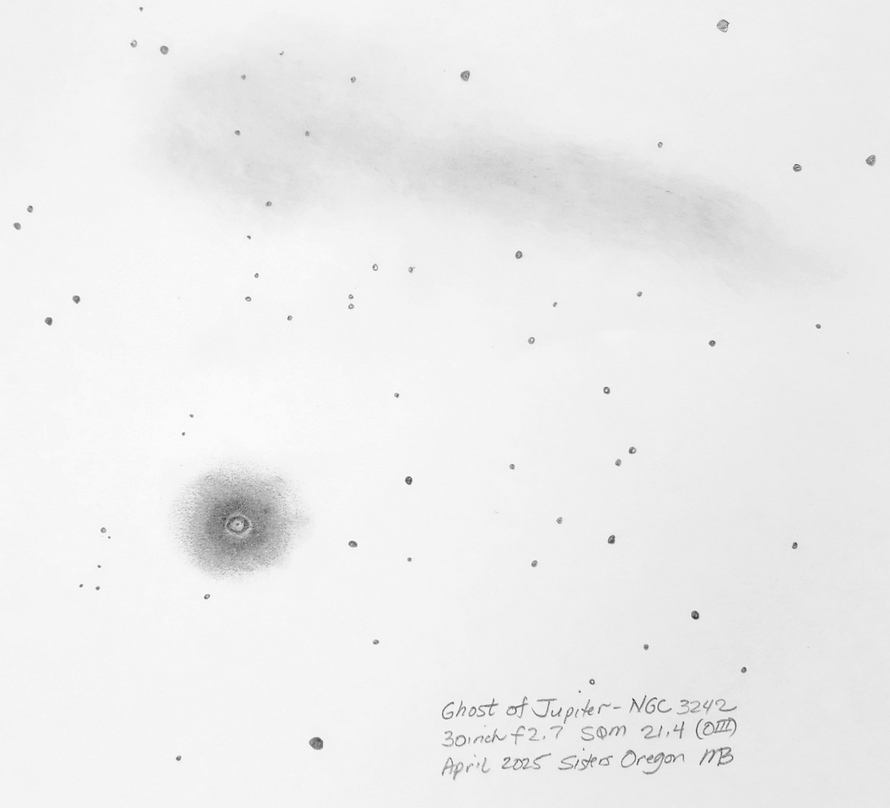
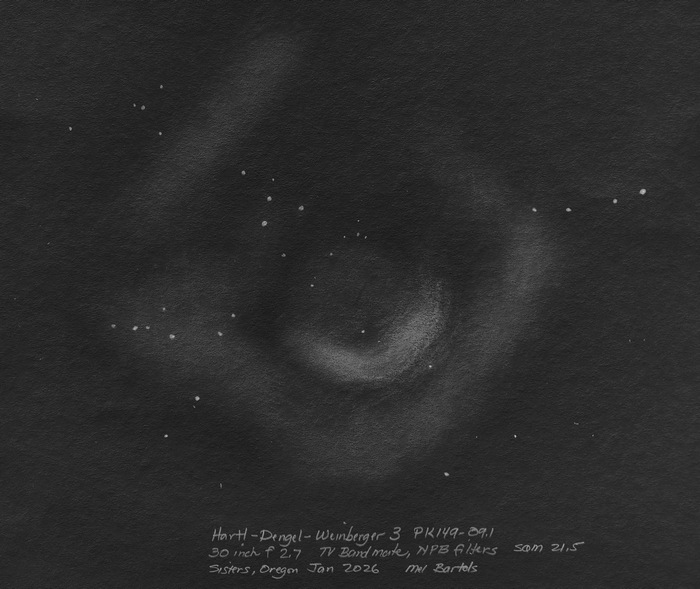
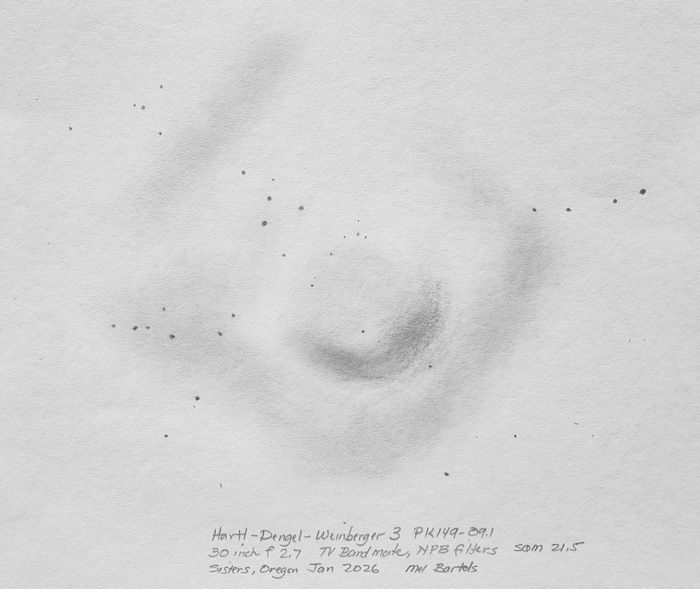
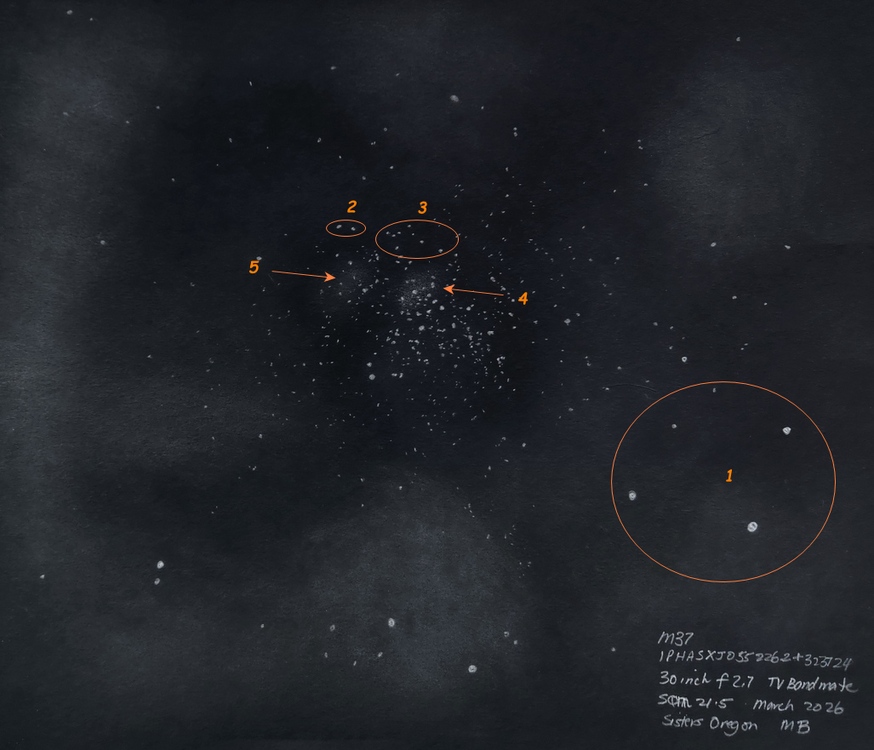
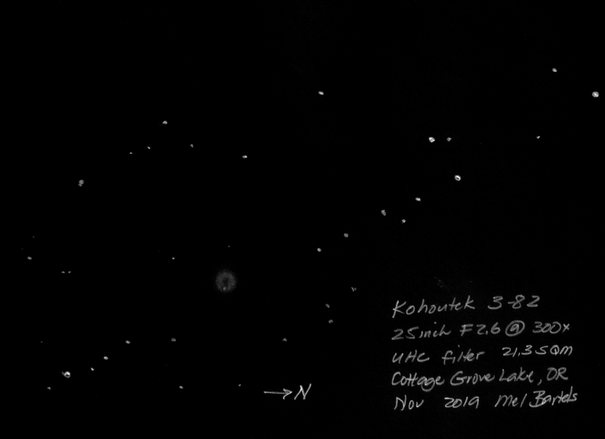
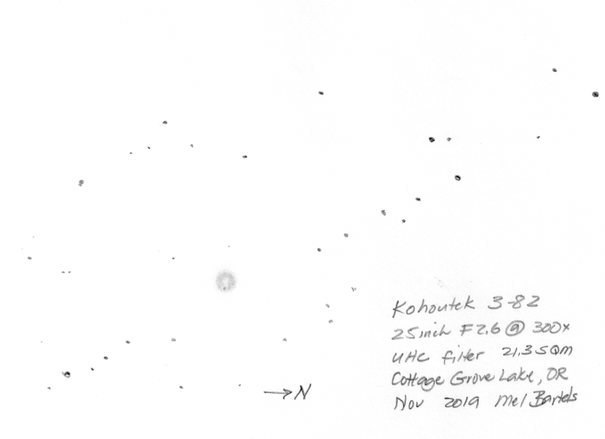
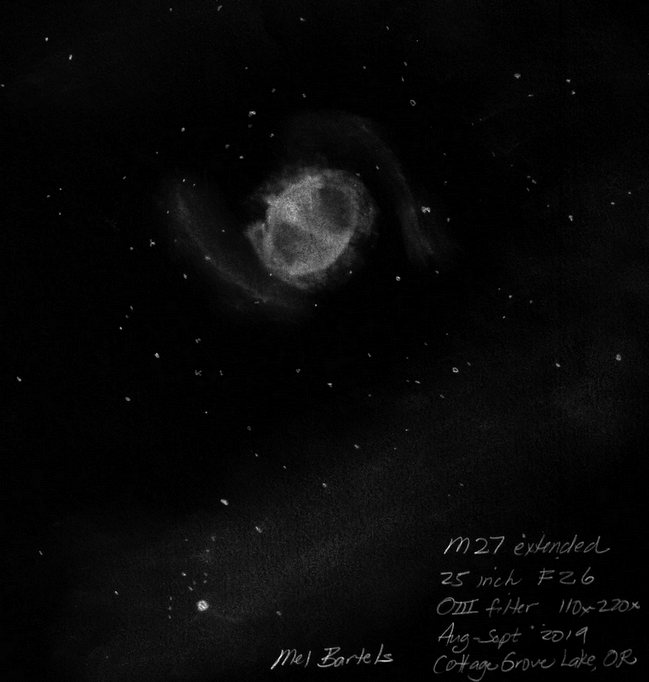
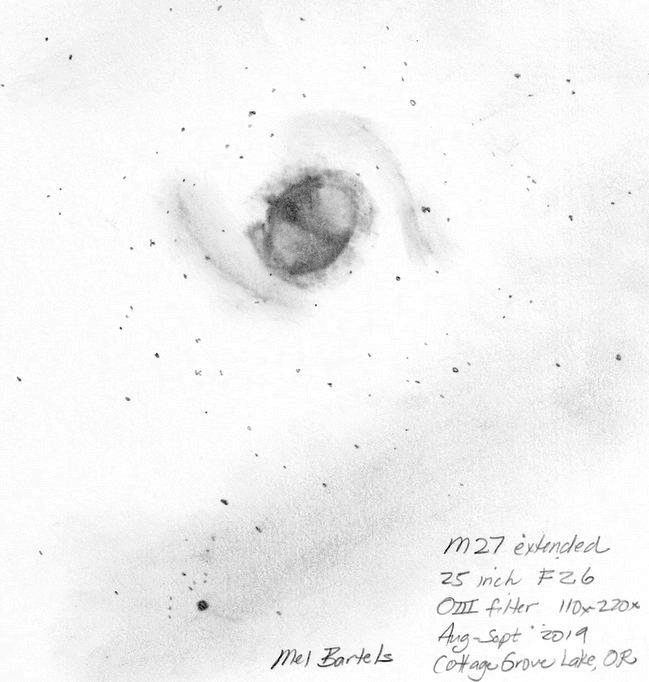
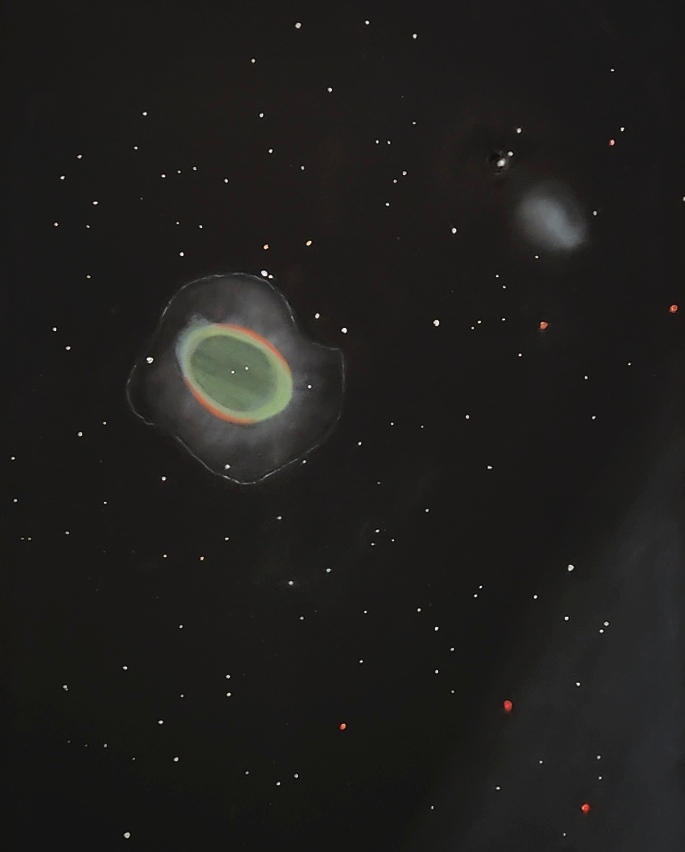
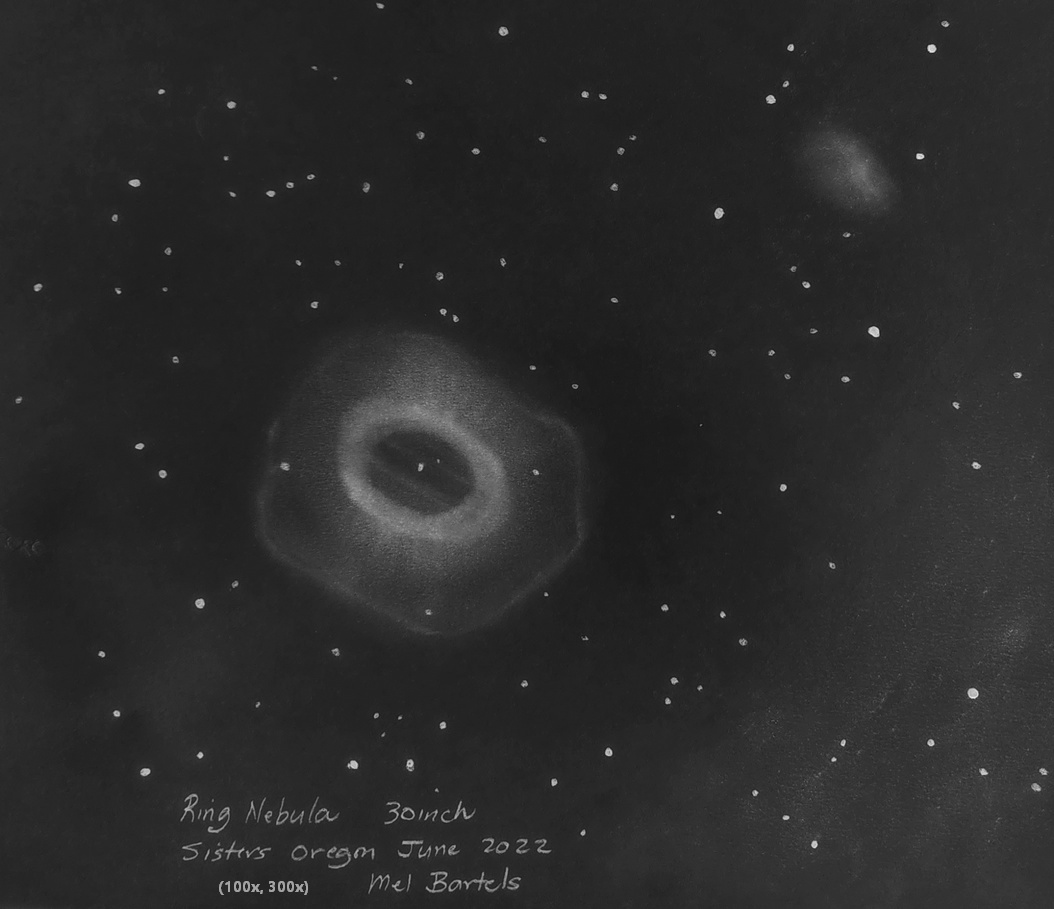
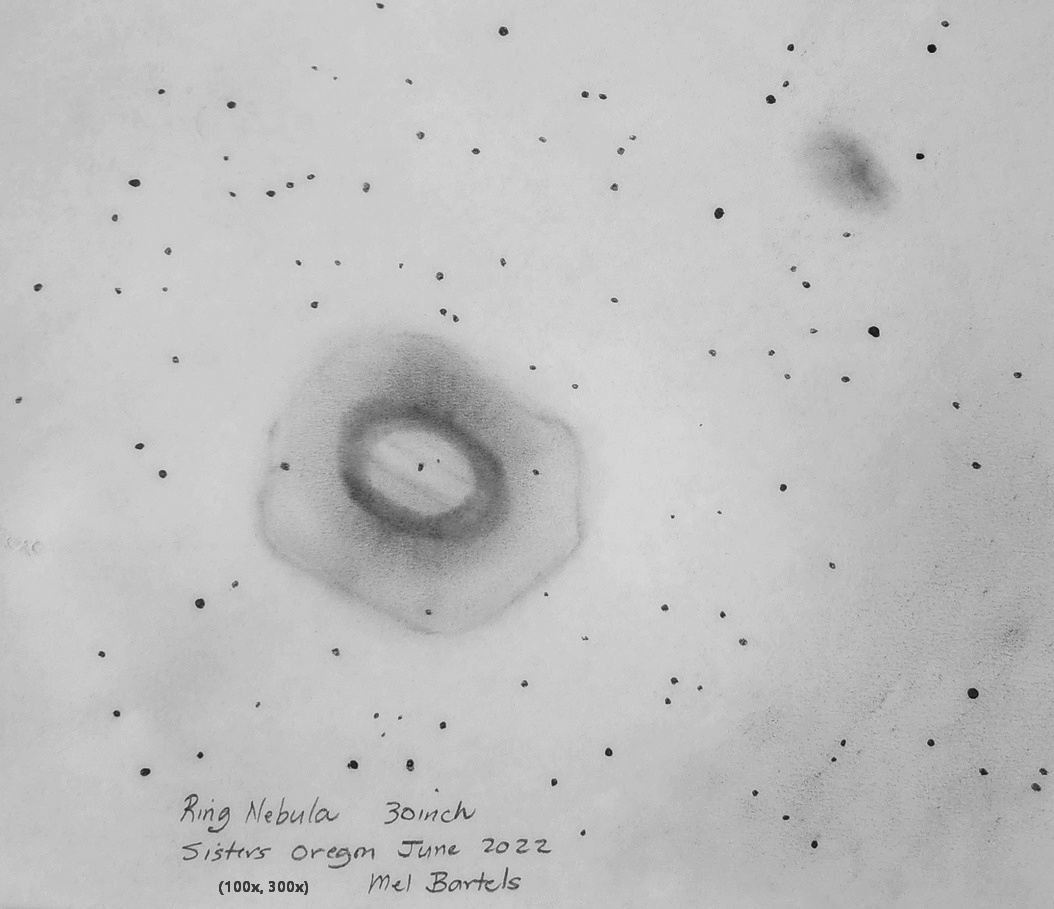
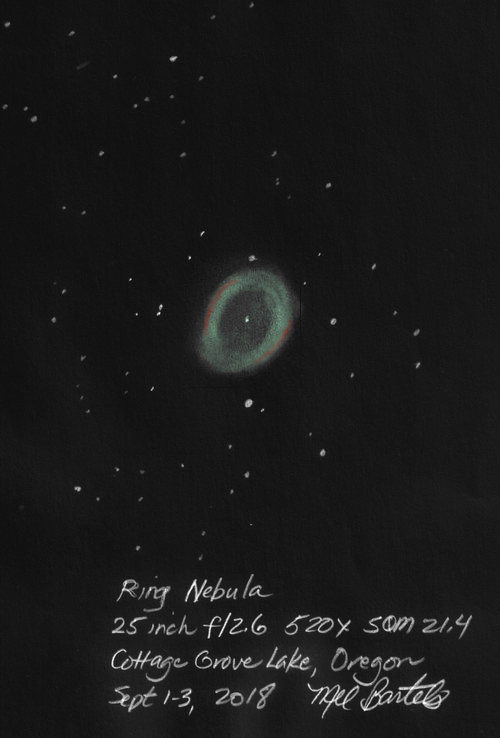

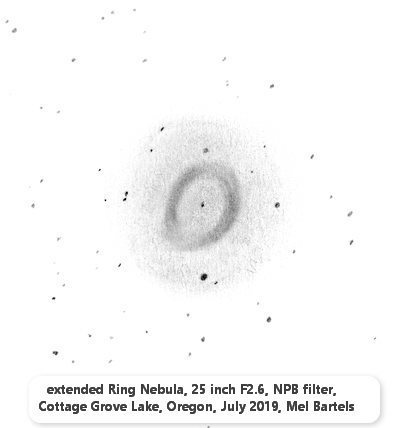
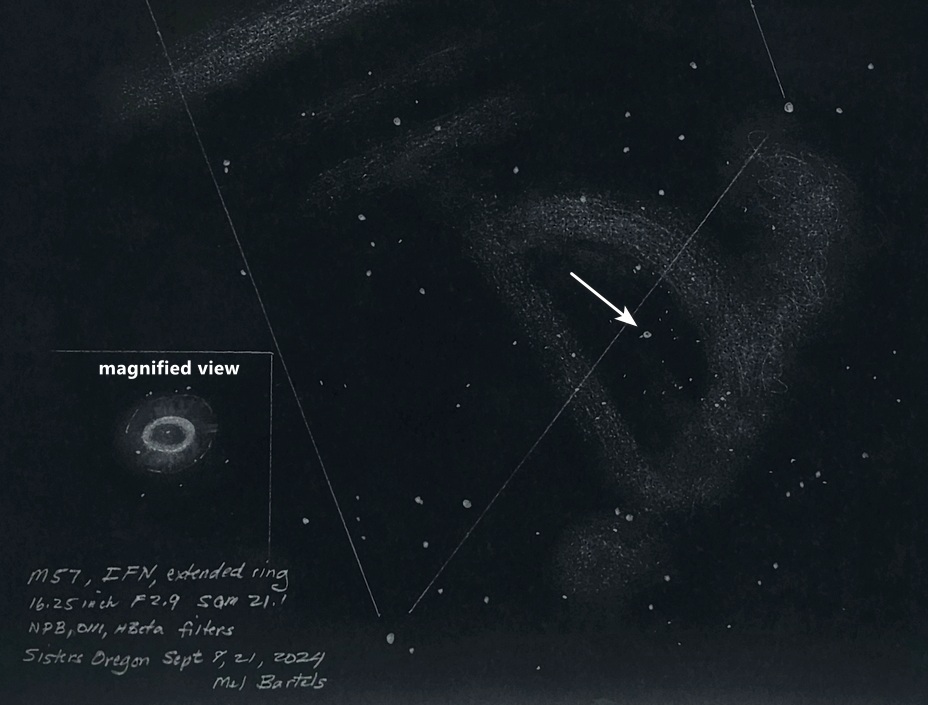

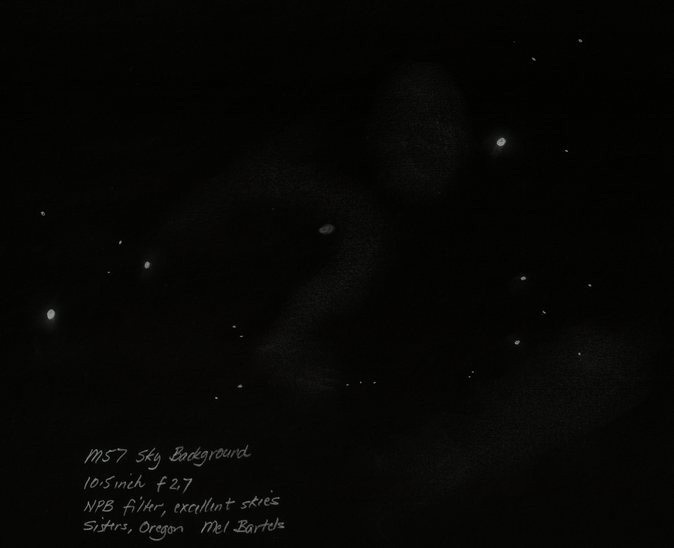
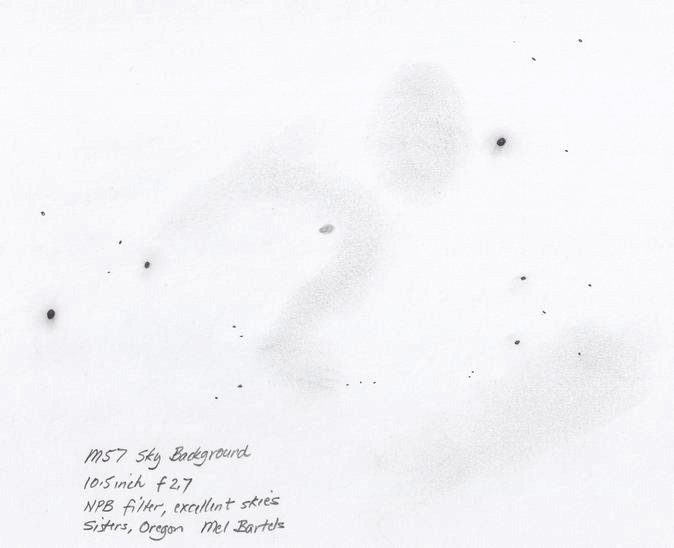
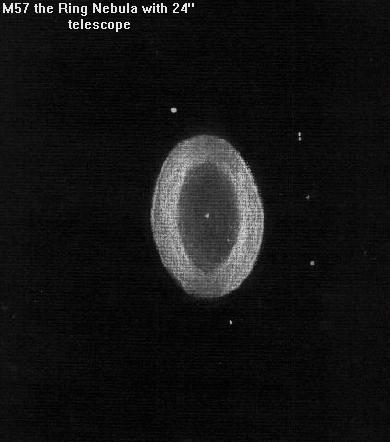

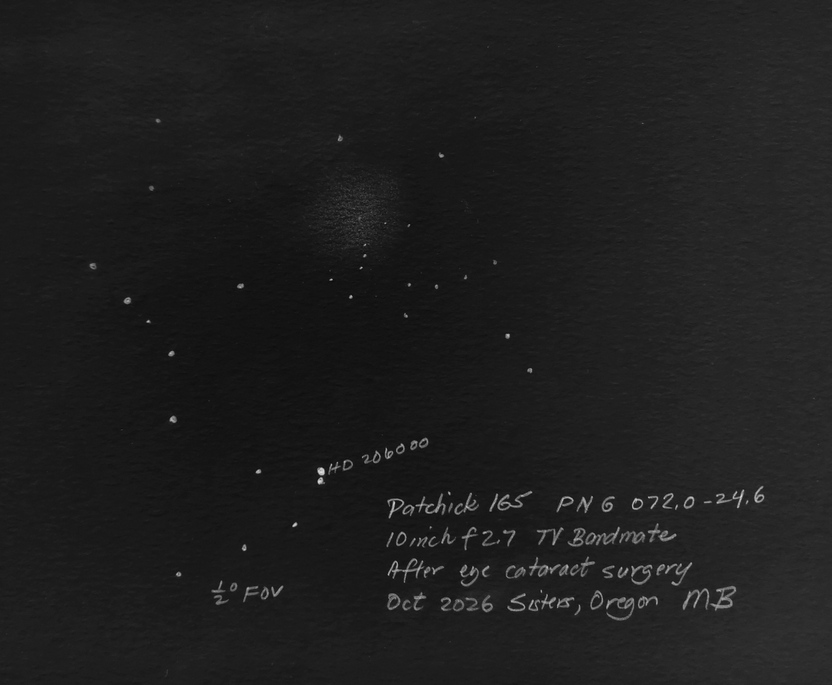
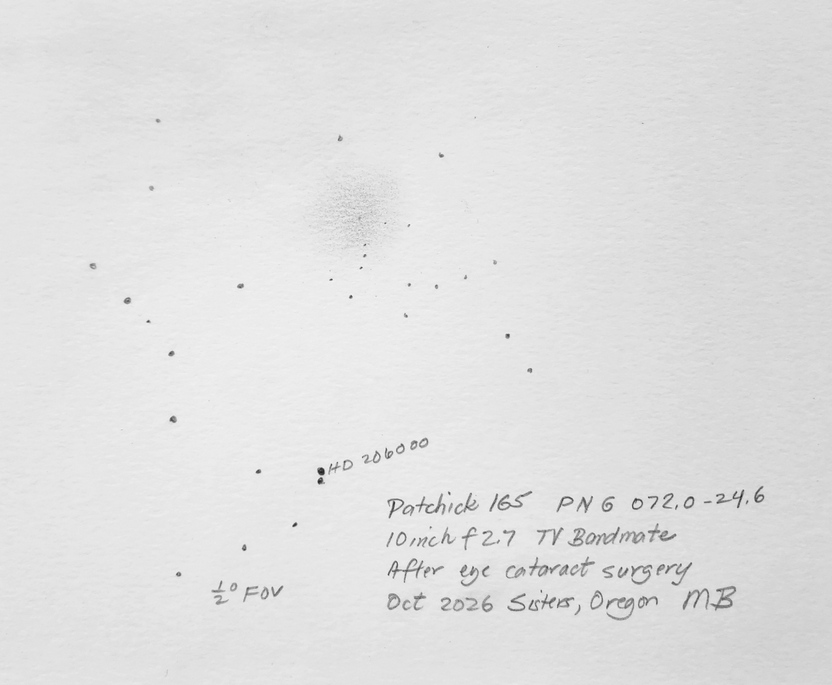
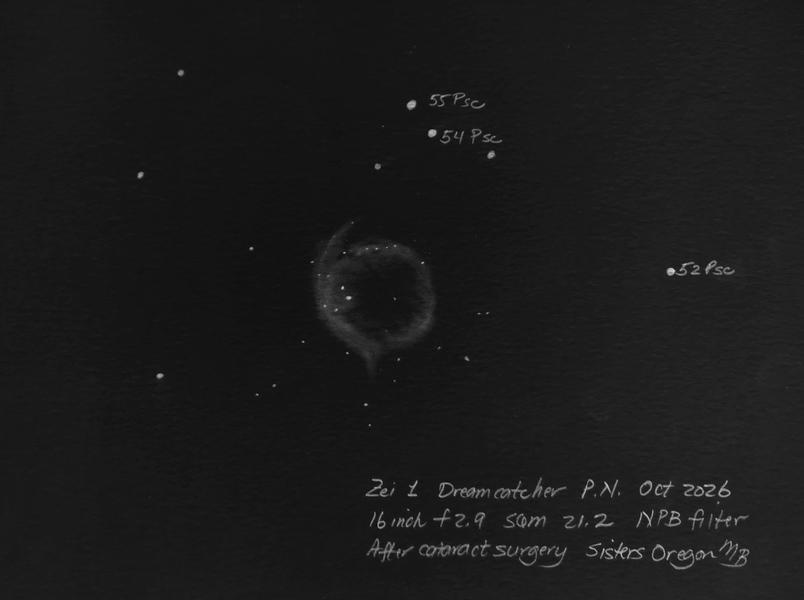
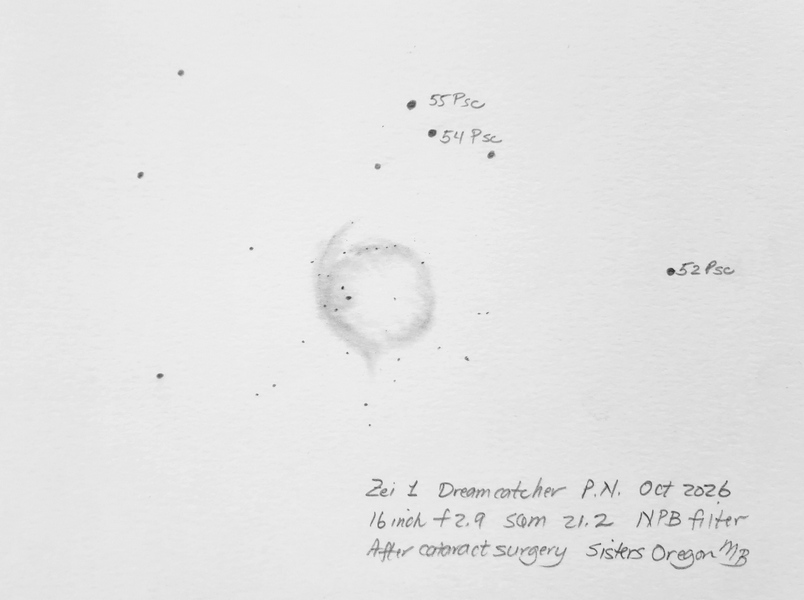
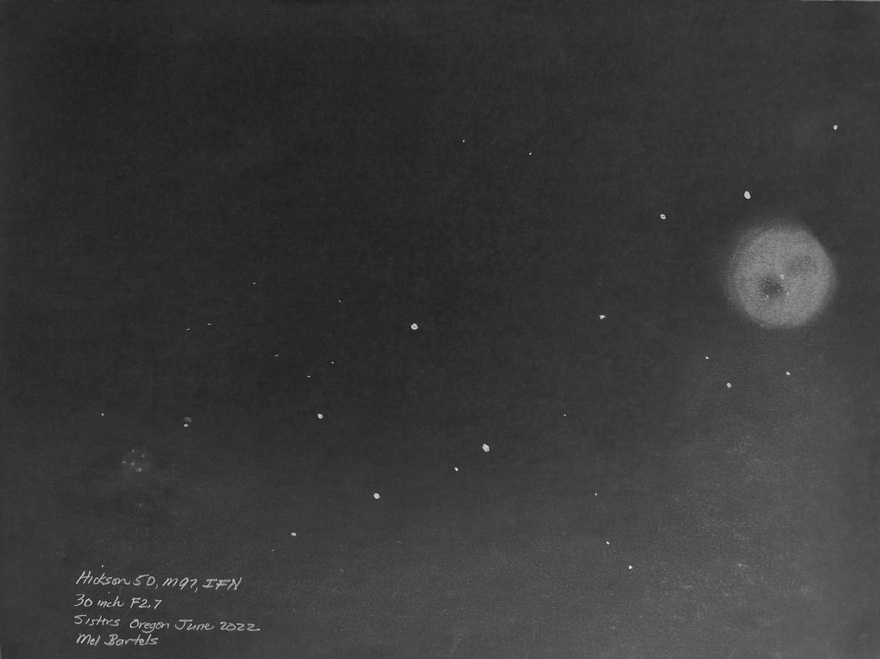
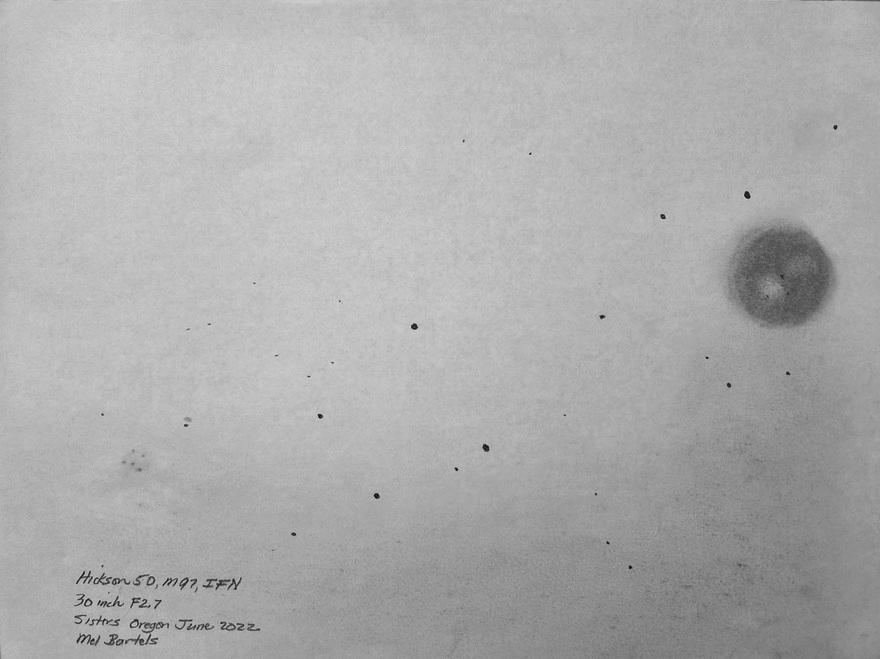


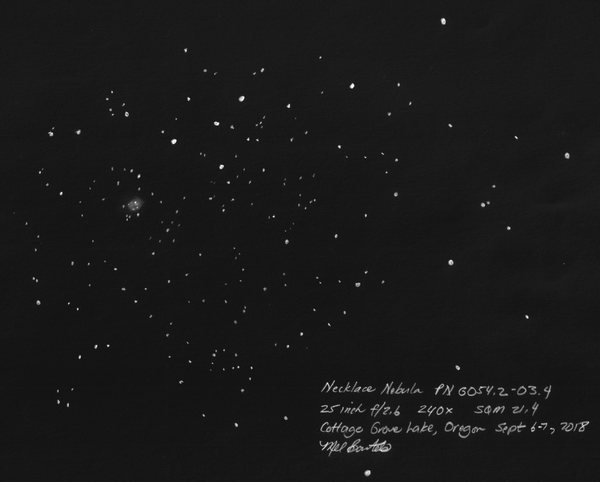
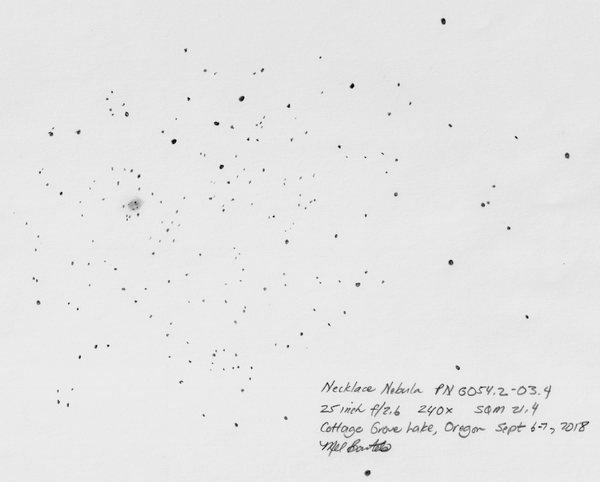
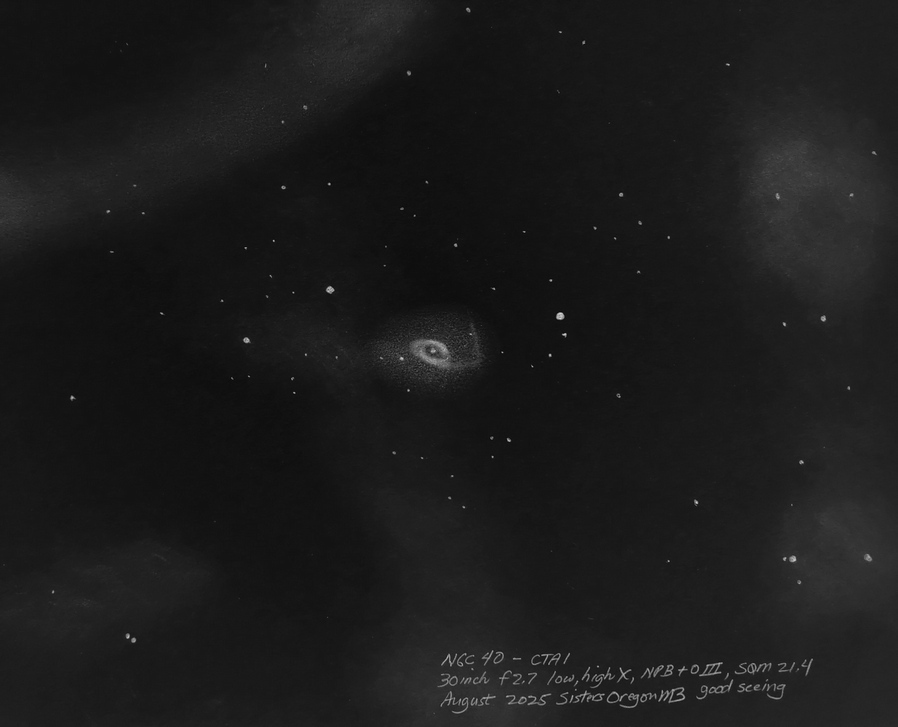
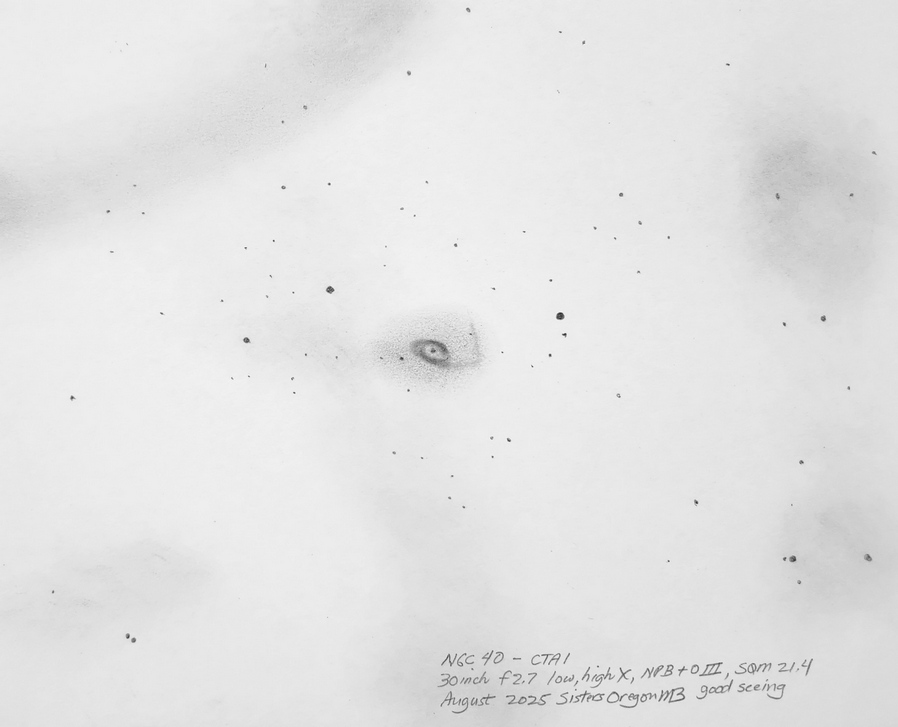
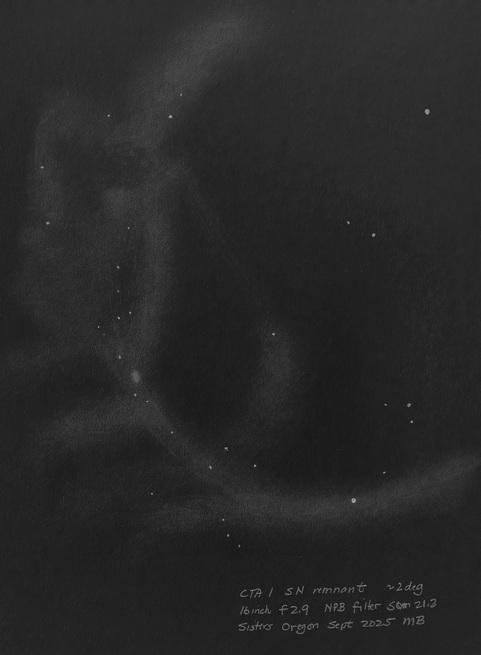
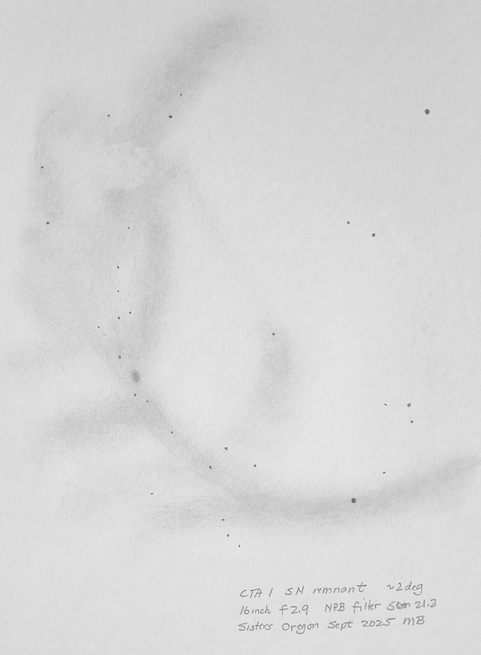
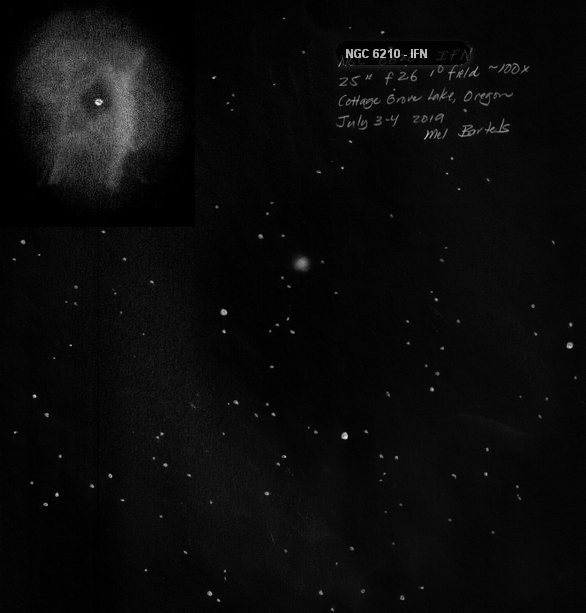
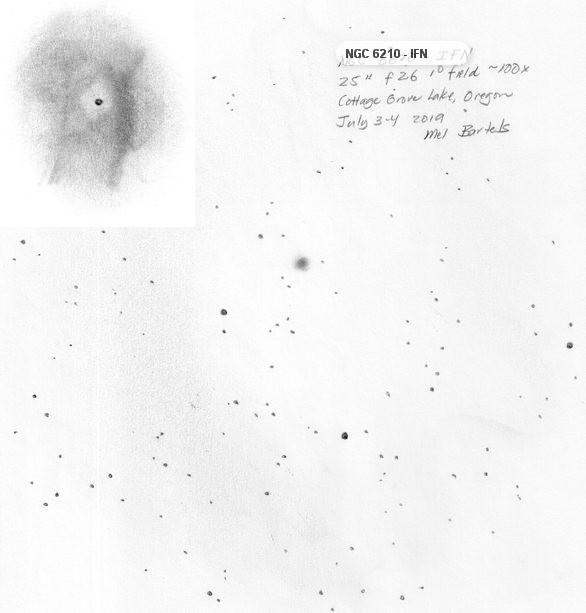
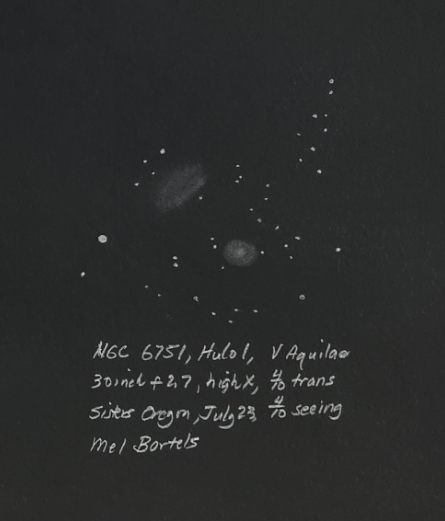
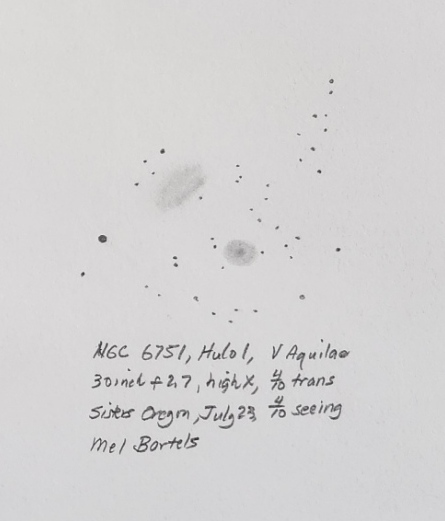
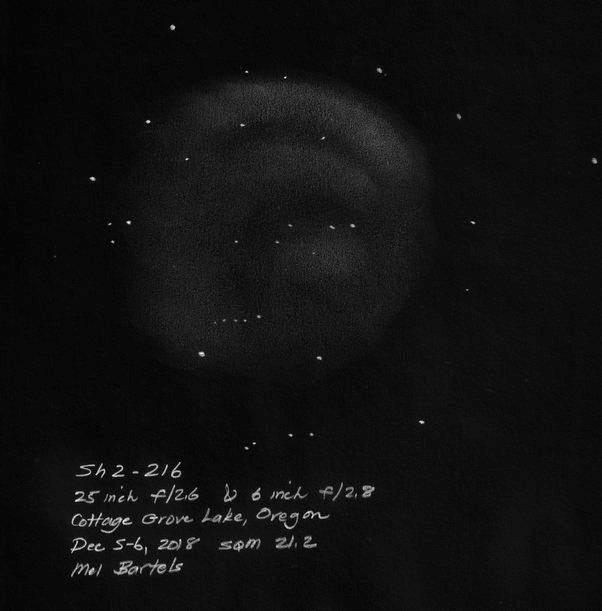
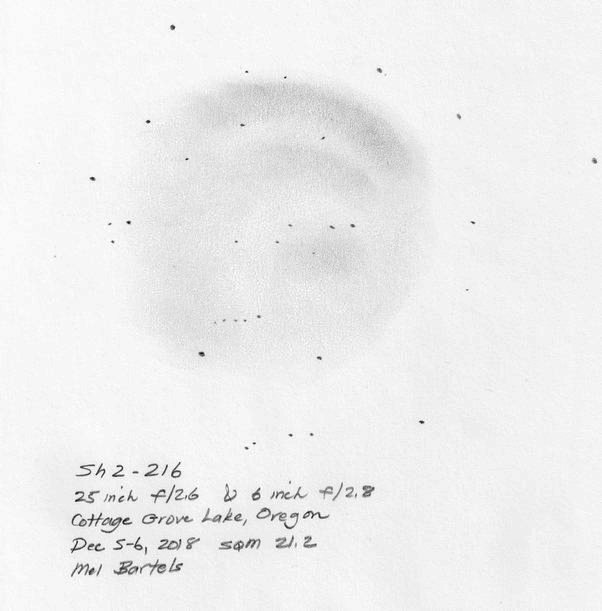
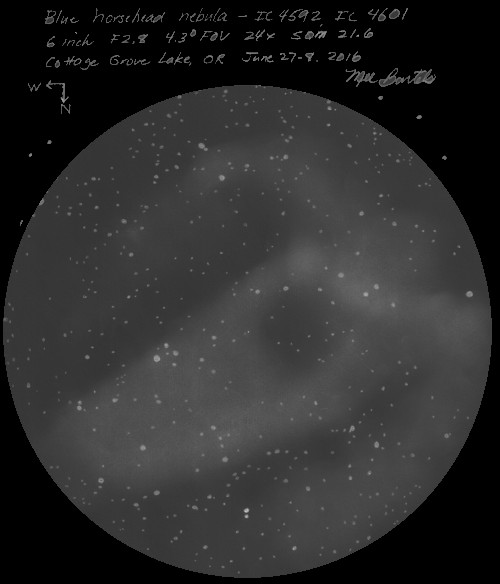
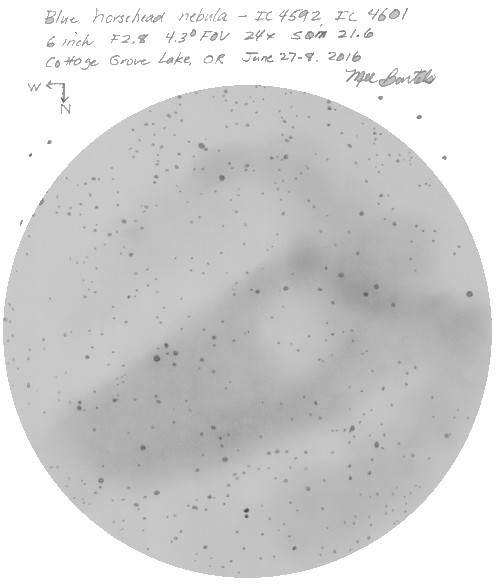
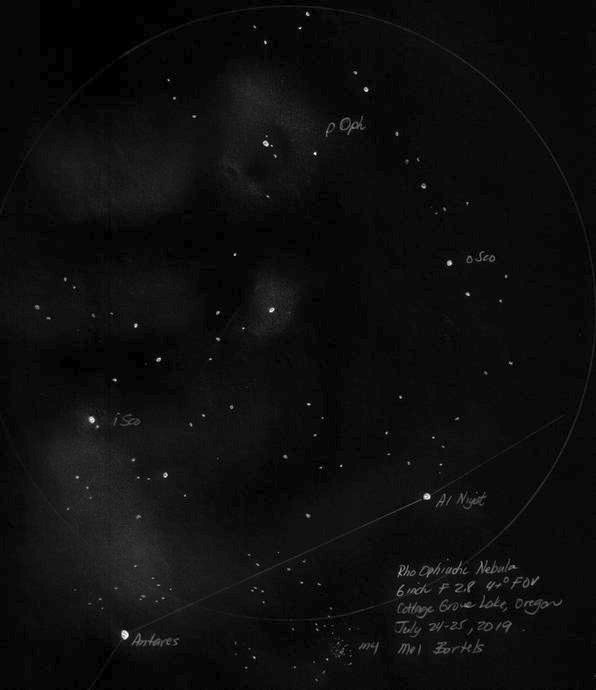
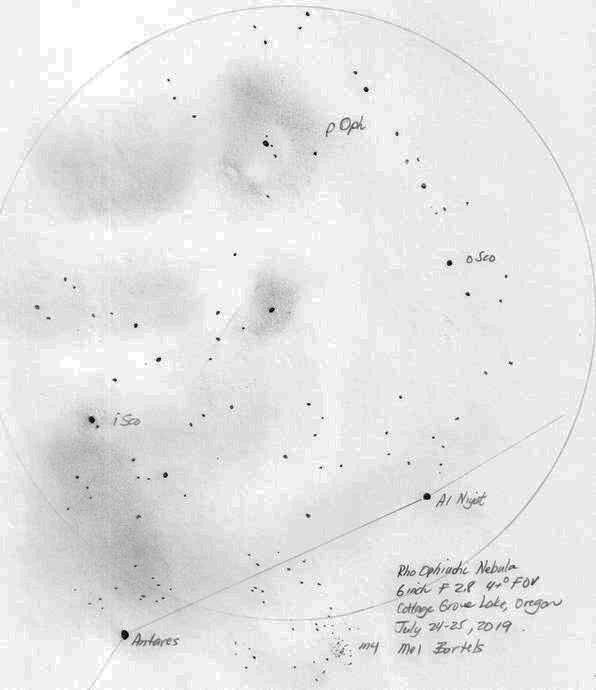
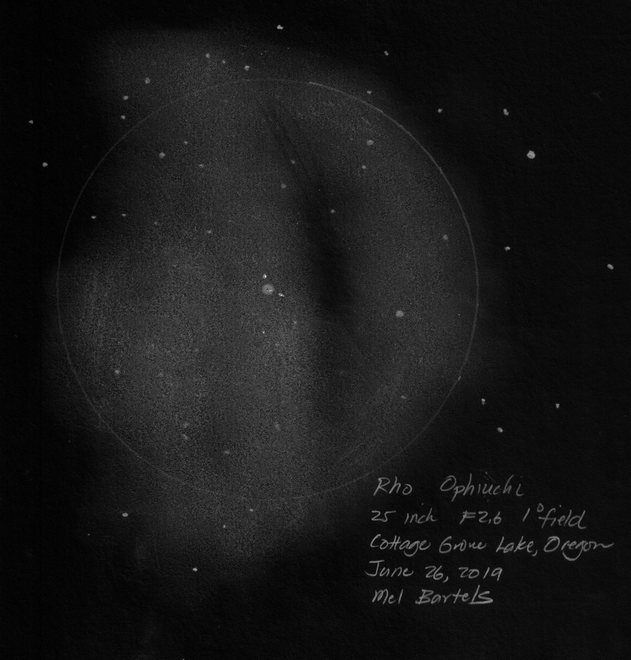
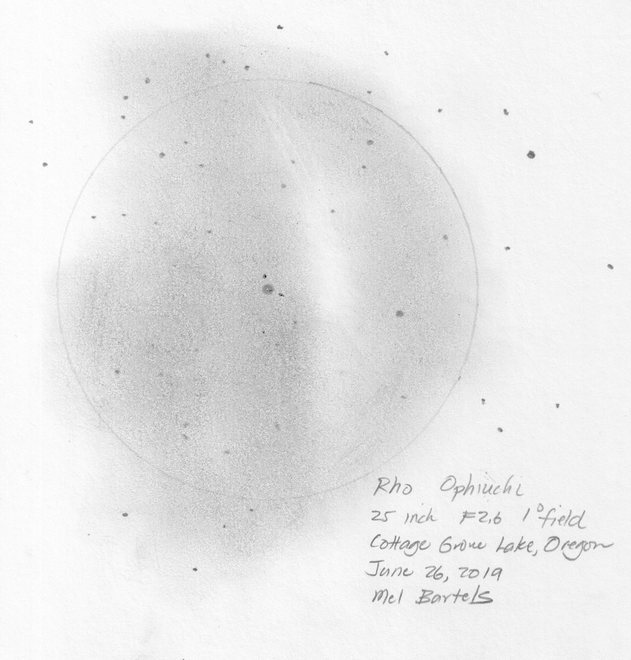


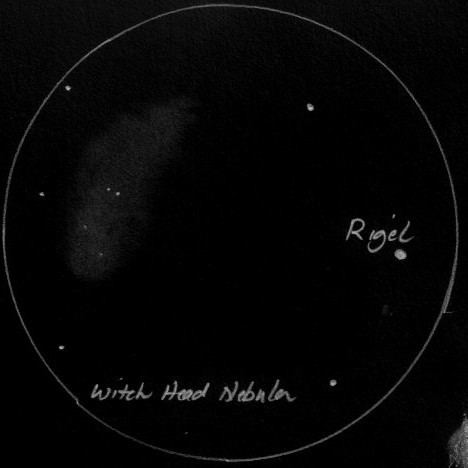
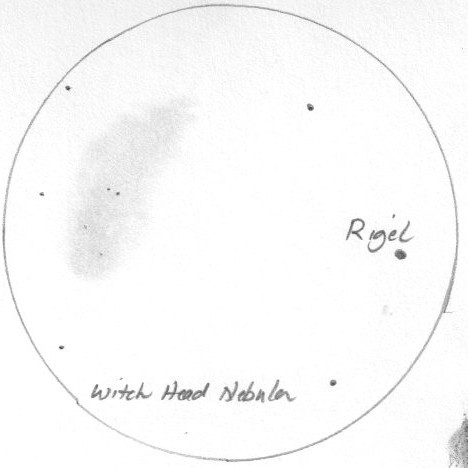
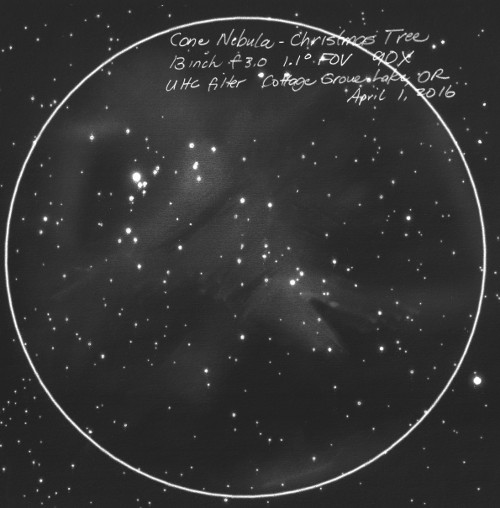
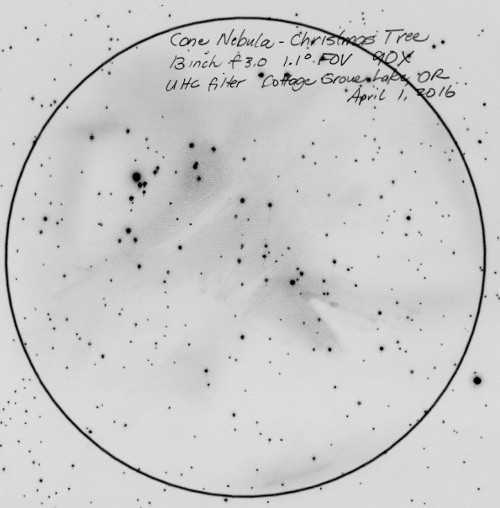


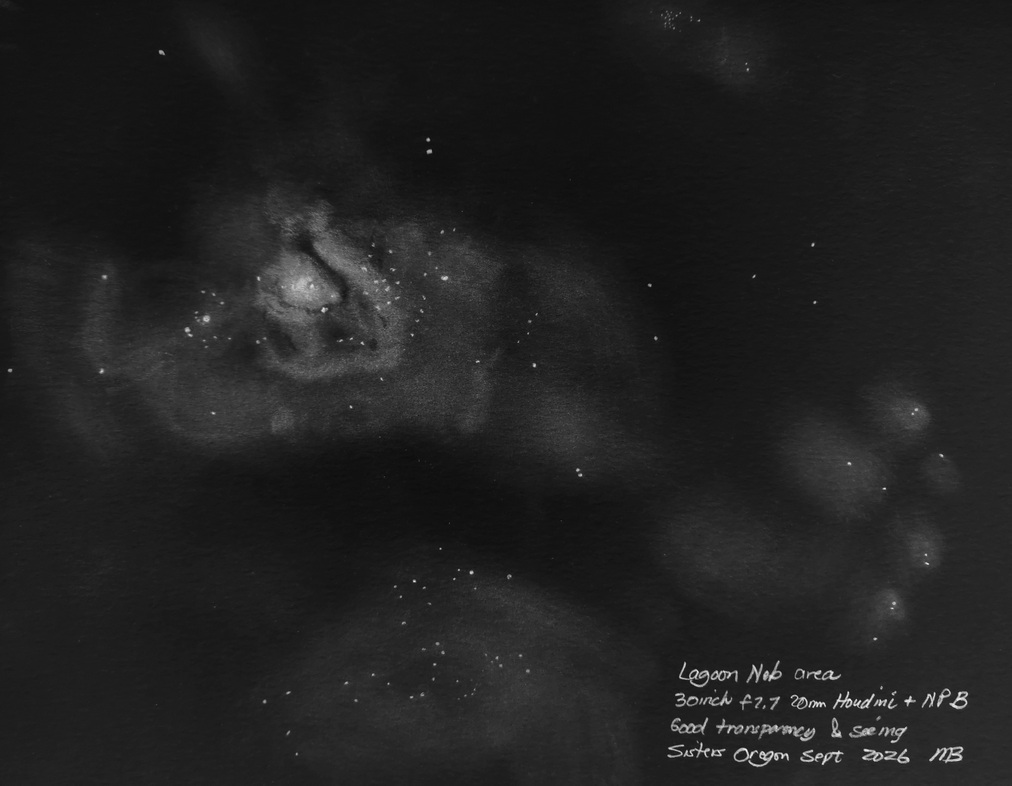

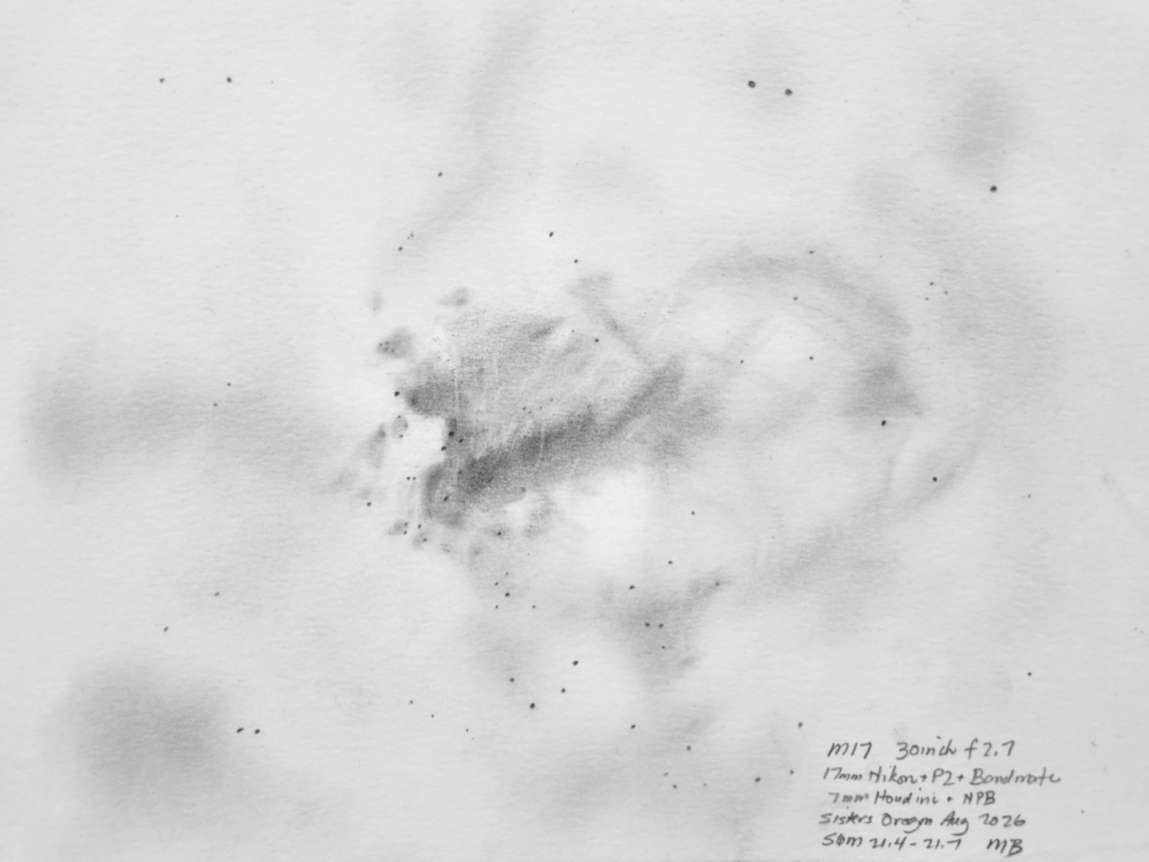

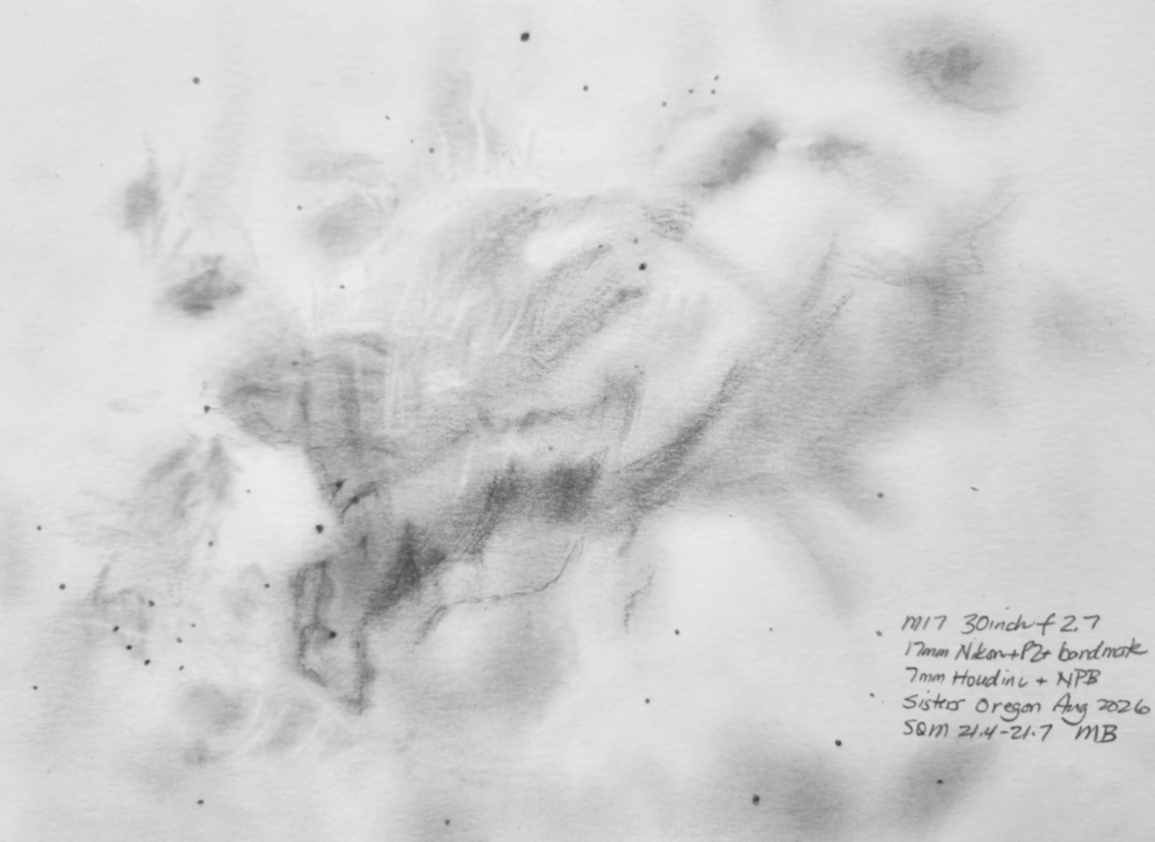
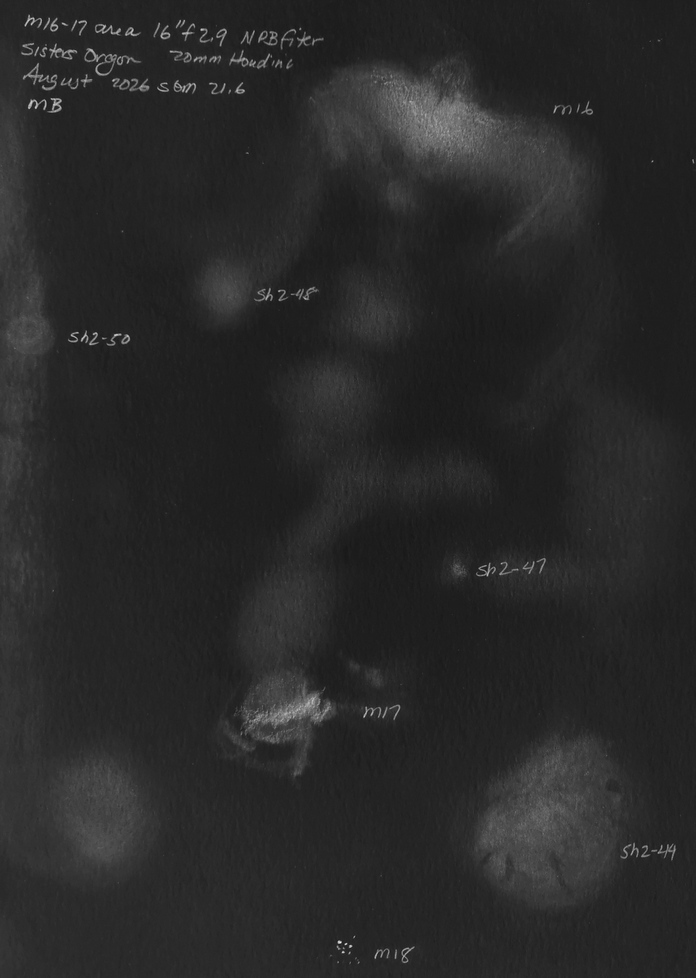
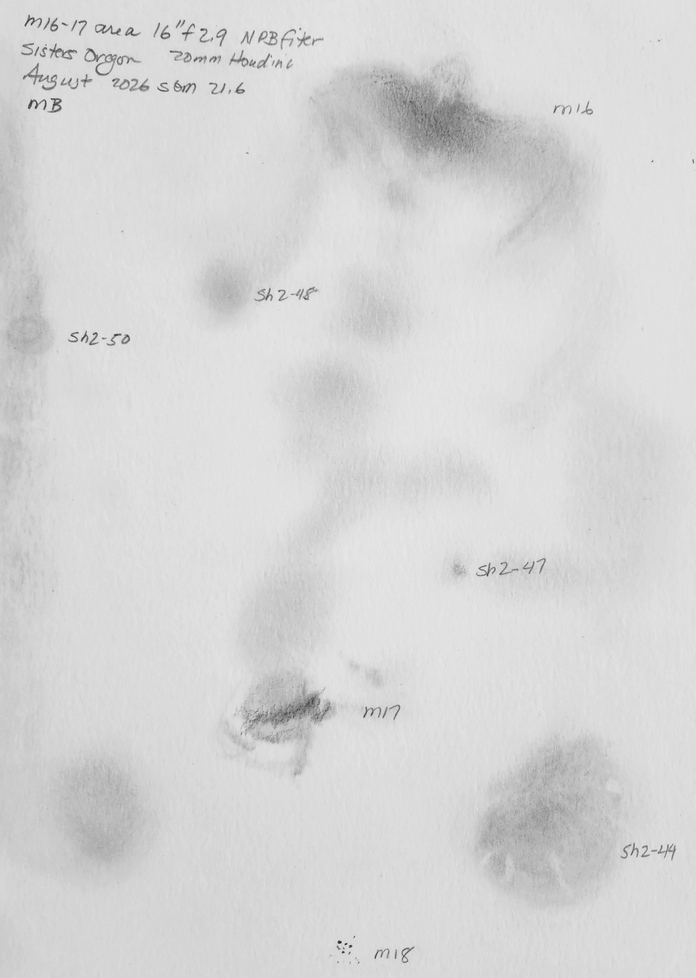
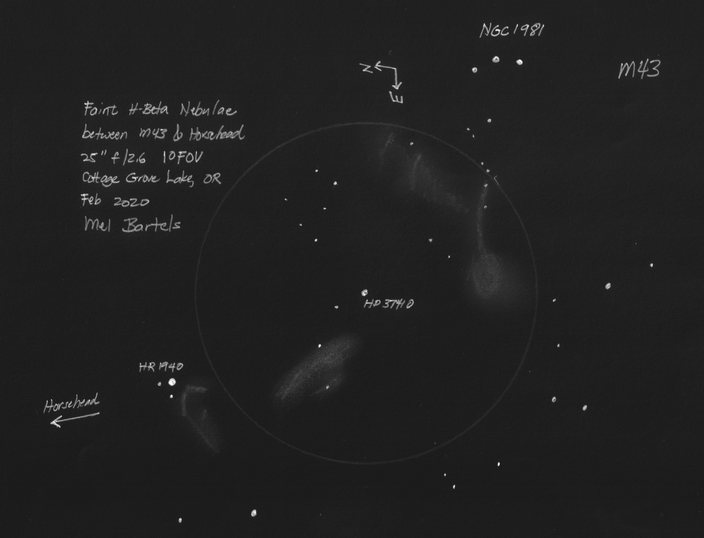
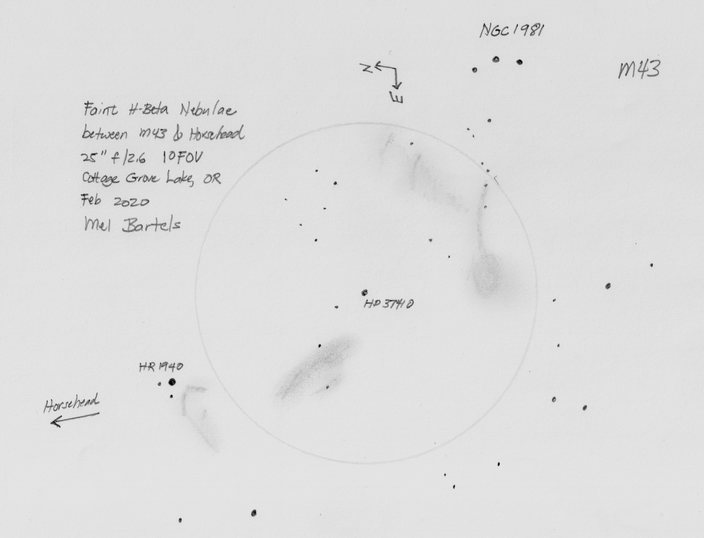
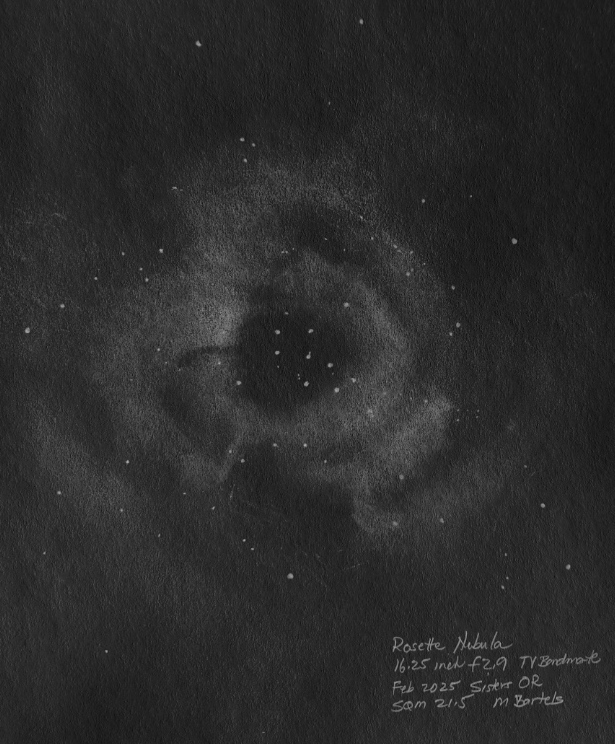
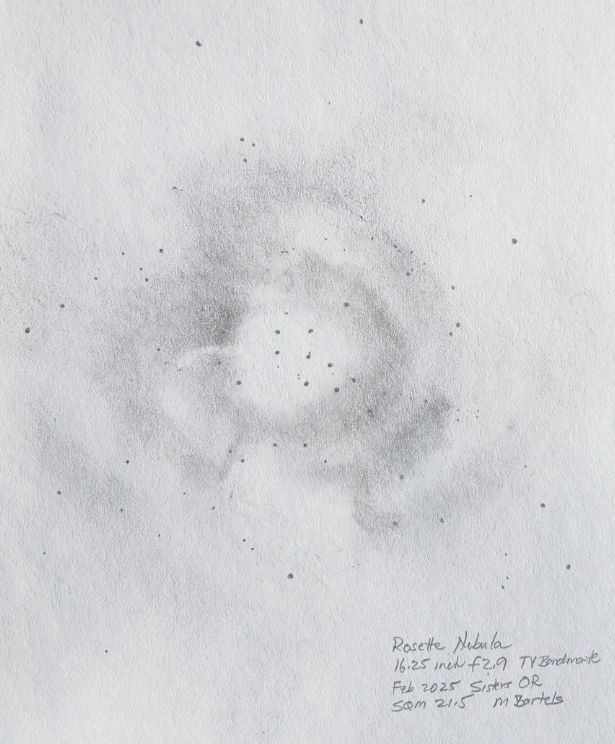

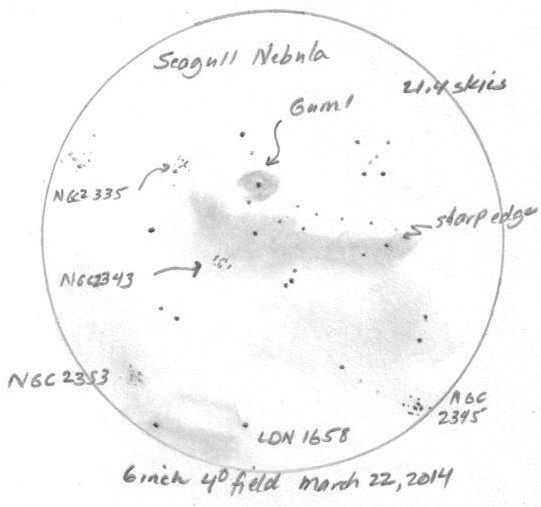
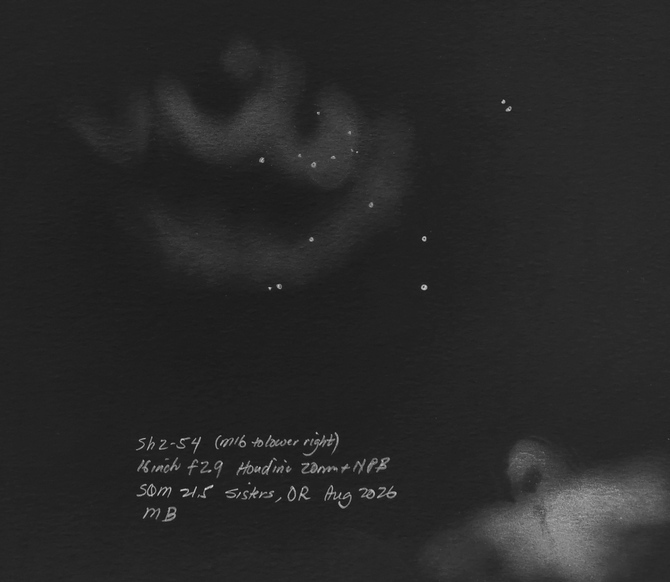
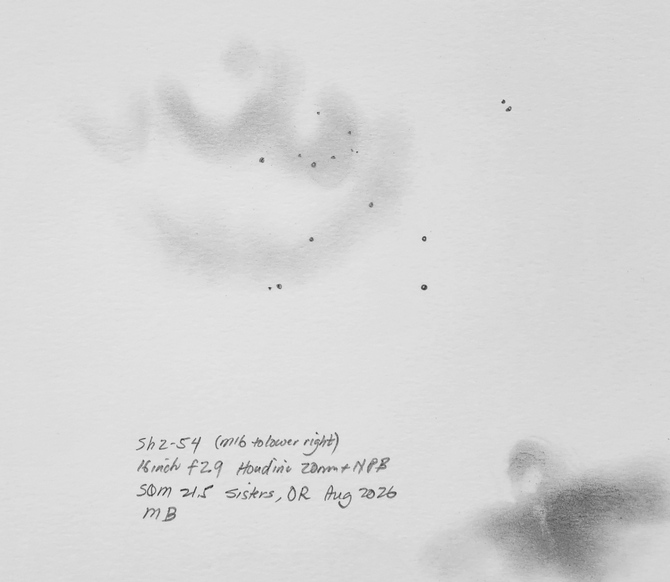
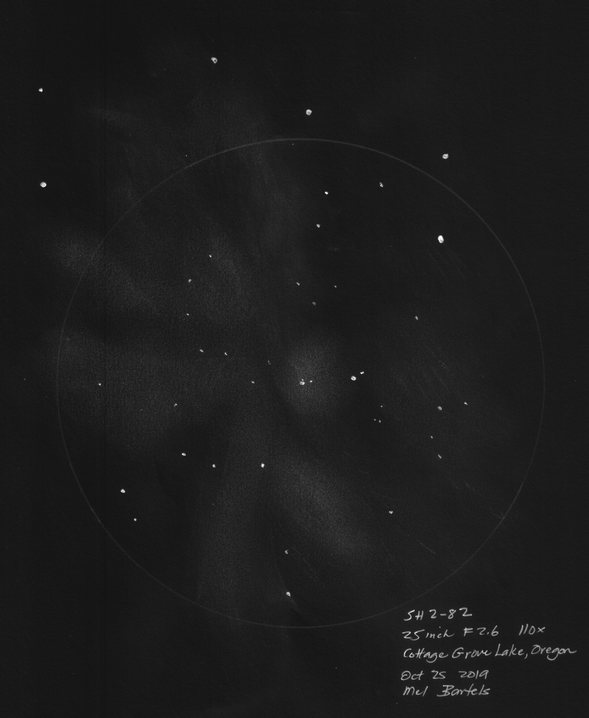
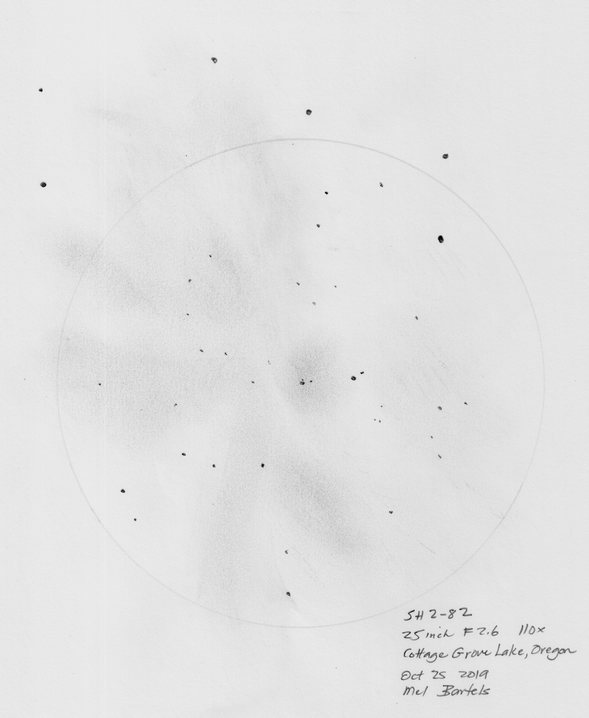
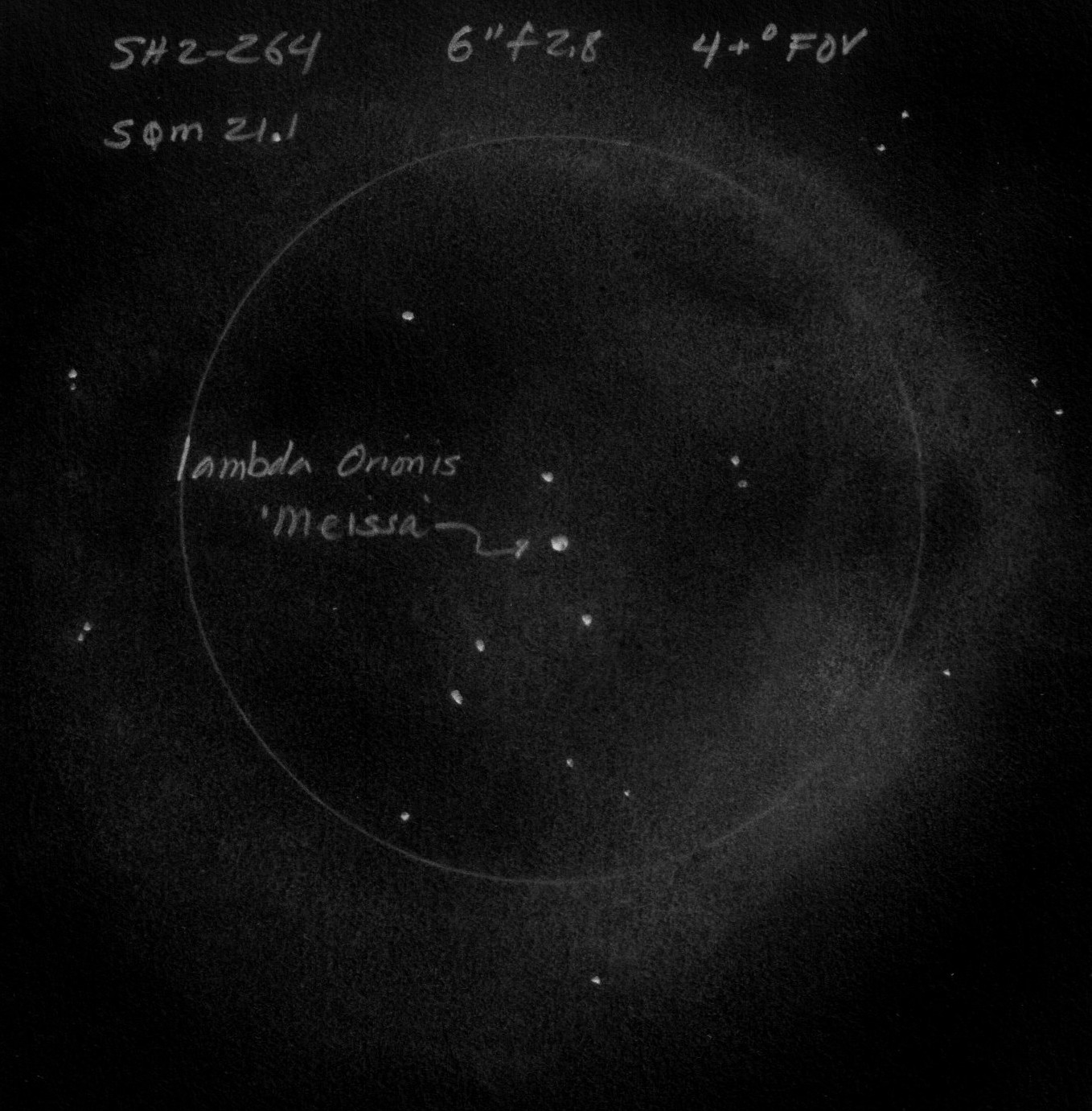
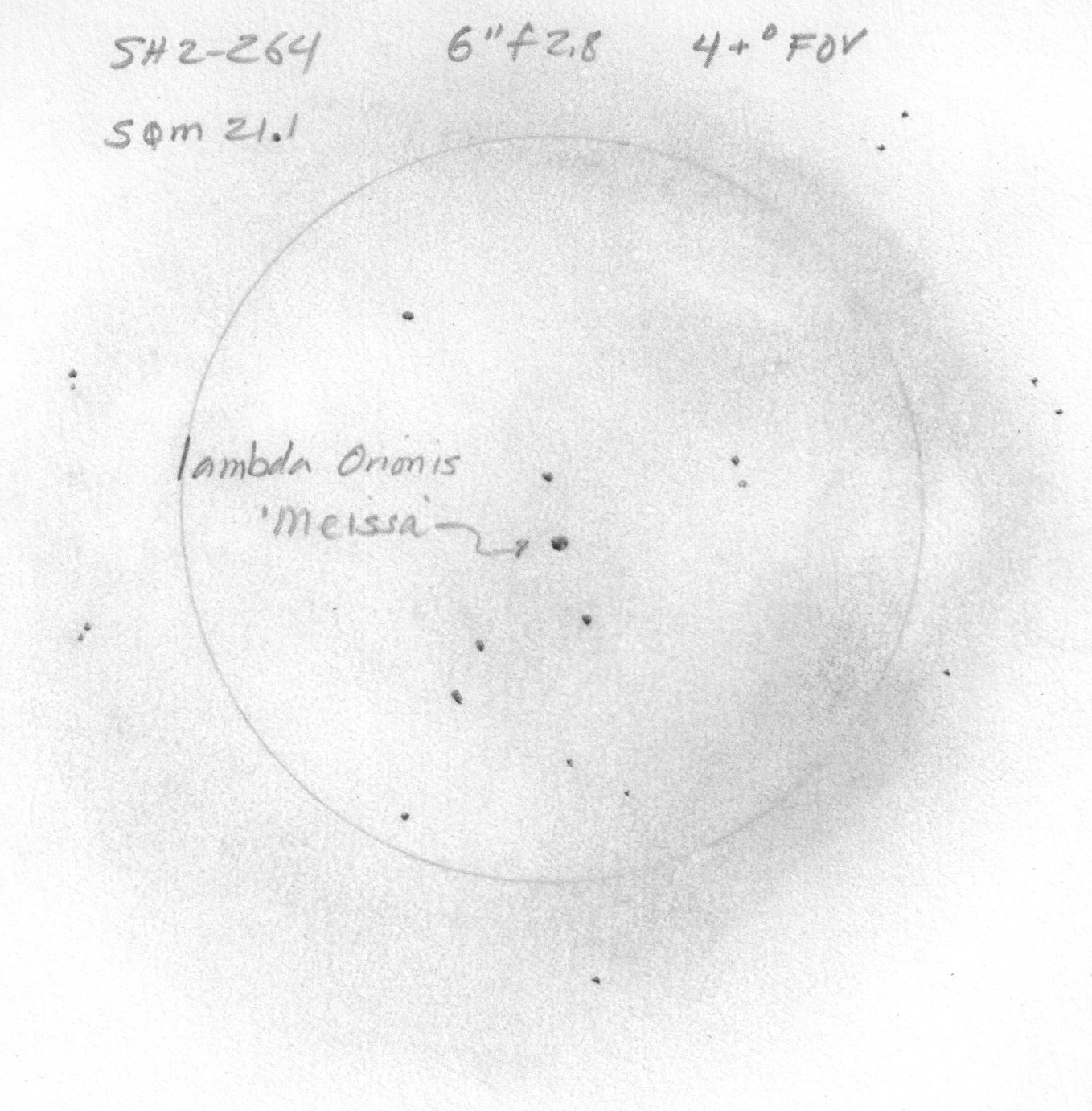
Telescopic sketch of the Flying Bat and Giant Squid Nebulae along with the carbon star V419 Cephei. That's SH2-129 and OU4.
Check out the beautiful digital images elsewhere on CloudyNights.
My target was the Giant Squid. With the OIII, the brightest curved arc trailing away from the bright star SAO33210 was immediately visible. The dark bay just to the top of the bright star is nice.
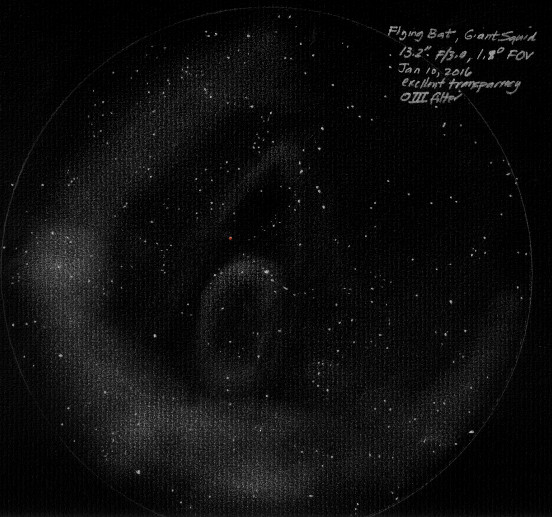
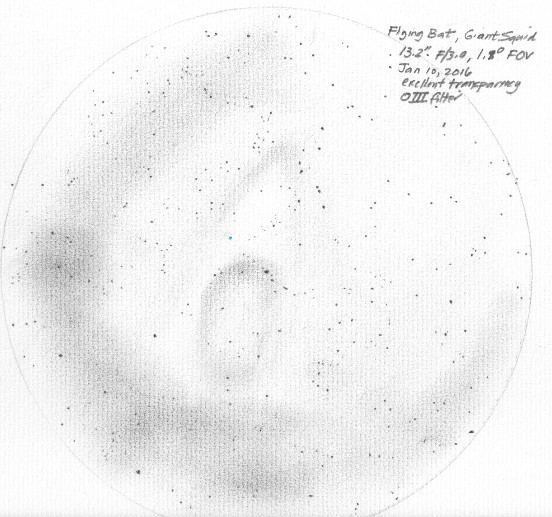
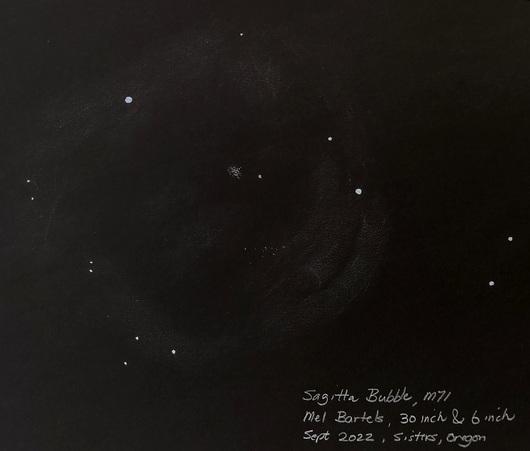
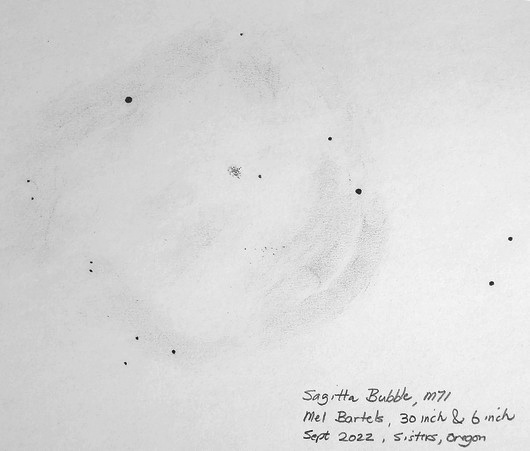
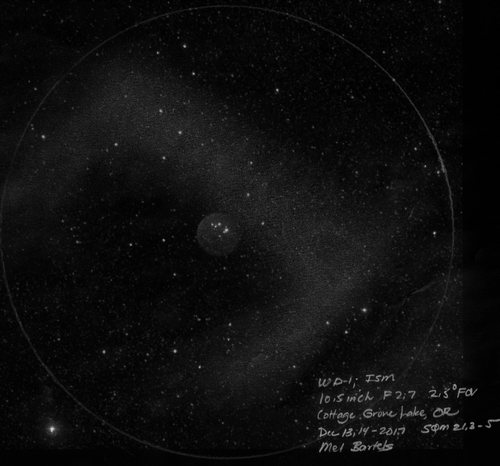
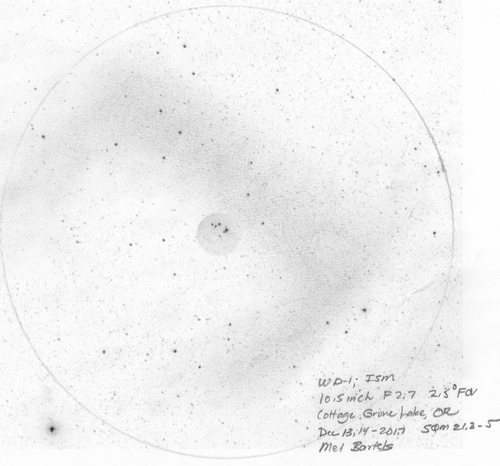
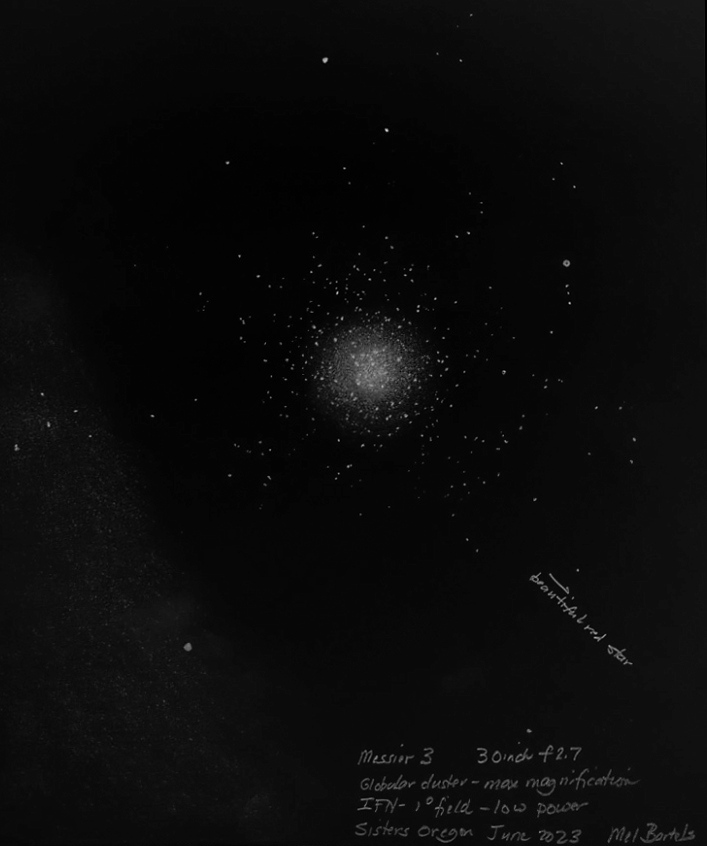
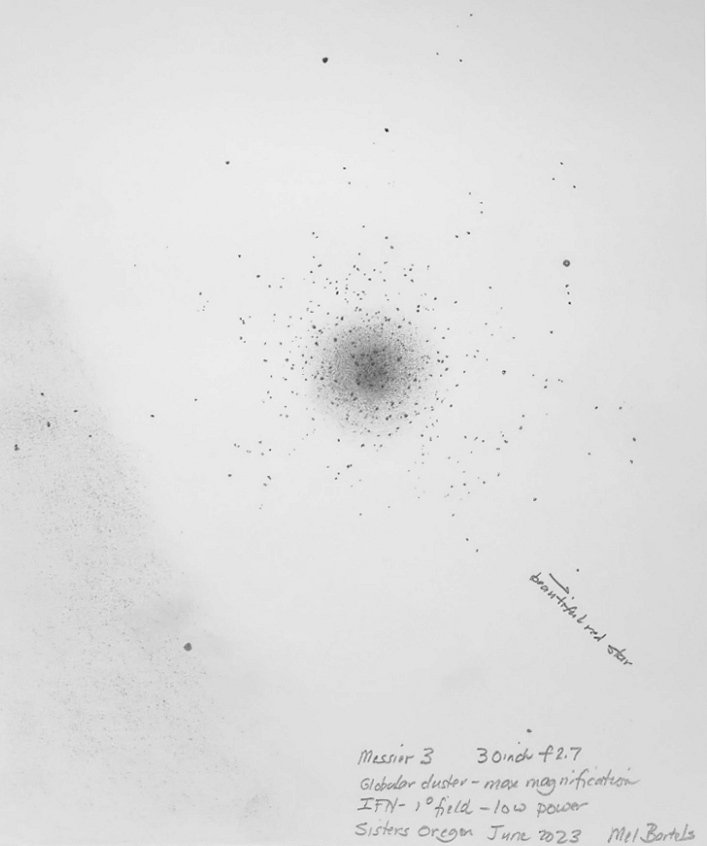
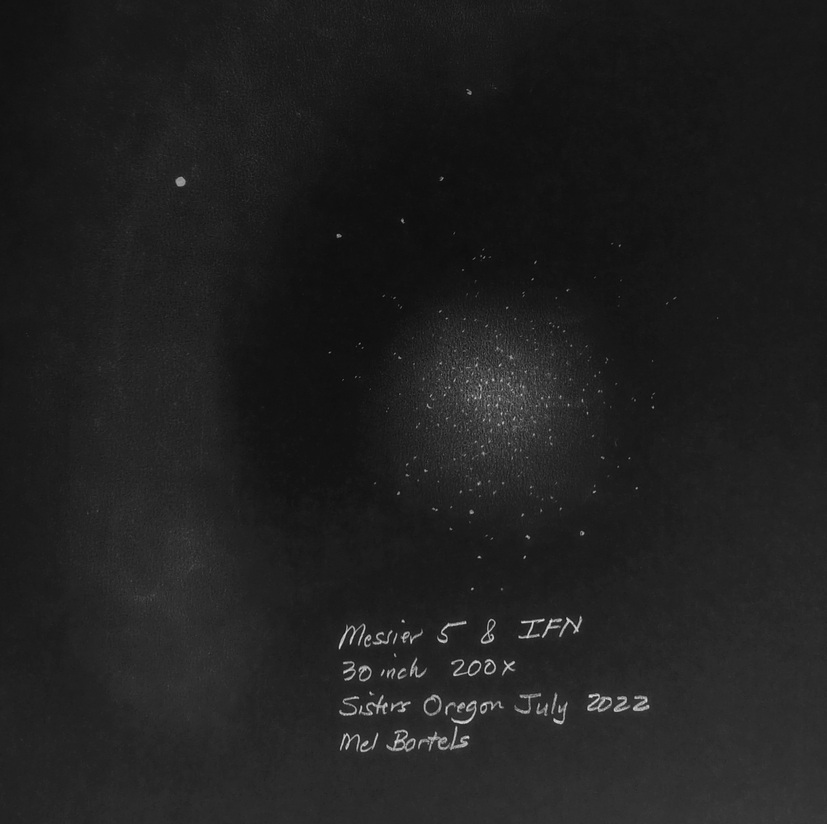
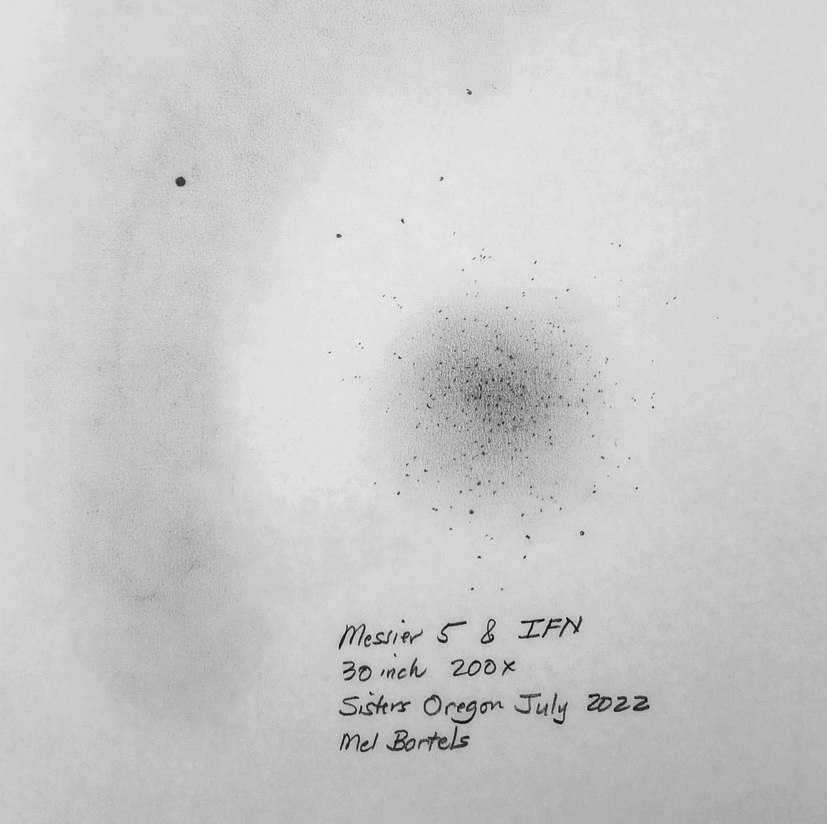
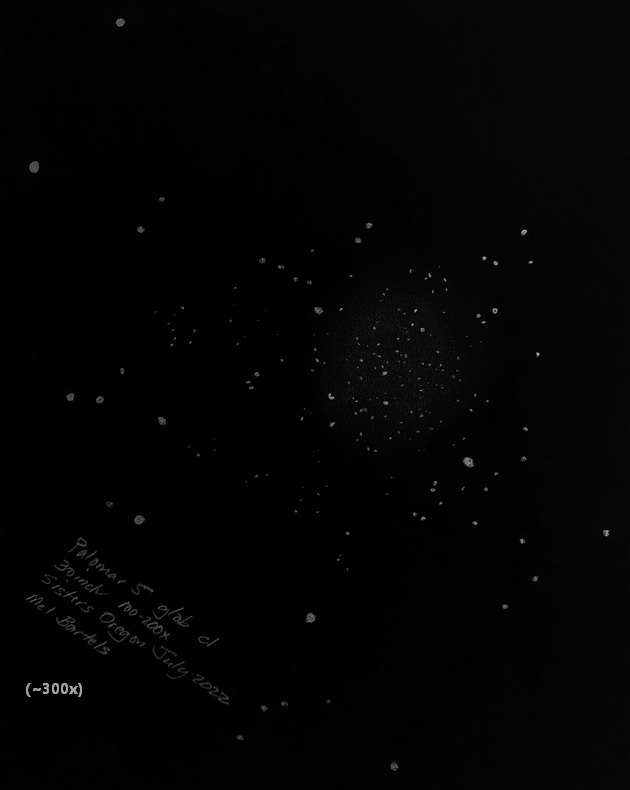
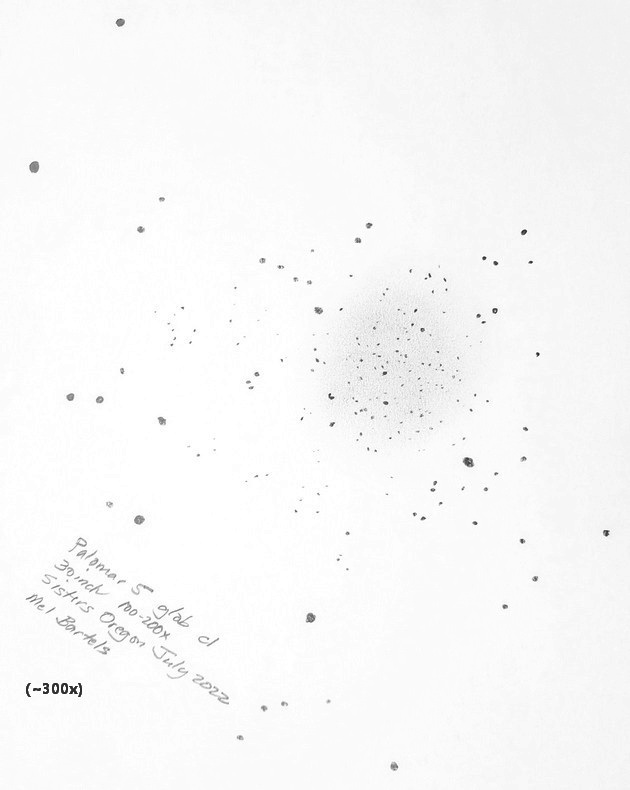


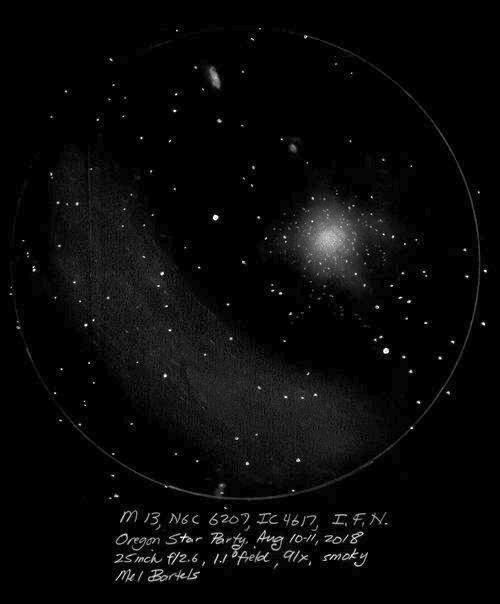
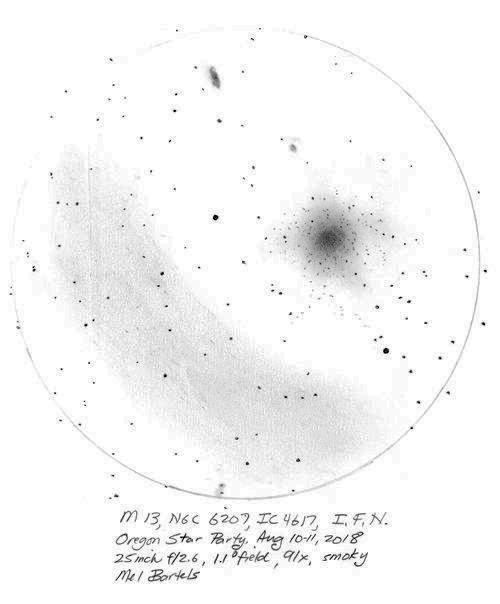
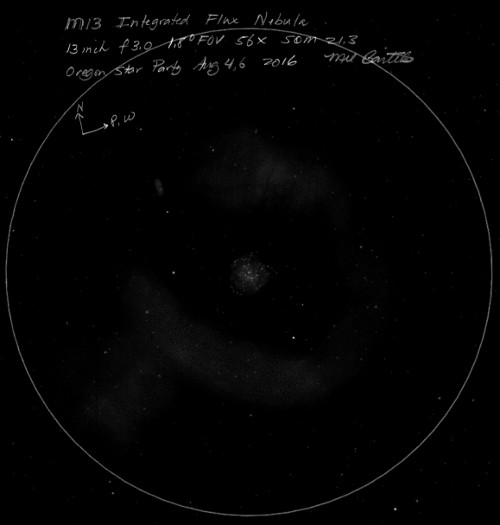
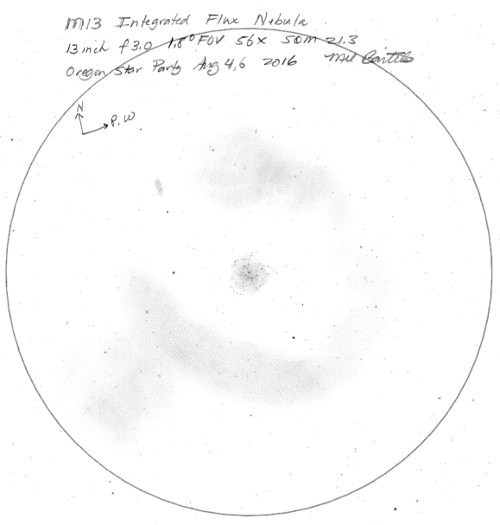
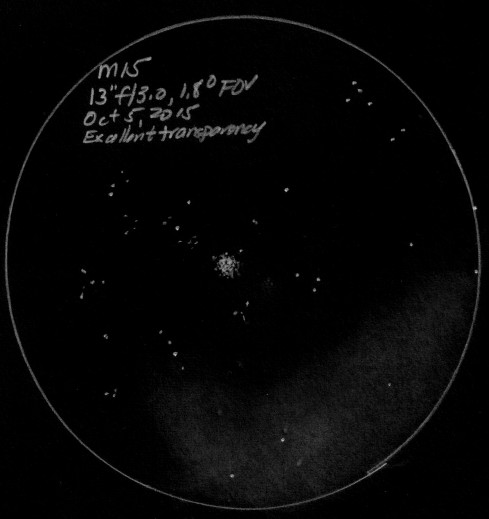
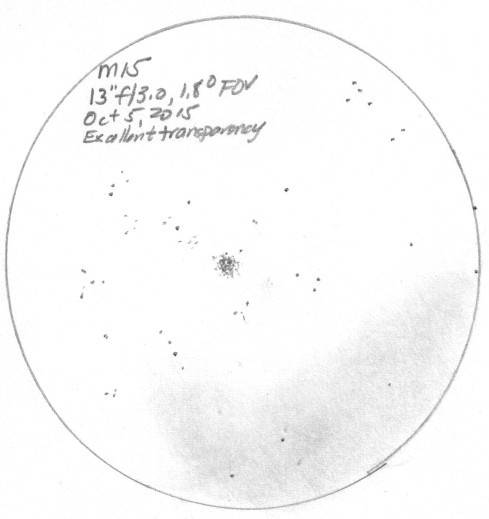
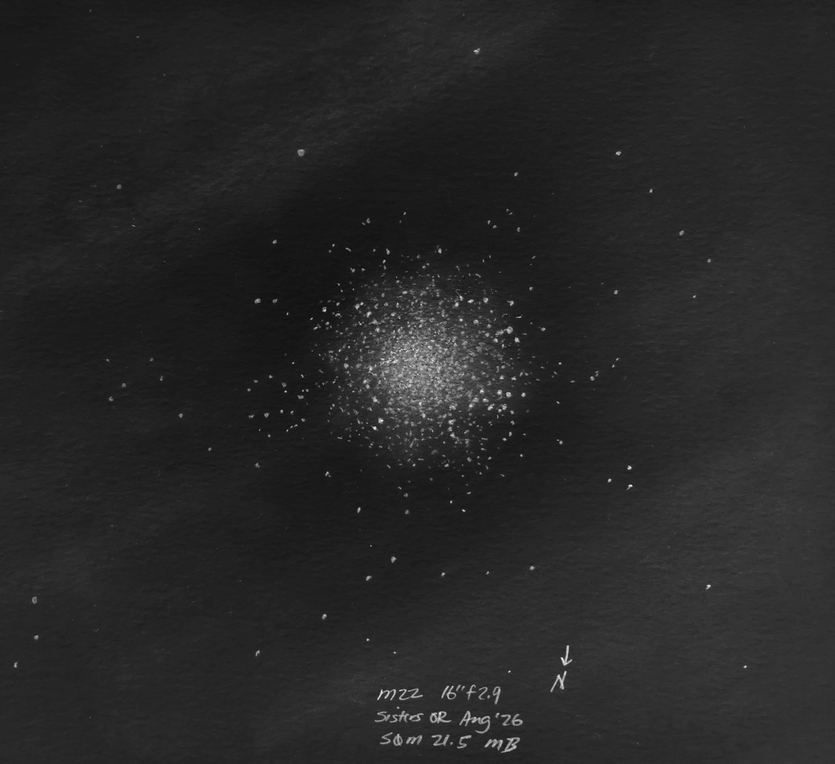
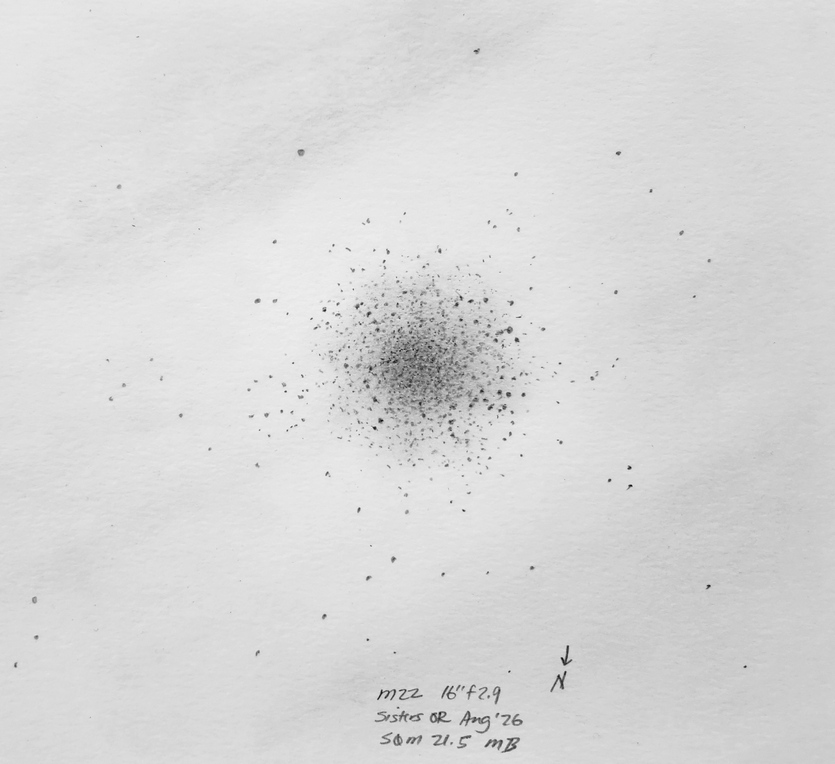
21.4 skies --- IFN can be seen but harder
21.1 skies --- IFN are quite difficult
less than this I'd say impossible... at least for me...
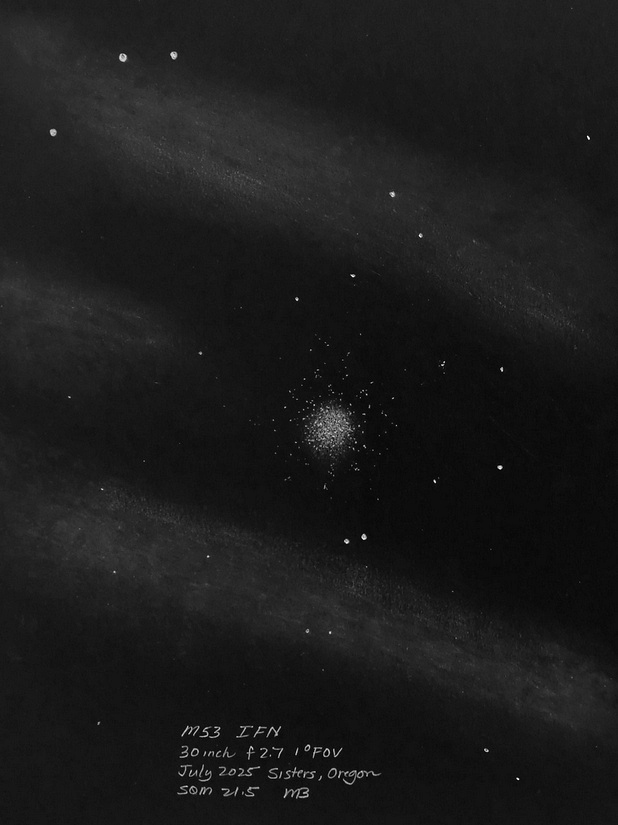
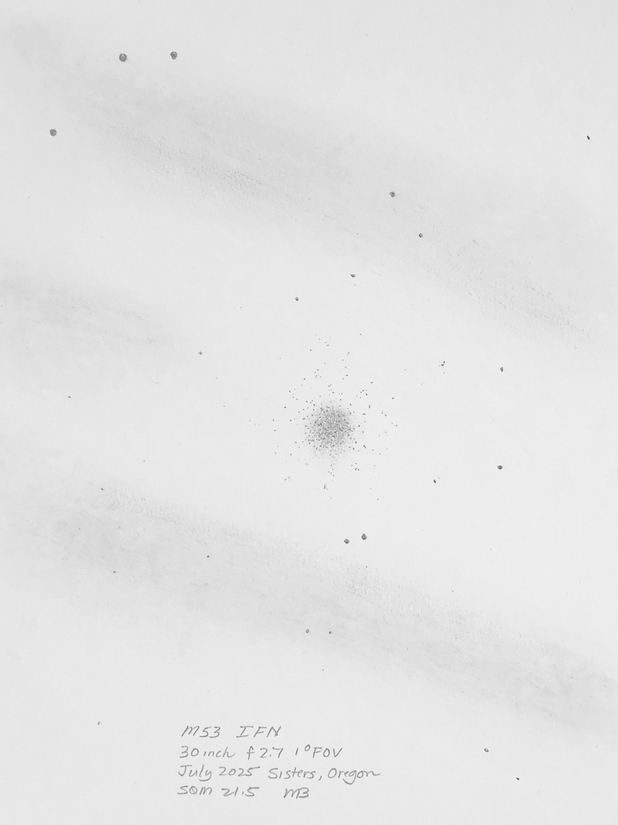
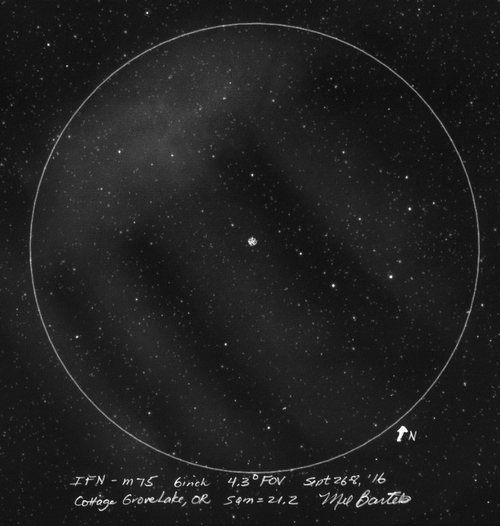
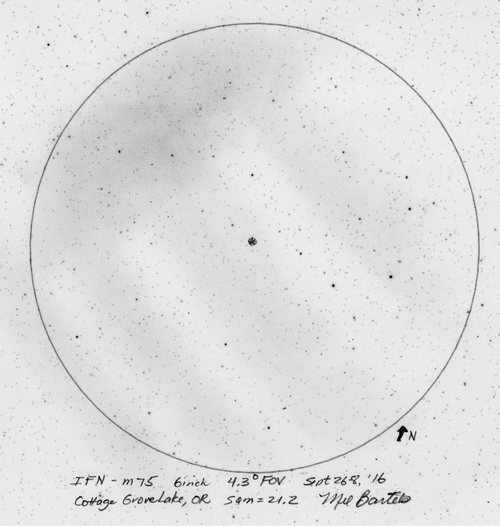
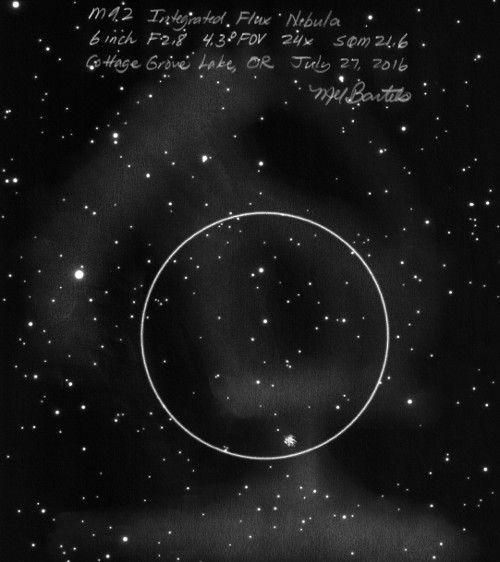
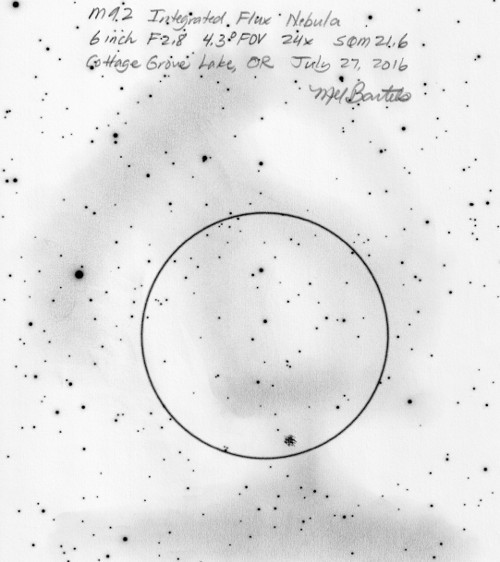


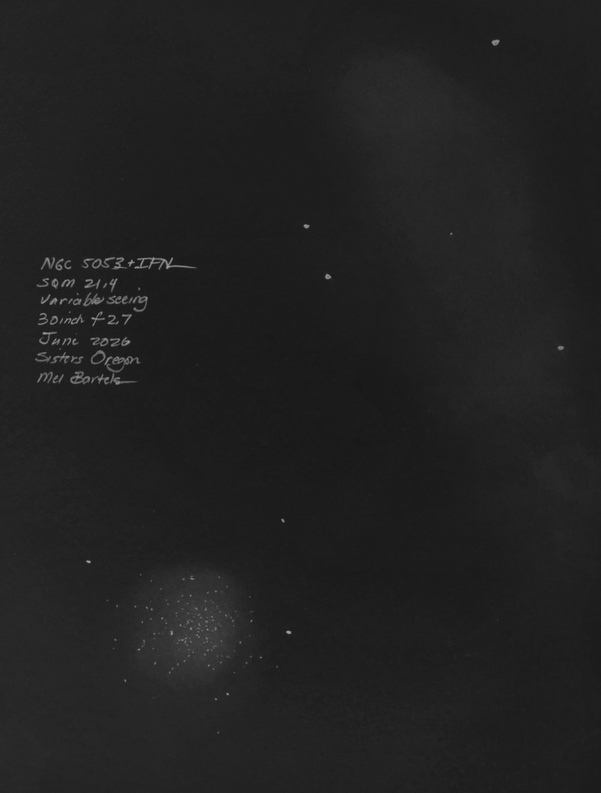
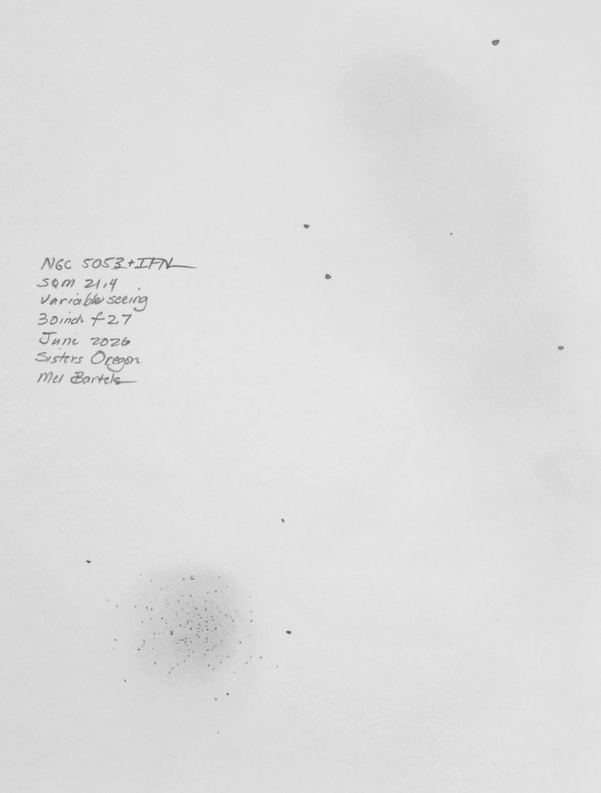
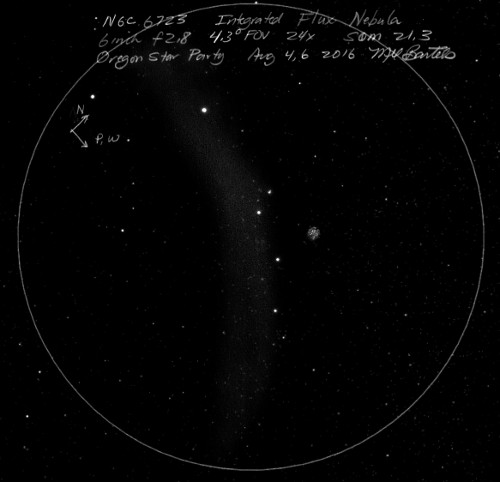
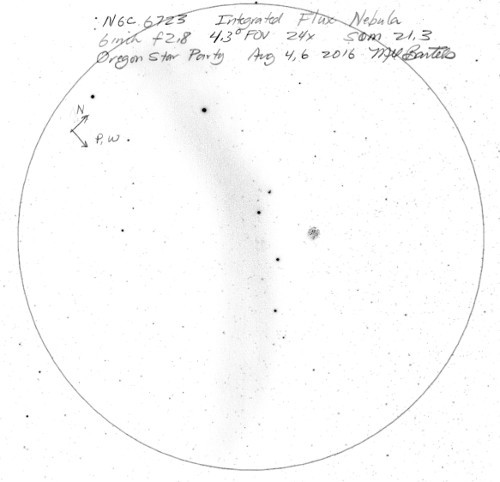


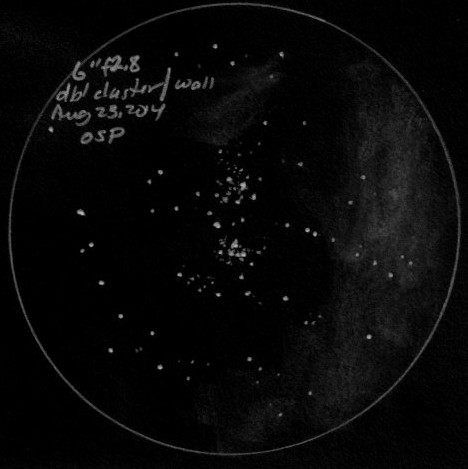
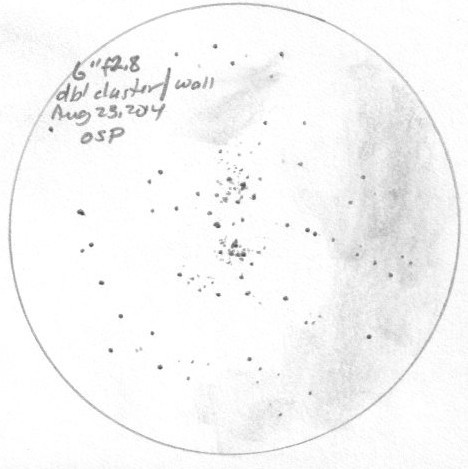
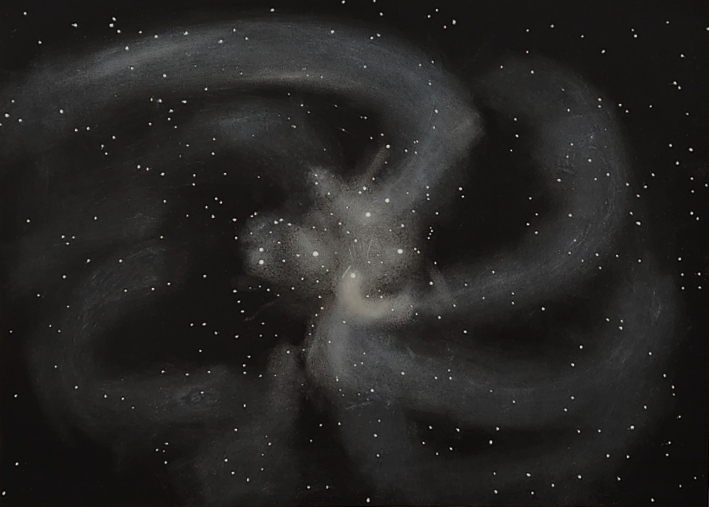
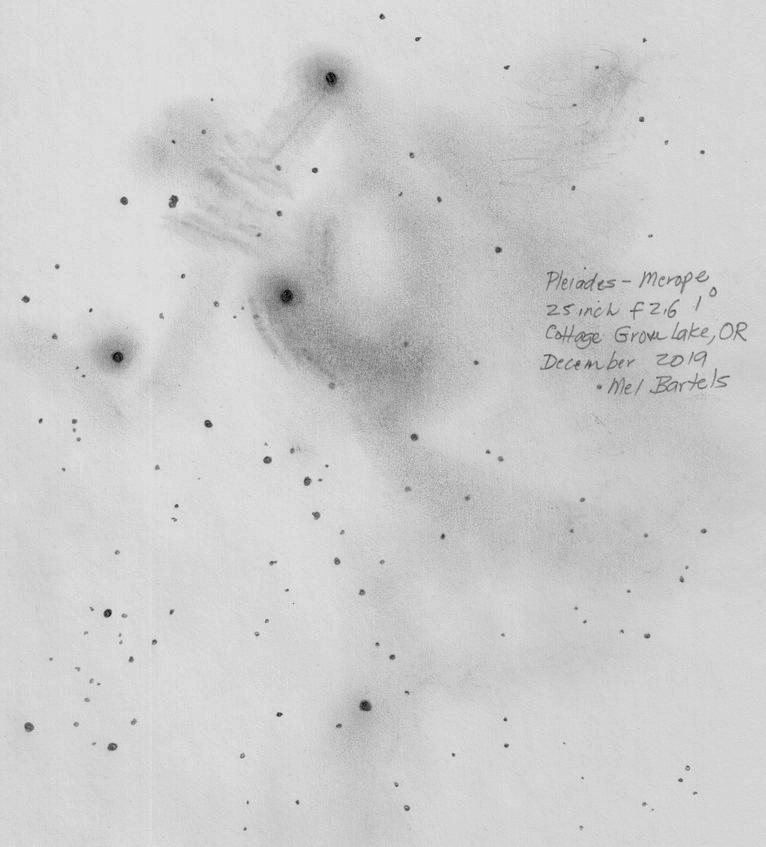
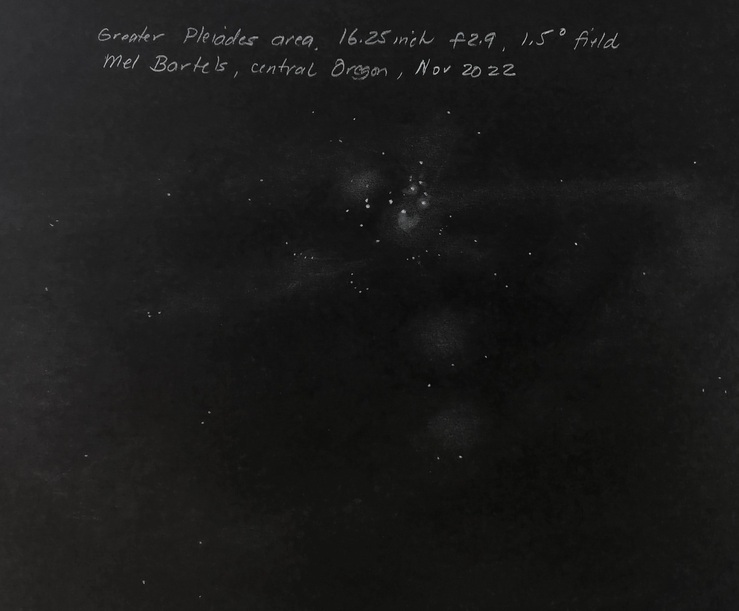
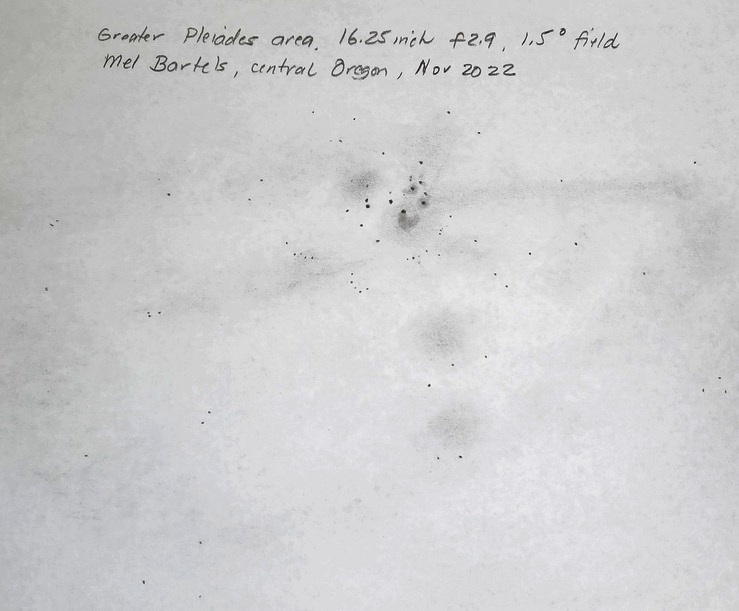
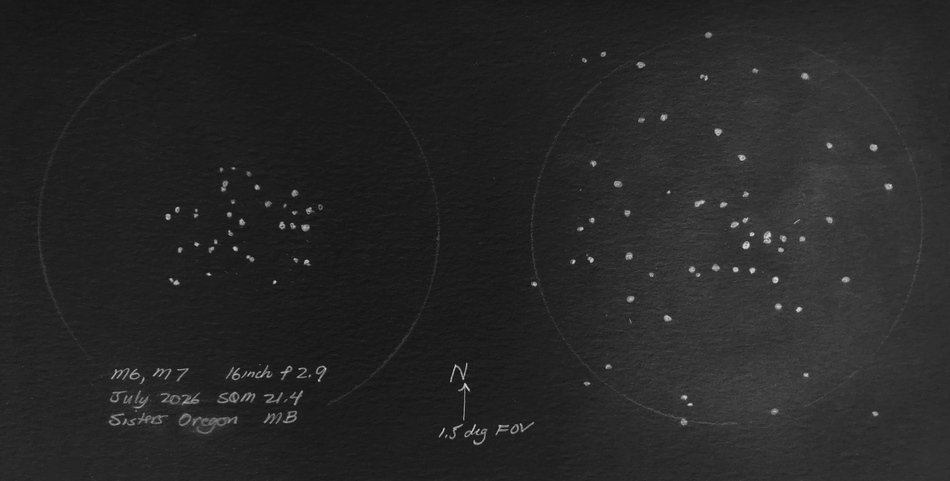
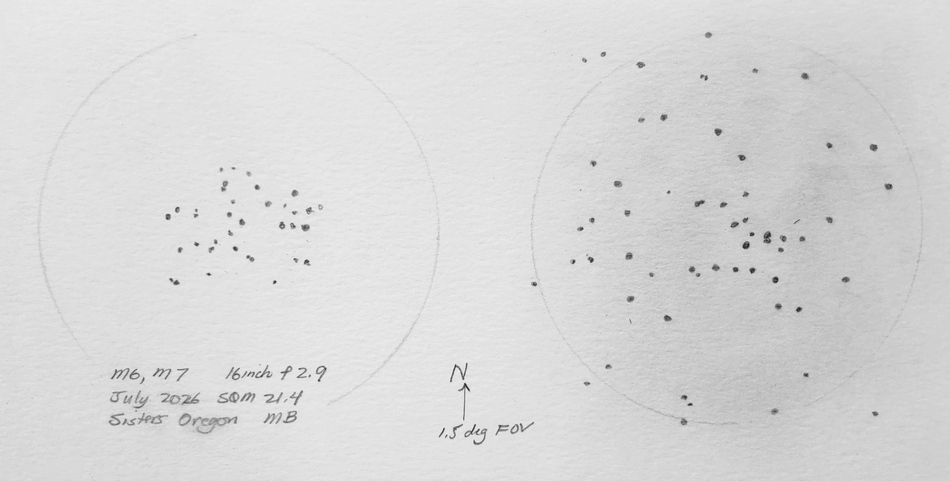
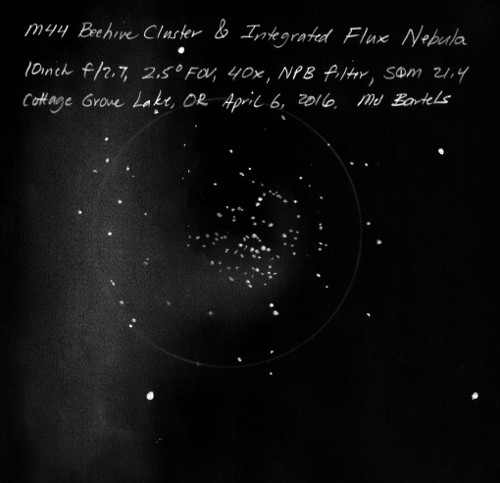
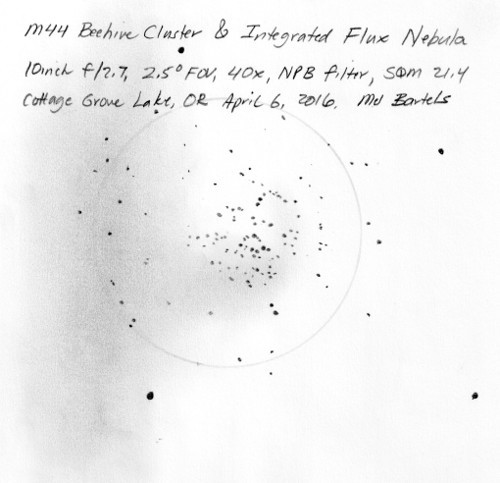
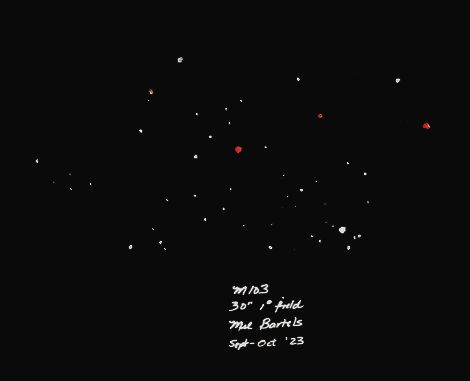
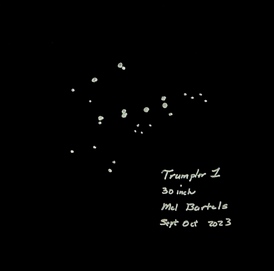
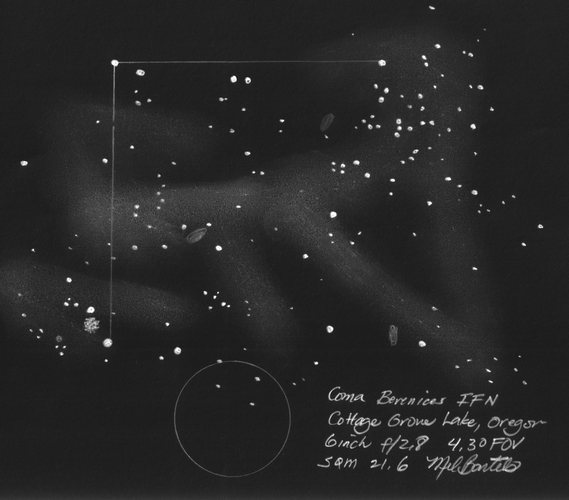
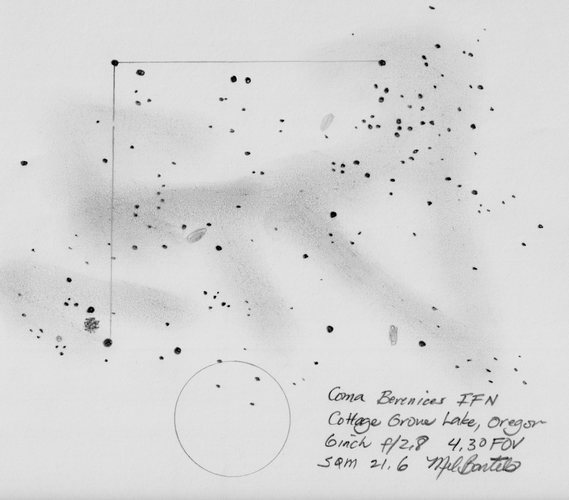
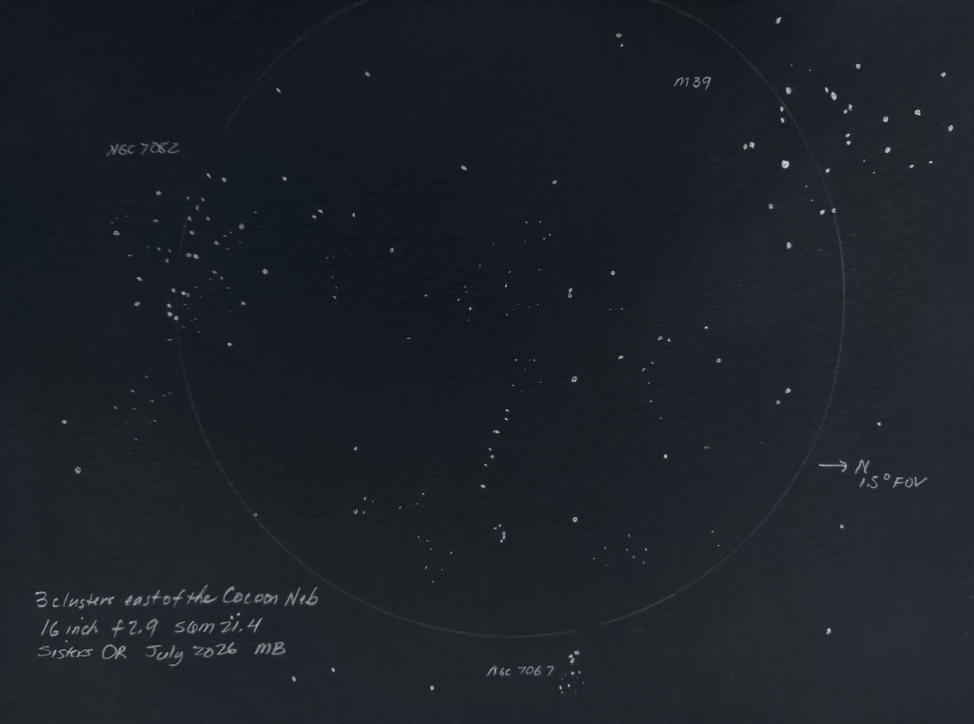
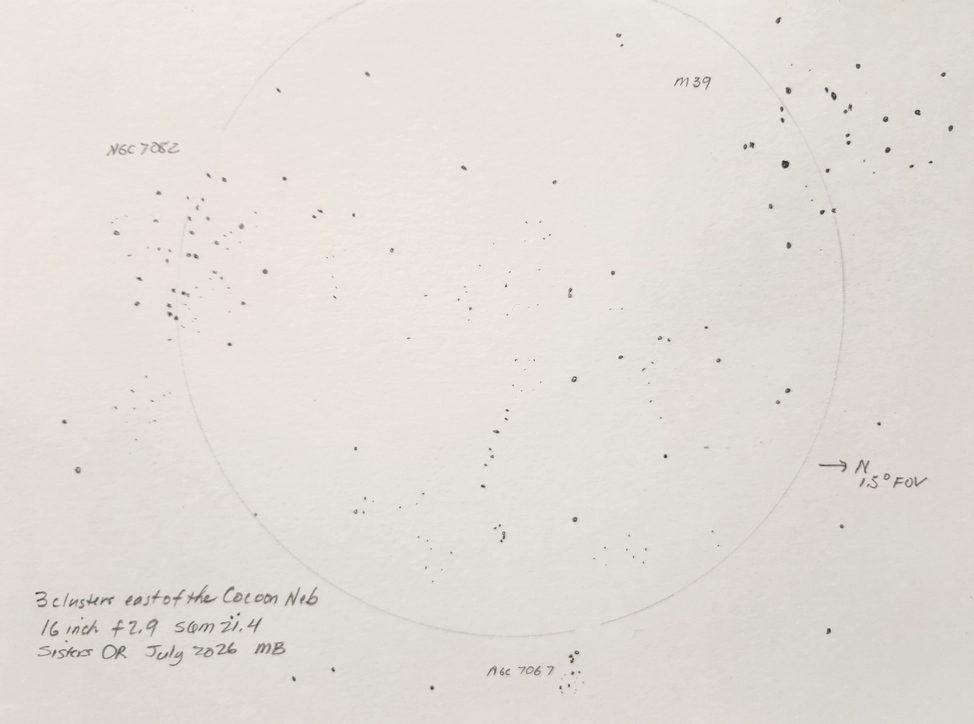
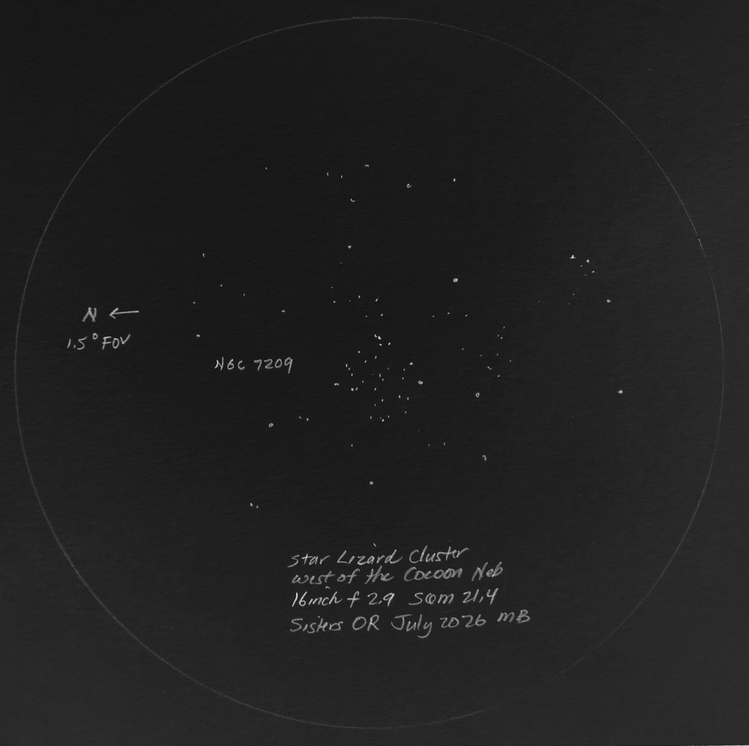
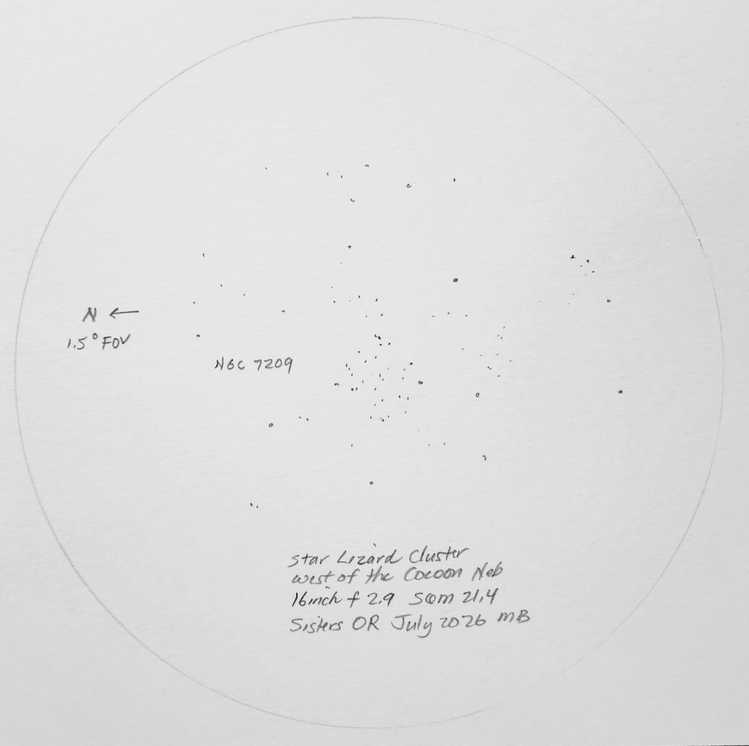


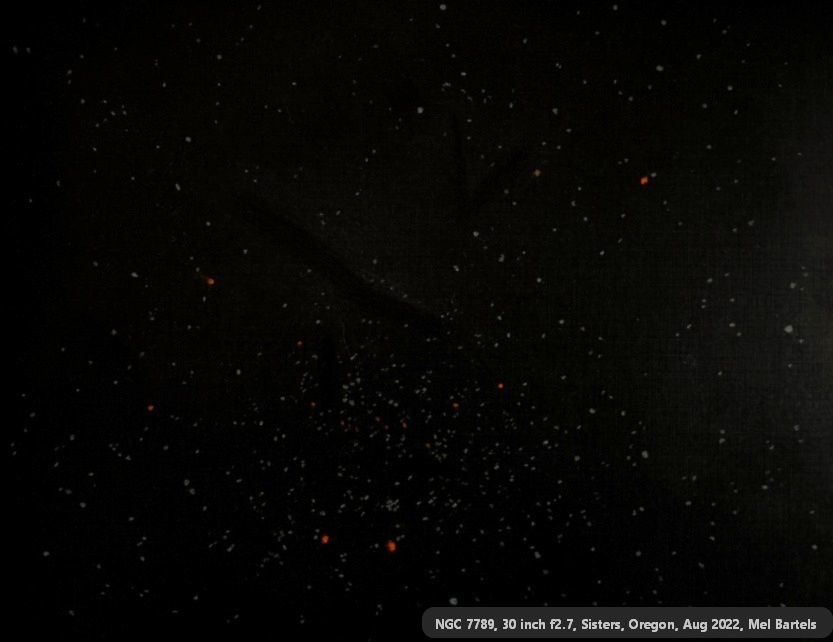
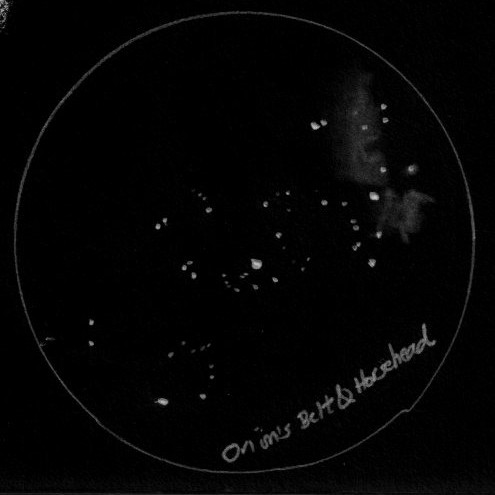
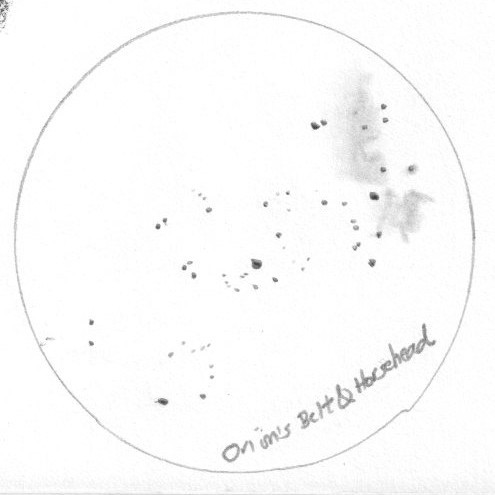
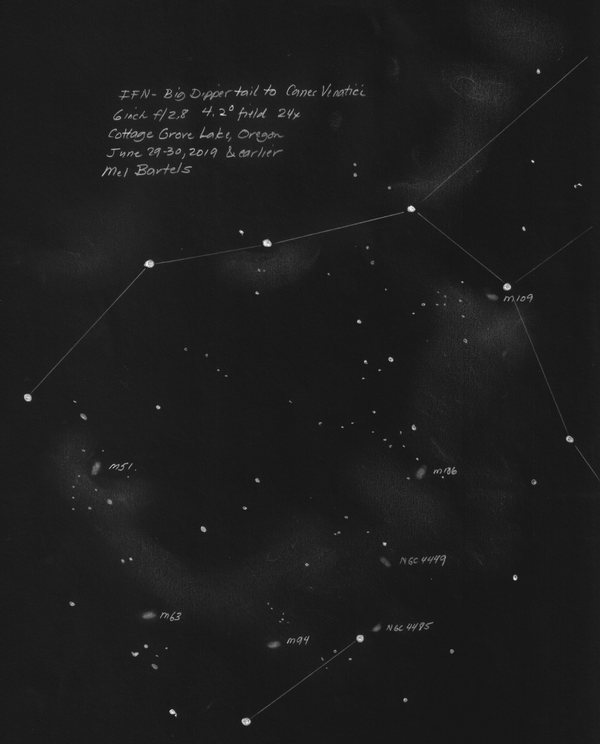
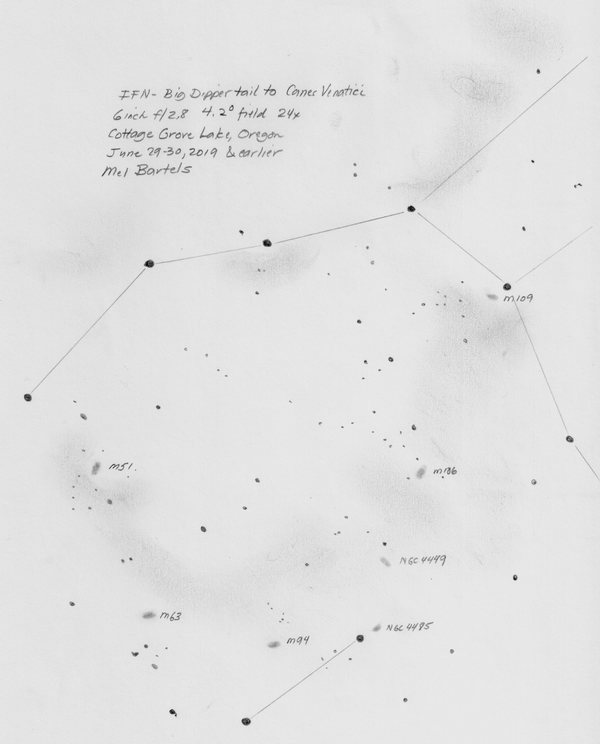
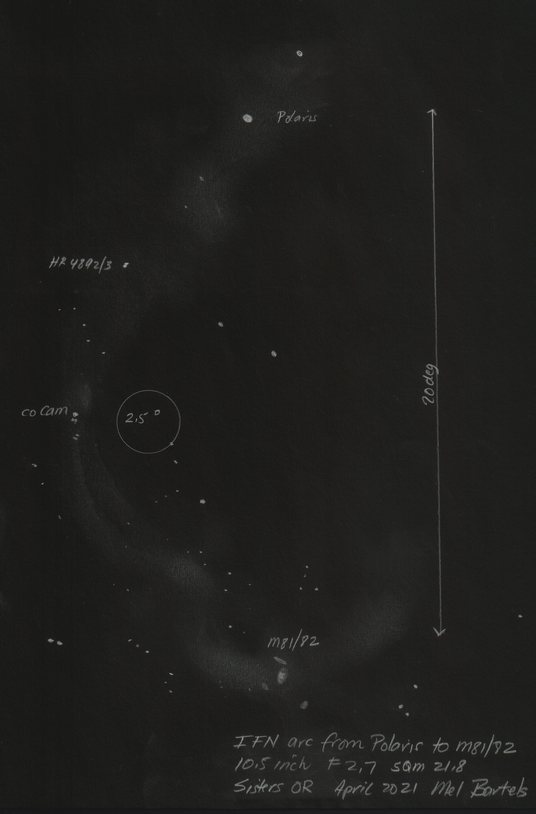
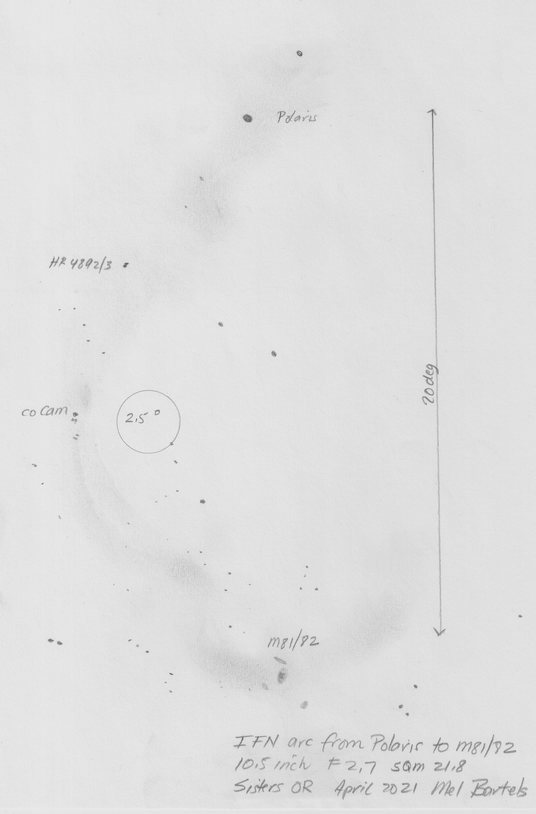
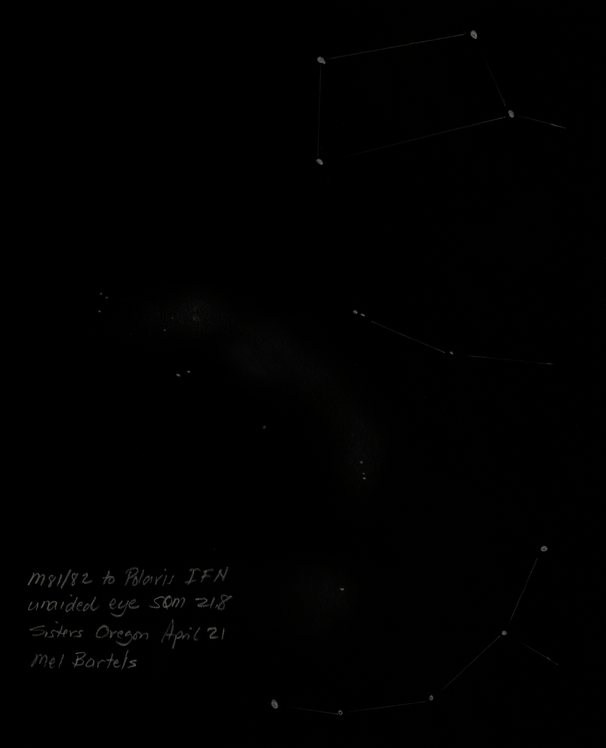
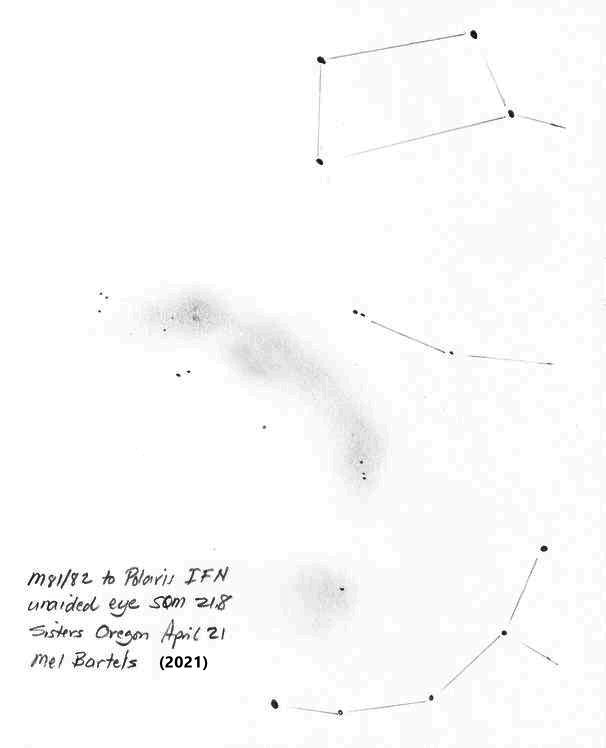
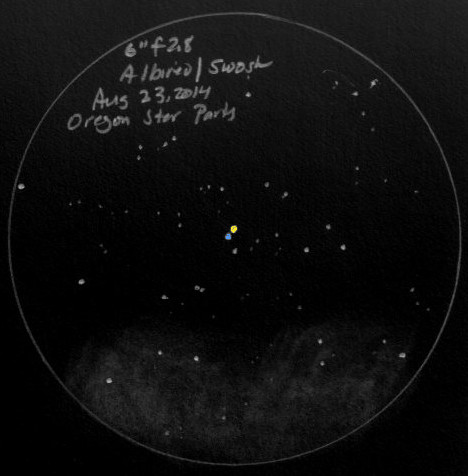

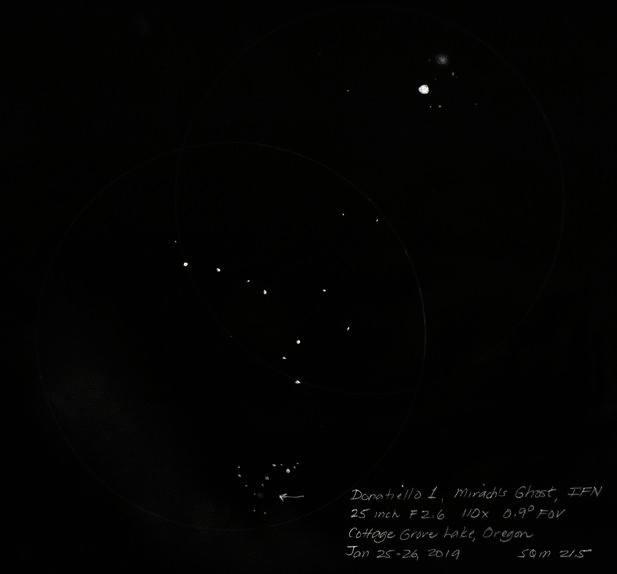
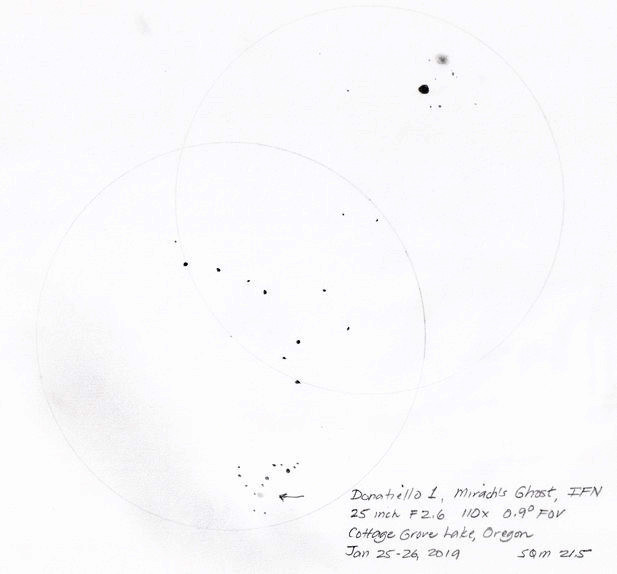
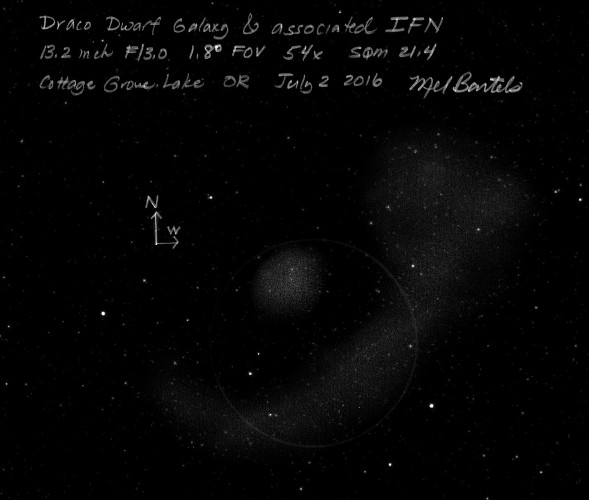
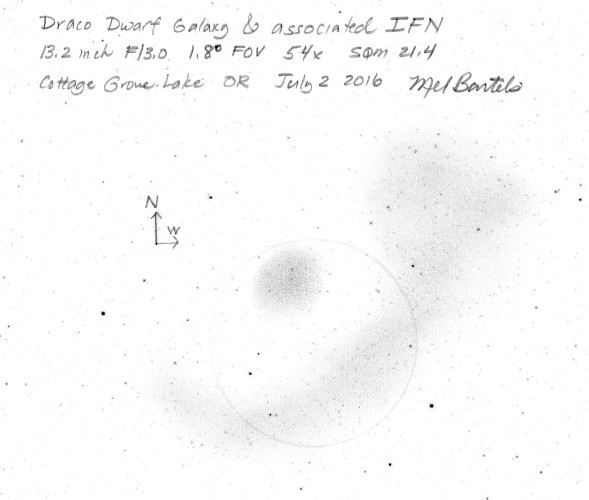
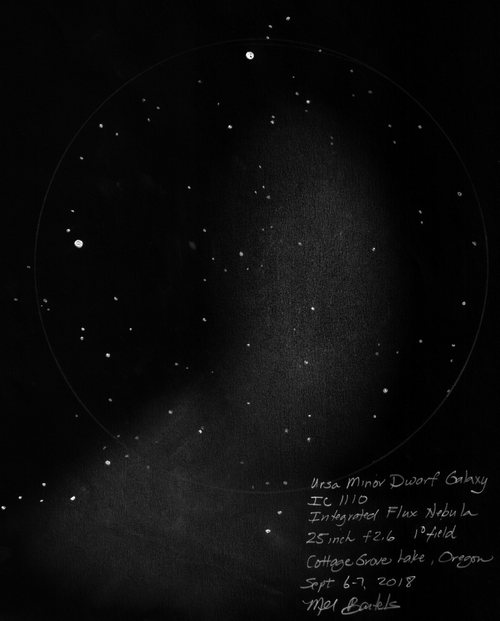
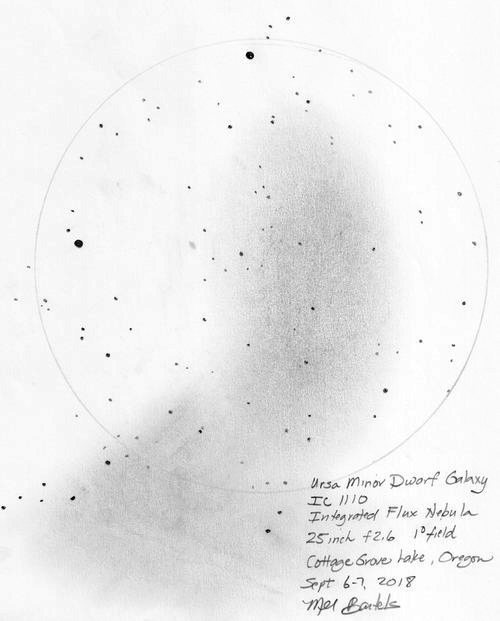
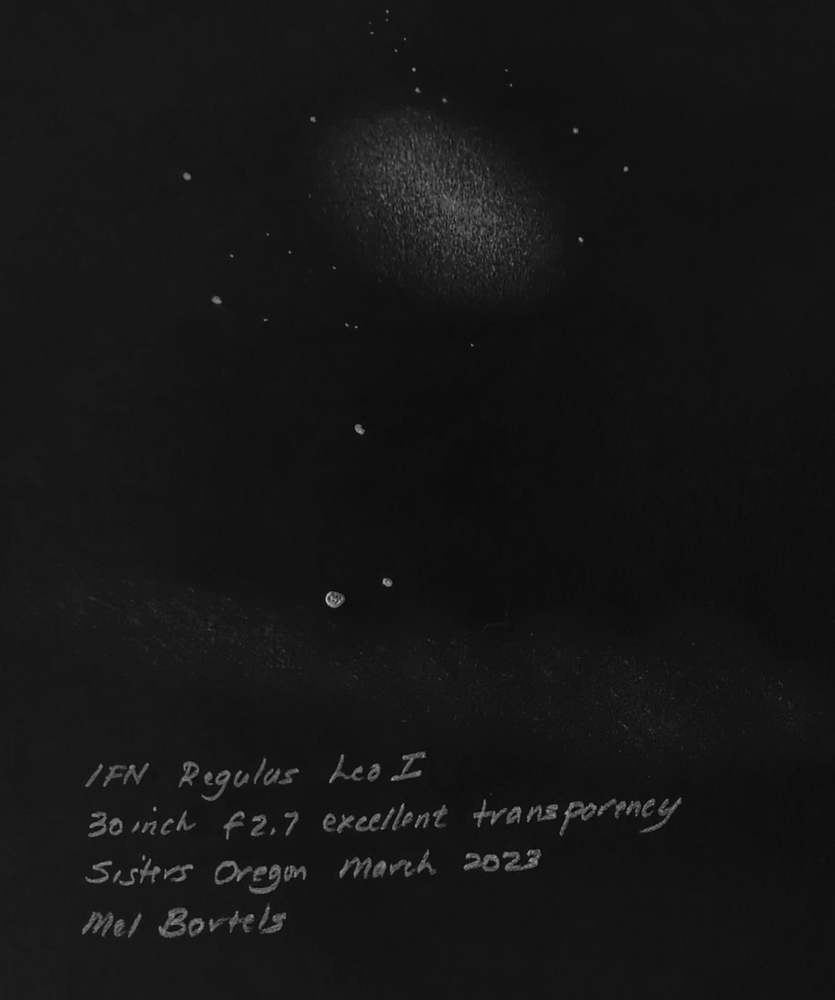
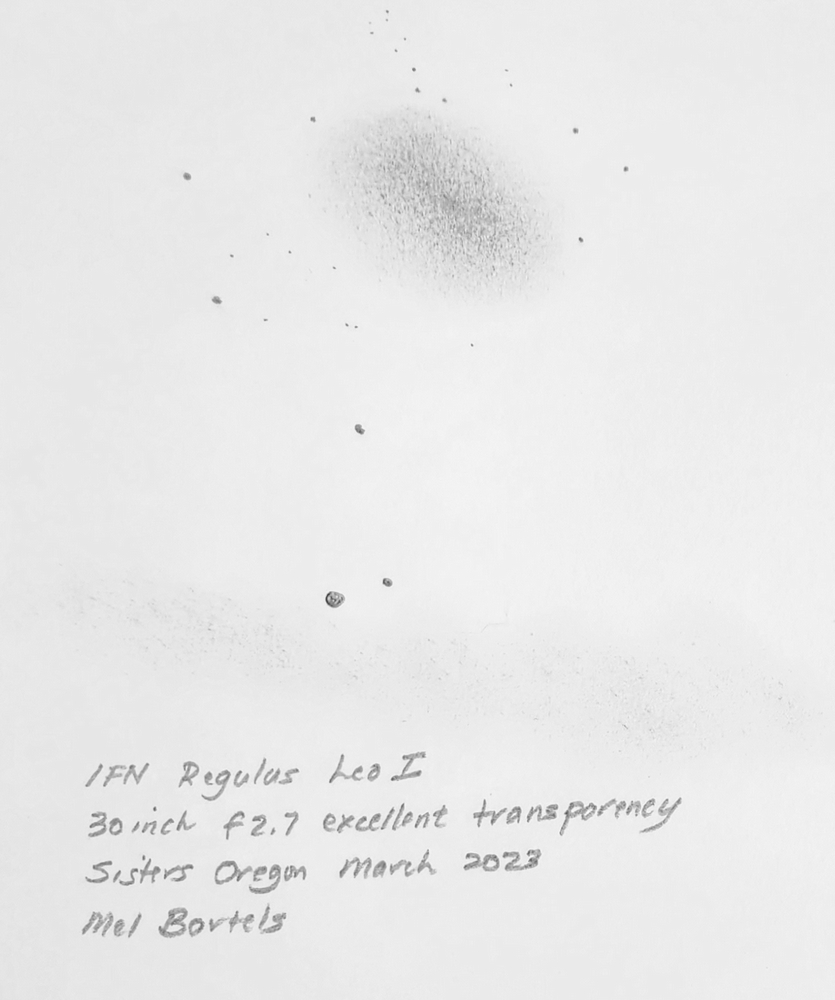
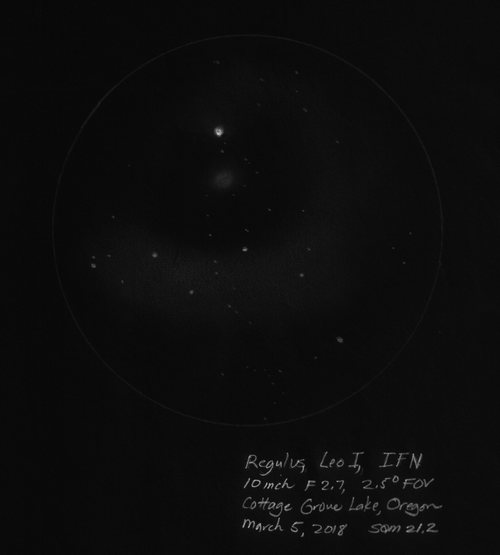
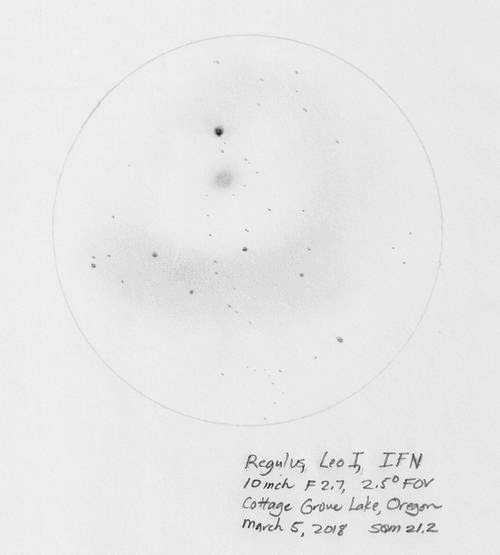
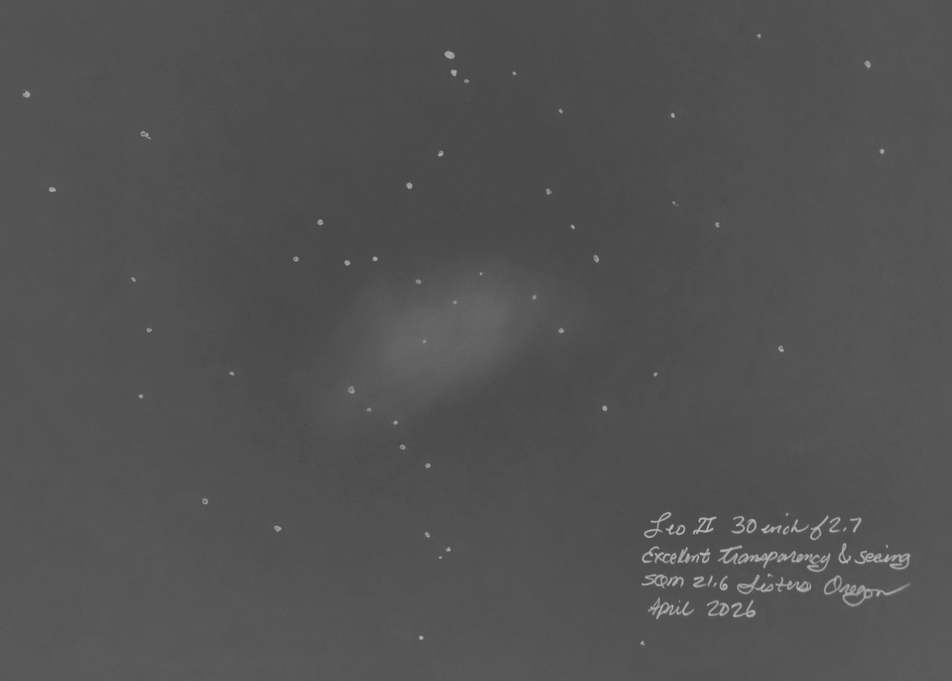
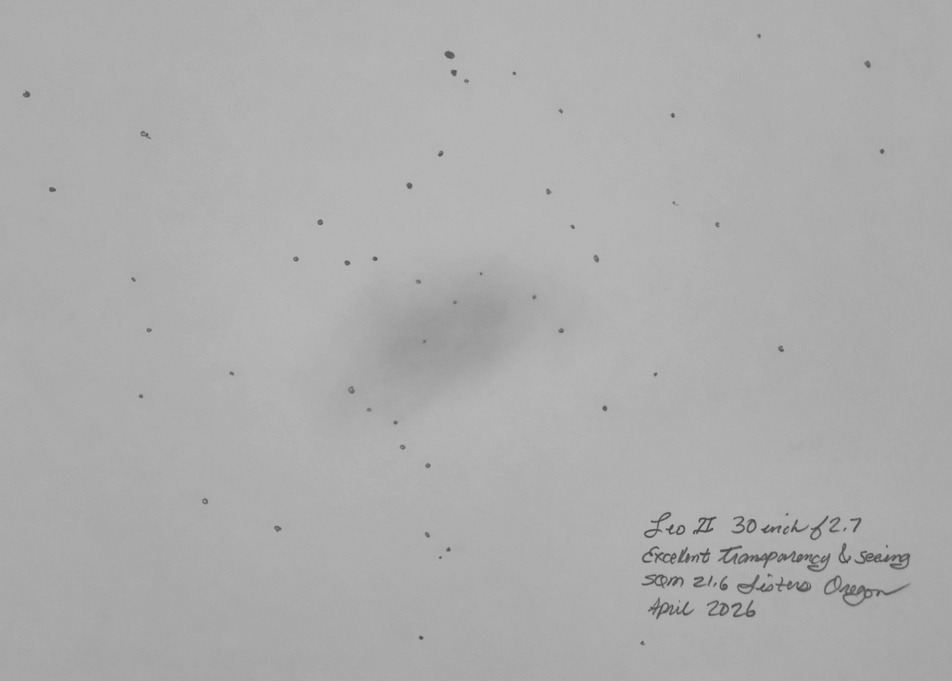
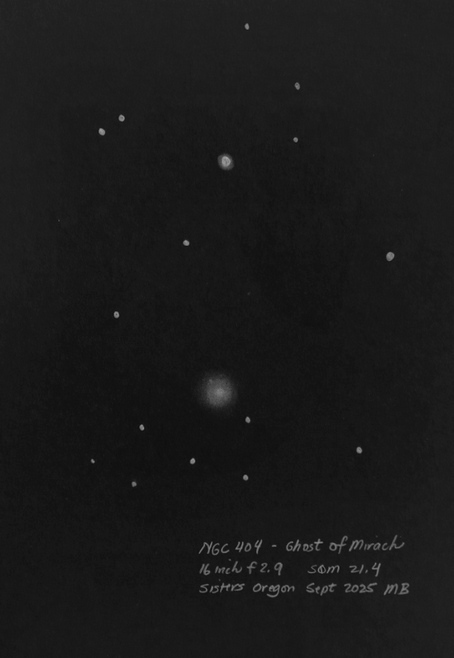
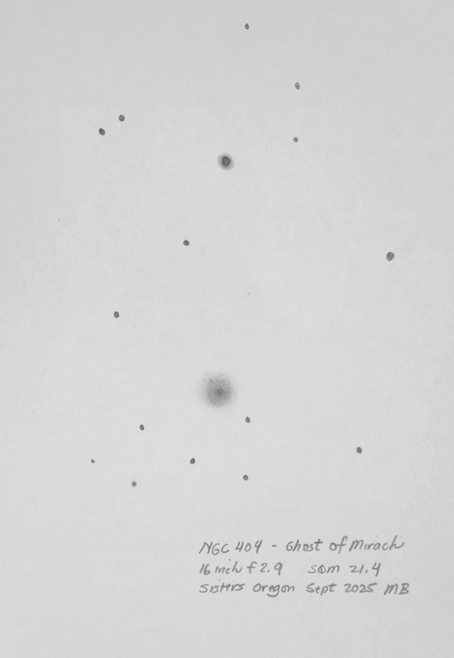
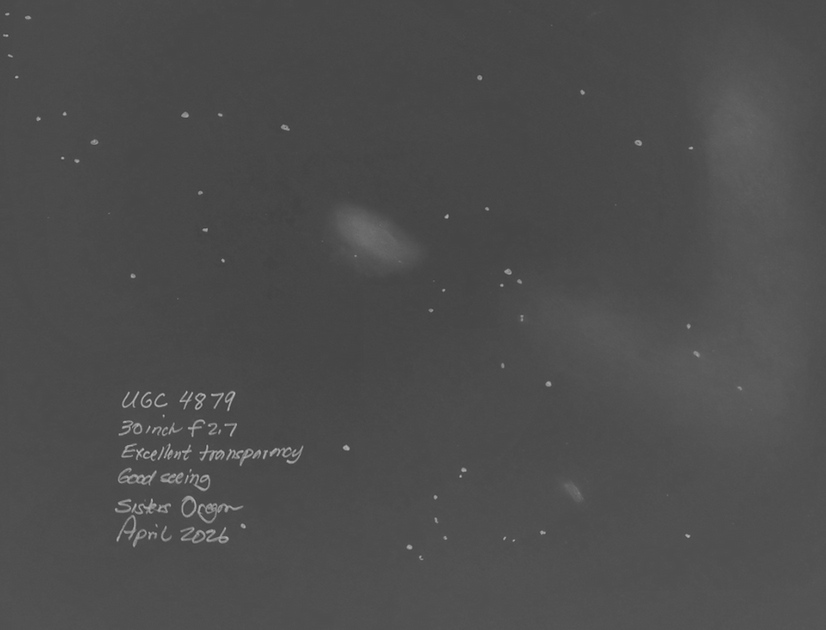
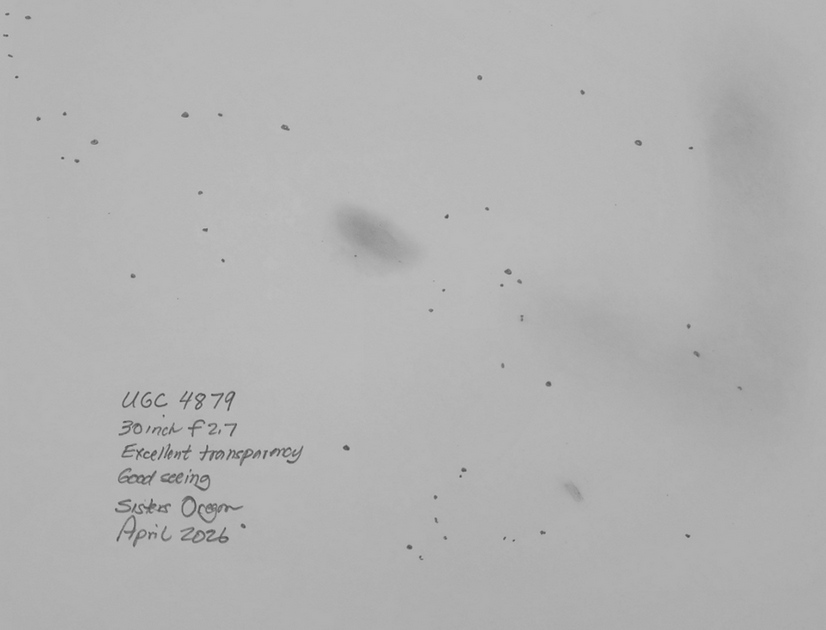
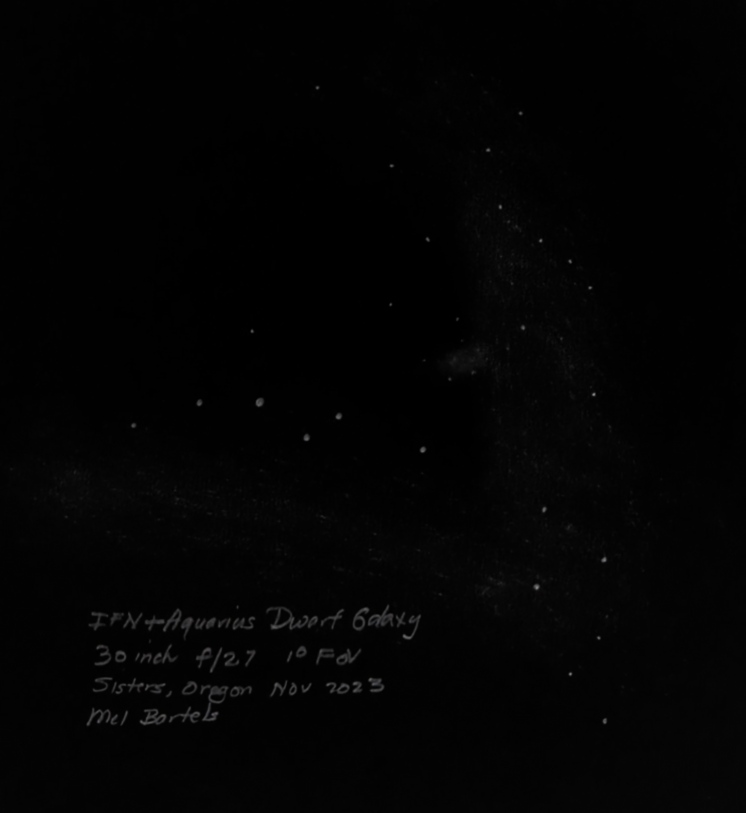
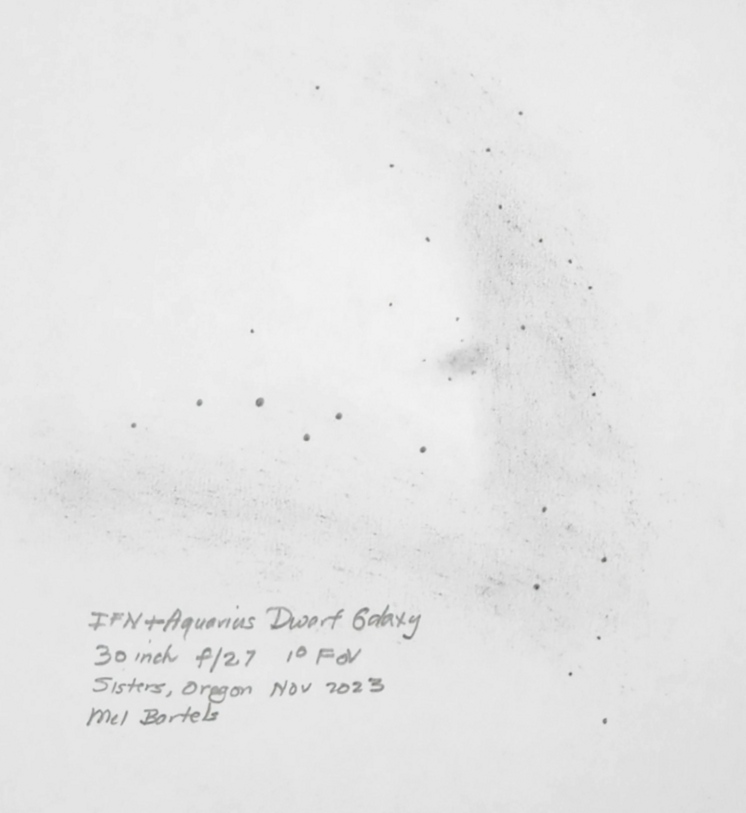
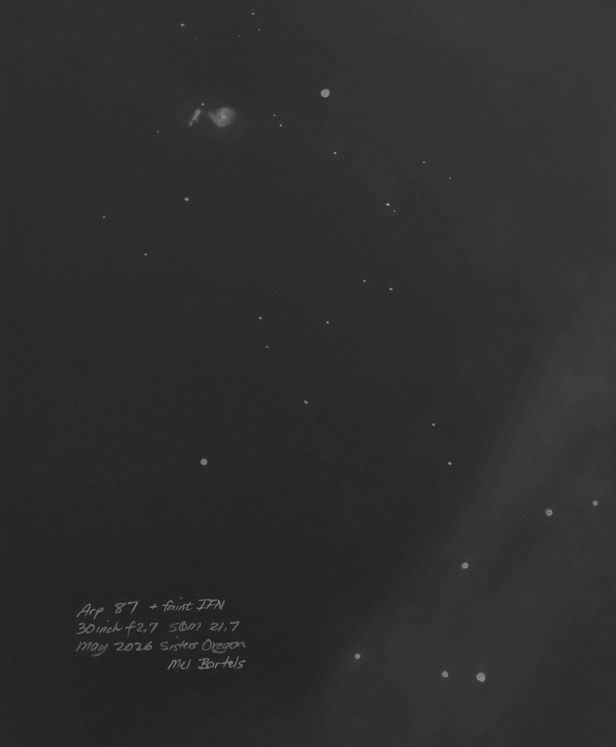
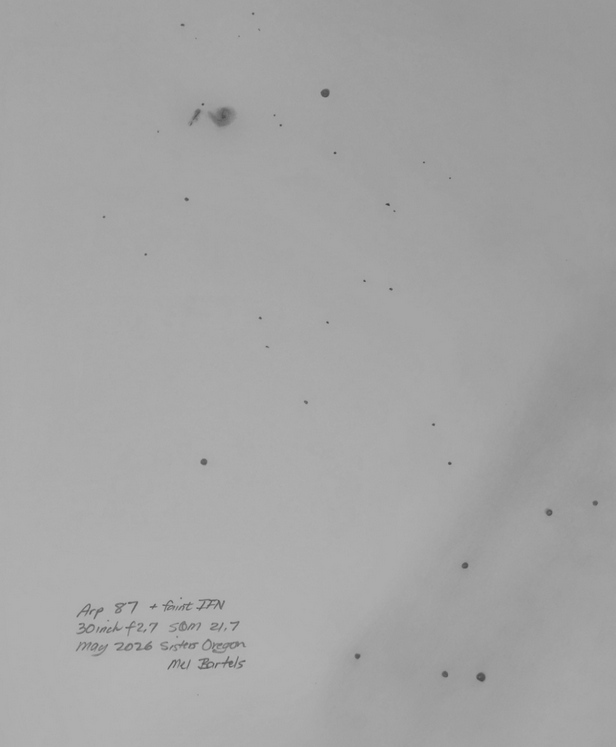
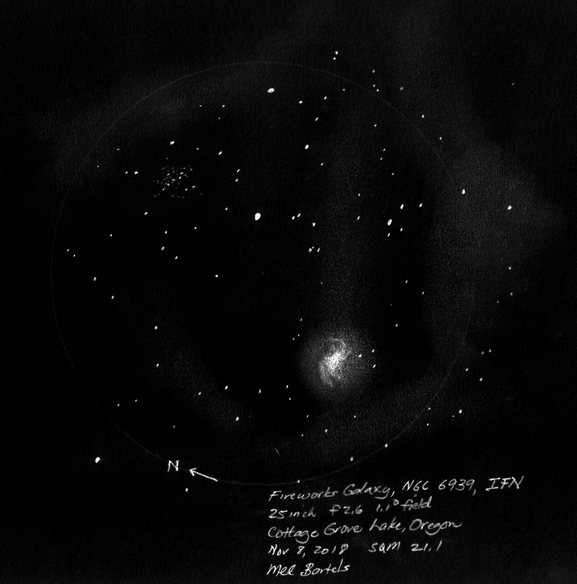
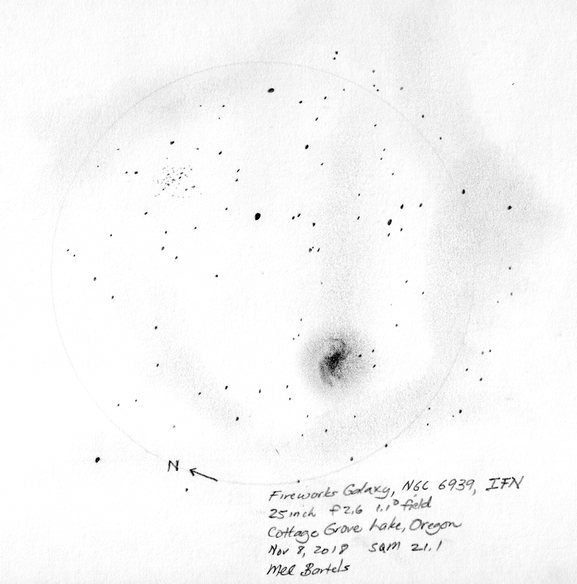
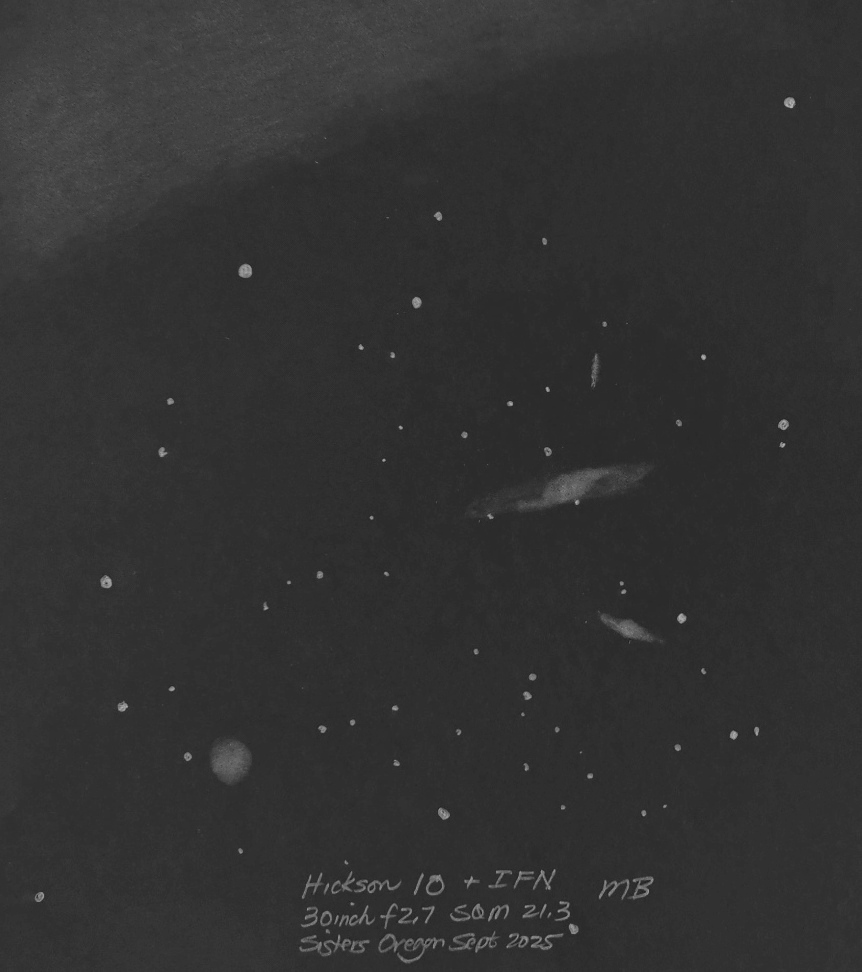
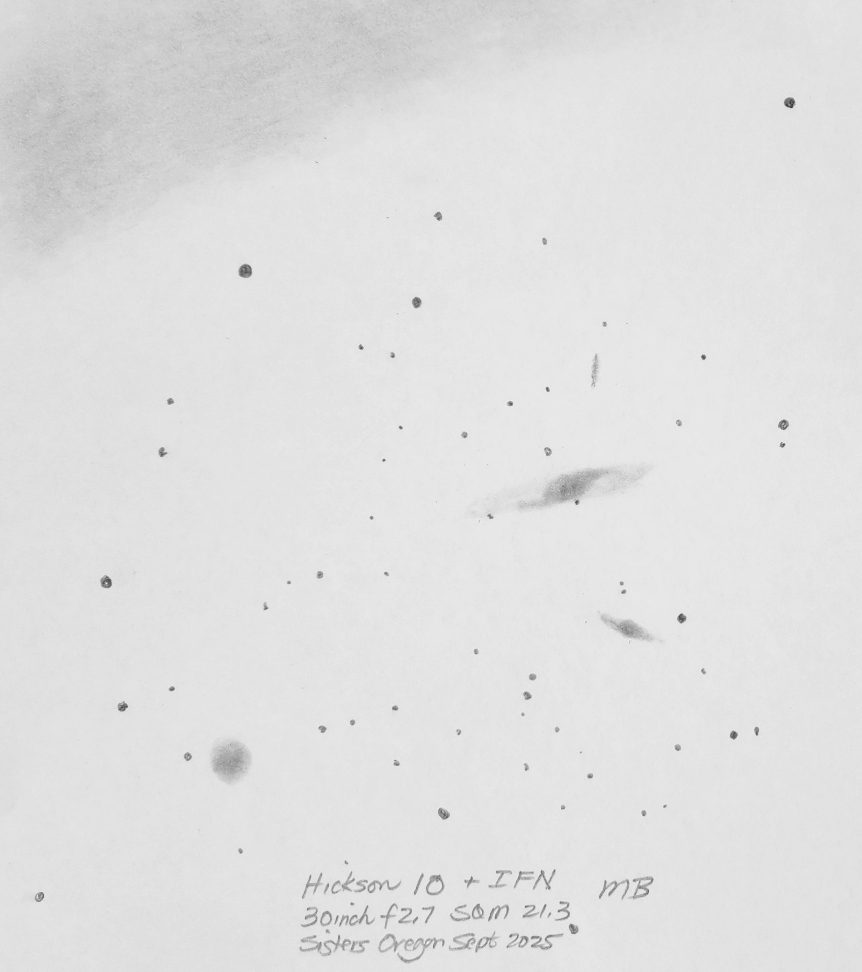
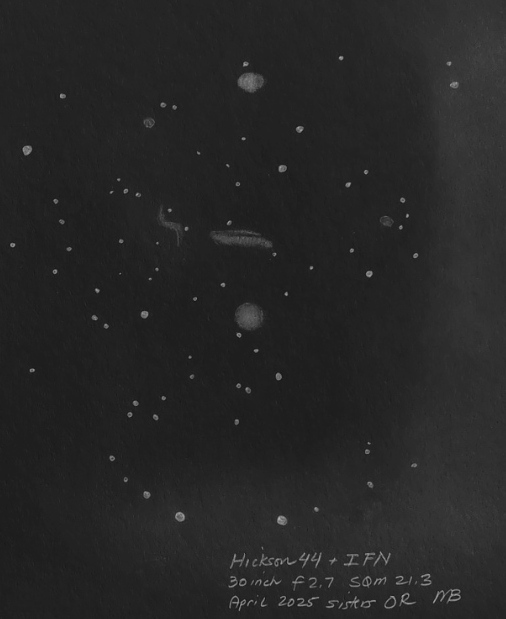
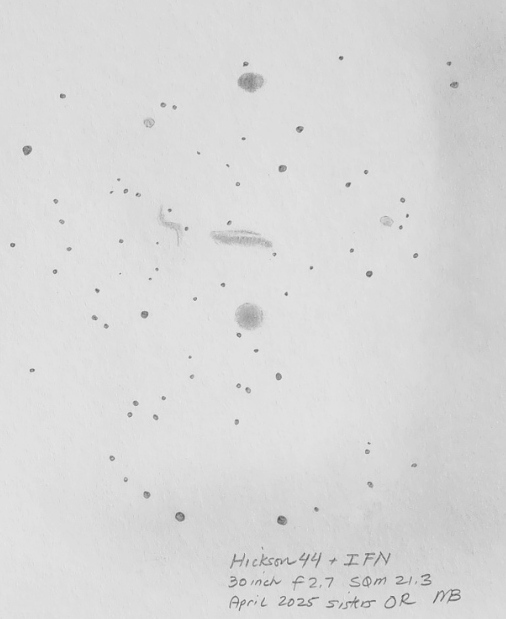
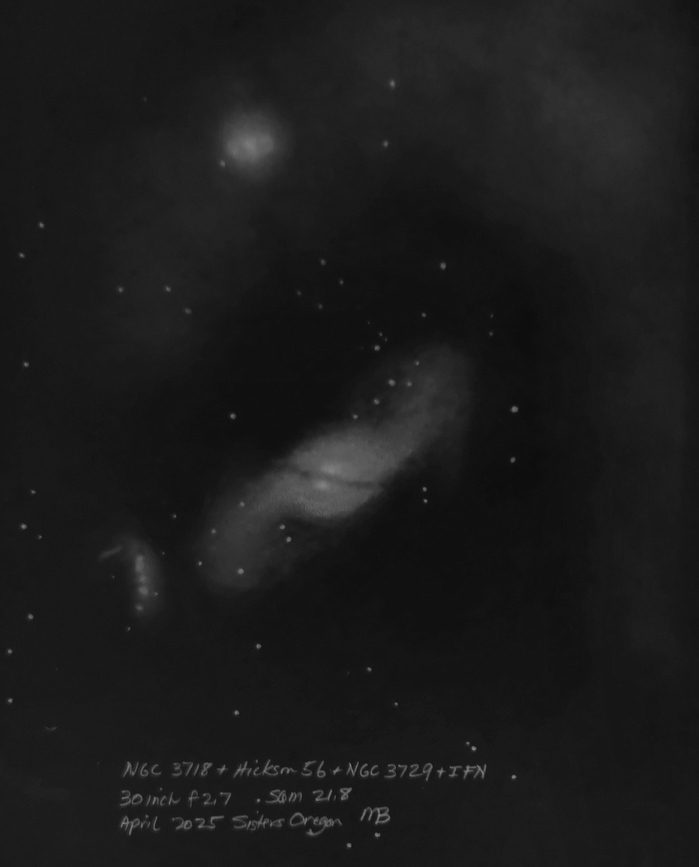
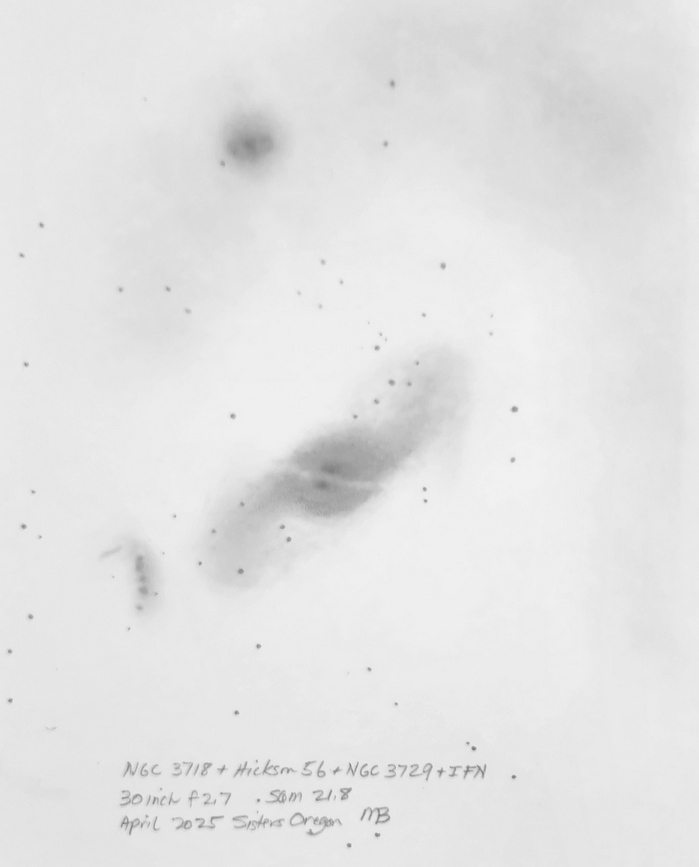
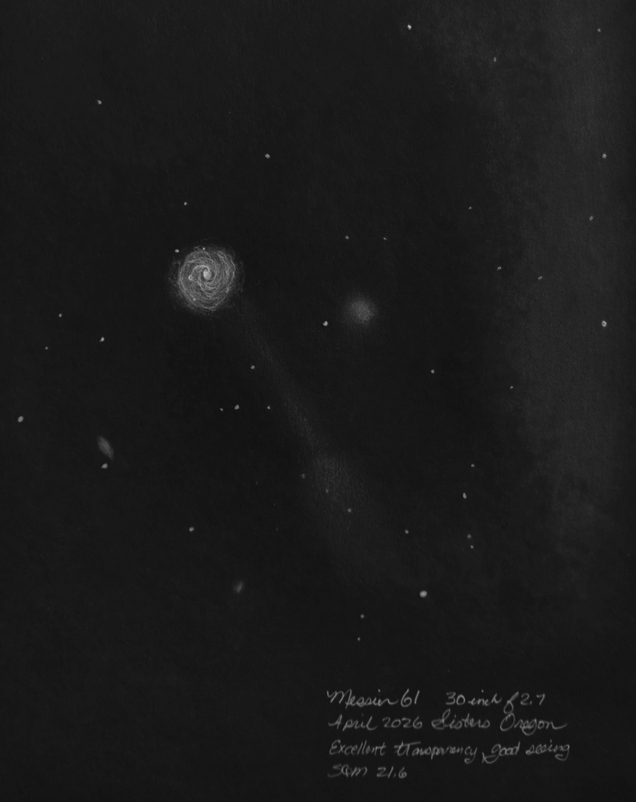
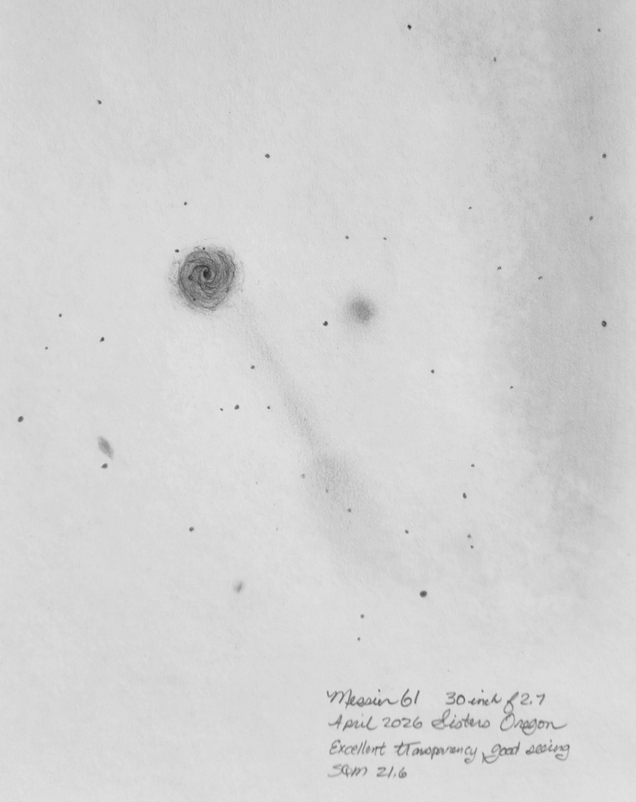
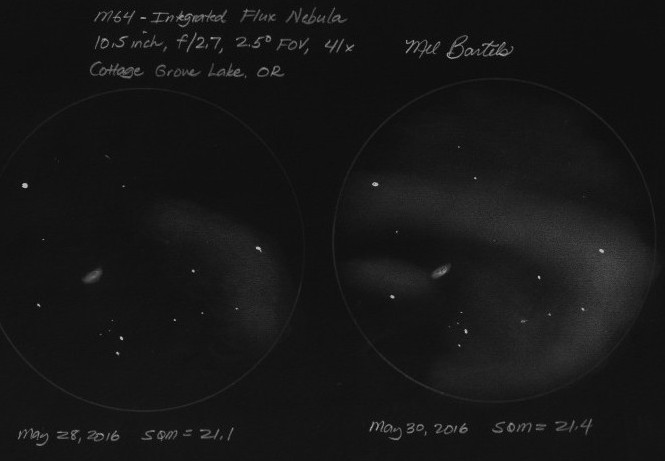
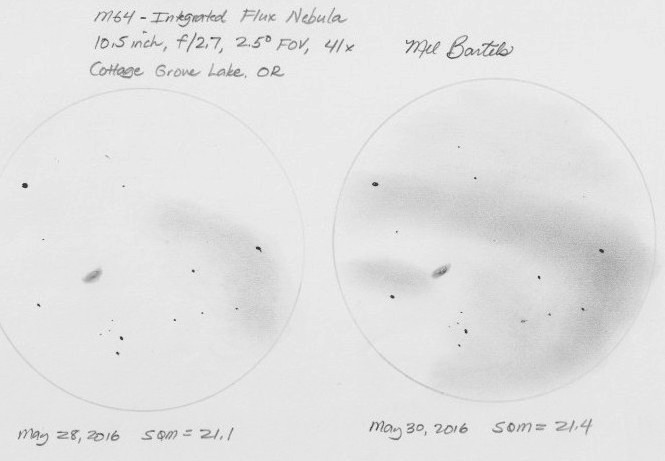
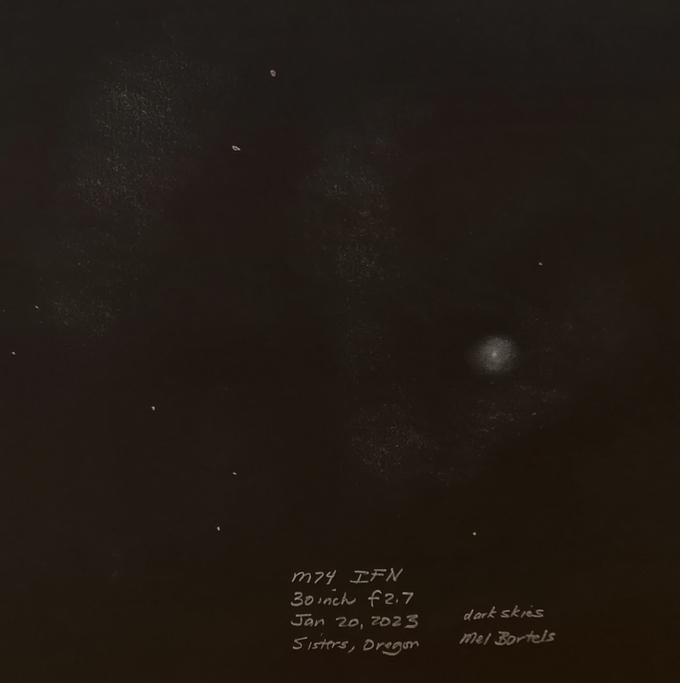
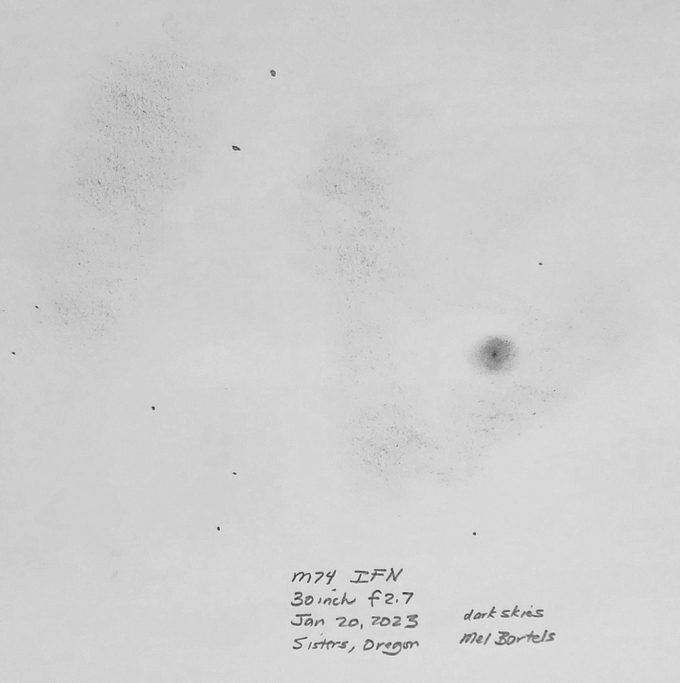
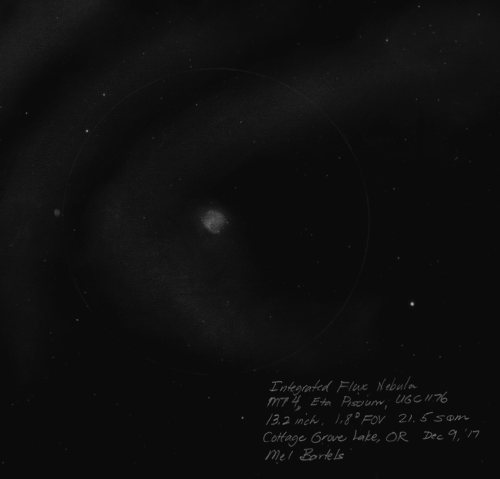
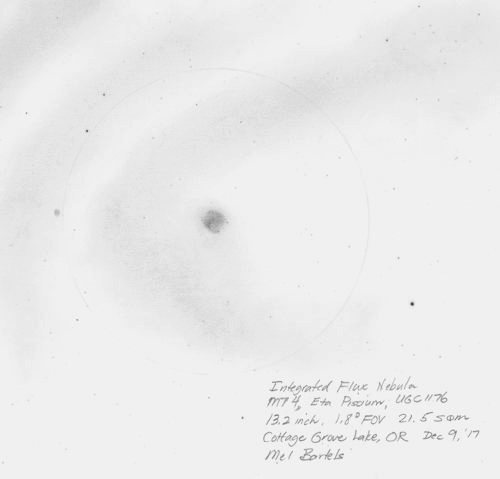
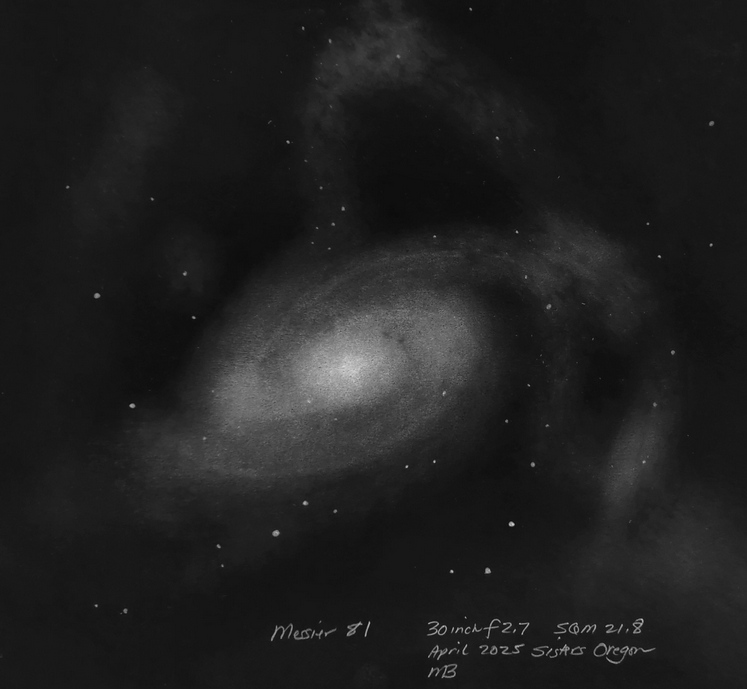
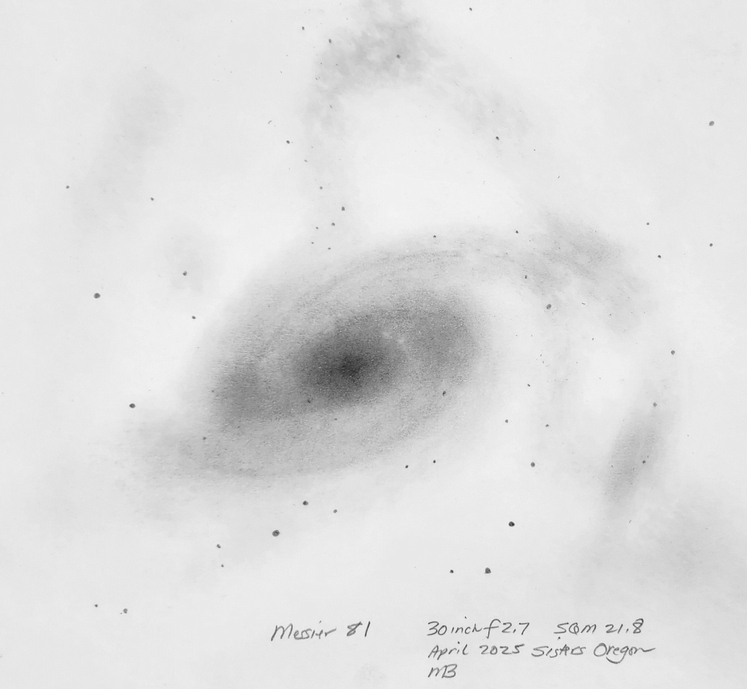


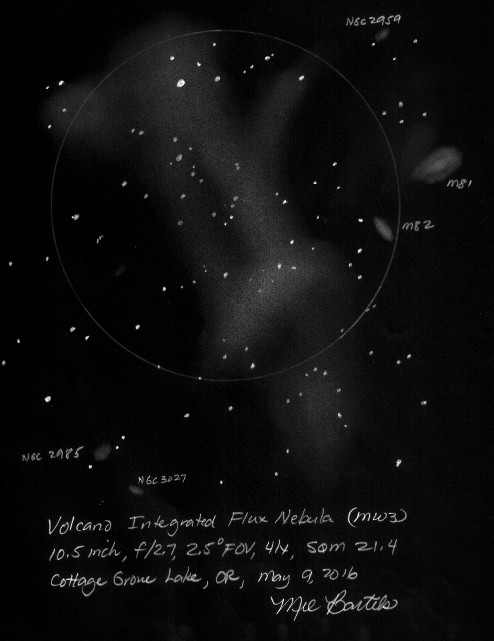
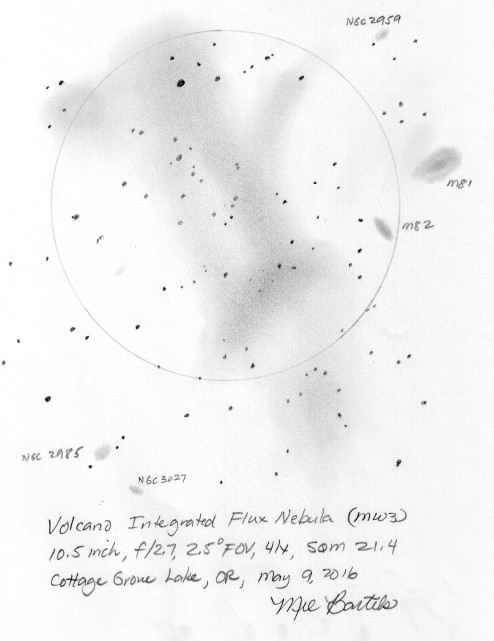
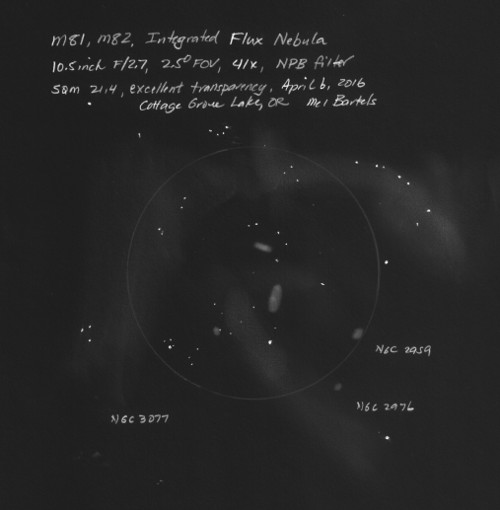
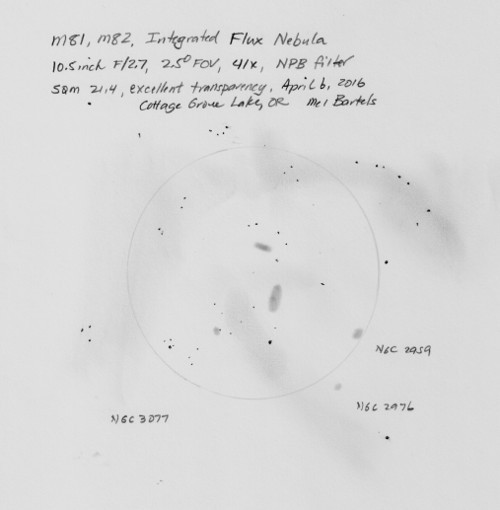
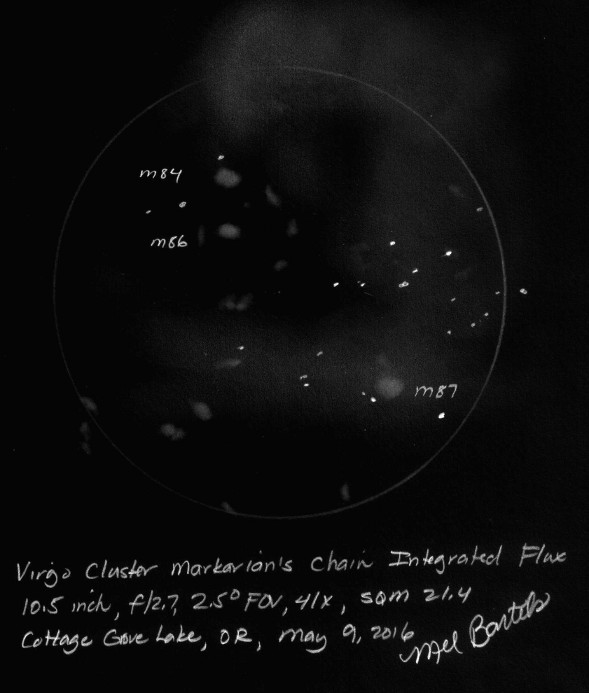
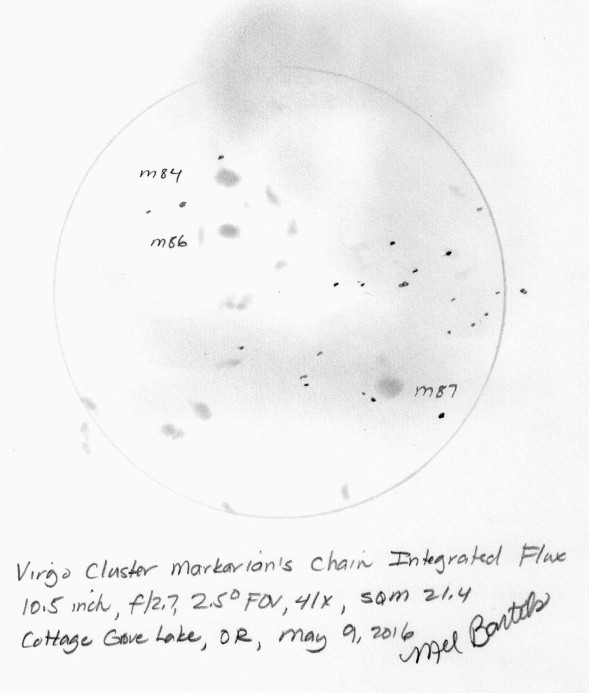


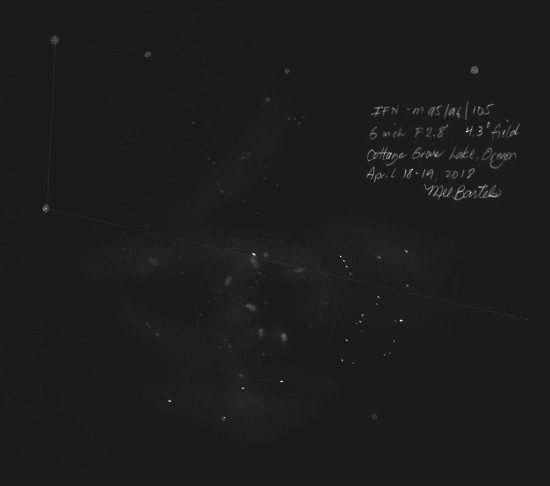
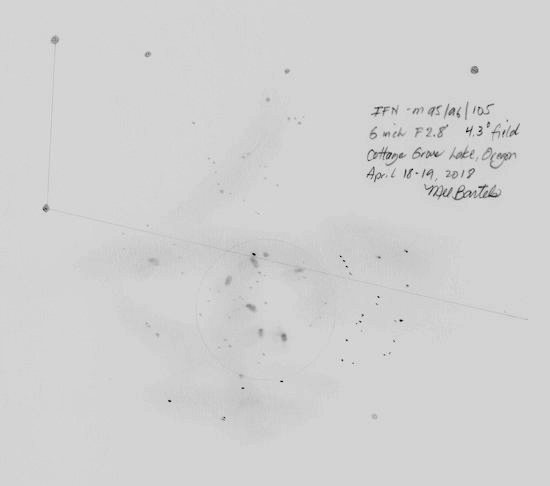
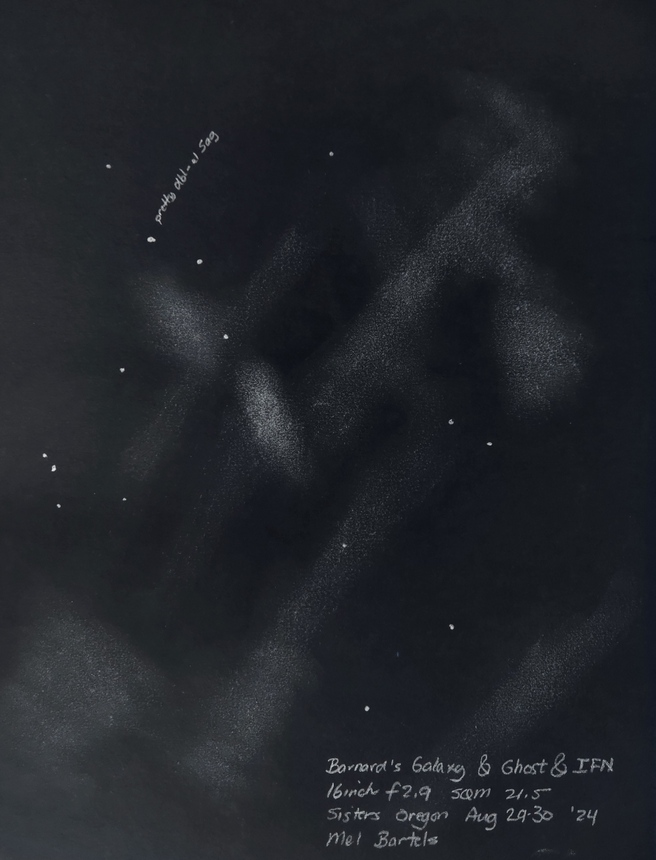

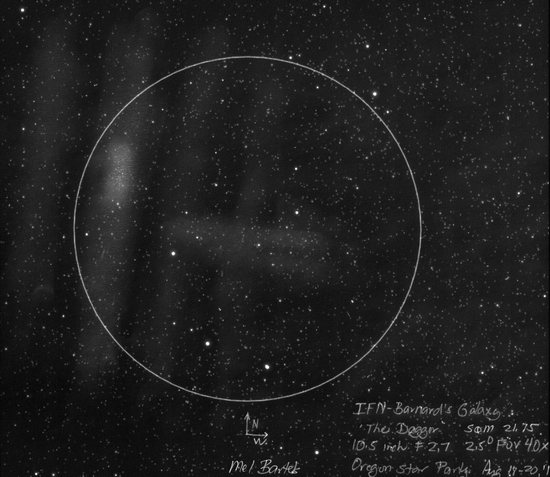
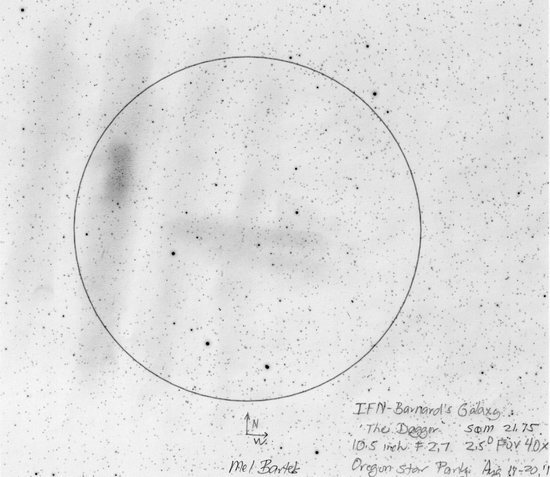
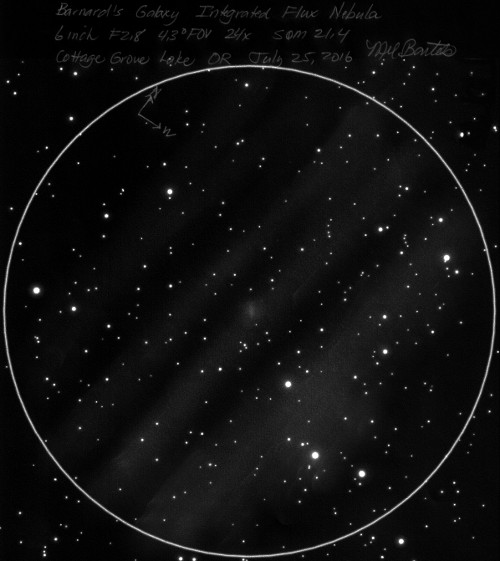
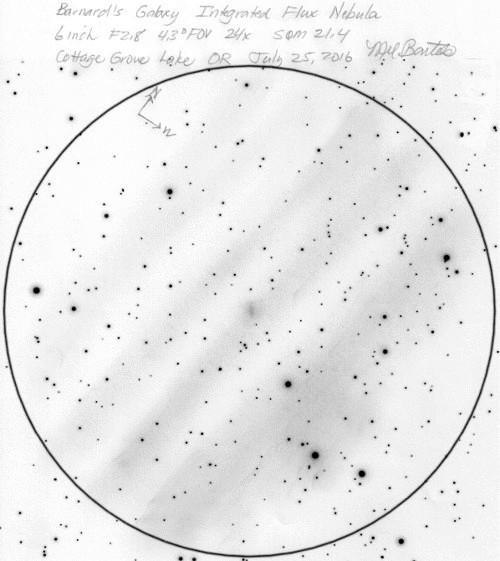
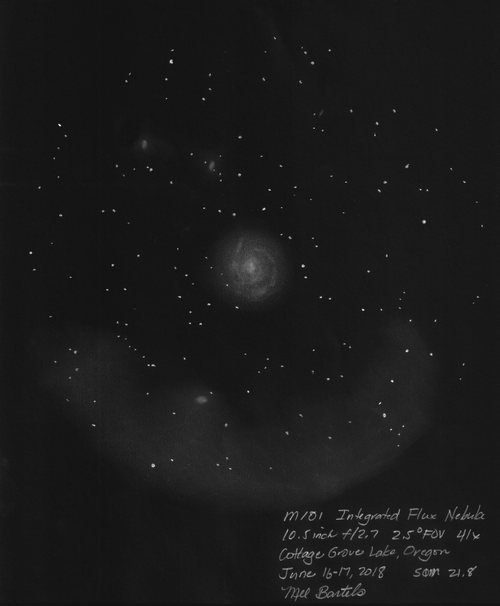
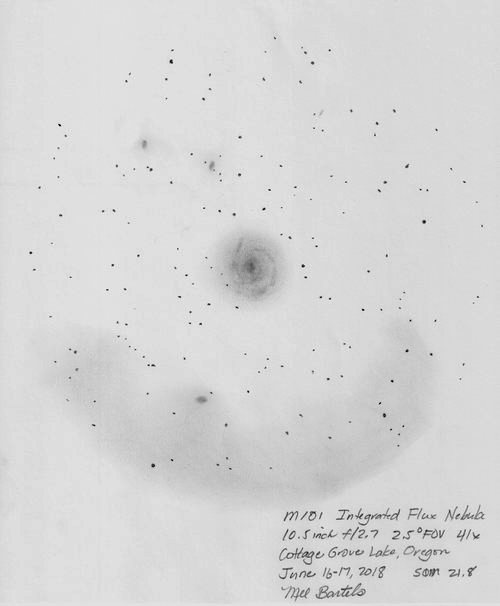
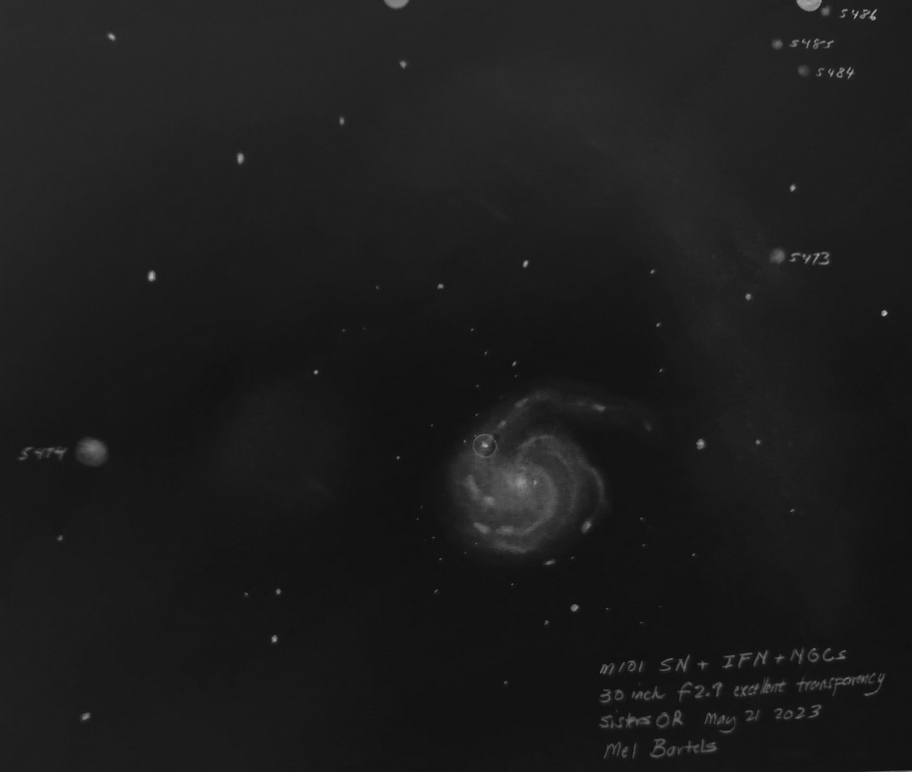
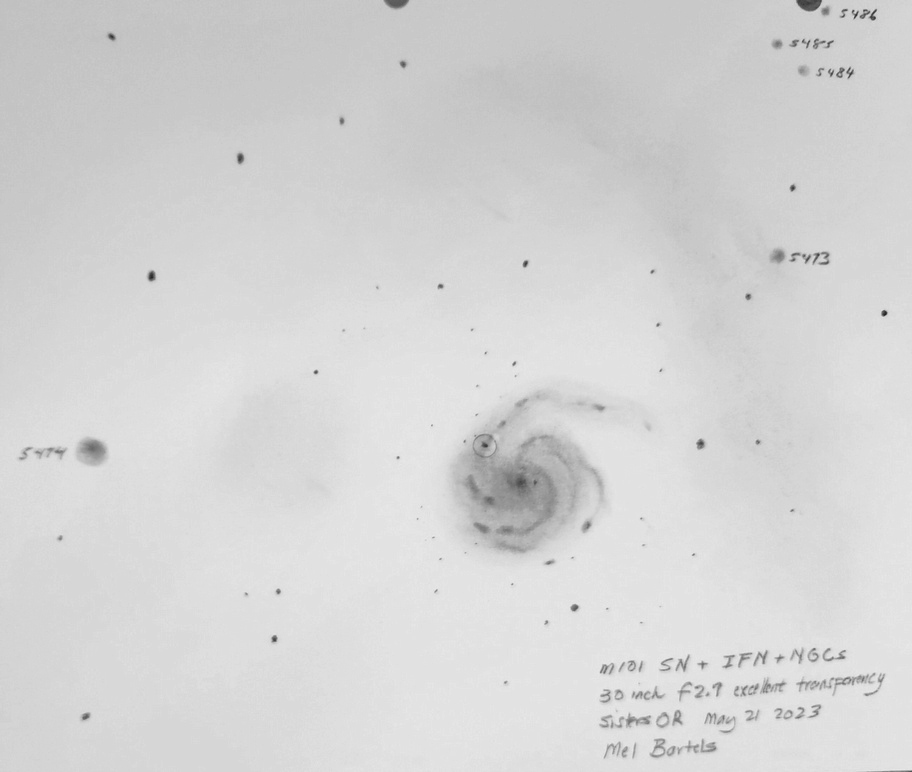
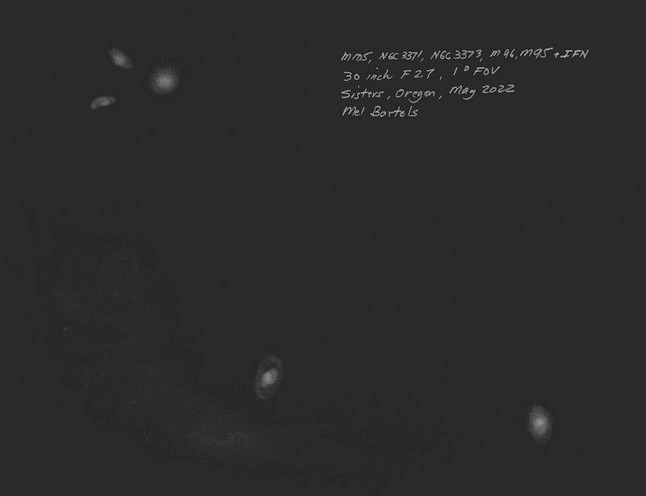
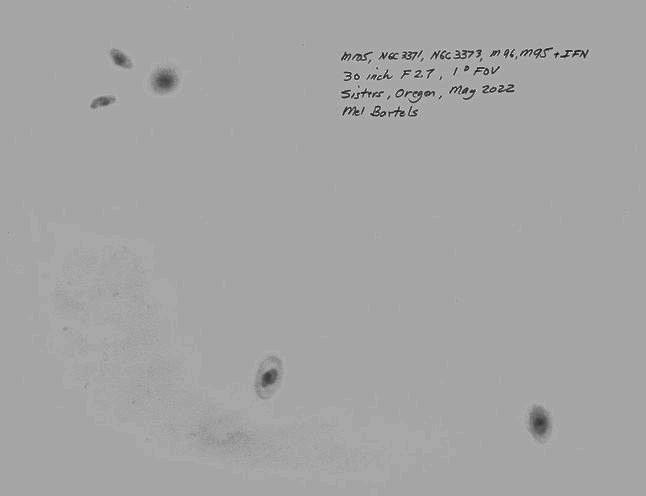
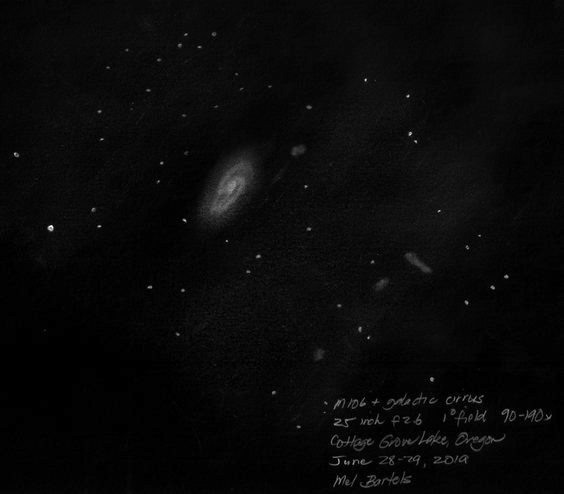
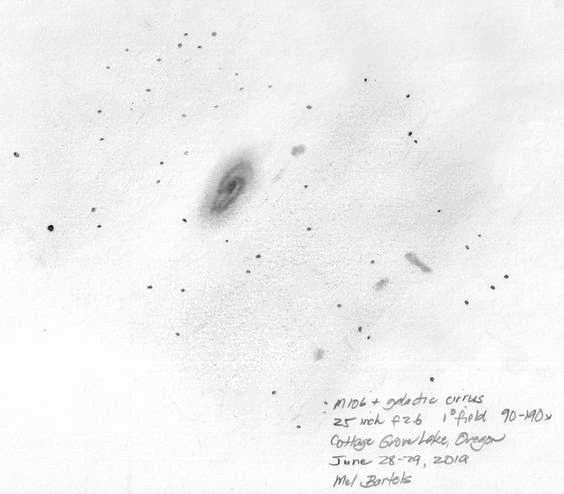
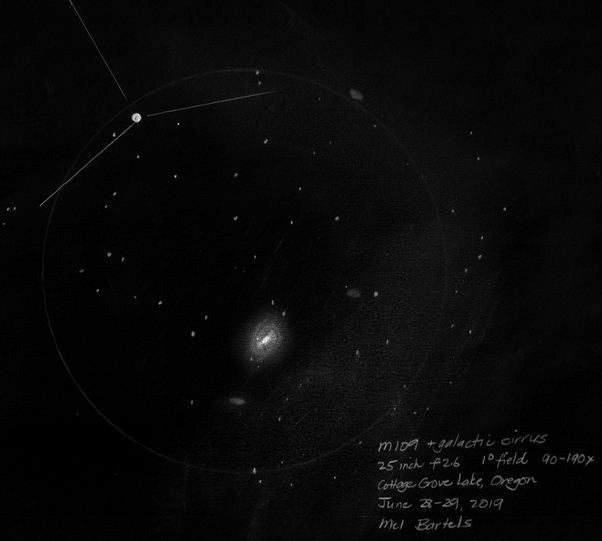
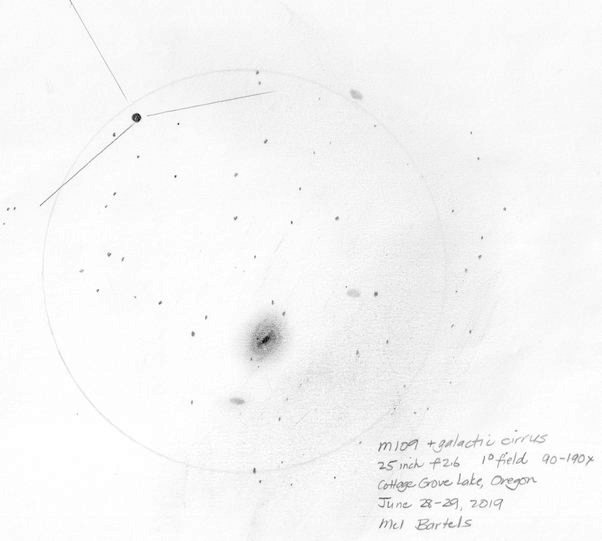
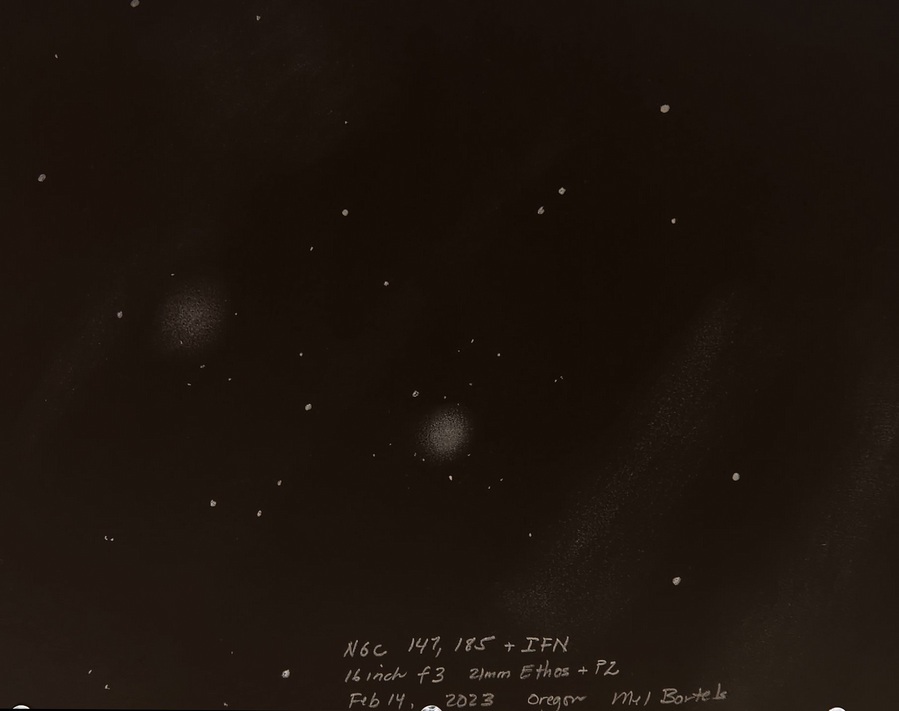
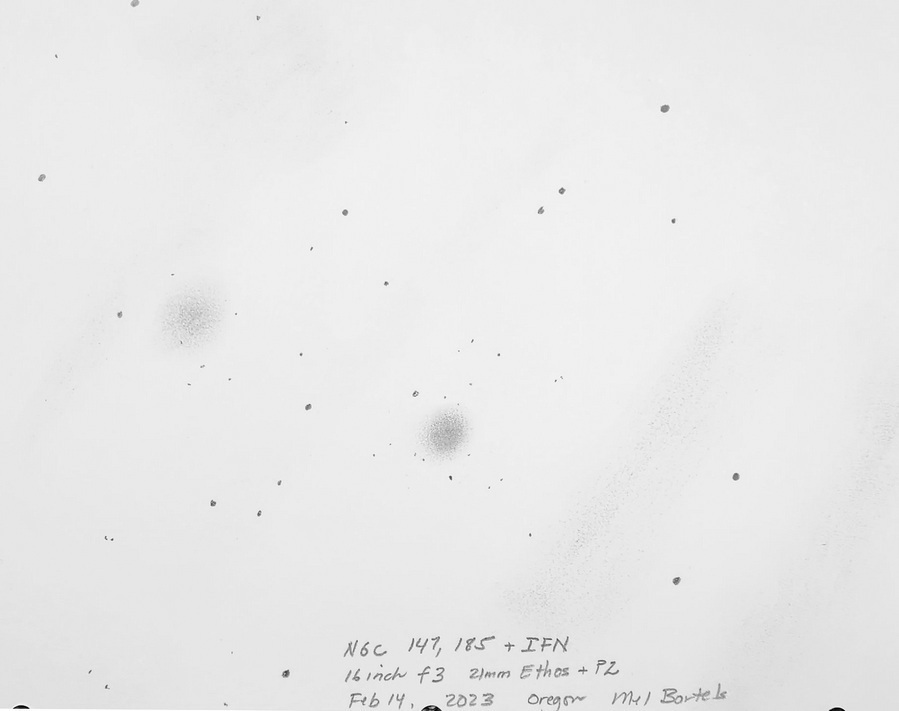
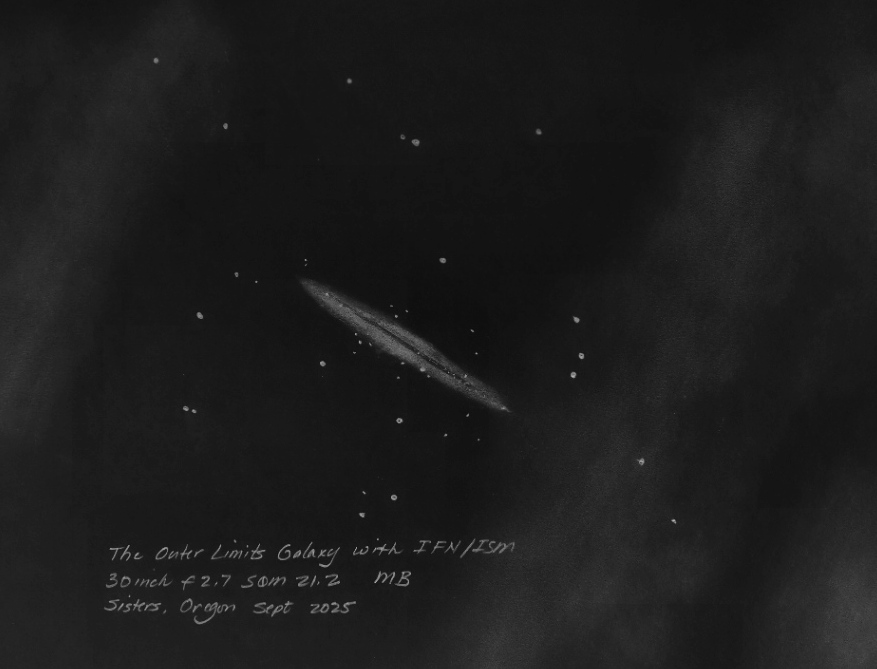
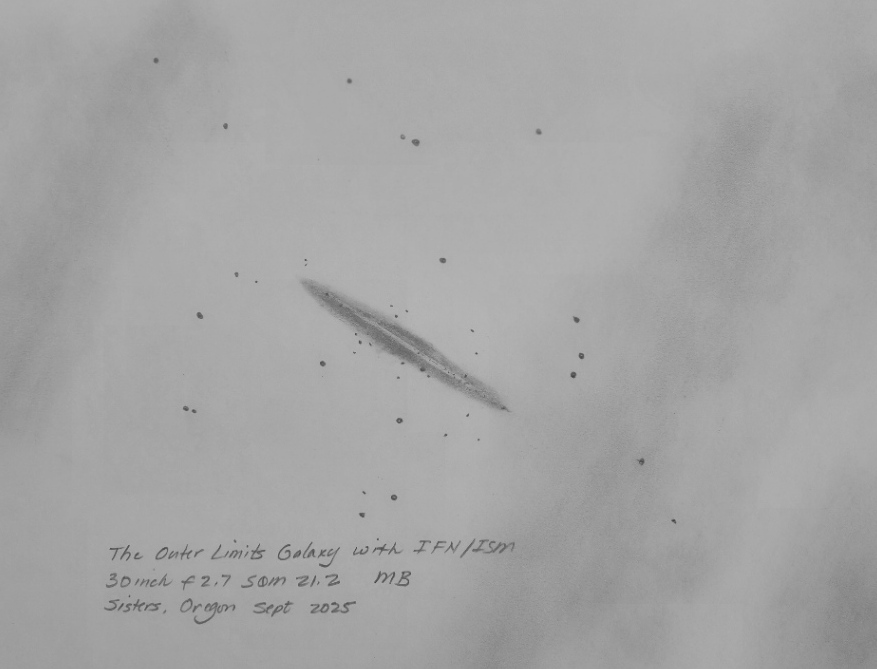
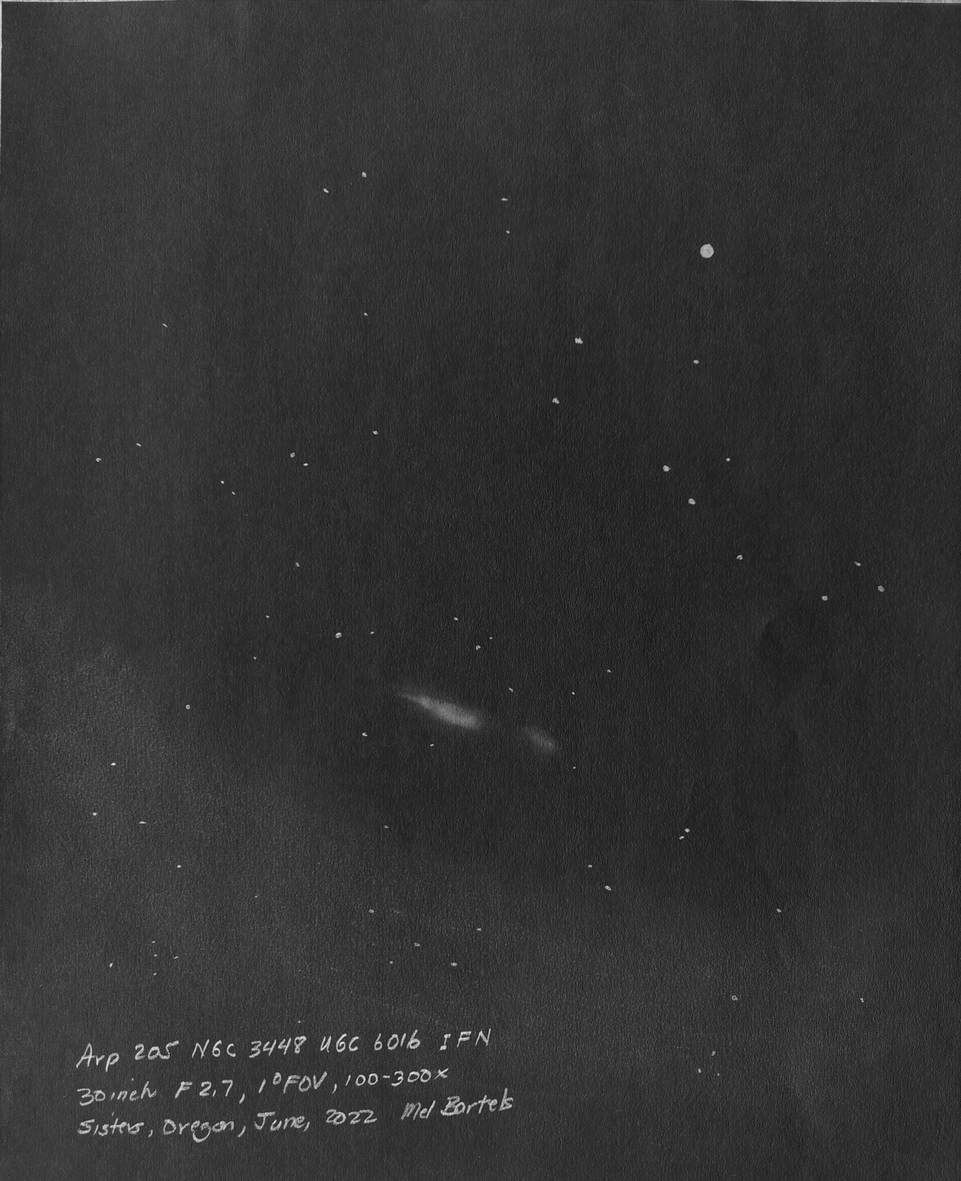
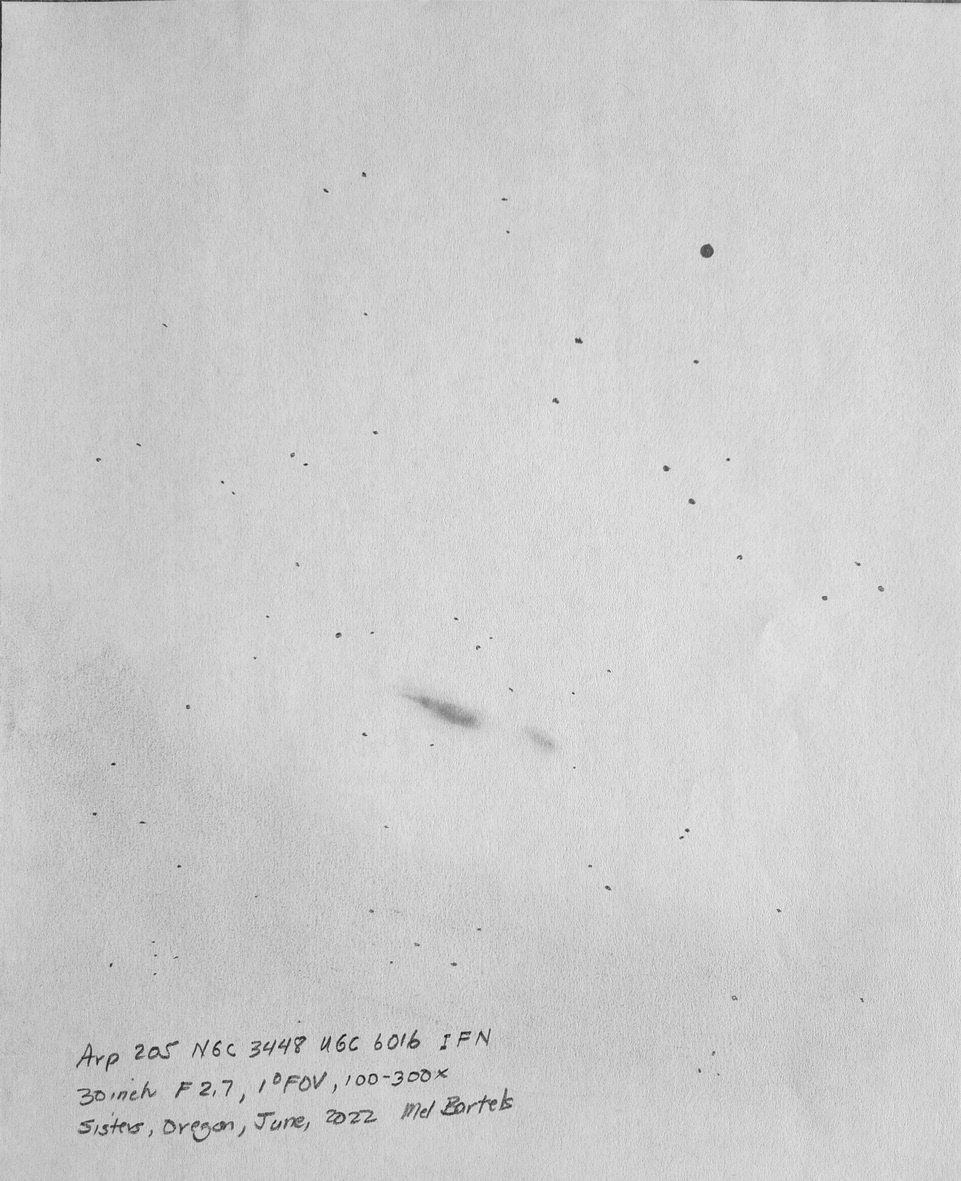
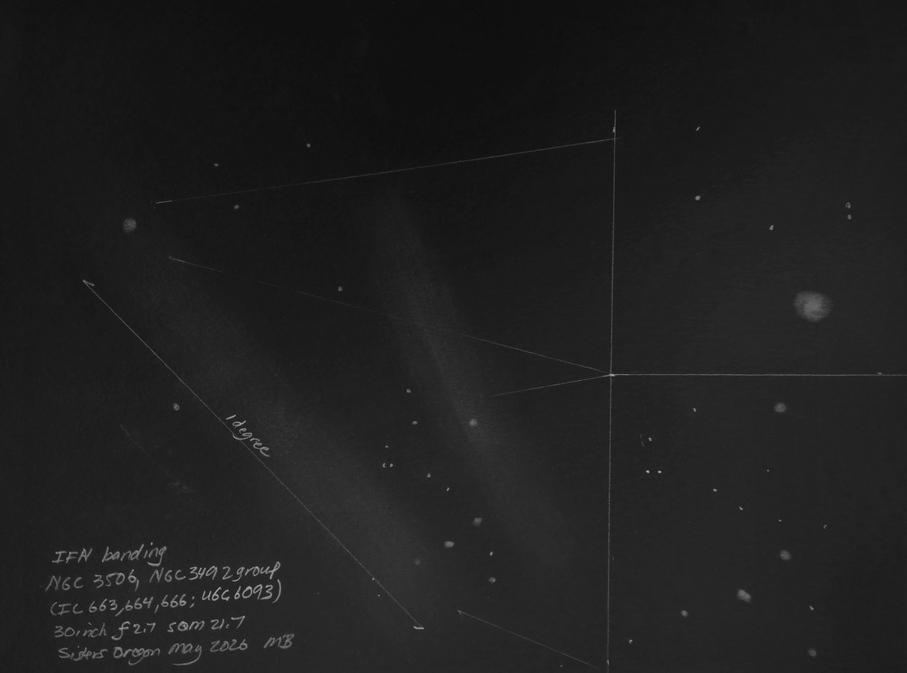
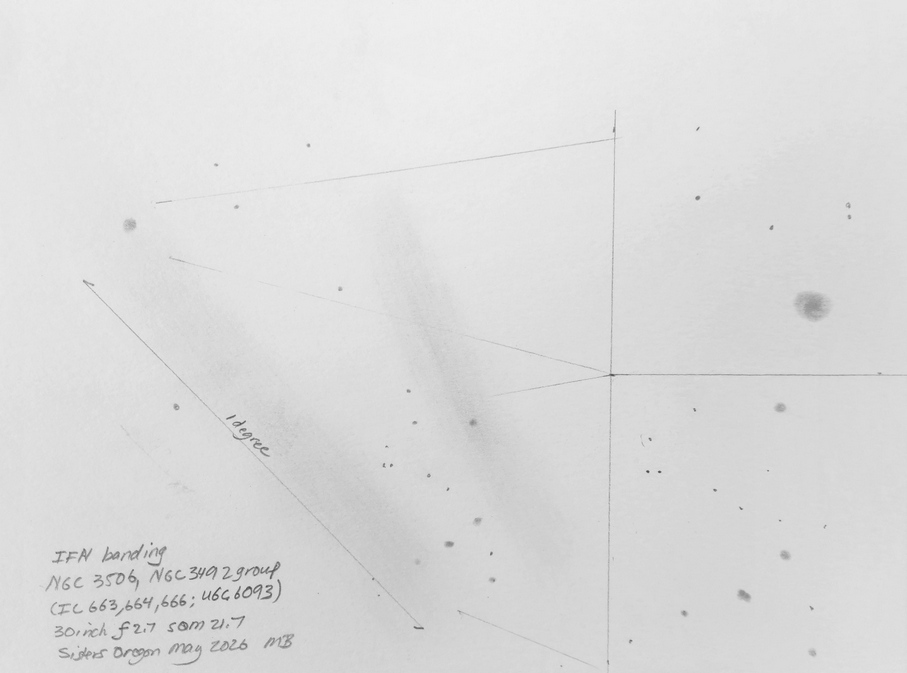


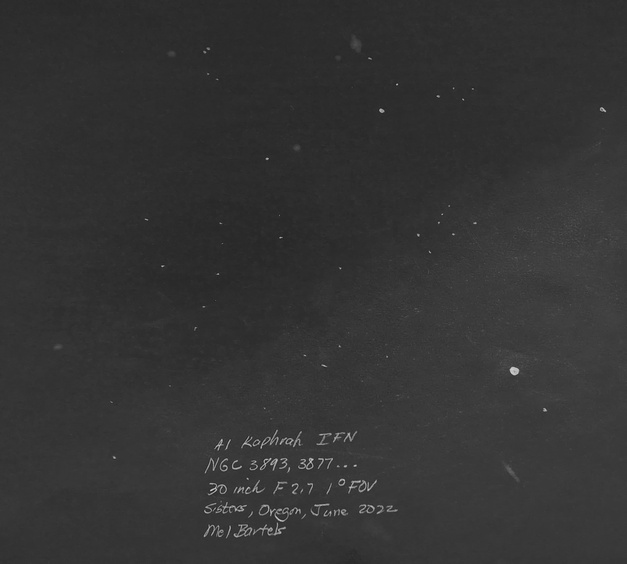
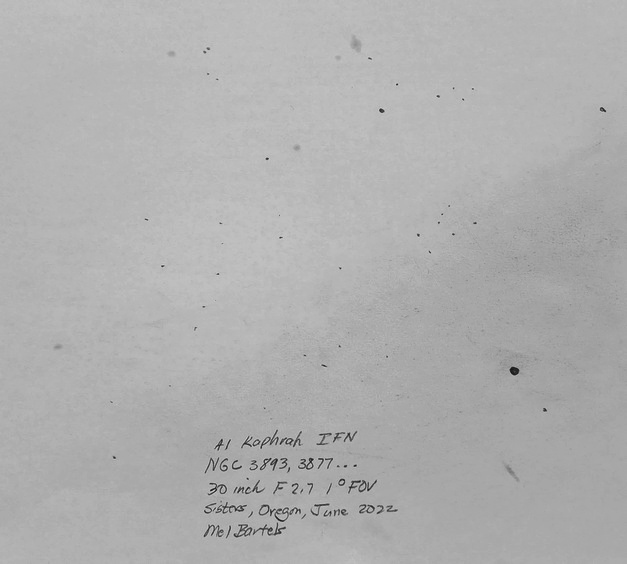


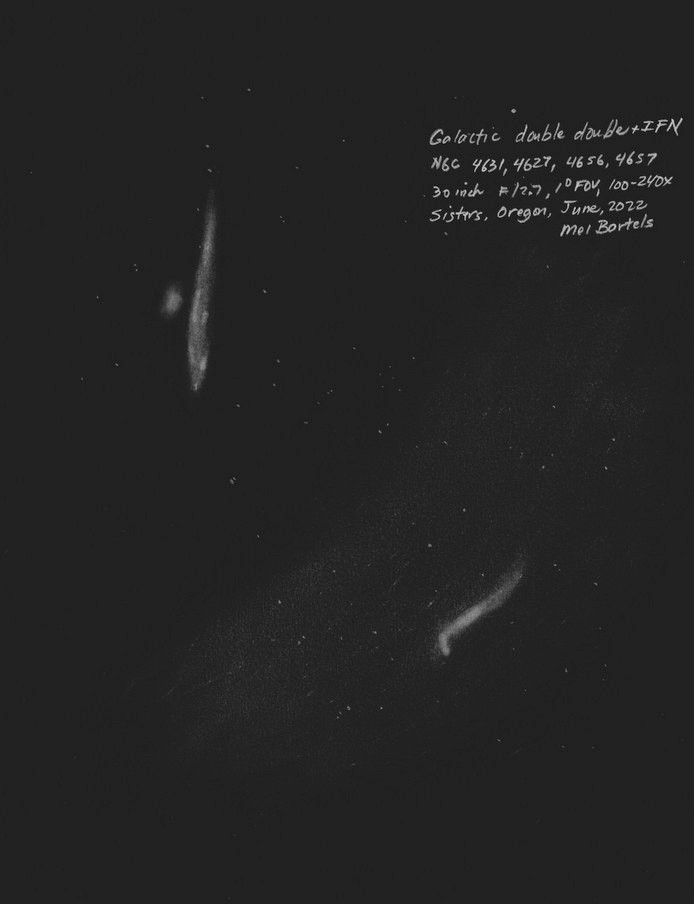
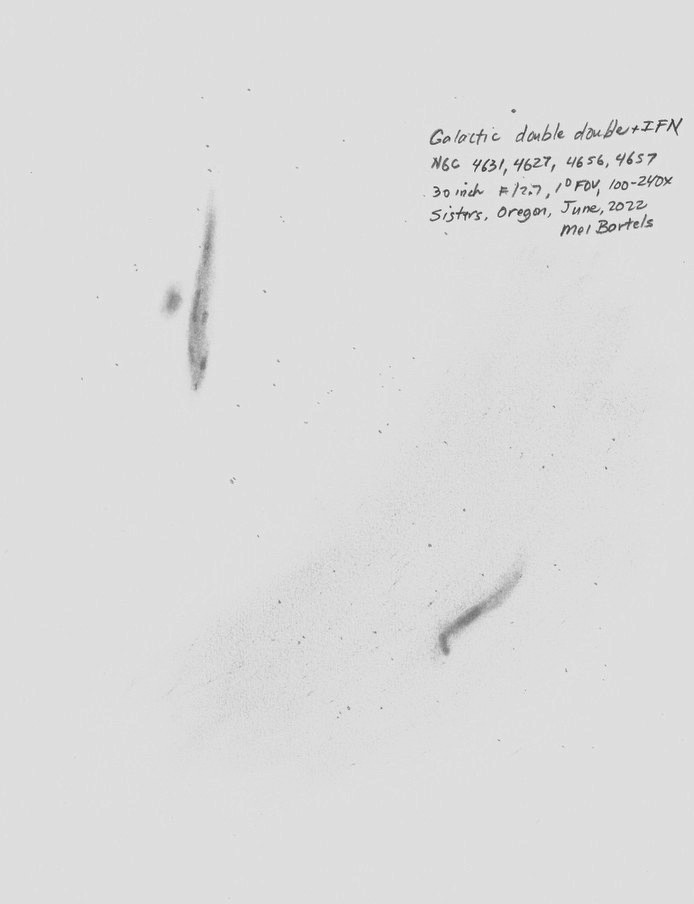
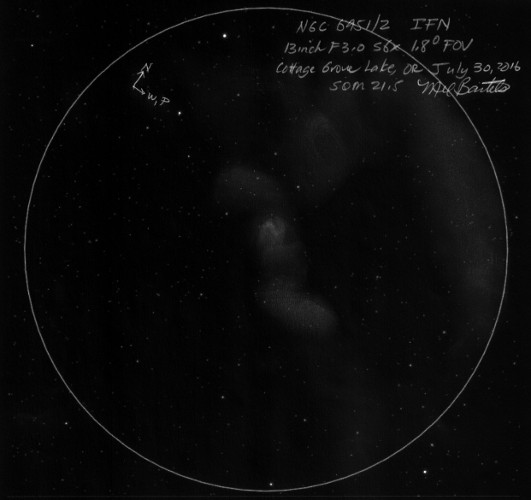
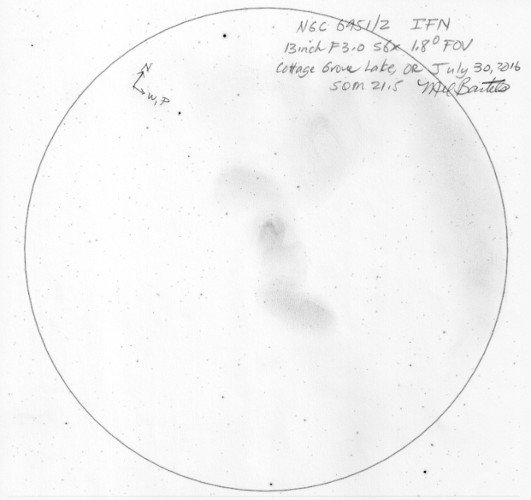
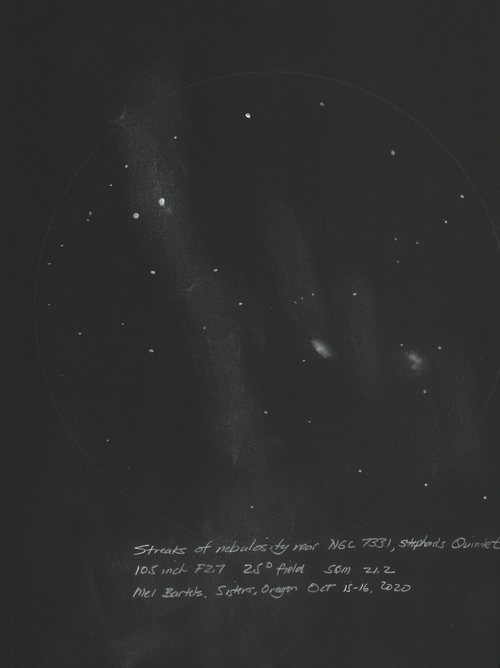
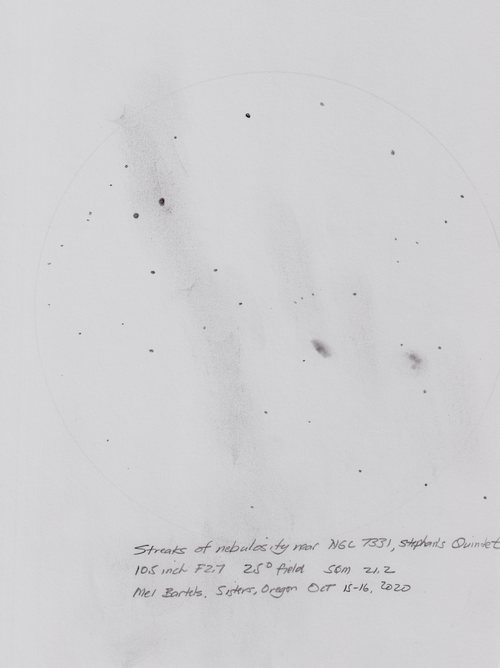


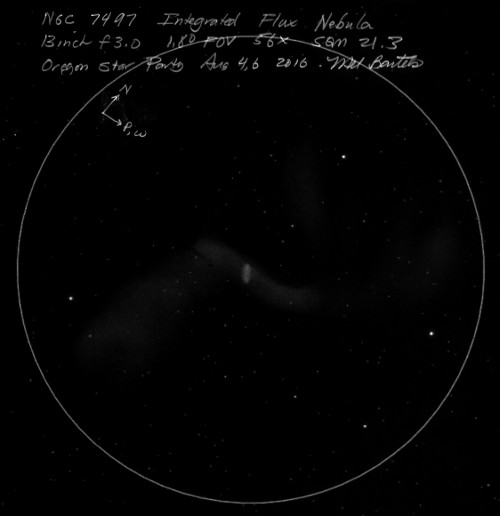
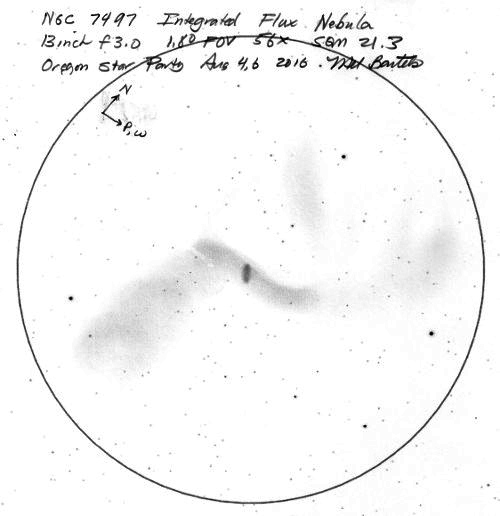
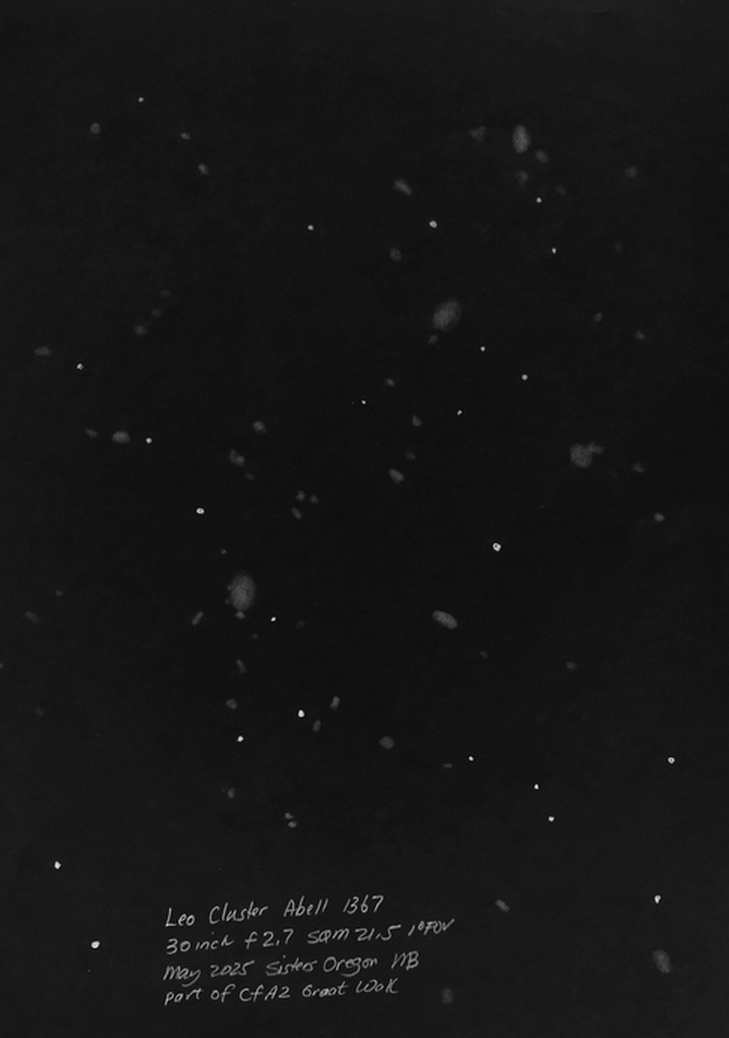
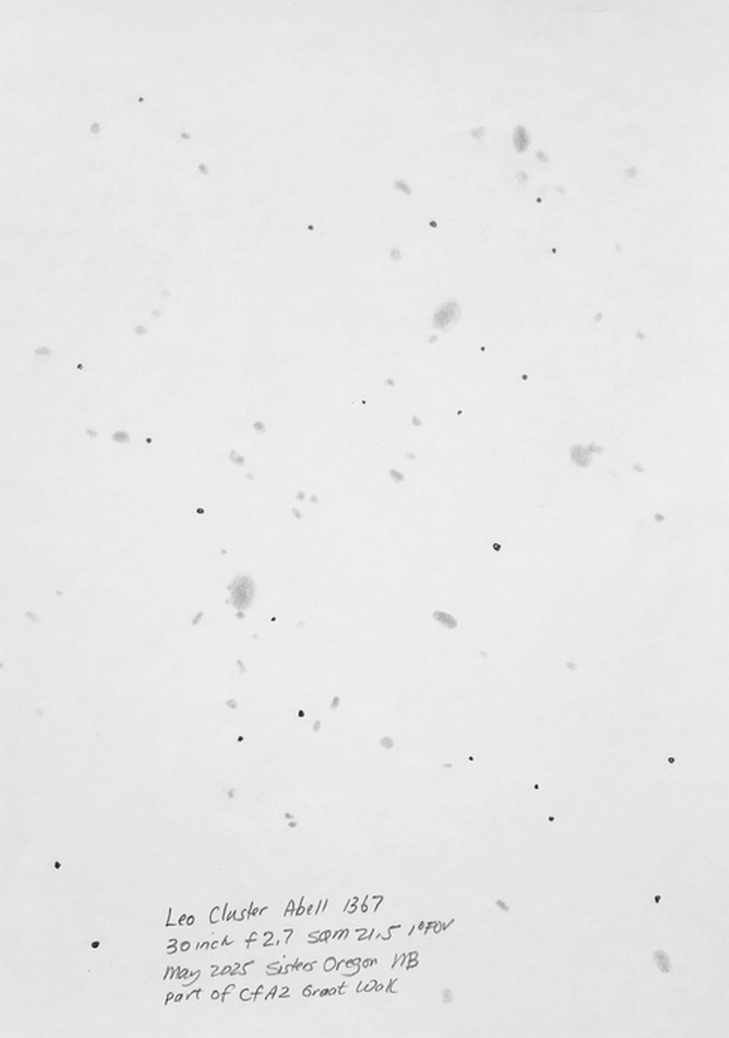
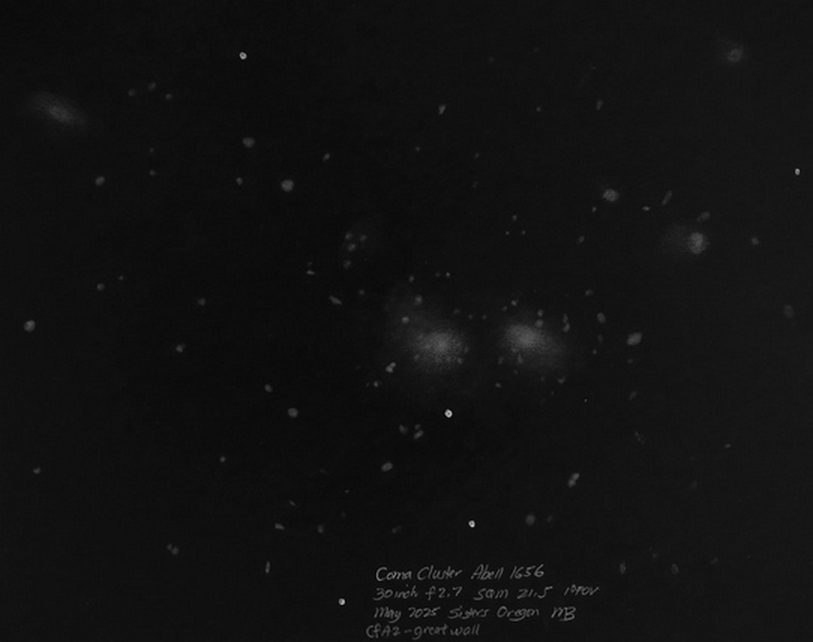
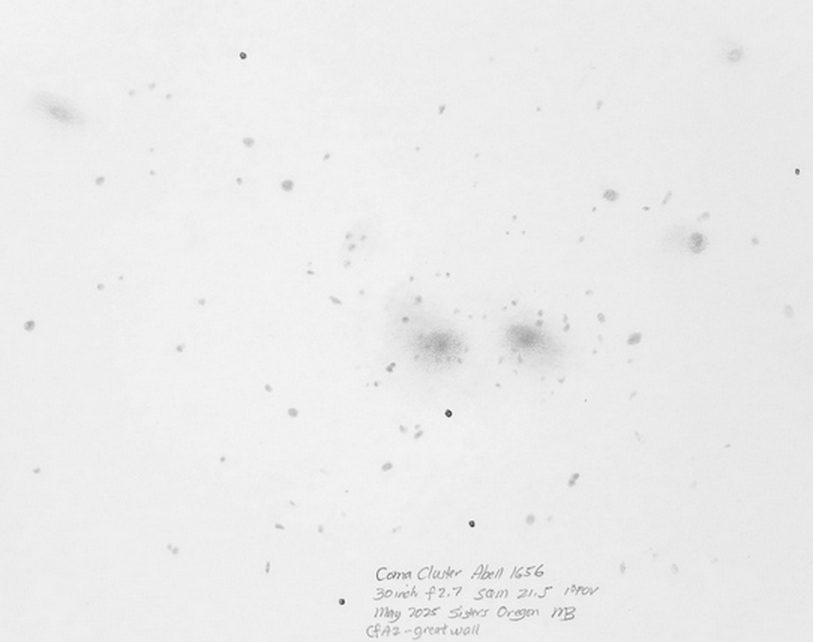
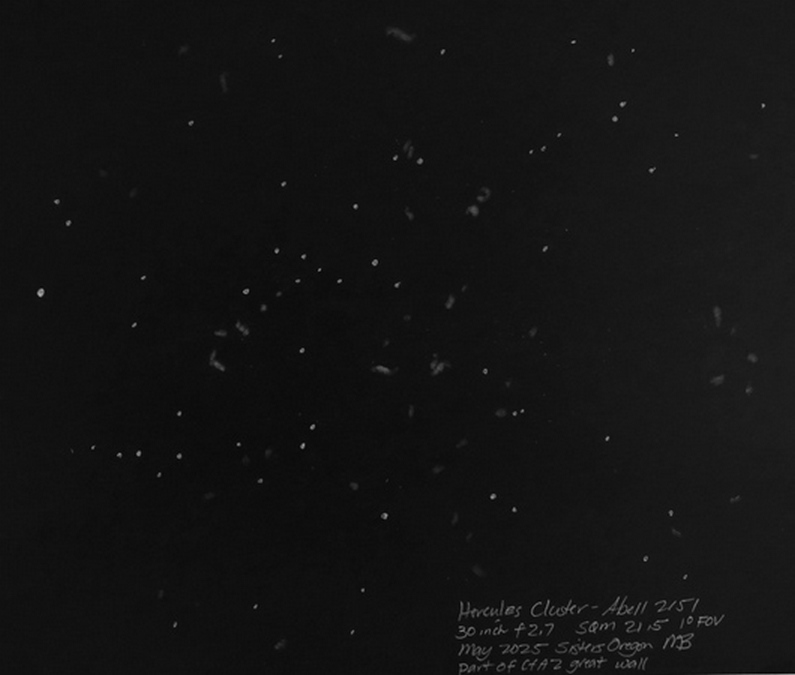
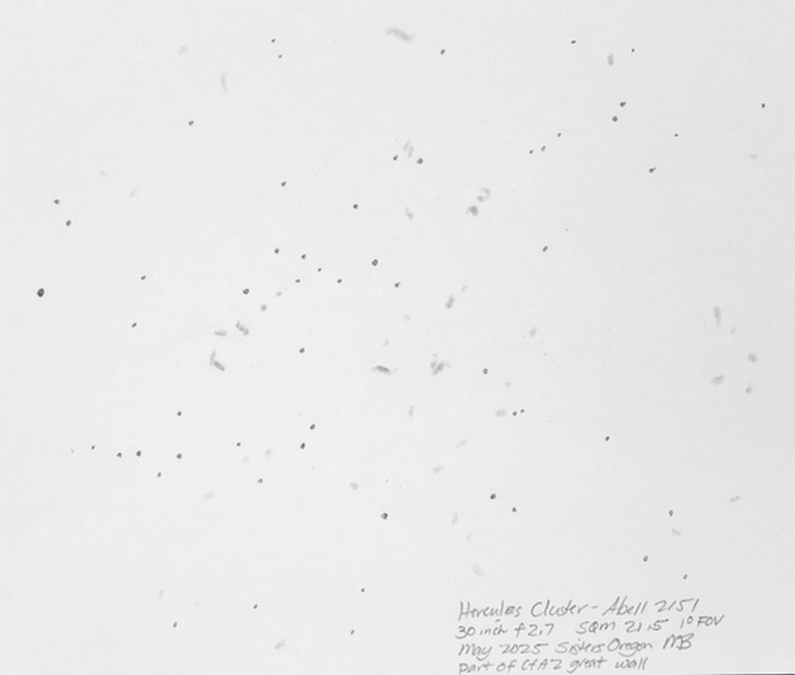
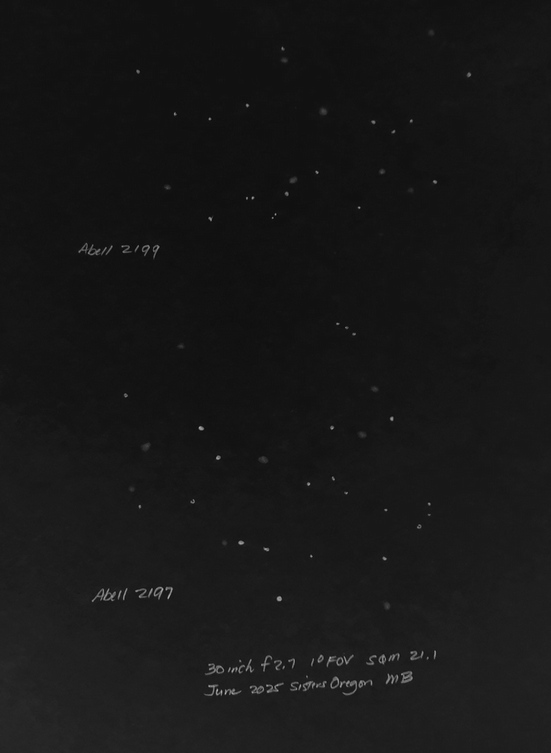

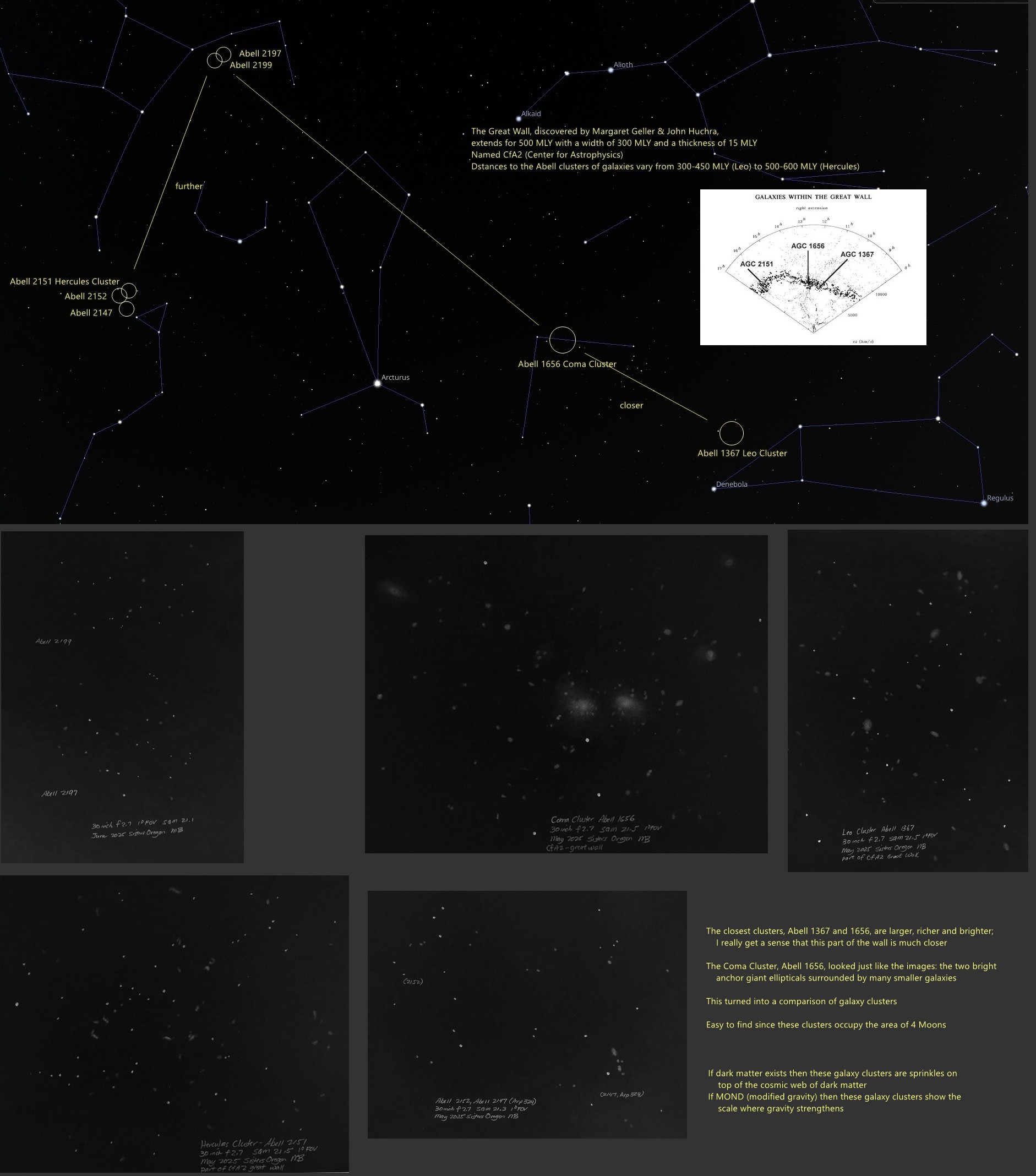
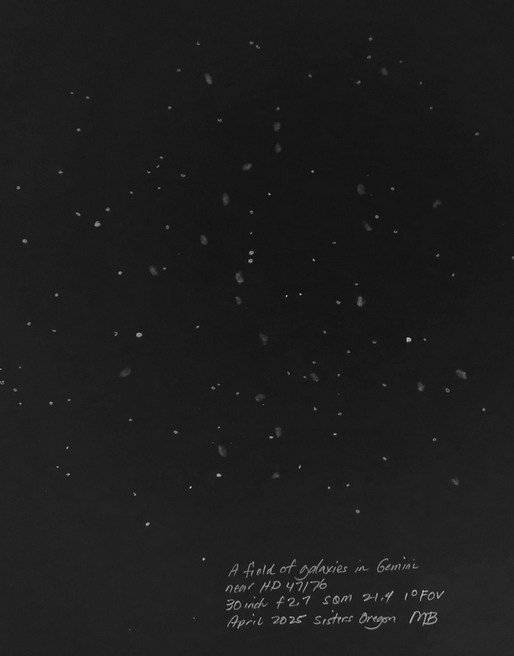
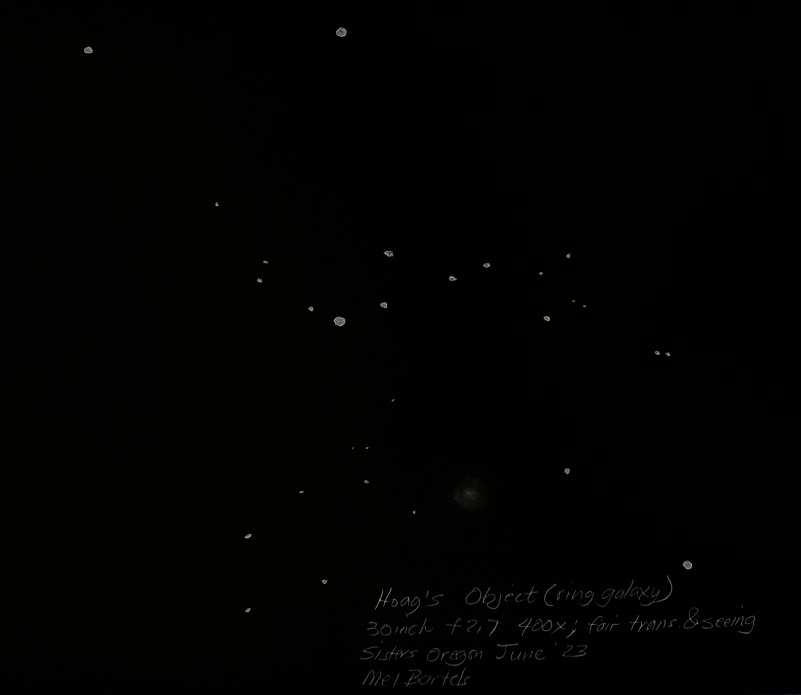
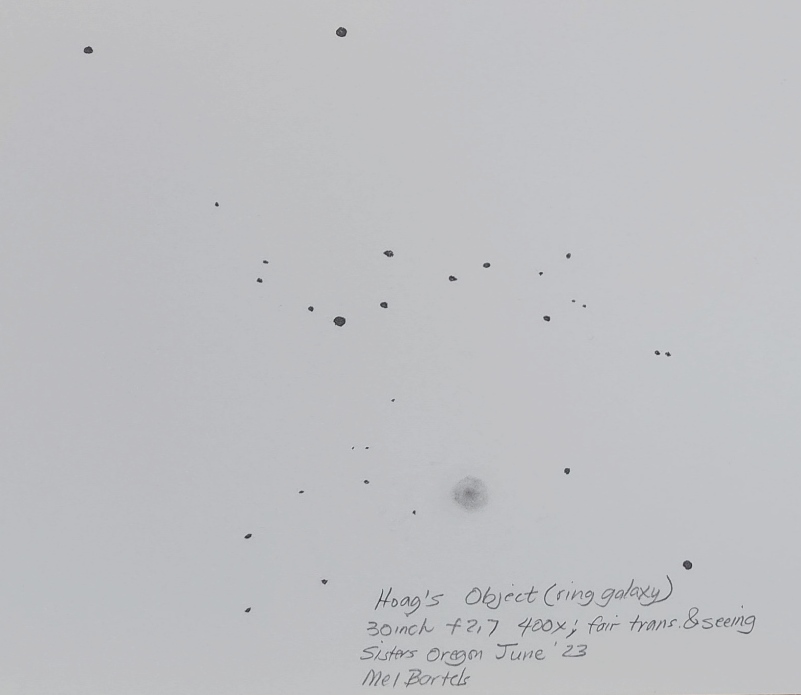
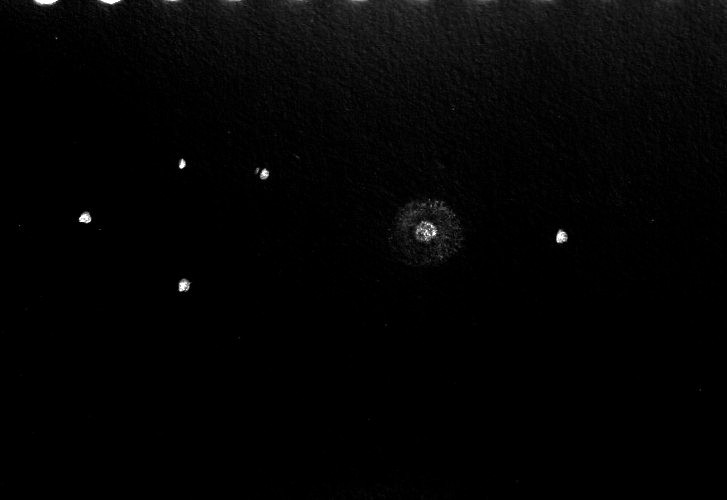
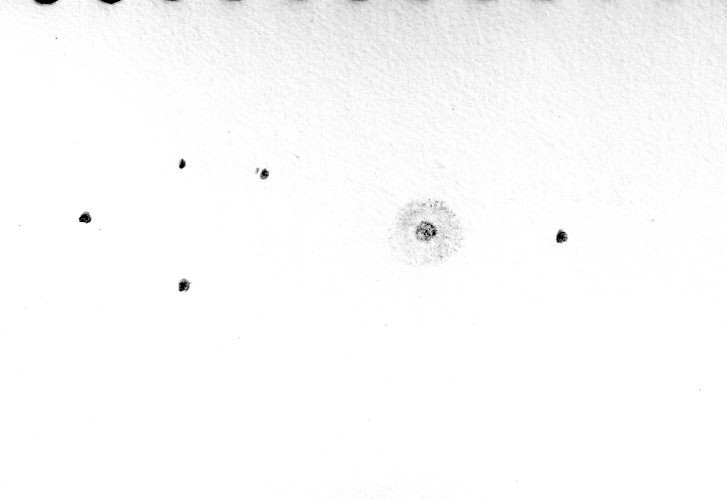
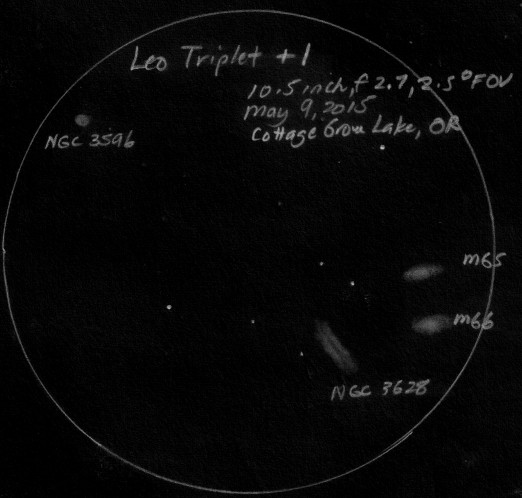
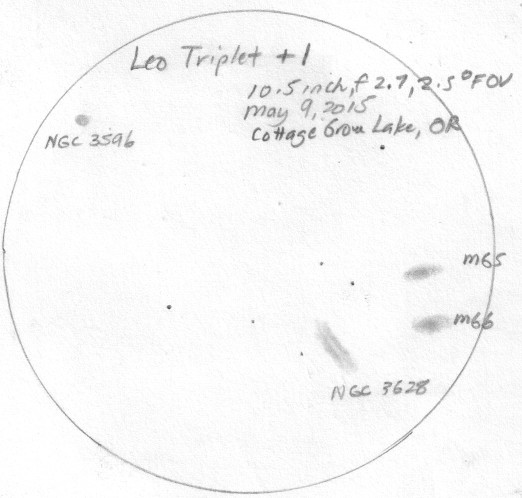
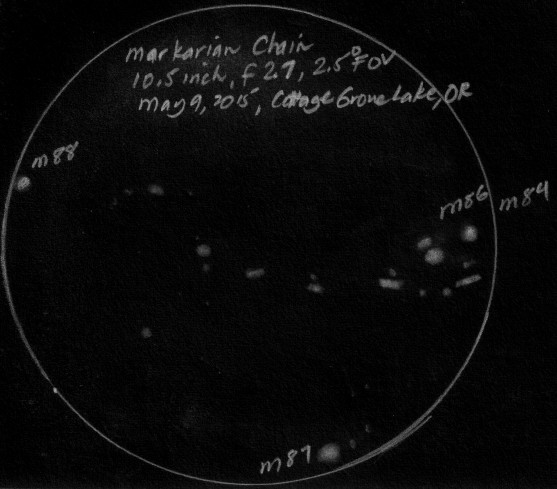
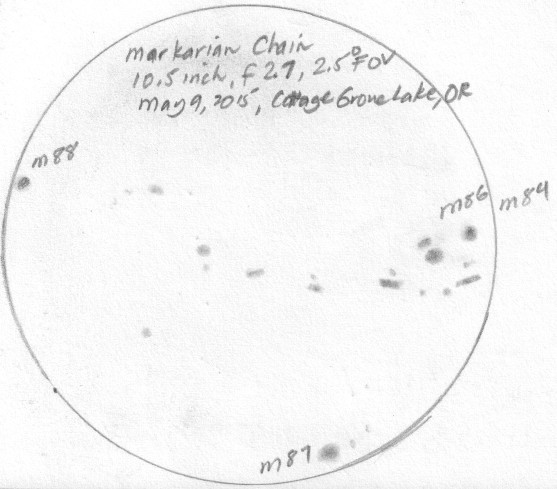
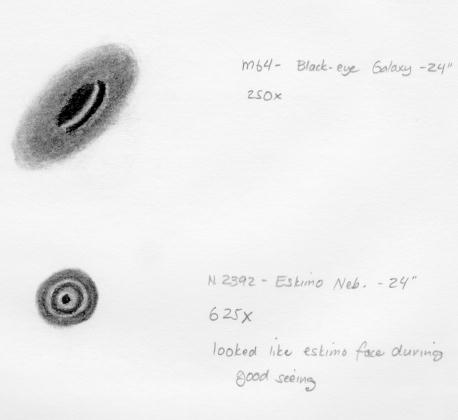
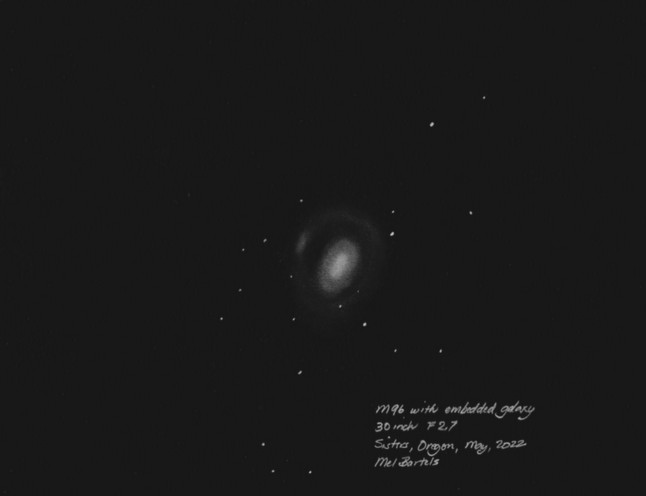
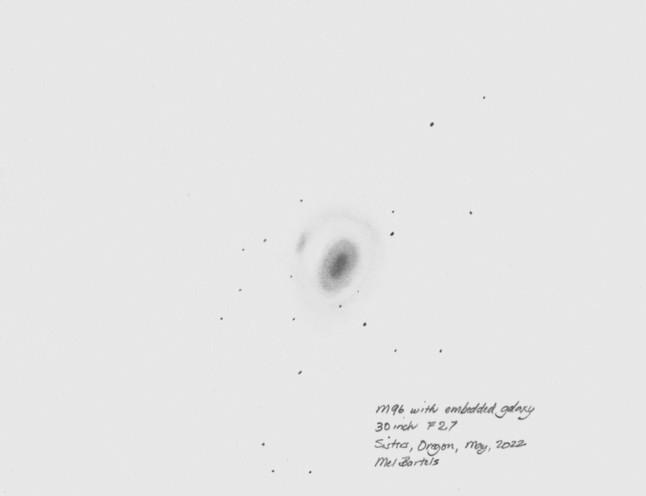
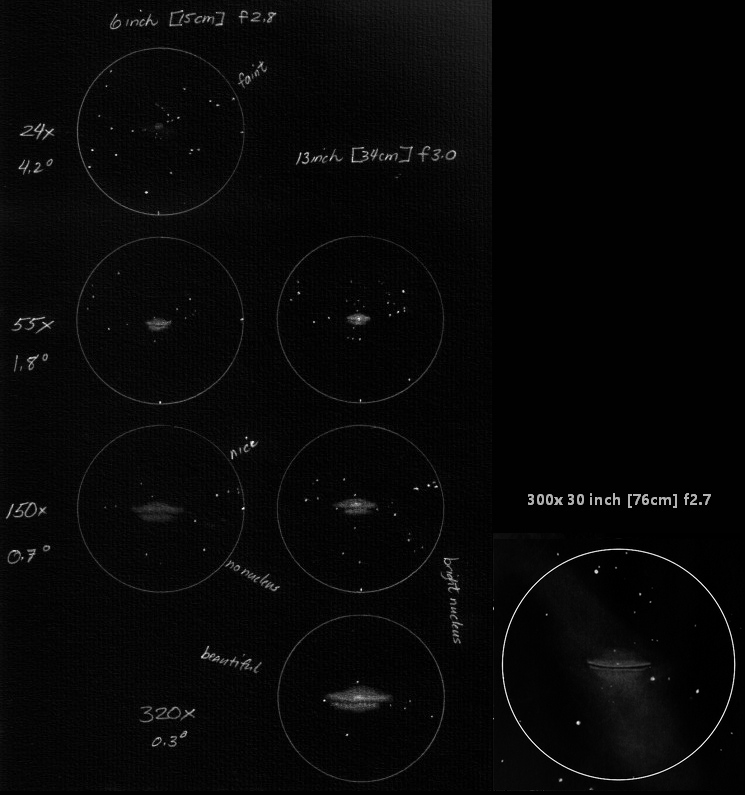
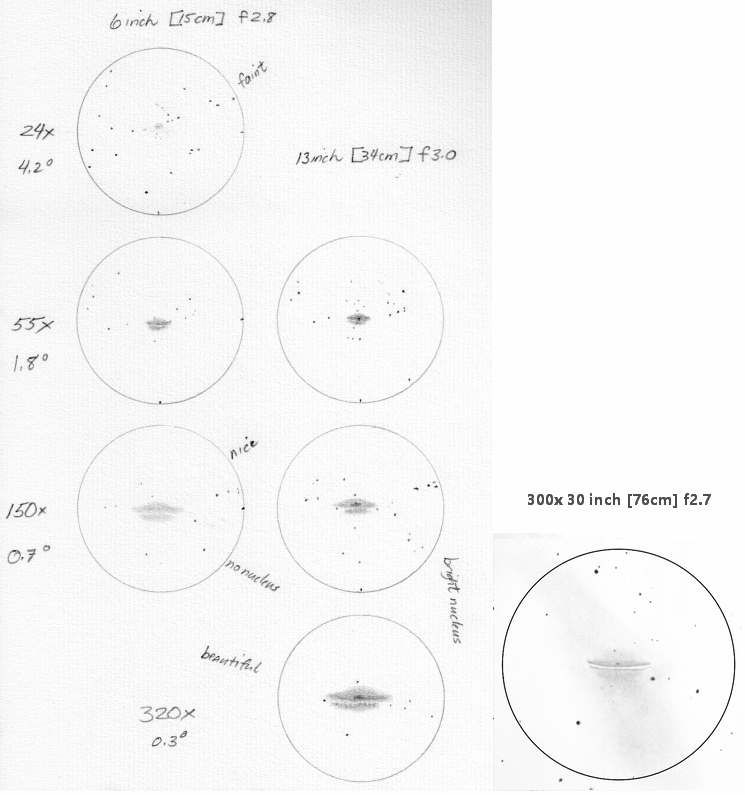
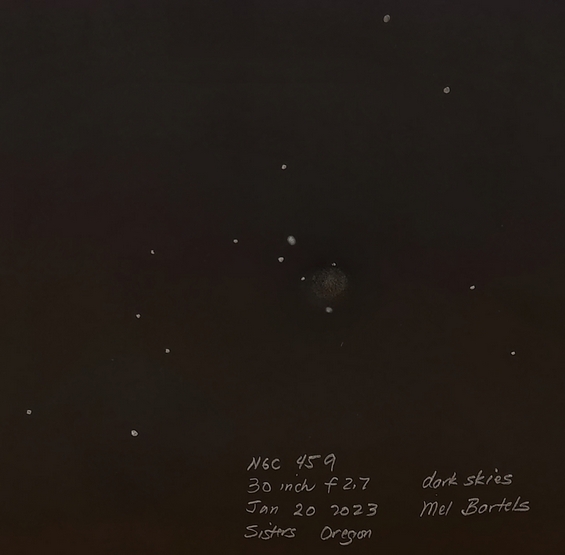
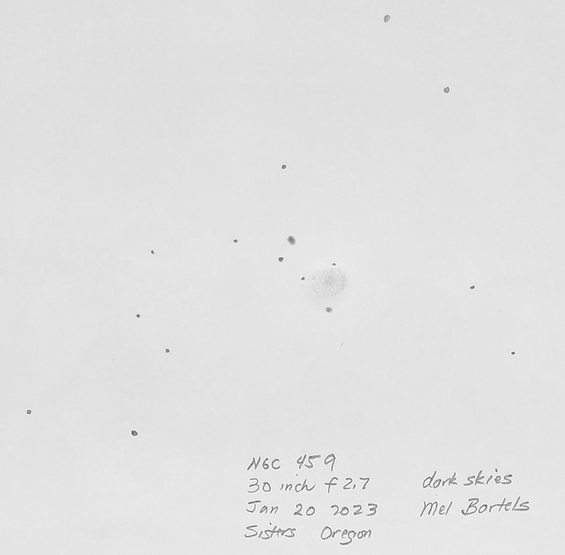
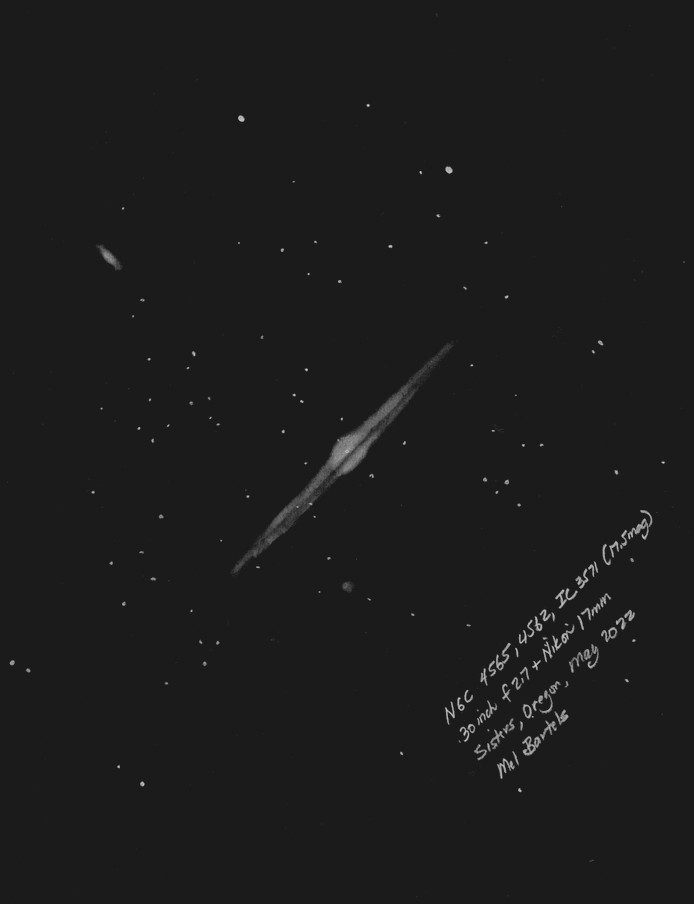
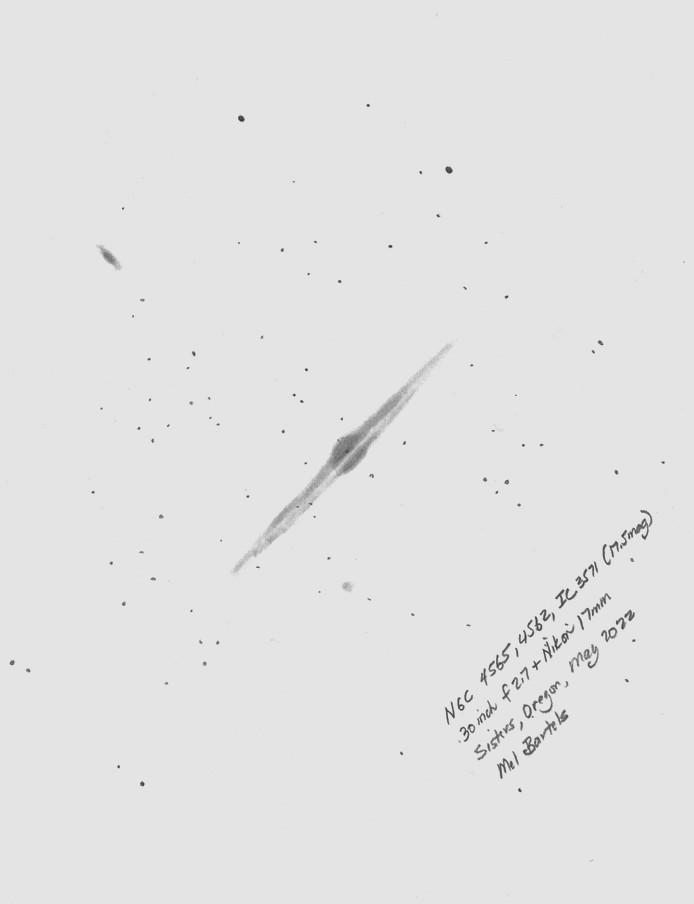
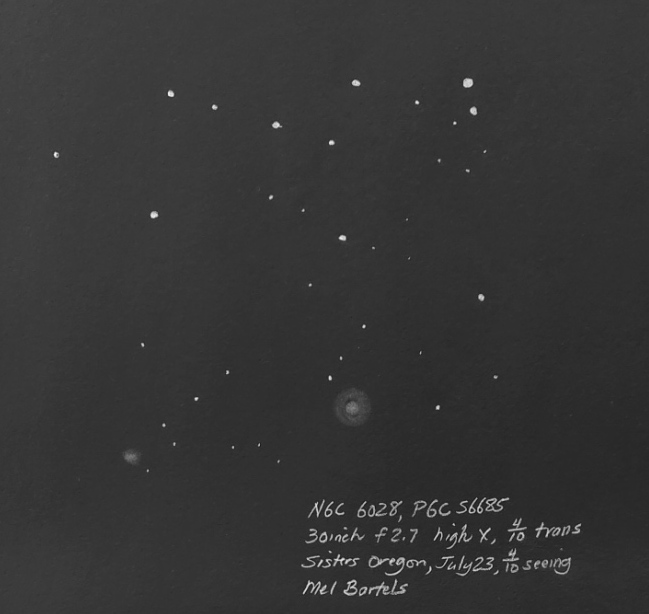
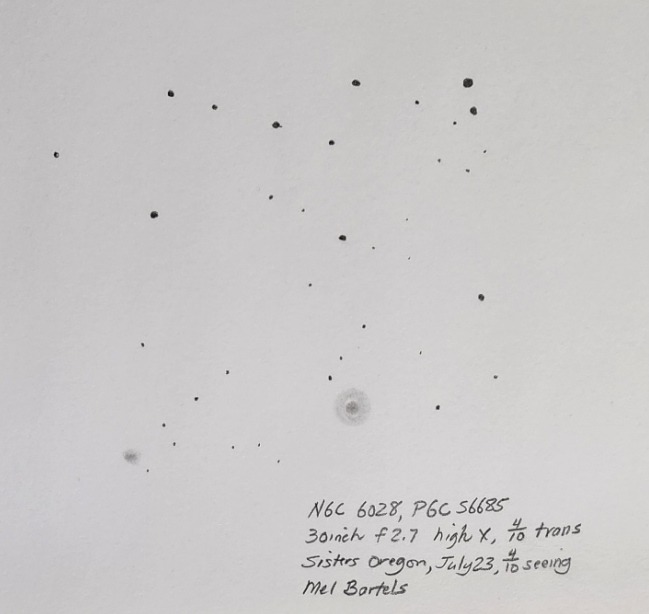
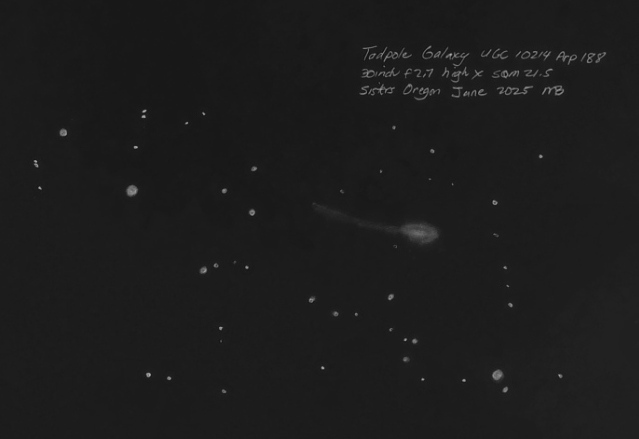
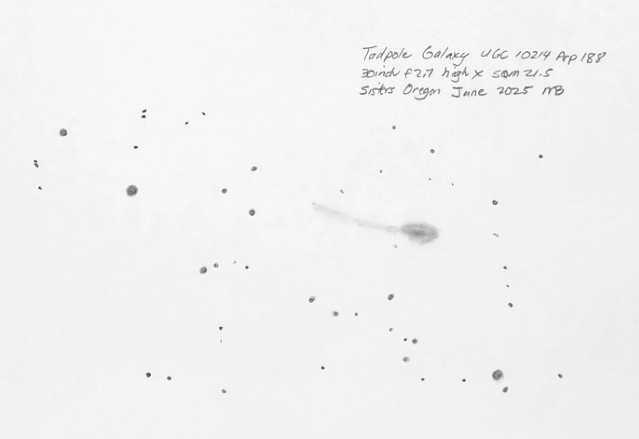
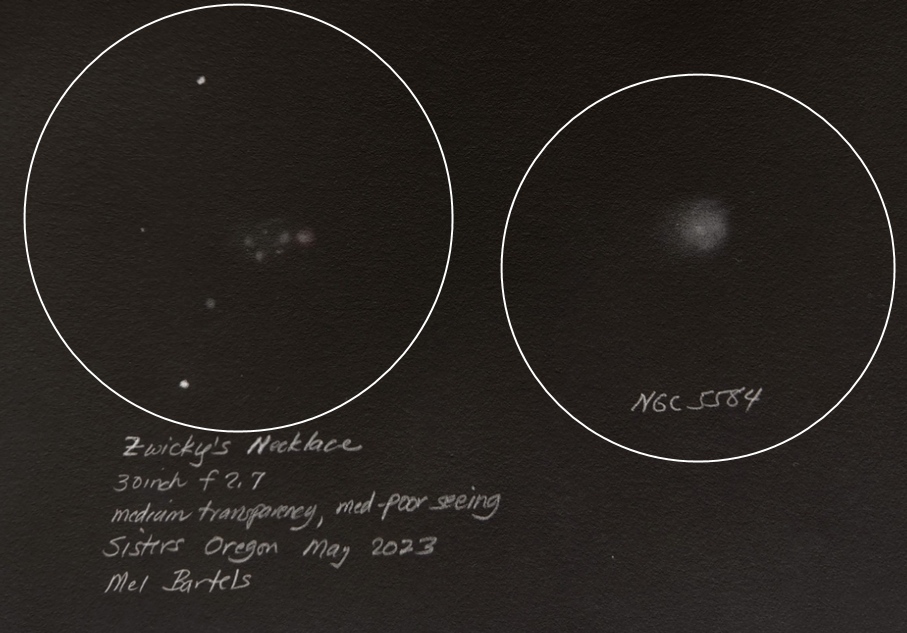
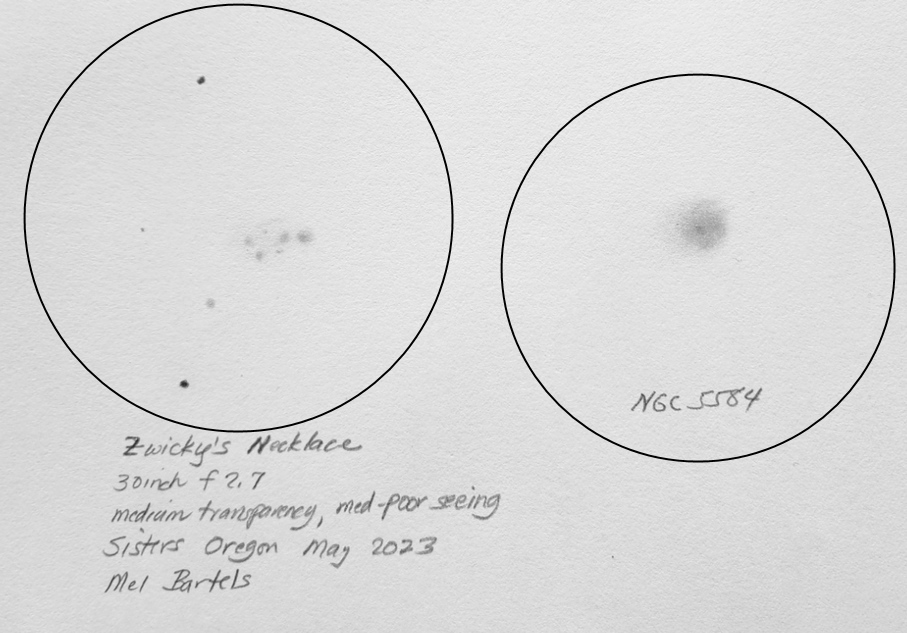

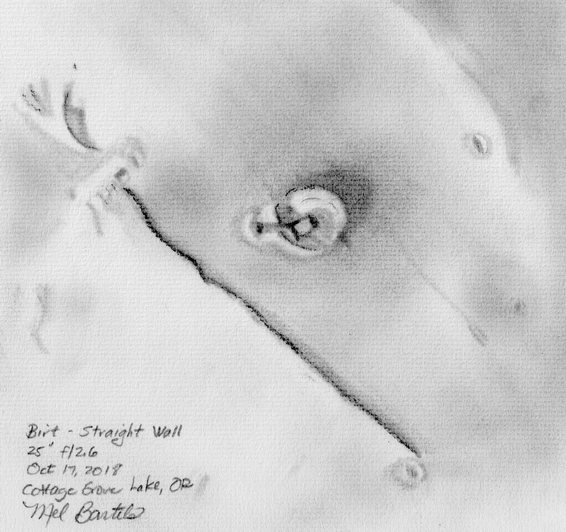
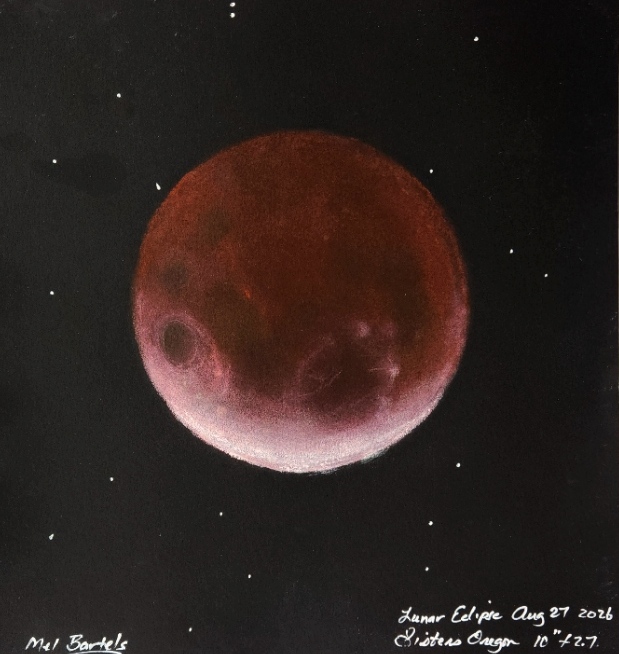
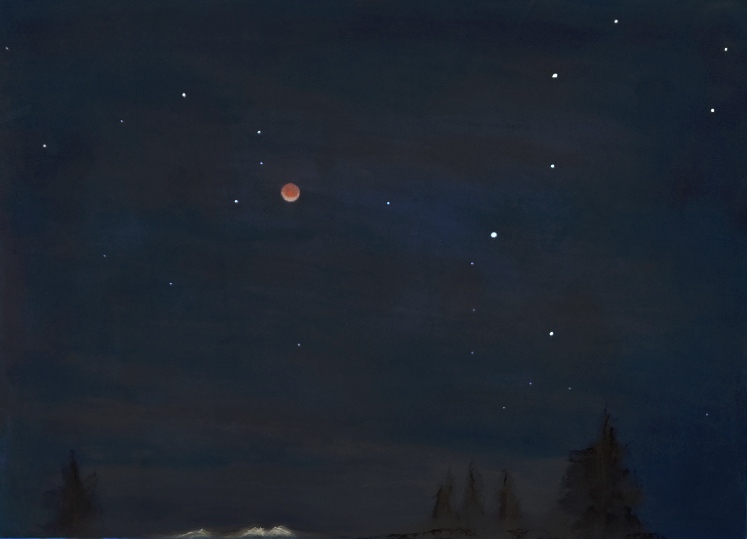
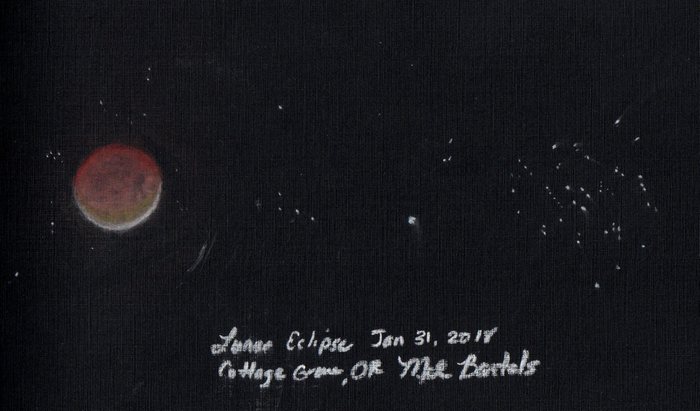
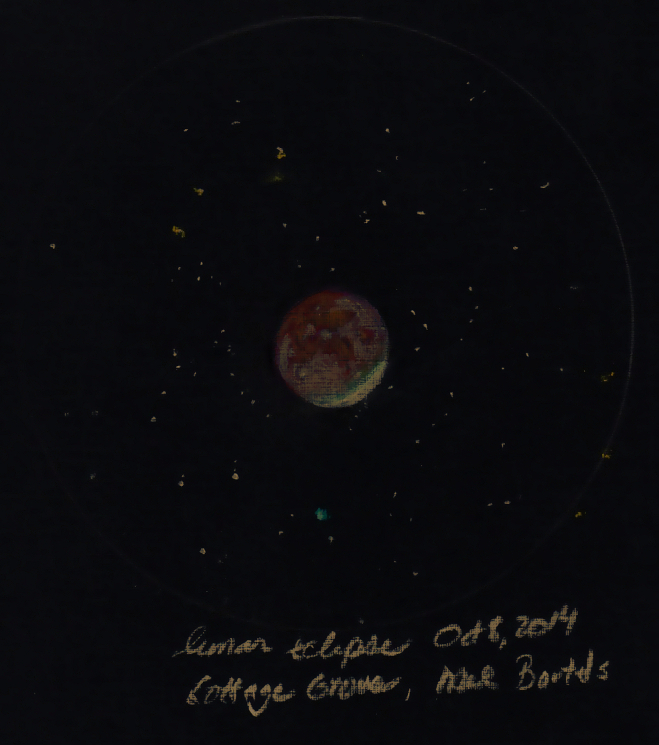
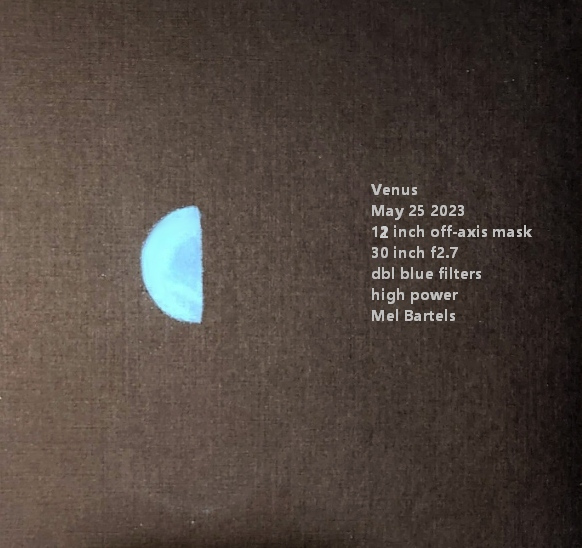



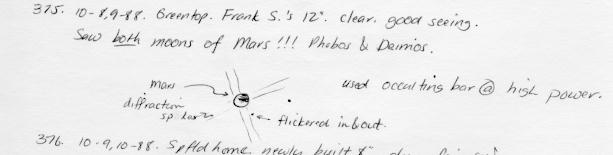

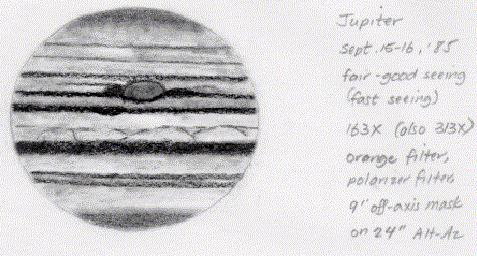

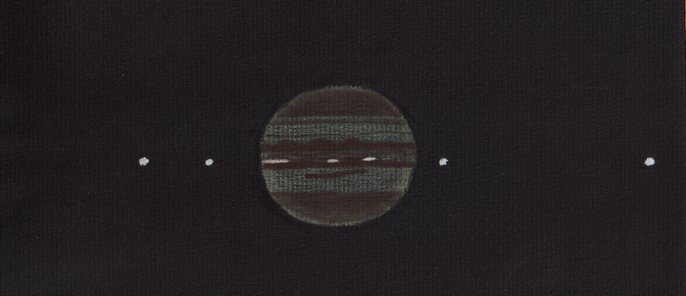


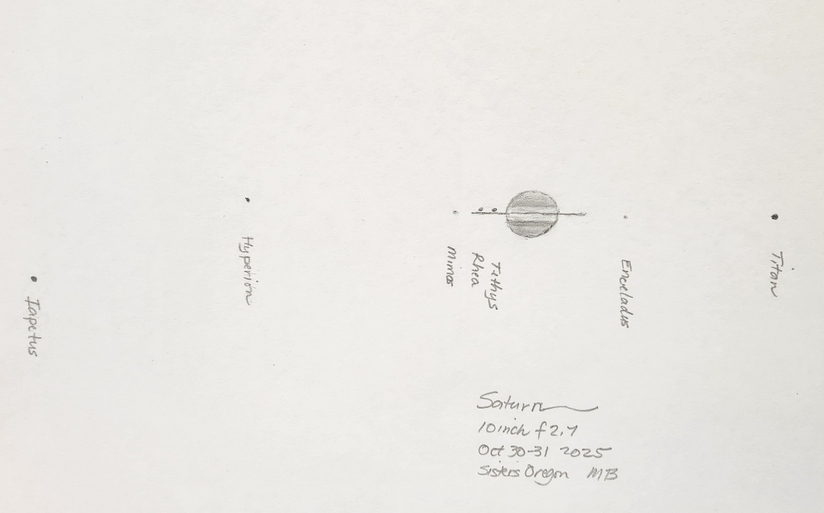
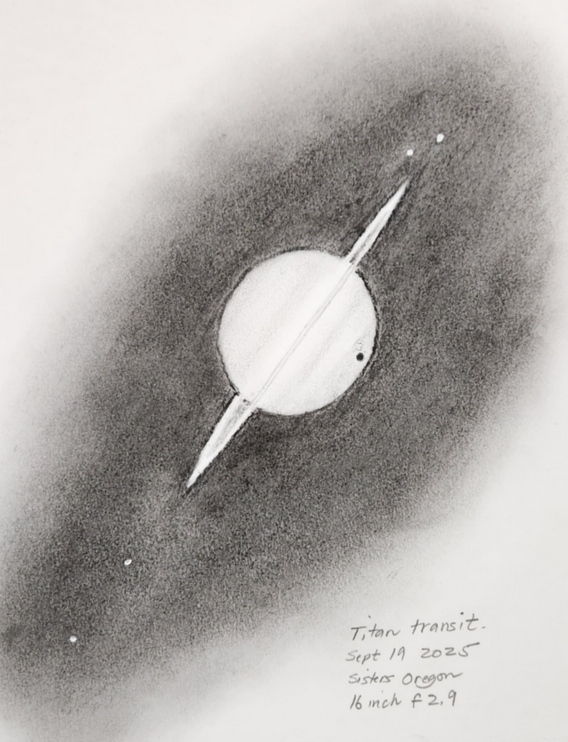
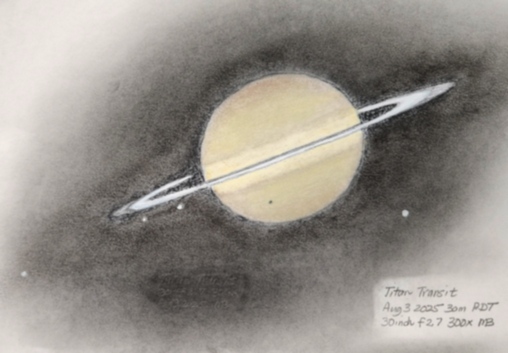

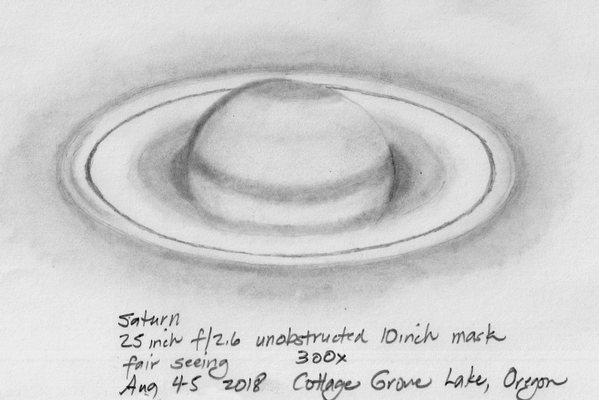





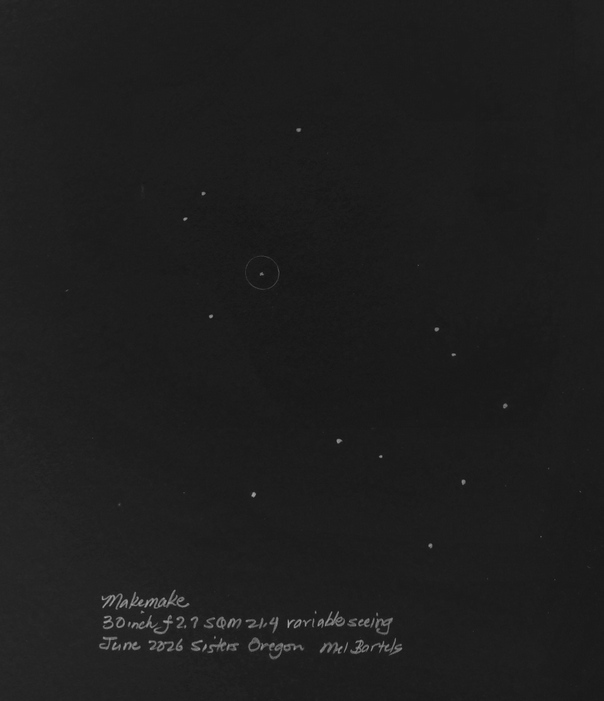
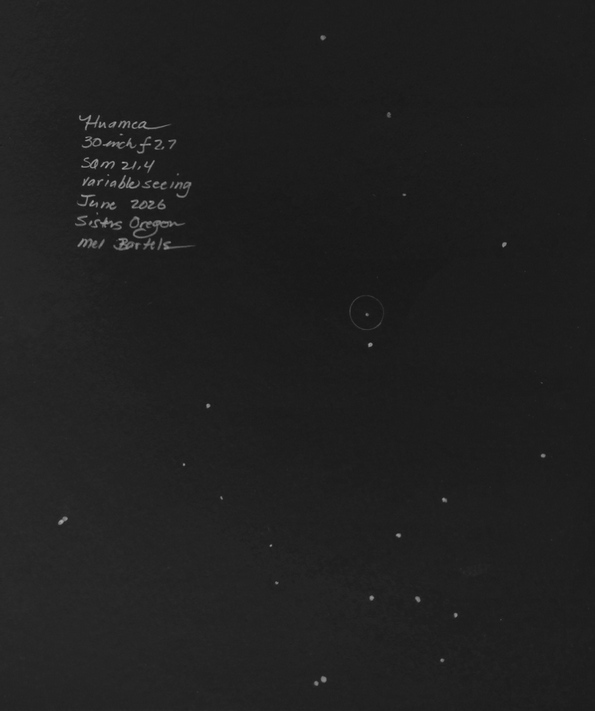
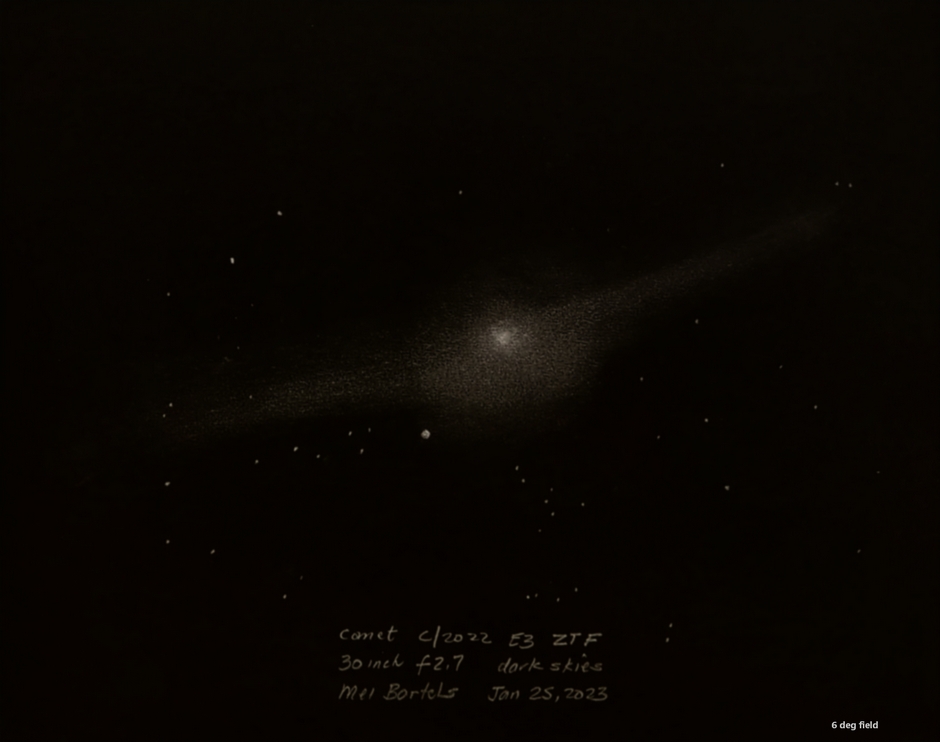
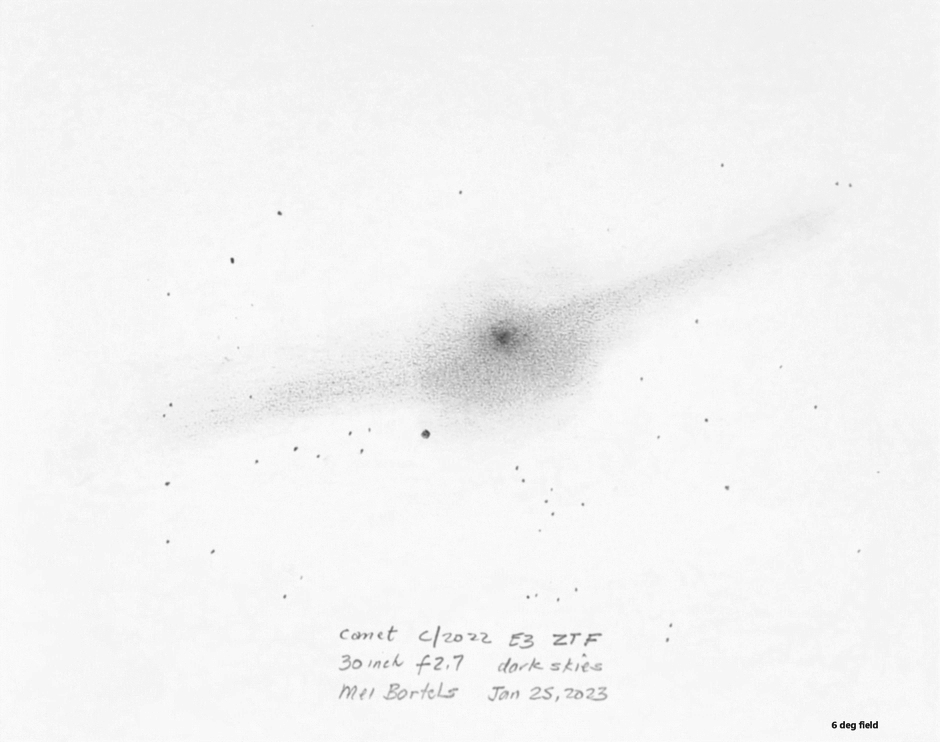
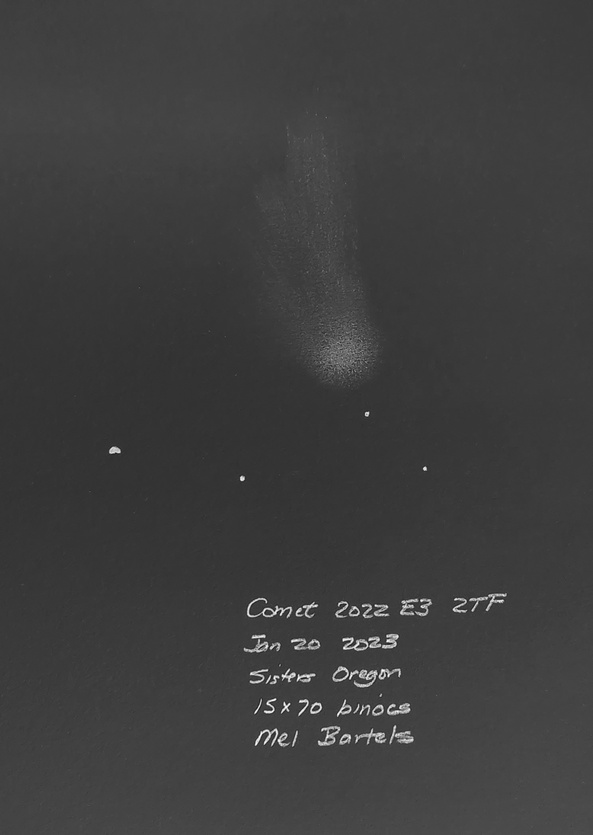
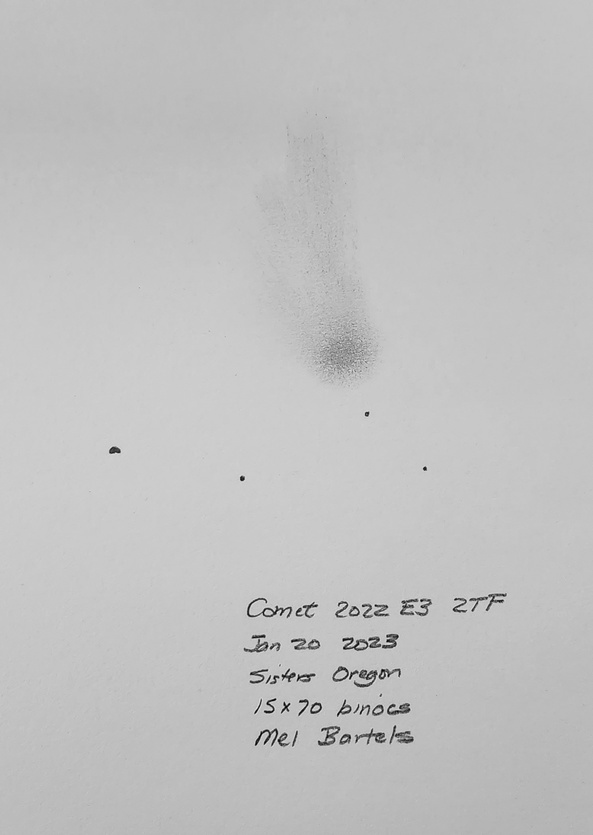
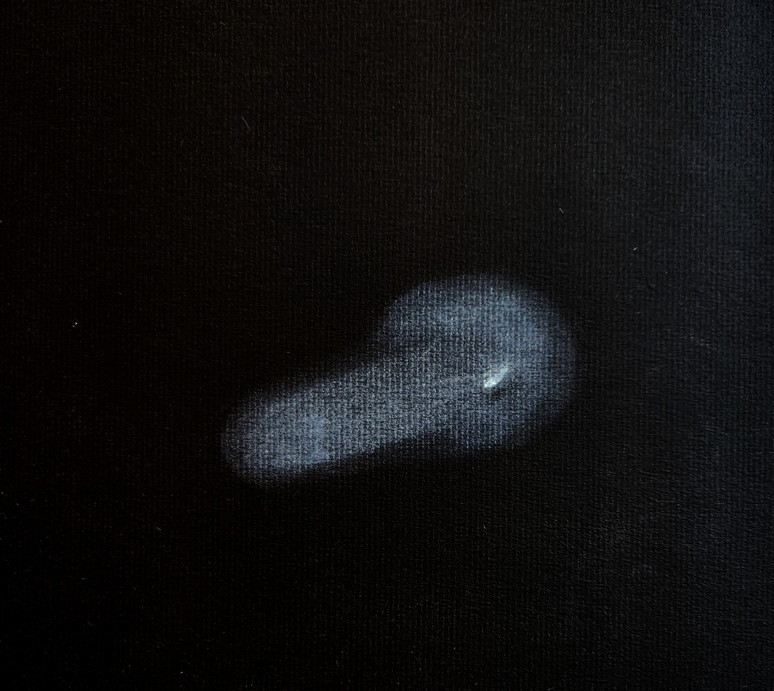
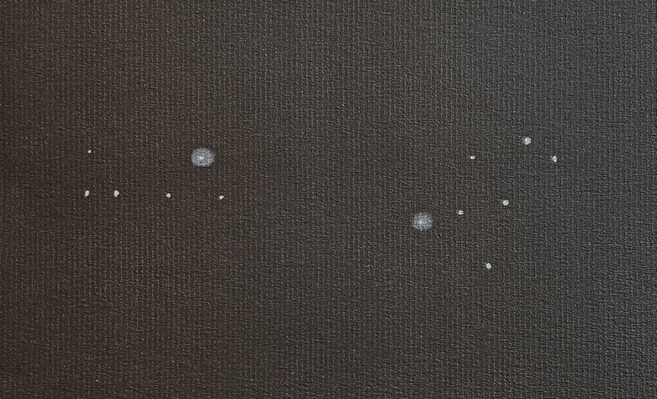
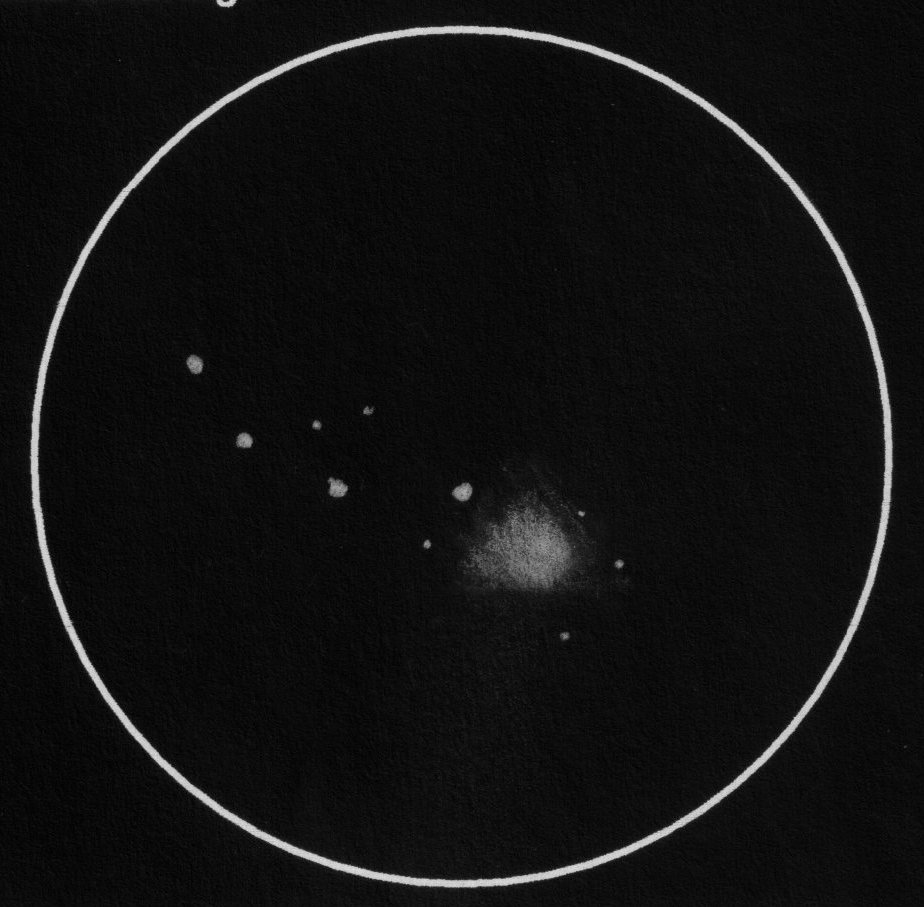
.
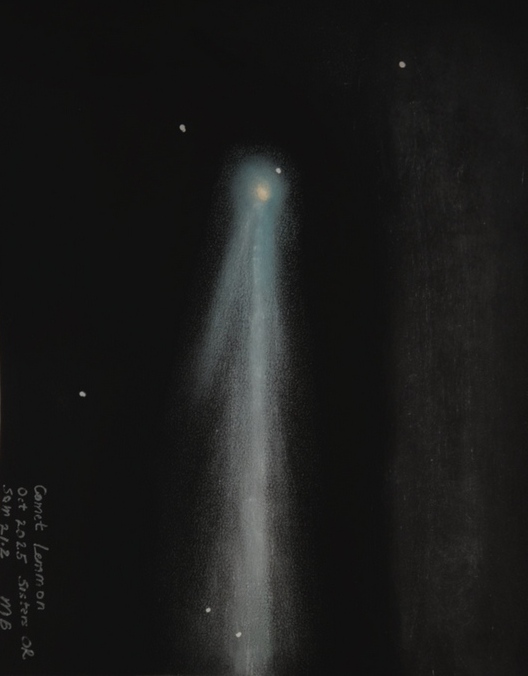
.
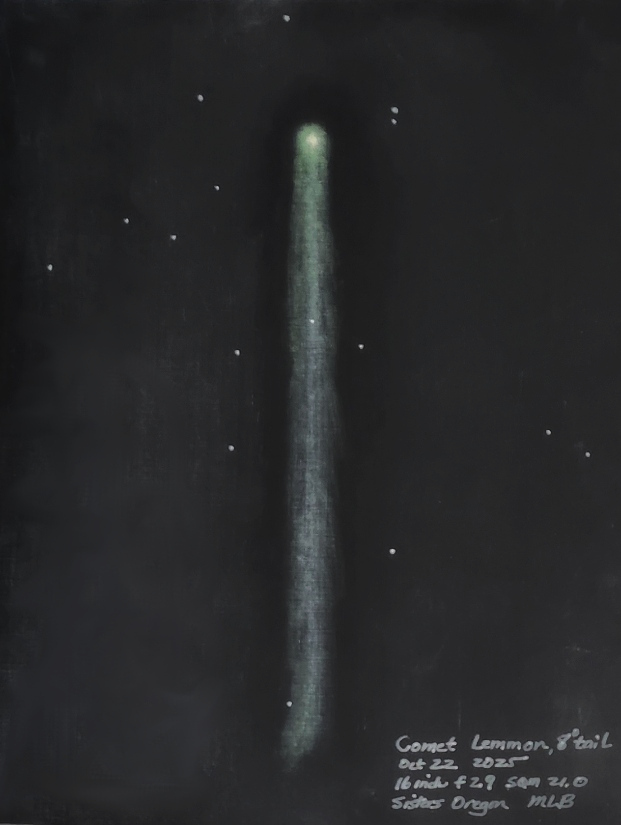


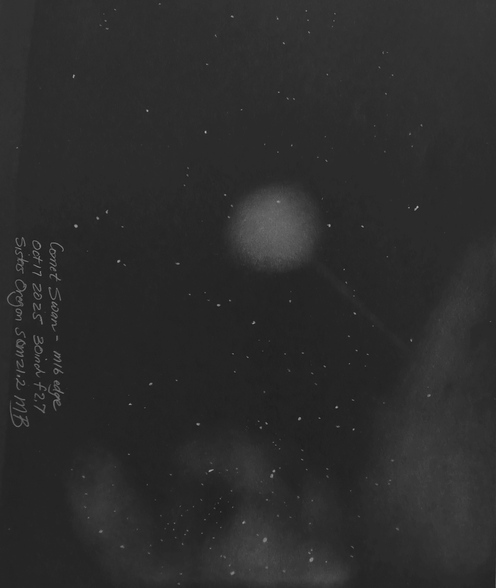
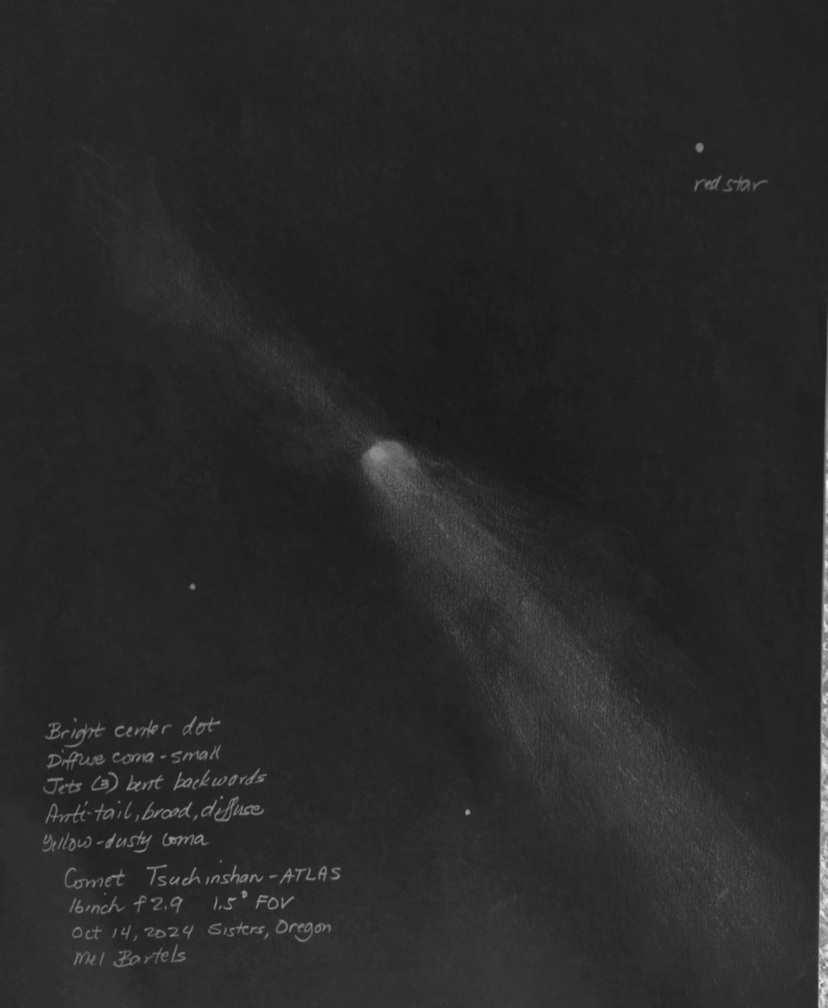


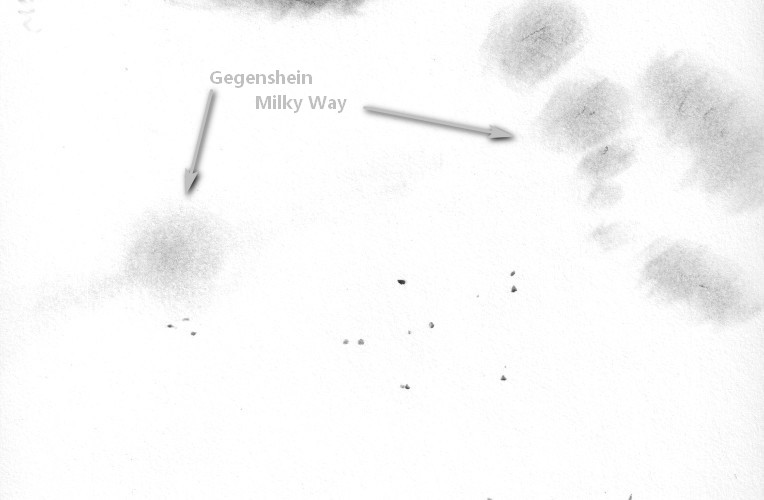
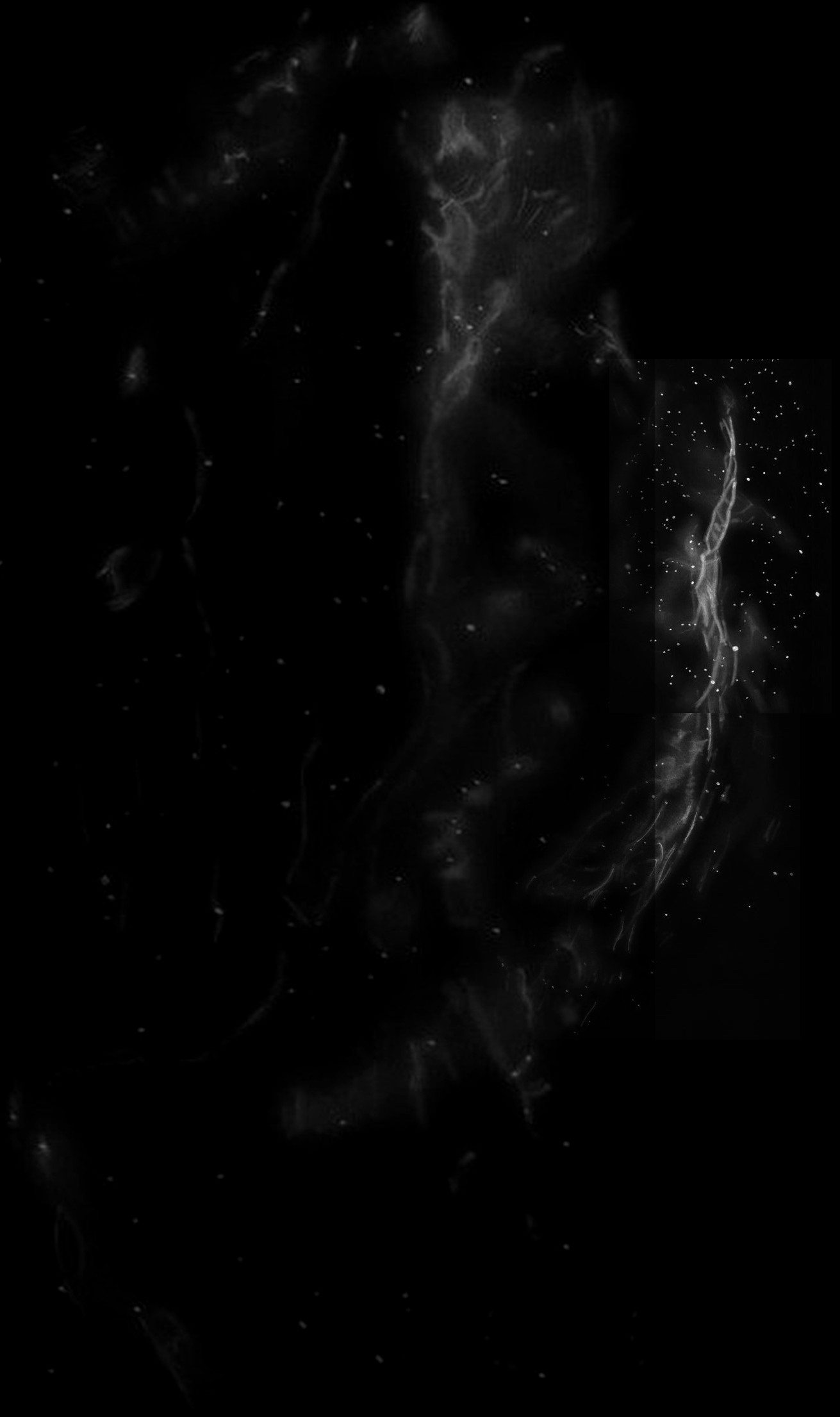
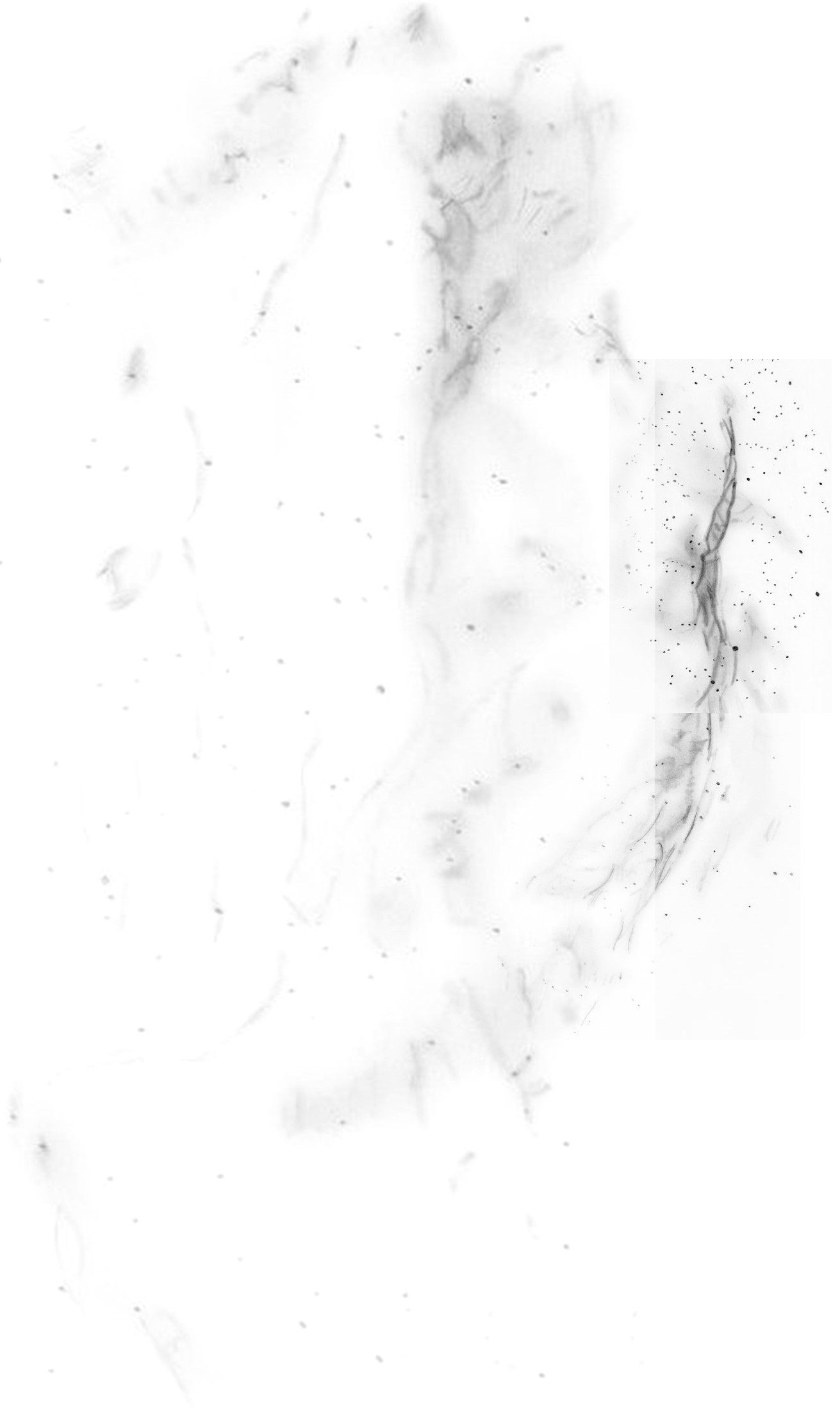
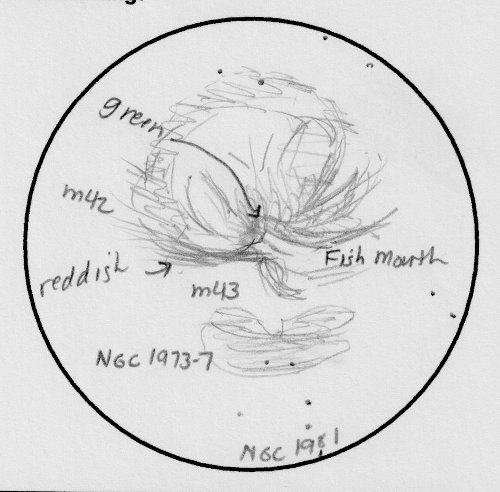
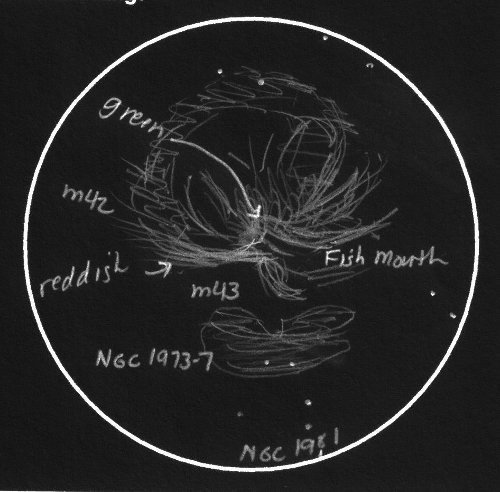
.jpg)
.jpg)