Pitch Lap Calculator by Mel Bartels

Stroking

MOT TOT
Tool to mirror size ratio
Presets: full contact petal lap reverse petal lap
Number of stars
Straight stroke   length offset spin
W stroke   overhang

Notes

  • MOT is Mirror On Top. TOT is Tool On Top.
  • Zones: 0=center, 1=edge; enter in any order.
  • Pressure is a relative number.
    Zero means that MOT or TOT does not matter.
  • Stroke length is relative to mirror diameter.
    For example, a 10 inch mirror with 0.2 stroke:
    1 inch stroke up,
    then 2 inches stroke down,
    then 1 inch stroke up,
    then returning to the starting position.
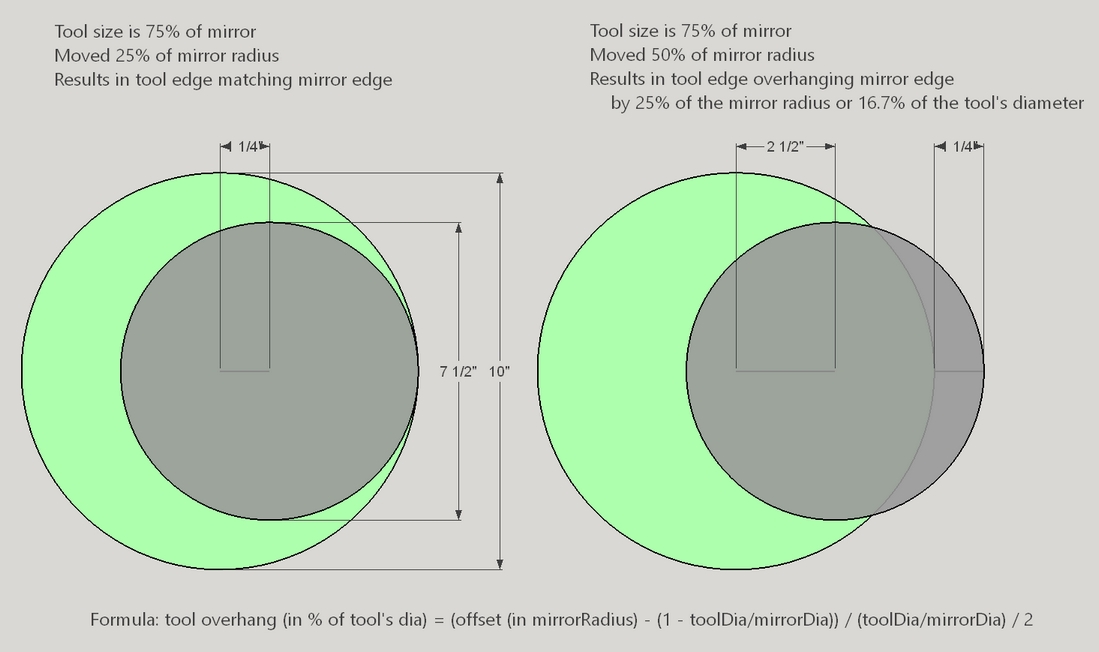
  • Offset and overhang are relative to mirror diameter.
    For example, a 0.5 offset:
    the upper piece is centered halfway between
    the center and edge of the bottom piece.

Pitch lap top view (black is pitch)

Note: you can paste a helpful image

Relative polishing action on the mirror - side view

Relative polishing action on the mirror - top view

Spinning

Rotational vector inspector. Green is CW, red is CCW.

Tool rotation rate: ; or set a tool rotation rate of

Friction set empirically by observing the tool rotation rate

Tool to mirror size ratio

Tool offset from mirror center % of mirror radius;

Use pitch lap contact pattern?


Relative polishing action on the mirror - side view

Relative polishing action on the mirror - top view

Spinning notes


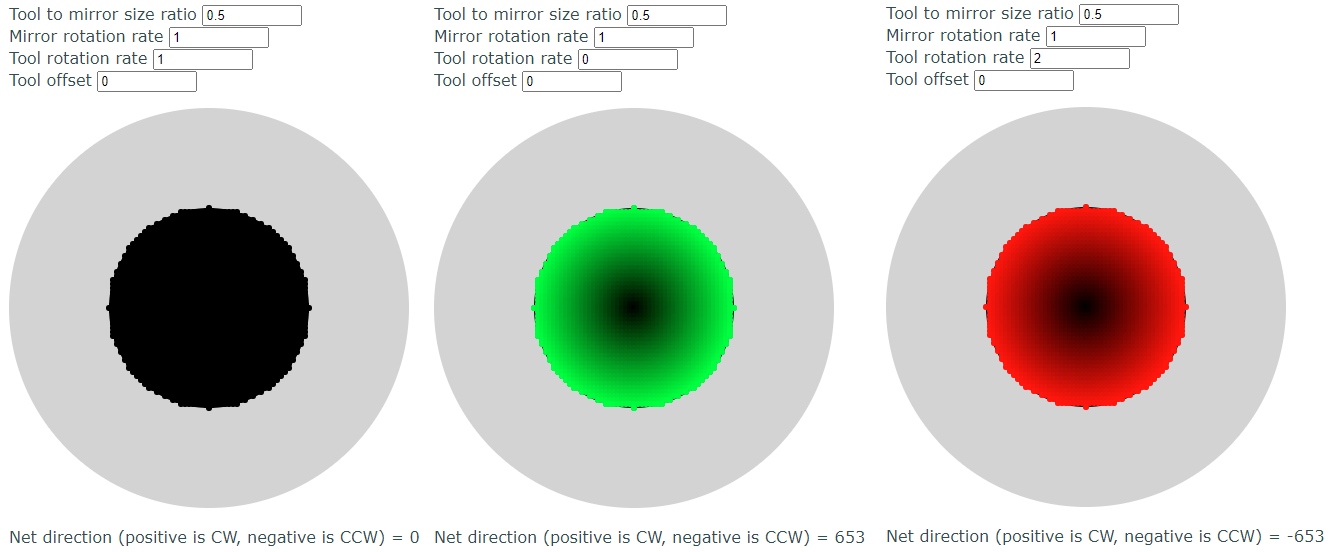
Consider these three examples with the tool centered on the mirror. The tool matches the mirror's rotation in the first example, netting zero rotational action. In the second example the tool does not rotate at all, causing the mirror to generate a clockwise rotational vector. In the third example the tool spins faster than the mirror, causing counter-clockwise action.

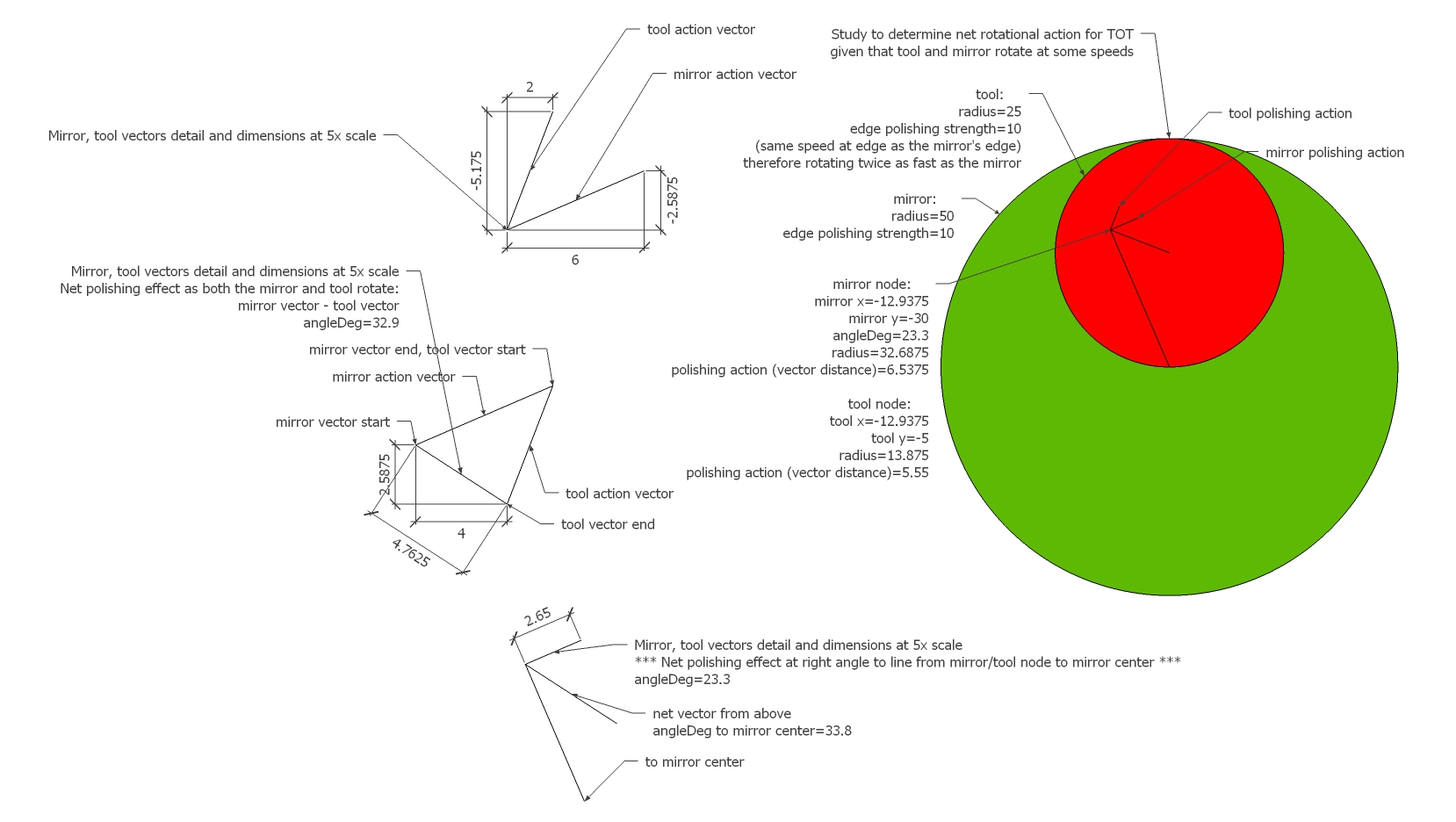
Here's how I work out the rotational vector (distinct from the polishing action:
Created 2017, last updated 23 February, 2026